



Where will Brunello di Montalcino’s 2019 vintage go?
How will the recently released 2019 vintage of Brunello di Montalcino fare in international markets? Louis Thomas investigates.
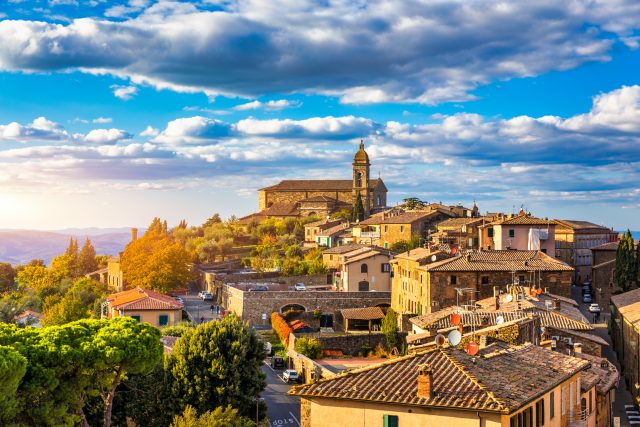
Released in January of this year and previewed to the trade and media in late 2023, the 2019 vintage of Brunello di Montalcino is considered worthy of a “five-star” rating by the Consorzio del Vino Brunello di Montalcino.
After the heat of 2017 and the rain of 2018, a vintage of 2019’s quality brought great relief to producers. Overall, some 7,989,701 bottles of wine were produced from the 2019 harvest, a similar volume as was made in 2018, though less than in both 2016 and 2017, which exceeded nine million bottles apiece.
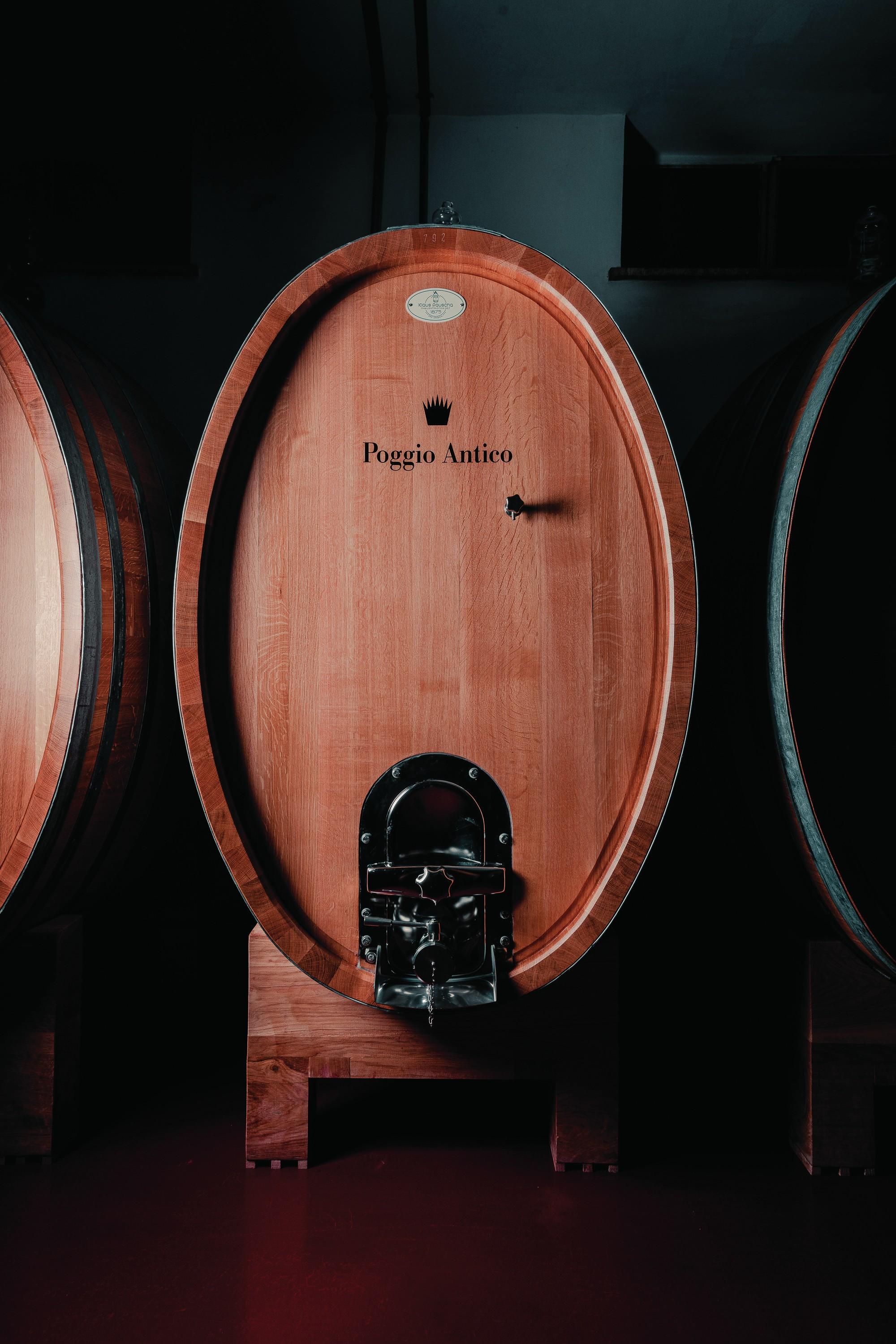
Poggio Antico sales and marketing manager Riccardo Bogi describes 2019 as “a beautiful vintage”, adding: “I saw a lot of agronomists smiling – normally they’re extremely stressed.
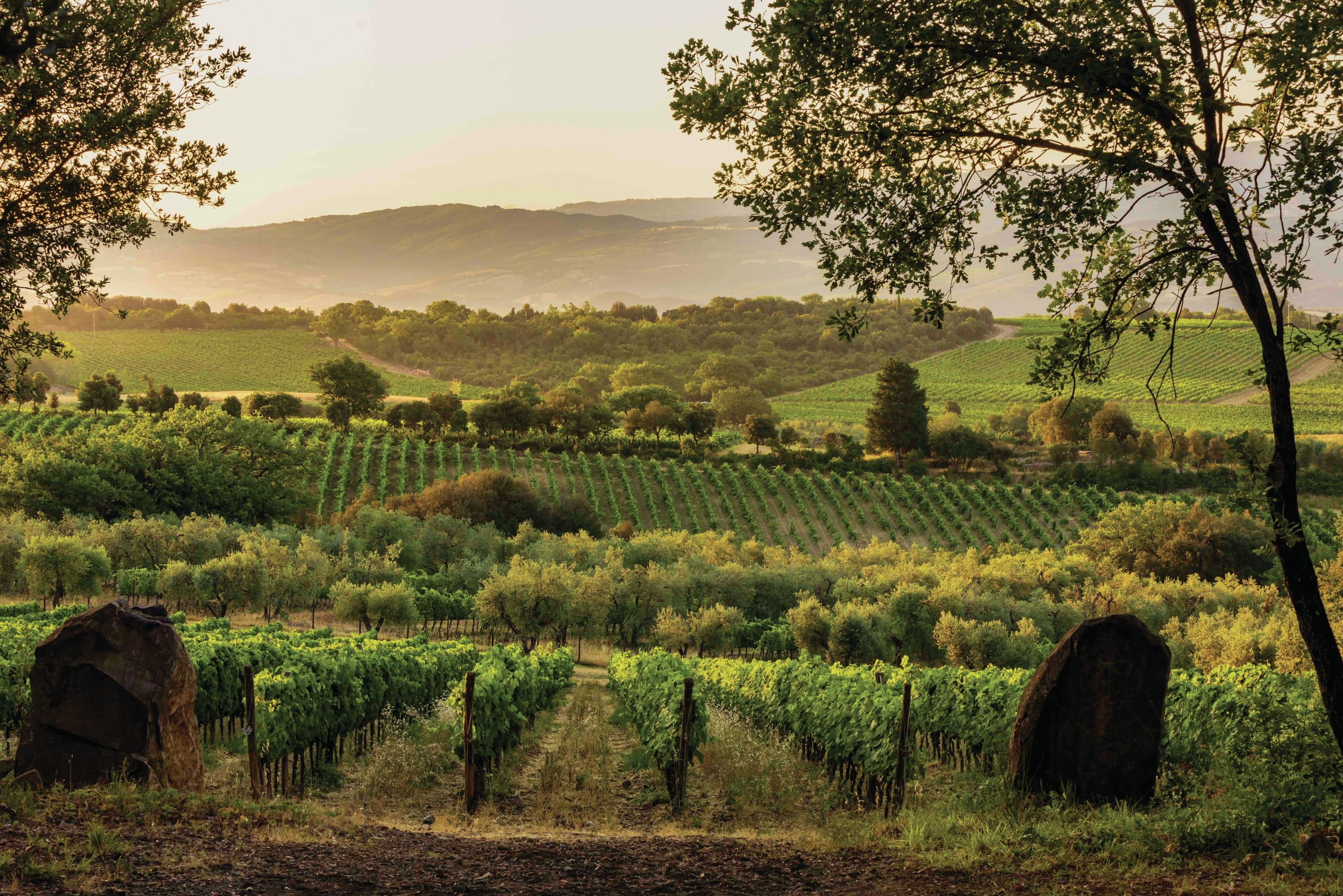
“When you read a book on how a vintage should be, that was 2019 – we had a rainy, cold winter which helped with the water reserves, followed by a sunny and warm spring, and a fresh summer and end to the growing season.”
Summing up, he describes the 2019 vintage as “perfect”, and says: “We just had to not mess it up in the cellar!”
Indeed, skilful winemaking has played an important role in the acclaim given to the wines from the 2019 vintage which, like all Brunello that is not designated as riserva, spent a minimum of 24 months maturing in oak, and four months in bottle, before being released after 1 January of the fifth year after the harvest.
Wine expert and consultant Gabriele Gorelli MW, the first Italian to become a Master of Wine and a resident of Montalcino, suggests that there is a “super clear” trend when it comes to tasting the 2019s: “This vintage of Brunello is much more ‘protective’ and crunchy compared to past vintages,” he explains.
Elegance and finesse
Overall, the view among producers is that, compared to the previous vintage, the 2019s are more “precise”, with the Consorzio del Vino Brunello di Montalcino noting the wines for their “elegance, finesse, balanced tannins, clearly-defined bouquets and distinct primary aromas”.
“ABVs are rarely below 14% [in the 2019 vintage],” Gorelli continues, “and yet the character is pure, polished and overall vibrant acidity exalts the pleasure of drinking. Although the wines are more concentrated in flavour and polyphenols compared to 2018, there’s an excellent prettiness and balance due to more considerate extraction and picking time.” Given how globally established the appellation of Brunello di Montalcino is now, there will be huge international demand for the wines of the celebrated 2019 vintage.
North America and Europe are certainly the strongest markets right now.
Giampiero Bertolini, CEO of Biondi-Santi (which releases its wines a year later than other producers), shares his view on why the US enjoys the lion’s share of Brunello di Montalcino, after Italy.
“High-end Brunello is aimed at people with money, and people in New York, Chicago, Miami, Texas, etc have a high amount of disposable income,” he says. Around 90% of Poggio Antico’s wines are exported, with distribution outside the US, Canada and Italy handled through French fine wine network La Place de Bordeaux, where Poggio Antico has been present since 2021. The producer plans to release approximately 7,000 bottles of its Brunello di Montalcino 2019, Brunello di Montalcino Riserva 2018, Rosso di Montalcino 2022 and singlevineyard Brunello di Montalcino Vigna i Poggi 2019 through La Place. The main markets the wines are expected to reach through La Place are the UK, Germany, Switzerland, the Netherlands, Belgium and Denmark.
Growth potential
However, Brunello producers aren’t just looking to the west – Asia is also seen as a region that has great potential.
“The Asian market has the largest opportunity for growth,” says Famiglia Cotarella export manager Andrea Leone.
“They are currently more comfortable with French wines, because they were there [in the market] first… the area is not familiar with Brunello yet, but it’s definitely on the up.”
According to Bertolini, the awareness of Italian wine is “growing very slowly in China, much slower than people thought it would 10 years ago, but some key products from Italy have high demand. Chinese consumers buy by brand, so Biondi-Santi sits among the likes of Sassicaia and Ornellaia for them”. He continues: “I would definitely say that South Korea and Taiwan are also doing very well. We’re also developing Singapore as a market – it’s always been good, but now a lot of people from Hong Kong are moving to Singapore due to the political situation there [in Hong Kong]. Unfortunately, this does mean that Hong Kong is no longer a great hub for superhigh-end wine. Japan has a different dynamic – it’s a very traditional, mature market, which is not growing much for Italian wine.”
The Moscow Option
There is one perhaps unexpected destination where a good few bottles of Brunello di Montalcino 2019 could find themselves: Russia.
Given the sanctions imposed after Vladimir Putin’s invasion of Ukraine in the spring of 2022, there have been sizeable difficulties in getting wines into Russia, as Luca Devigili, business development manager of Banfi, admits. “We had a huge reduction of sales in 2023,” he reports. “At the start of 2022, Russia was able to stock some wines, but in the second half of the year there was a huge reduction. But we think the situation will become a little bit easier, and we are quite positive about our relationship with Russia in the future. “It’s really interesting that in Russia you can cover the full price range of the market, from entry-level up to icon wines,” Devigili adds.
Precise export figures for Banfi’s wines to Russia were not disclosed to db. The war in Ukraine has prompted some companies, including Tuscan wine giant Frescobaldi, which counts historic Montalcino estate Tenuta CastelGiocondo among its portfolio, to withdraw from trading with Russia.
Asked why Russians seem to have a particular fondness for Brunello di Montalcino, and Italian wine in general, in spite of the difficulties of securing stock, Gorelli posits: “Brunello, just like Barolo, is seen as a statement: ‘I’m drinking an old-fashioned, nonadulterated, real Italian wine, just like Italians are doing.’ I believe it is the ‘Italianity’ that really makes the difference, and wine is the perfect ambassador for conveying this message. “Nowadays, conjuncture and conflicts aren’t promoting or pulling sales,” Gorelli continues, “but I know for sure that demand is far from being weak, as is the willingness of the Russian trade to try alternative ways to import Brunello.”
Economy on the up
Indeed, in spite of being the country under the most economic sanctions in the world at present, Russia’s economy is on the up, with the International Monetary Fund predicting that the country will record economic growth of 3.2% this year – placing it ahead of any of the world’s advanced economies. Part of what is enabling this growth is Western products making their way into Russia through what the BBC diplomatically calls “a variety of routes”. Whether or not producers try to risk the Russian market, Gorelli believes that, overall, 2019 Brunello di Montalcino will find its way through the challenging international landscape of fine wine: “Comparing how things went in 2023 to the booming previous couple of years is rarely beneficial or motivational,” he says. “The fine wine market boomed, just like the luxury watch market did. I believe we are living in a settling phase that will consolidate Brunello’s position in the market. However, figures talk: the appellations from Montalcino are among the ones with the lowest stock around.”
The 2019 growing season at a glance
- According to the Consorzio del Vino Brunello di Montalcino, the 2019 vintage saw Sangiovese grapes of “excellent health”.
- Winter temperatures were “slightly above the average for recent years”, with “a total of about 70mm” of rain across January and February.
- “Budding took place at the usual time, with rainfall of around 100mm and average temperatures of around 10°C in March, April and May.”
- Late July saw around 70mm of heavy rainfall over two days, but there was only 20mm of rainfall in August.
Rain during the first week of September delayed the harvest, with picking concluding in the cooler sites in late October.
Related news
From innovation to gastronomy: why Hungary is having a moment
“The only way to build a wine is by making fewer bottles than the market needs”


