



What does sustainable winemaking really mean in 2024?
With so much information out there about sustainability, Chris Losh cuts through the noise to tell the wine trade what it really needs to know.

CAN YOU remember where you were the first time a winery talked to you about sustainability? I think mine was about 10 years ago. They waved at a couple of solar panels on the roof, spoke about recycling paper and reducing emissions and the conversation moved on.
Fast forward to 2024 and it’s a very different landscape. Literally. From being a theoretical future problem, climate change is now redrawing the wine map and, powered by the agreements signed at the UN Climate Change Conference in Paris in 2015, countries and businesses are putting inordinate amounts of effort into addressing it.
“Twelve years ago, buyers were very happy if you had any information on your carbon footprint, because it was something very advanced,” says Valentina Lira, Viña Concha y Toro’s director of corporate responsibility. “But today you have some retailers requesting reduction paths based on climate science.”
Reduction of carbon emissions comes in three parts: Scope 1, Scope 2 and Scope 3.
The first two are relatively straightforward to address, covering, respectively, direct emissions from your own business and the energy a business buys. Things like switching to a green energy supplier and reducing or removing chemicals in the vineyard can achieve a lot.
Unfortunately, these elements have a relatively small impact on the overall carbon footprint of a bottle of wine. By far the most emissions come from transport and packaging. These are covered in Scope 3 – emissions that occur upstream or downstream of the core business.
MAJOR COMMITMENT
In other words, to majorly reduce their emissions, wineries, distributors and retailers need to work with other businesses that are all moving towards the same goal. Addressing Scope 3, in other words, makes a big difference, but it’s hard and requires major commitment.
“The way vineyards are managed and wines are made needs to be reviewed,” says Josep Maria Ribas, climate change director at one of the industry’s climate change pioneers, Familia Torres. “We need to accelerate our commitment to selfgenerated energy from renewable sources, as well as things like replace diesel tractors with electric tractors, implement regenerative viticulture in owned vineyards and those of suppliers, and reuse glass bottles.” The capture of CO2 from wine fermentation for reuse as an inert gas in the winery is also high on Ribas’ agenda.
In terms of the big players, Torres has reduced its emissions per bottle by 36% compared to 2008, and is hoping to get to net zero by 2040; meanwhile, Concha y Toro has brought its net zero deadline forward by 10 years to the same date. Australia’s Hill Smith Family Estates is on track for zero emissions by 2050 and California’s Jackson Family Wines is aiming to be climate-positive by the same date. These are some of the best-known names, but an impressive number of producers are also committing to big changes in a short time.
Regions, too, are setting goals. Bordeaux is on track to be carbon-neutral by 2050. Austria has an impressively rigorous tool to help producers assess their performance, leading the Wachau to declare itself the country’s “first sustainable-certified wine region”.
In the UK, bulk bottler Lanchester has invested £13 million in turbines, geothermal pumps and solar panels, generating three times more electricity than it requires.
Carbon reduction, of course, only gets a business so far. Actively removing CO2 via carbon capture (planting carbonmunching vegetation) is a part of many business strategies – and an obvious one for wineries which, after all, have a lot of land. Its effectiveness depends on what is planted – the fastest-growing vegetation generally removes the most – but this then ties in with wider questions of biodiversity.
Hill Smith Family Estates, for instance, re-vegetated its Riverland vineyards with native mallee scrub rather than nonindigenous carbon-busting plants. It changes the role of the winery in the wider ecosystem.
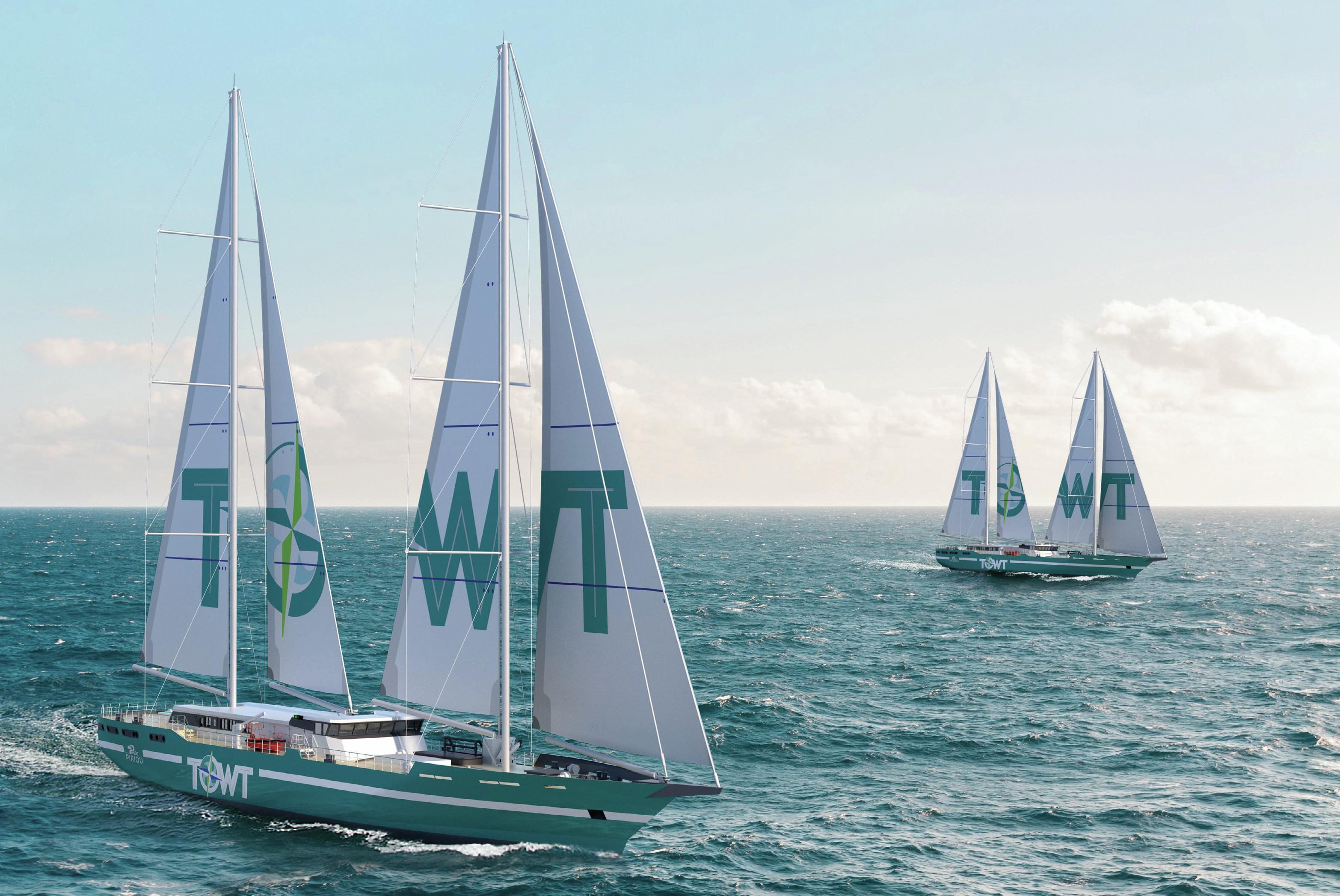
Wind power: Bordeaux is set to replace road transport with freight sailboats
“In the future, I’m convinced that growers won’t only produce wine – but will also have woods and other agricultural crops. Monoculture is over,” says Marie-Catherine Dufour, technical director of Bordeaux’s CIVB.
A further means of carbon capture is to collect the gas produced during the fermentation process. Torres is at the forefront of this still nascent technology. Capturing, compressing and storing the by-product, they can then use it to preserve wine in tanks from oxidation.
Saving money and cutting back on emissions at the same time, the company describes it as a “great circular economy success story”. Fermentation capture shows real potential. In Bordeaux alone, it’s estimated that the process could capture 32,000 tonnes of CO 2 a year.
This is all good news but, as mentioned earlier, in the grand scheme of things wineries’ direct action is a relatively small part of their products’ overall carbon footprint. At Hill Smith Family Estates, Louisa Rose reckons that 80% of the producer’s emissions come from suppliers.
A big part of this, without doubt, is caused by transportation. Put bluntly, moving heavy bottles around the world (generally using fossil fuels) has more of a negative impact than cutting out pesticides does a positive one. Distribution is a huge topic in the International Wineries for Climate Action (IWCA) forum.
“The most important thing is no planes, fewer trucks and more boats and trains,” says the CIVB’s Dufour. “We have to stop planes. It’s not a lot of volume, but it’s very expensive in terms of carbon.”
Boats, of course, mean longer lead times and potentially high temperatures. Some wineries are talking about only shipping in cooler months to ensure their products aren’t cooking in containers. All of this could have an impact on logistics.
Importers will need more storage space (if they’re taking a whole year’s shipment in one go) and, since predictions on required levels aren’t always accurate, restaurants and retailers might have to accept stock outages. Just-in-time supply chains don’t sit well with reducing carbon emissions.
One intriguing development is taking place in Bordeaux, where they are soon to reopen the harbour to smaller-volume freight sailboats – with actual sails. The intention is to ship containers direct from the port to container hubs, avoiding road haulage and – using wind power – with minimal environmental impact.
BULK SHIPPING
One big logistical carbon-saving technique is already in place. Bulk shipping and bottling in market has grown in importance over the last 20 years, mainly as a money-saving technique. But its environmental impact is huge, too.
According to bottler Lanchester, a 20- foot container can hold either 13,200 bottles of wine or one (bulk shipping) flexitank. The former accounts for 9,900 litres; the latter 24,000 litres – CO2 savings of 38%. Half of all the wine sold in the UK now is shipped in bulk – and 85% of all Australian imports.
Belgian supermarket group Ahold Delhaize (which sells 40m litres of wine a year) recently finished an advanced new bottling facility. It’s something we can expect to see more of.
The other key shift in bottling has been the bottles themselves. Wineries everywhere are sourcing bottles that are lighter and/or have a higher recycled glass content. The companies that are part of the Sustainable Wine Roundtable (SWR) action group have agreed to an average bottle weight of 420g across their portfolios – a significant reduction. Lanchester recently demoed the new Verallia Bordelaise Air. At 300g, it’s the lightest bottle on the market.
SWR’s founder, Tobias Webb, says that its Bottle Weight Accord “got producers and retailers to do what they were going to do anyway and got them to do it all the same”.
Big-scale movements like this are doubly effective. Firstly, they remove sizeable amounts of carbon from the production chain, and secondly the scale involved helps customers get used to the new reality more quickly.
“If the entire market moves incrementally towards lighterweight bottles, we stand a good chance that the customer will be recalibrated to a glass bottle with a lighter weight,” says Barry Dick MW, global bulk wine sourcing manager at UK supermarket Waitrose.
Dick also makes the point that alternative formats can help. Waitrose is championing cans, in Belgium Delhaize is stocking more PET bottles, bag-in-box and pouches. Customers will choose these formats because of their convenience and practicality, rather than their sustainability credentials – but the latter are real, nonetheless.
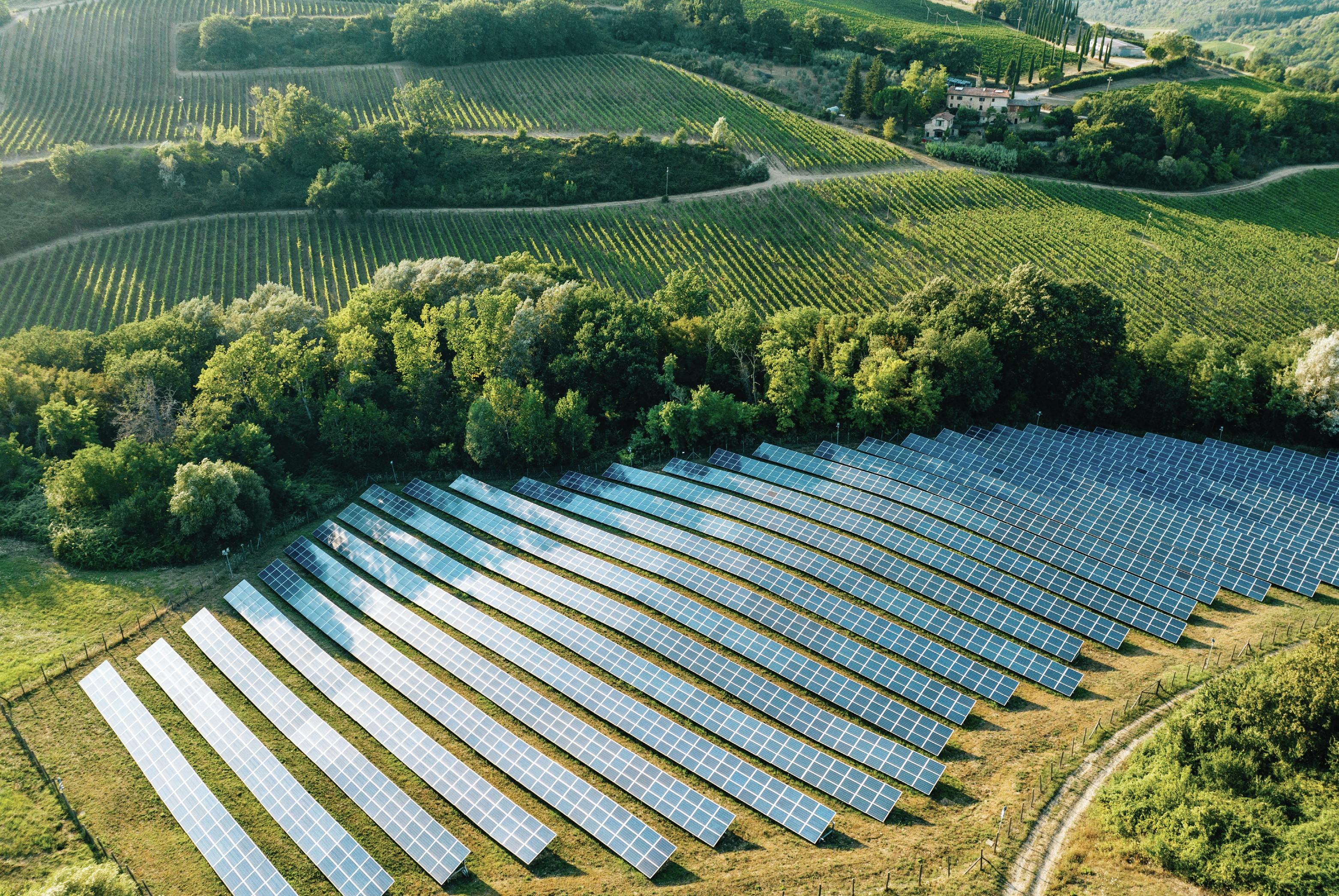
Clean and green: but eco measures are just one aspect of sustainability
The question, perhaps, is whether any of this will go far enough. More radical solutions may well be required to get the industry to net zero. Josep Maria Ribas at Torres – generally a step or two ahead of everybody else – acknowledges this.
“Packaging material accounts for about one-quarter of our carbon footprint,” he explains. “But [reducing bottle weights] has a limit, so new schemes need to be considered.”
Time, then, to familiarise yourself with what could be the debate of the next 10 years: reuse.
A recent EU ‘study of studies’ was pretty unequivocal on the subject, pointing out that using a bottle two or three times could have a huge impact on the container ’s carbon footprint. The report’s authors recommend that “reusable packaging should be used for as long as possible”.
The theory is simple: making glass in a super-high temperature furnace uses enormous amounts of energy, so reducing the number of times you need to do it (whether in its initial creation or for recycling) lowers emissions.
Even sustainability-committed wine producers are currently sceptical of the benefits, citing everything from the CO2 costs of transporting bottles and the energy required in washing them to differences in bottle sizes and difficulties of collection.
Even its proponents accept that moving to a culture of reuse rather than recycling won’t be straightforward. “It’s industry bodies and retailers that can make this change,” says Peter Roberts, founder of That Reuse Company. “Trying to do it from the grass roots is unlikely.”
Nudges from legislation will surely help. As of 2027, wine regions in France will need to reuse 10% of their bottles. In Bordeaux, they are limiting this to collection within a 100km radius of the winery, and probably focusing on collecting from the on-trade (where bottles remain after consumption).
It’s not a radical solution, and it won’t move the dial much on CO2 emissions, but it could, perhaps, be a proof of concept that breaks down resistance to a wider rollout in future.
“Don’t let ‘perfect’ be the enemy of ‘good’,” implores Muriel Chatel of Sustainable Wine Solutions. “We don’t need a bottle to be reused 50 times, we just need it to be reused even once. We need a new approach to all of this.”
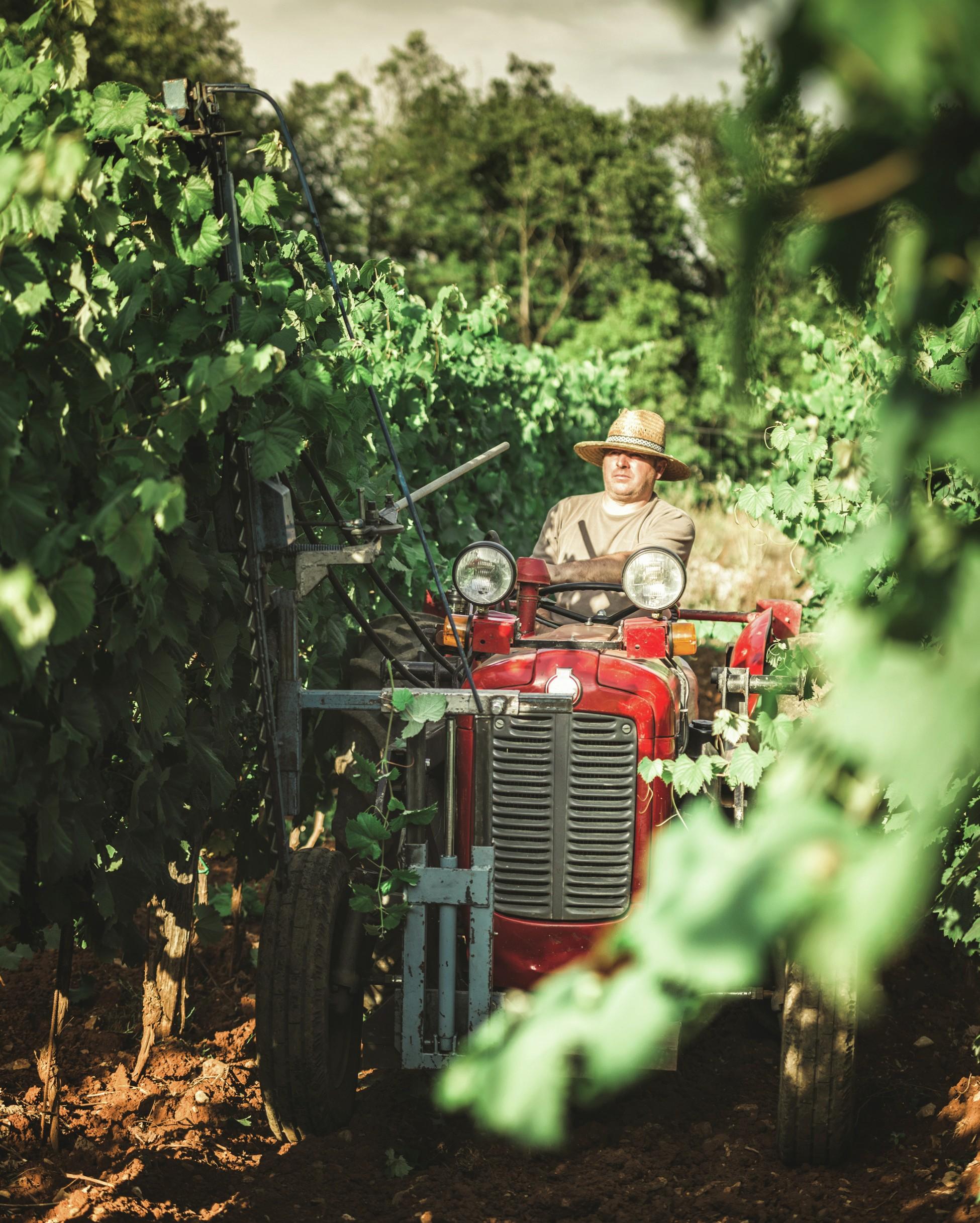
Fuel for thought: wineries are looking to move into greener forms of transport
Such thinking is echoed in Sweden. Free from market competition and plugged into the government’s green policies, the country’s monopoly retailer,
Systembolaget, is a long way ahead of most other retailers on matters ecological.
The number of its SKUs classified as sustainable has tripled in two years to 362. Plans are for the “vast majority” of the total range of 2,000 wines to be sustainable by 2030.
Already, all suppliers (and potential suppliers) have to fill in an exhaustive (and doubtless exhausting) form that analyses the total carbon footprint of their products. Soon every bottle will have a Product Carbon Footprint, which will be displayed on labels.
The system is being shared with other Nordic monopolies (meaning that producers only have to fill in the information once) and, when finalised, the Swedes are likely to share it with other companies.
“We see a huge advantage in trying to do this in a very co-ordinated way,” says Gad Pettersson, Systembolaget’s head of unit, product quality and sustainable supply chain.
DO PEOPLE CARE?
However, the final question is: do consumers actually care? A recent study by New York’s Stern Center for Sustainable Business claimed that products marketed as sustainable grew faster and sold at a higher price than those that weren’t. It’s a particularly hot issue for consumers under 35, who – as we all know – are the long-term future of the category.
But it’s also likely that producers who are not taking sustainability seriously will start finding it harder to get listings. If the Nordic monopolies are planning to increase the percentage of sustainable products in their range, the implications for non-compliers are obvious.
At Ahold Delhaize, wines and sparkling wines manager Pieter-Jan Cuyvers says that “sustainability is becoming more a part of our requests towards our suppliers”. They are, he says, moving to a point where it’s “essential to have – otherwise we won’t be able to do business together”.
Across the industry, from wine producers and logistics firms to packaging suppliers, this messaging will be either inspiring or terrifying, depending on the stage they are at on their journey.
Either way, what’s becoming obvious is that standing still is increasingly not going to be an option.
“We have to realise we’re not in the world we were in 10 years ago,” says That Reuse Company’s Peter Roberts.
“We all have to take responsibility for ourselves at a corporate and individual level. When we make choices, we need to understand the consequences that those choices have.”
Related news
All the medallists from The Global Pinot Gris Masters 2026
Will crus unlock Oltrepò Pavese’s full potential?
Cru World Wine sees huge demand for its 'community-ownership' share offer


