



What a new vineyard classification system means for Austria
Is Austria’s long-awaited new nationwide vineyard classification system the right remedy for the country’s wine sector? Louis Thomas investigates.
Delivering his update at the VieVinum trade show held in Vienna’s Hofburg palace in May, Austrian Wine CEO Chris Yorke said that the country wishes to position itself as “a premium, environmentally-conscious wine country that has both tradition and modernity”. “We love a good regulation in Austria,” Yorke joked. “We have spent the last 20 years on a really important journey, defining our DACs and the typicity of each region.”
The DAC (standing for Districtus Austriae Controllatus) divides Austria into 18 wine regions – 17 specific winegrowing regions, and one, Wiener Gemischter Satz, which falls into the category of both a generic and specific winegrowing region. In 2023, the final DAC, Thermenregion, situated to the southwest of Vienna in the zone of Niederösterreich, was approved. DAC wines are then further divided into three tiers: gebietswein (regional wine); ortswein (village wine); and, at the top, riedenwein/lagenwein (singlevineyard wine).
With the ink on the DAC maps barely dry, the country’s plan for the next 20 years, according to Yorke, is even more radical – and specifically concerns the single-vineyard wines at the very top of the pyramid.
Approved in 2023, the reforms will see Austria become the first country in the world to introduce a nationwide vineyard classification system.
“We have defined all of the DACs, and now we have the ability to classify those single vineyards, as long as they fit into the DAC system,” says Yorke.
The new classification enables single vineyards to be designated as ‘Erste Lage’ (the equivalent of premier cru), or ‘Grosse Lage’ (grand cru).
In order to achieve these designations, a number of criteria have to be met. “You have to show the historical significance of the vineyard, the homogeneity of the soil, and the international and national ratings of the soil,” Yorke explains. “The criteria are the same for all – I expect the first classifications to go through in 2025, and it will be a 20-year-long process.” He also notes that this will be done on a region-by-region basis. “We often compare ourselves to France, but if you compare this to Burgundy or Alsace, it’s very different,” Yorke argues. Drawing the analogy of a tennis game, Yorke says that there has been, and will continue to be, a “very noisy consensus-building process” – and there are big players on both sides of the net.
System overhaul
The first serve of the match was delivered back in 1991, when Traditional Wine Estates of Austria (ÖTW) began pushing for single-vineyard classification. Three decades later, and with about €10 million invested into its campaign efforts, the group has finally got its wish.
The key argument cited by many of the supporters of the introduction of Erste Lage and Grosse Lage on wine labels is that the system will put terroir at the forefront for consumers.
“I don’t know any food or drink product that represents the soil where it grows, the climatic circumstances, like wine – it can represent all these things,” says Ingrid Groiss of the eponymous wine estate in lower Austria’s Weinviertel. “But, if you don’t find those characteristics and differentiation in the wine, then it’s not necessary to write the name of the single vineyard on the bottle. We have to tell the consumer what makes the vineyard distinctive and special.” It could be particularly advantageous for producers of wines made from Austria’s most widely planted grape variety, Grüner Veltliner, which covers almost one-third (32.4%) of the country’s total vineyard area. For wineries wishing to stand out in what is a very crowded field – a “difficult” task, according to Stefan Gebetsberger, owner of Spitz’s Weingut Stefan Gebetsberger, having Erste Lage or Grosse Lage status could be a boon.
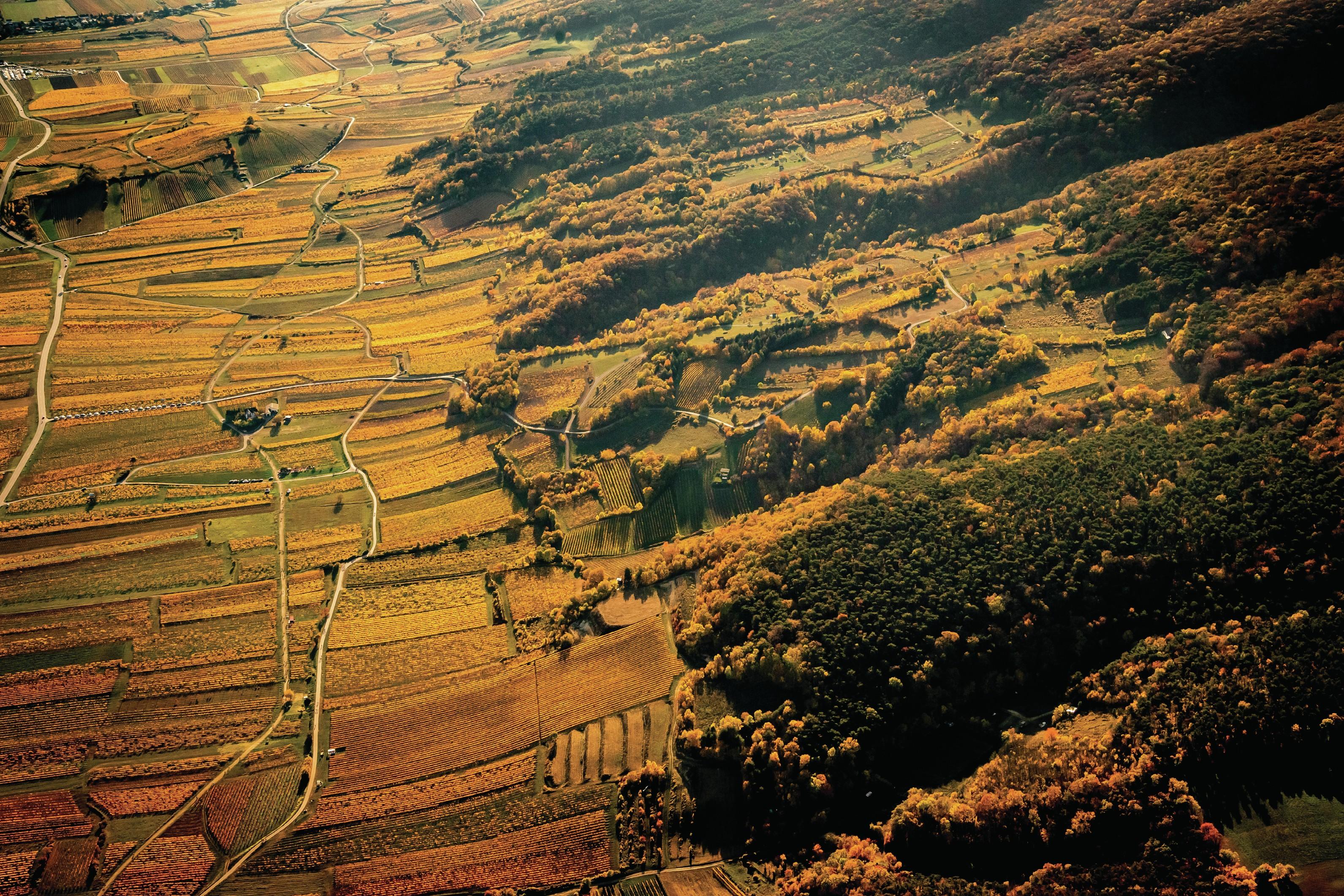
He adds: “It could also mean that winemakers would try to reduce or minimise their use of technical winemaking, giving more trust in the quality of the grapes and the quality of their work in the vineyard.”
Groiss, who plans to pursue the new labelling terms for her wines, warns that, for the system to be a success, it has to be rigorously enforced. “Classification can be dangerous if it’s not focused enough – if the wines taste like all the others, they shouldn’t be classified as single-vineyard wines,” she argues.
Among the key proponents of the new system has been Weingut Schloss Gobelsburg – indeed, the historic Kamptal estate’s winemaker and CEO, Michael Moosbrugger, is also ÖTW chair. Alfred Unterganschnigg, who has handled Schloss Gobelsburg’s sales and marketing for more than two decades, says that these early efforts may have seemed like a “small stone thrown into a big pond” at the time, but today those ripples have become a wave that will sweep over Austria in the decades to come.
For Unterganschnigg, one of the most important advantages of implementing the system is that it facilitates the communication of the quality of Austrian wine, especially to a more international audience.
“It makes many things much easier and simpler to explain,” he argues. “If a Chinese sommelier comes to us and asks about the land, and we say it’s a premier cru, suddenly they understand that the quality is very high without even having tasted it – it offers a clear picture.” From an international perspective, it might make a great deal of sense.
Austrian wine exports are continuing to rise in value, hitting €238.2m in 2023, with 11.3% year-on-year value growth in the Asian markets of China, Hong Kong, Japan, Singapore and South Korea. Asked whether Austria’s producers should really have a say themselves over the worthiness of their own wines to be awarded either Erste or Grosse Lage status, Unterganschnigg tells the drinks business: “Who knows their own child better than the mother?”
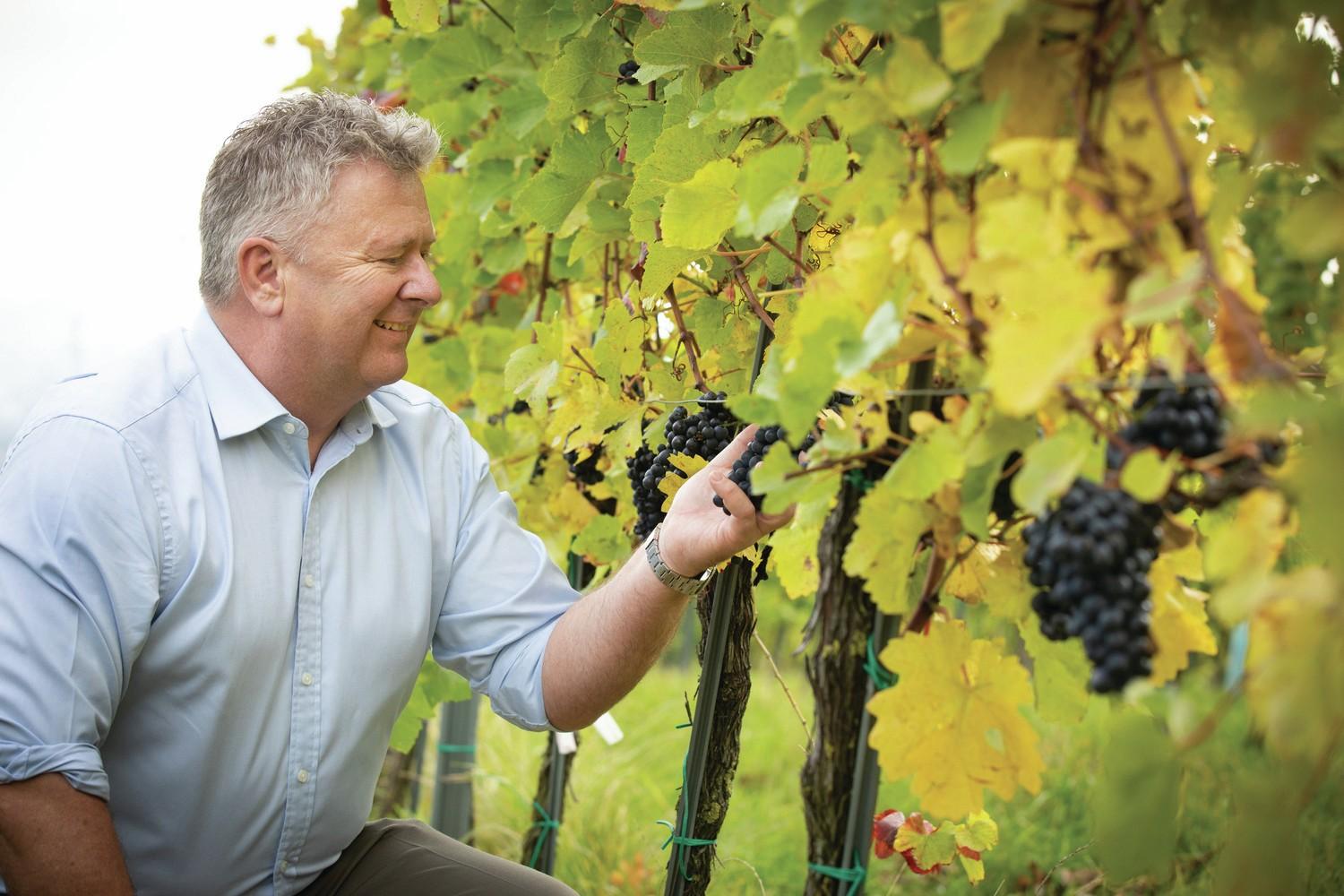
As for whether vineyards might run the risk of losing that status, Unterganschnigg says: “Once a vineyard is made a grand cru, it has gone through all the qualifications, so it should stay there – it’s a verification system that is democratic for everyone.”
However, not all are in favour of the new system. The strongest opposition to it comes from Burgenland, the region on the eastern edge of the country, pressed up against Austria’s border with Hungary. The largest winegrowing region within Burgenland is Neusiedlersee. A DAC since 2012 and with approximately 6,000ha under vine, Neusiedlersee is a major force in Austrian wine.
Among the producers in the region to express discontent with the proposed system is Weingut Gebrüder Nittnaus.
“Classification is not something we want to promote,” says Andreas Nittnaus. “We like single vineyards, but we don’t see the need to promote them officially.” His brother, Hans Michael Nittnaus, chimes in: “What does the history of the vineyard really have to do with the quality of the wine?”
The pair also suggest that, as in Bordeaux and Burgundy, these classification systems, by their nature, “cement the status quo”, to the disadvantage of newer producers.
History is something that could perhaps work against Burgenland when it comes to classification.
The Blaufränkisch wines produced by Weingut Moric’s Roland Velich certainly invite comparisons with grand cru Burgundy and, as the group of visiting Japanese wine trade professionals sporting ‘Moric’ caps gathered around the winemaker’s stand at Vievinum illustrates, these are wines that have a serious cult following. But, while Velich might seem to be exactly the sort of person to favour a Burgundy-style vineyard classification, this is not the case.
“When it comes to historical sites, they come from places that have always cultivated wine. For 1,000 years, we in Burgenland were part of Hungary; 100 years ago, we became part of Austria,” explains Velich. “It is wrong to think of a grand cru as something with a historical record – we don’t have those records for Burgenland, as with all the disruption throughout Hungarian history, wars and new regimes, a lot of things got lost, including the records.”
Faced with the concerns of Burgenland winemakers, Schloss Gobelsburg’s Unterganschnigg says: “With any action there is a reaction – everyone has their own opinion.”
Case for the defence
Indeed, not every winemaker in Burgenland is against the plans. René Pöckl is something of a superstar in the region, with Weingut Pöckl’s blends of local grapes, such as Zweigelt and Sankt Laurent, with international varieties including Cabernet Sauvignon and Syrah, receiving critical acclaim.
Pöckl suggests that one grape in particular could receive a reputational boost from the new system.
“Blaufränkisch will really benefit, because there are so many bad sites for Blaufränkisch, and it will help customers to find the good sites,” he says. “It is really important that the reputation for great sites for this grape are built up. There are so many good ones, and they’re mixed up with bad ones.”
But Pöckl, whose winery is decorated with bottles of great Bordeaux wines, does not plan to use the system. “It’s not necessary,” he says. “I make blends, so the single sites are not as important. But if you have a single-site wine, I strongly believe it necessary to put it on the label.”
“For lower-priced wines, people buy by variety,” he adds, “but, for more expensive ones, people want to taste the soil, the environment, so therefore it makes sense to have it on the label.
“There will be producers in northern Burgenland who are strongly against it because the region is quite flat, so there aren’t as many differences between sites, but if you are on the slopes and have different types of soils, it [classification] has to come to bring us forward.”
Between those who are vociferously for this bold new vineyard classification and those who are against it, there are some producers who are straddling both sides of the debate.
Dieter Hübler, co-founder of winery Laurenz V in Kamptal, suggests that while it has been a work in progress for many years, it is still a relatively rapid change for the world of wine. “Burgundy did it in 500 years, we did it in 30, so there will always be friction,” he says.
Warning that the Austrian wine sector should “learn to walk before it runs”, Hübler, who is overall in favour of the new system, says that the debate is unlikely to settle anytime soon, adding: “Good luck trying to get one single opinion out of farmers!” Austrian wine has come a long way since the scandal of 1985, when it emerged that numerous wines from the country had been adulterated with diethylene glycol, a toxic substance found in antifreeze. Today, Austria’s wines are arguably among the most dynamic and consistently excellent in the world. This new classification could sever any final reservations that consumers might have regarding the quality of the country’s wines.
There is still the crucial question of whether the new system will be fit for purpose in years to come – historical greatness does not necessarily equal future success, as Honegger suggests. “It remains to be seen where the best vineyards of each region will be over the next 30 years, with the climate radically changing.”
If it does prove a long-term success, other wine countries may follow suit. While several winemakers joke that “Austria is always behind trends”, in this case it could be ahead of the curve.
Related news


