



The bridge that could change Sicily’s wine industry
Could a bridge across the Strait of Messina, a possibility spoken about since Roman times, transform the Sicilian wine industry for future generations? Louis Thomas investigates.
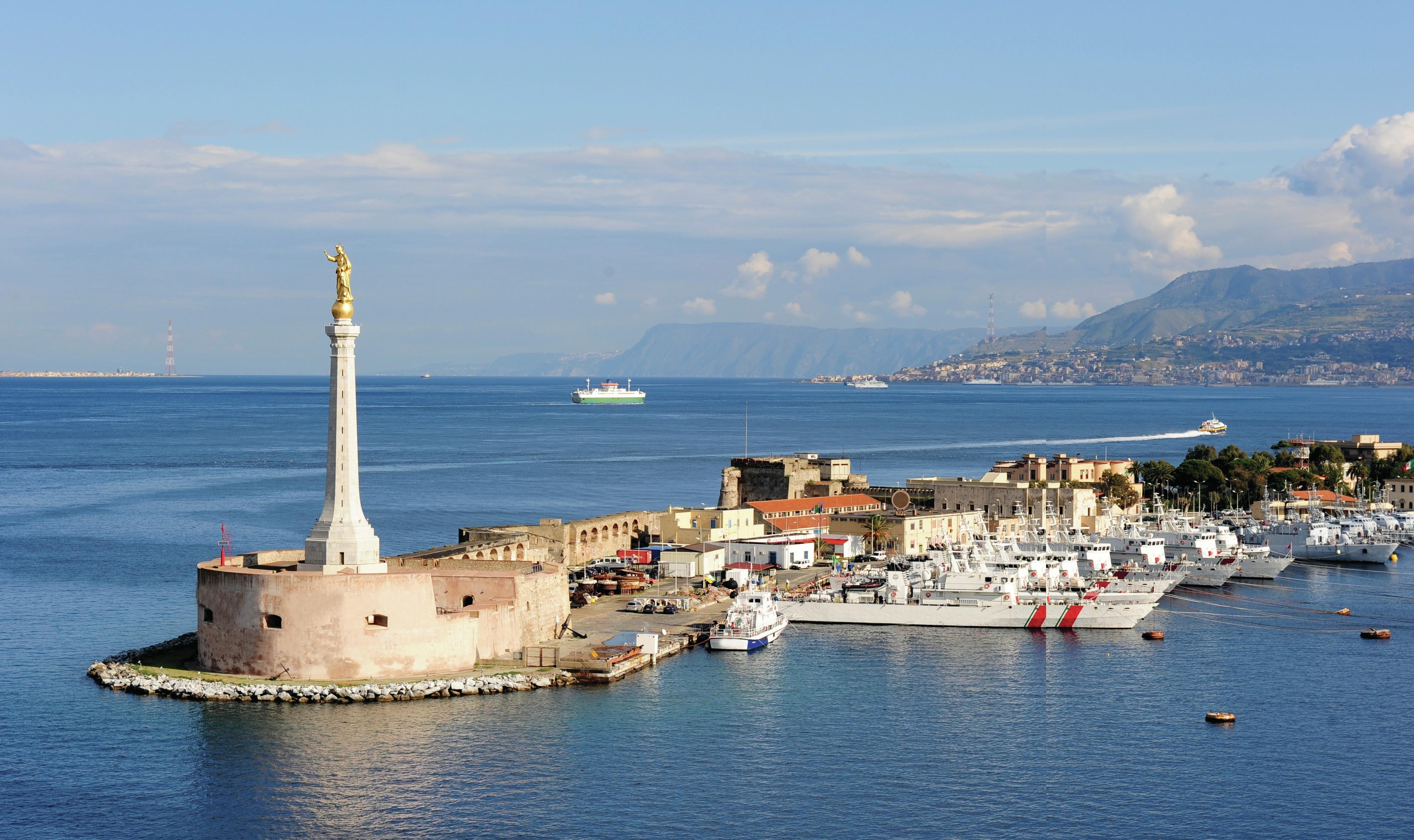
The idea of a bridge connecting Messina, at the north-eastern corner of the island of Sicily, to Reggio Calabria, on the tip of the toe of mainland Italy, is not a new one. The Ancient Romans had plans to bring the provinces together via a bridge, and over the subsequent centuries numerous kings and emperors have dreamed of such a project.
In the modern era, the champion of the project was the late Silvio Berlusconi, the colourful and controversial media mogul and football tycoon who became Prime Minister of Italy. Berlusconi’s efforts were foiled when he was turfed out of office in 2006. Although he returned two years later, the plans were shelved.
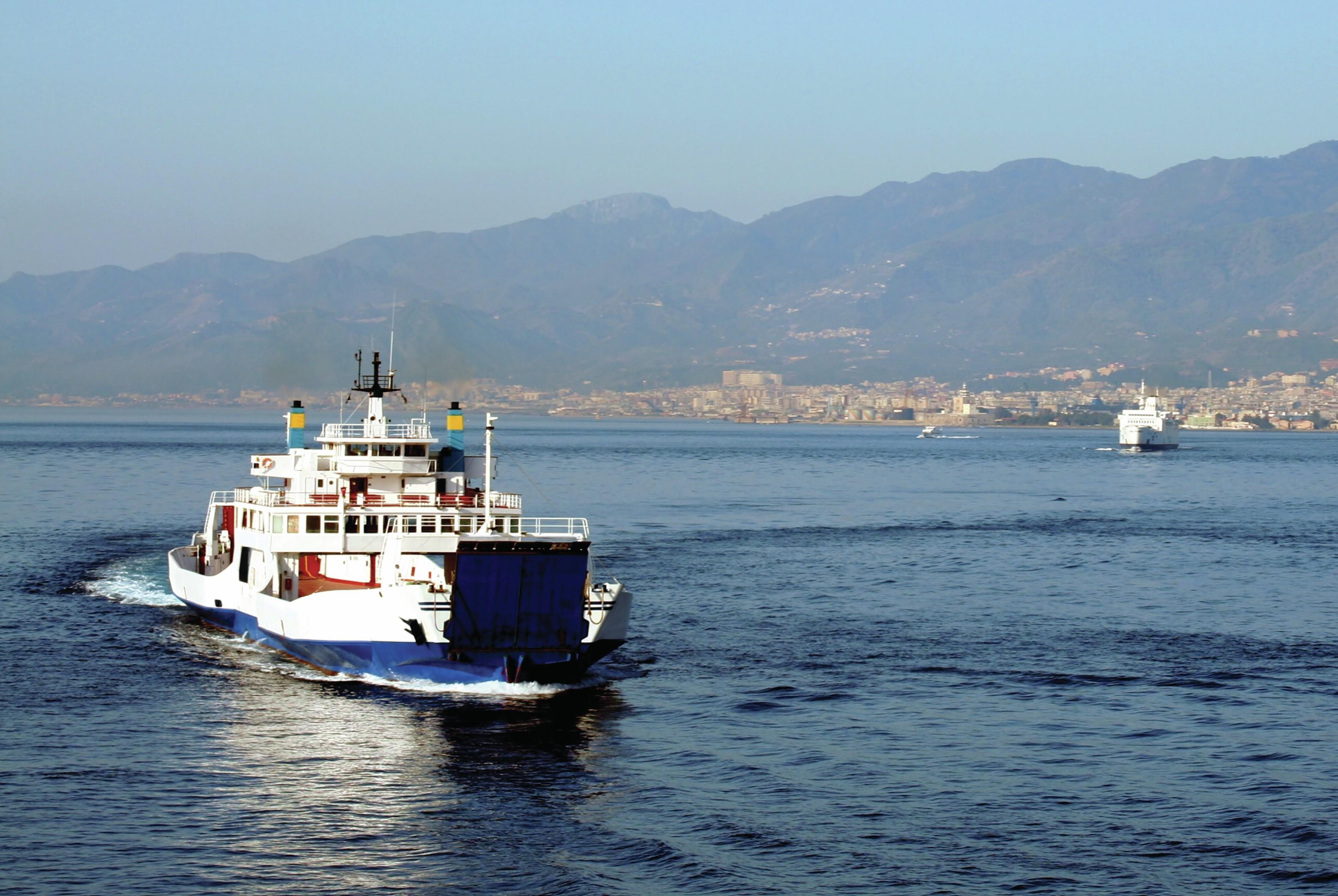
At present, those wishing to make the crossing must still use a ferry which, at its fastest, takes around 45 minutes to get from Messina to Reggio Calabria.
But today there is a new politician who has made it his crusade to bridge the gap.
In recent years, the chief proponent of the Messina Bridge project has been Matteo Salvini, Deputy Prime Minister of Italy and Minister of Infrastructure and Transport in the government of current Prime Minister Giorgia Meloni.
Although Salvini is founder of Lega per Salvini Premier, which itself is the successor to Lega Nord, or the ‘Northern League’, a right-wing populist party generally preoccupied with the affairs of northern Italy, his obsession – arguably his white whale – lies in the south.
Salvini is hoping to succeed where his predecessors have failed, but it is no small undertaking. A design for a possible suspension bridge, approved earlier this year, puts into perspective the sheer scale of the project.
The total span of the bridge would be 3.3 kilometres, with 339-metre-tall towers holding it aloft. At its central point, it would stand 74m above sea level and be 60m wide – enough for three traffic lanes in each direction, a service lane and a double-track railway.
The planned bridge has also been designed to be strong enough to survive a 7.1-magnitude earthquake, the same level on the Richter scale that flattened Messina in northern Sicily in 1908 – the deadliest recorded earthquake in European history. Such a vast structure has proved to be one of the most contentious issues in Italy. As the renewed push to build it has taken shape, protests against the bridge have taken place across Sicily and, according to one nationwide poll conducted in 2018, 53% of Italians oppose it, with 30% in favour and 17% undecided. The reluctance of various Sicilian wine consorzi to share their views on the bridge project with db is indicative of how controversial the issue is – but plenty of others in the industry were eager to express whether they were for or against the Messina Bridge.
The Shipping Forecast
From a logistical point of view, it might seem that a bridge connecting Sicily to the toe of Italy would be highly advantageous, particularly when it comes to the transportation of supplies for wineries, and getting the finished wines (whether bottled or in bulk) back over to the mainland.
Joseph De Maio, CEO of STI Internazionale, which handles imports of Italian wine, believes that a bridge should not be a priority. “Besides the fact that the bridge has already cost Italian taxpayers millions of euros, the main argument is: does it make sense to build this bridge without upgrading the motorways in Sicily?” he asks.
“Most of the trailers collecting goods in Sicily use scheduled short sea services from Palermo to Naples and Genoa anyway,” De Maio continues. “In my opinion, the only major improvement would come from intermodal containers being shipped by rail from Sicilian terminals directly to mainland Italy and Northern Europe.”
What’s more, the view that Sicily should have a better road network before it builds a bridge is a sentiment shared by many wine producers.
Antonio Ciccarelli, PR & communication manager for Tuscanybased wine group Piccini 1882, which counts the 13-hectare Torre Mora estate in Etna DOC in its portfolio, claims that many roads in Sicily are “exactly the same” as they were during the Second World War.
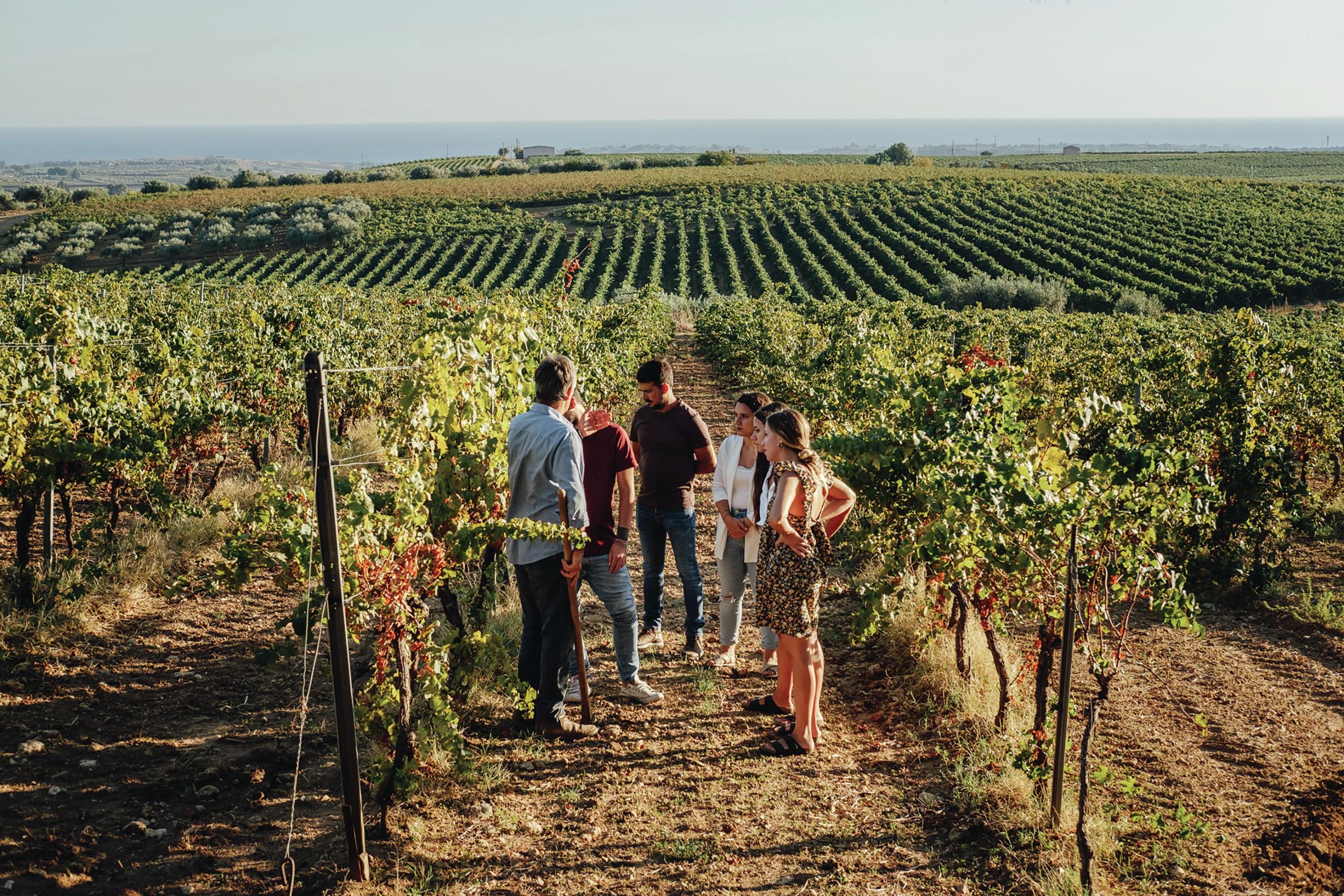
“The real priority for the Sicilian economy is to have modern roads and railways,” Ciccarelli argues. “To move goods by train across the island from Catania to Palermo takes seven to eight hours, and to move goods on the road from Catania to Trapani takes five to six hours. I think all Sicilians would prefer to have better infrastructure on the island than a bridge in one of the most seismically active places in the world.”
However, there is not much optimism that the condition of Sicilian infrastructure will improve. Marilena Leta, of the Tenuta Gorghi Tondi wine estate based in the west of Sicily, goes as far as to call the idea of high-speed trains on Sicily a “sci-fi dream”, adding: “You can understand why even talking about the Messina Bridge seems like a joke to the great majority of Sicilians.”
What’s the point?
If it is a “joke”, then it might well be one without much of a punchline.
Count Laurent Bernard de la Gatinais, president of Tenuta Rapitalà in Palermo province’s Camporeale and a former president of the Assovini Sicilia group of Sicilian wine producers, argues that a bridge would be redundant without an improved road network, and suggests that, while it might be a “fantastic” structure, it would be akin to a “cathedral in the desert”. De la Gatinais believes the costs of the bridge will outweigh the benefits, positing: “Maybe with the bridge you can save 20 minutes on a 15-hour trip. Is it worth it?”
Indeed, that is the €12 billion question. Roberta Urso, of Cantine Settesoli, a cooperative which manages 6,000 hectares of vines (around 7% of the total vineyard area of Sicily), says that there are plenty of “costs and benefits” to consider.
“According to one estimate, it would guarantee an increase in wealth produced on a national scale of €2.9bn per year, equivalent to 0.17% of GDP,” Urso reports. “The bridge would reduce travel times between Sicily and Calabria, facilitating trade and tourism between Sicily and the rest of Italy, attracting new investments and creating jobs, and would help promote tourism in Sicily and Calabria, bringing new visitors. However, the economic benefits of the bridge have not yet been definitively demonstrated.”
Urso also notes that a construction project as monumental as the Messina Bridge “could have a negative impact on the environment” and, from a winefocused perspective, there is one appellation in particular that could be affected: Faro.
Encircling the city of Messina, Faro DOC is not a major appellation when it comes to production – according to the Consorzio di Tutela Vino Faro DOC, it contains only 15 producers, cultivating 25ha of vines and producing around 40,000 bottles of wine per annum. But, while small in profile, it’s a DOC that could be thrust into the forefront of the debate about the bridge.

Land of opportunity
Whereas many Sicilians seem sceptical about the benefits a bridge could bring, Antonio Bonfiglio, of Faro DOC’s Cantine Bonfiglio, suggests it could provide an opportunity for the wine region closest to it: “We are in favour of any work that contributes to the development of southern Italy and to improving the living conditions of its inhabitants, but without distorting our territory, its uniqueness, and giving priority to the needs of our citizens,” he says.
Bonfiglio adds: “The bridge would certainly make logistics easier and reduce time and costs.
“The environmental impact of the bridge would certainly be considerable, but it would not affect the vineyards of Cantine Bonfiglio, which are located south of the city of Messina. I do not see any particular negative effects related to the construction of the bridge, especially since I believe that any spotlight shining on the city would help it in terms of visibility.”
But not all those in Faro DOC are keen on the idea. A spokesperson for the Bonavita winery pulls no punches when they say that they are “absolutely against the bridge over the strait”, adding: “It would not improve the economic and traffic situation of the city, nor would it facilitate the shipment of wine. Rather, it would destroy an already very fragile ecosystem.”
The environmental argument to be made against the bridge is a compelling one. According to research, 4.3m birds migrate through the Strait of Messina every year, with anywhere between 17% and 46% reportedly at risk of colliding with the bridge, were it to be built. How this impact on biodiversity would affect nearby vineyards is not clear.
Enza La Fauci, of the Tenuta Enza La Fauci estate in Faro, describes the bridge project as “undoubtedly very important”, but adds: “Where the bridge is to be built is truly a place of rare beauty, one of the most beautiful places we have. And really the idea of building a gigantic bridge, I must say, does not leave me entirely indifferent.”
Tourist destination
Indeed, while a bridge might make it easier for those travelling from mainland Italy to get to Faro DOC, the structure might yet detract from the area’s appeal as a wine tourism destination, if it proves to be an eyesore.
Nonetheless, La Fauci is not entirely opposed to the idea. She explains: “We need to shed light on this territory. And surely such an important construction could help us.”
All of the Faro estates contacted claim their vineyards and wineries would not be disturbed by any construction work.
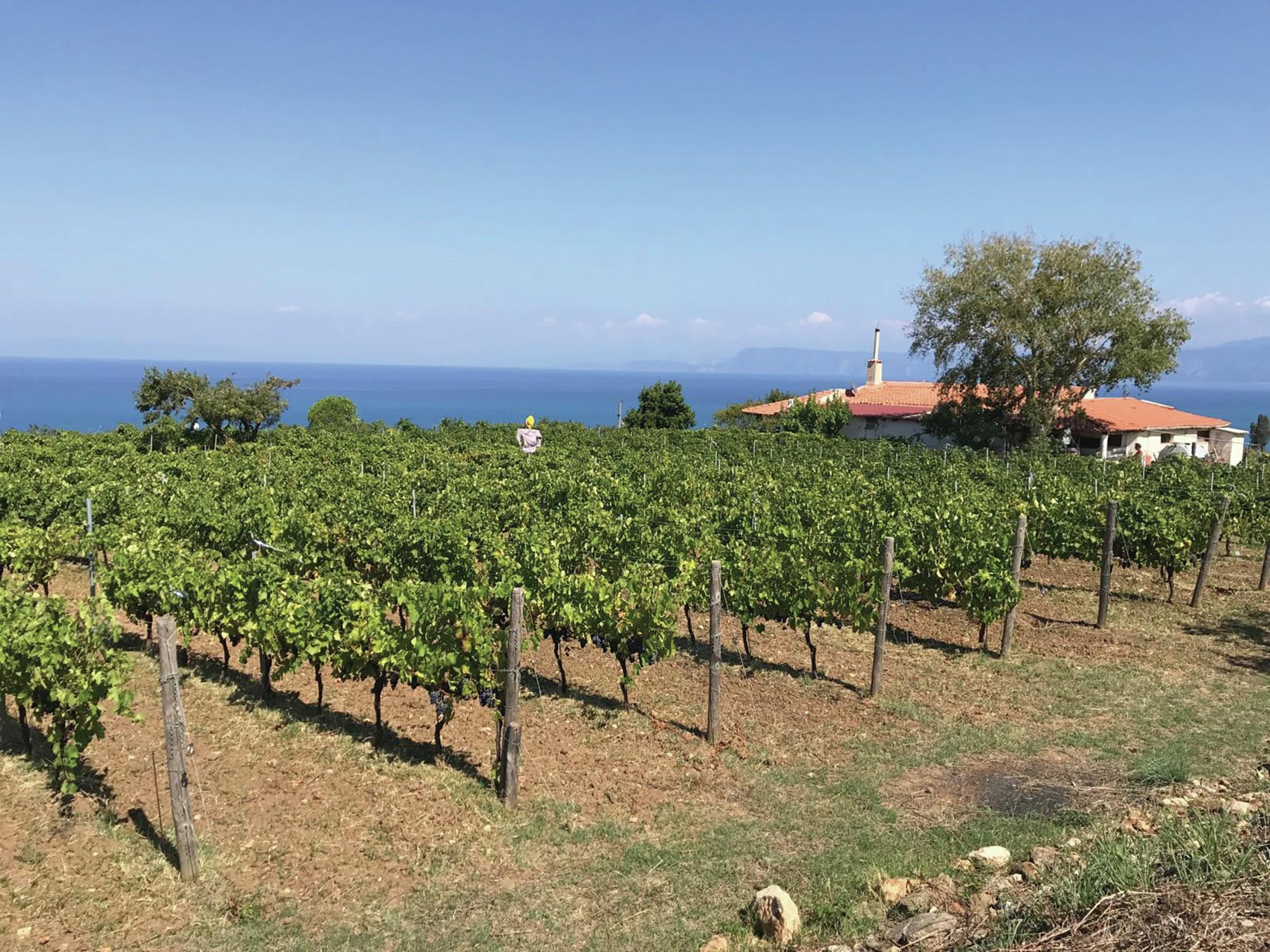
Indeed, as a wine destination, Calabria has plenty of points going for it, but accessibility is not one of them. If Sicily’s roads are, to quote Tenuta Gorghi Tondi’s Leta, “antiquated and neglected”, then those in Calabria are not much better. Tramontana says that the Criserà vineyards – planted with the likes of Alicante and Gaglioppo – would not suffer any negative impact from construction work, since Costa Viola, where the winery is located, is outside any proposed construction zone.
And, regarding the crucial question of whether or not the bridge will ever be built, Tramontana’s response is simply: “We’ll see.”
However, bridges, by their very nature, link two sides – and, while the Sicilians have their reasons for being sceptical both about the need for a bridge and the likelihood of it ever being constructed, Calabrians seem to be a bit more receptive to the idea.
Franco Tramontana, managing director of winery Casa Vinicola Criserà, which is situated only a few kilometres from Messina, but on the other side of the strait, says that he is backing a Messina Bridge, suggesting that it could be “the redemption of our territory”.
Calabria is not a wealthy region. According to 2022 data, a staggering 34.7% of Calabrians are at risk of poverty – by far and away the highest proportion in the country, compared to 22.4% of Sicilians, and the Italian national average of 14%. It is a region that has arguably been left behind by the rest of Italy. While Puglia and Sicily have become booming tourist destinations, producing wines that fill supermarket shelves and pizzeria menus around the world, Calabria is yet to follow suit.
Simply put, Calabria arguably needs investment even more than Sicily does. “There would certainly be many other priorities before the bridge, but if they were to do it, it would be an international attraction and the area would certainly benefit from it,” suggests Tramontana.
Sense of scepticism
There is a prevailing sense of scepticism on both sides of the Strait of Messina about the likelihood of a bridge ever happening. It has been talked about for decades – millenia even. According to some reports, construction could start this year, with work predicted to conclude in 2032, but it seems that not so much as a bolt has been put in place so far.
In the meantime, most in the Sicilian wine industry do not consider a Messina Bridge to be an engineering triumph linking them to the mainland, but rather a colossal folly.
“We have heard about it since we were children, and every time it is like déjà vu,” remarks Leta of Gorghi Tondi.
Sicilians, and Italians in general, have heard it all before.
There is also something to be said for how a bridge could rupture something that is at the very heart of the identity of Sicily, the Sicilian people and the Sicilian wine industry – it is an island.
So much of this identity hinges on Sicily being cut off from the rest of Italy. Many Sicilians would prefer the island to remain a separate entity, so that they can continue to do things as they have always done. As Giuseppe Tomasi di Lampedusa put it in his novel The Leopard: “In Sicily, it doesn’t matter about doing things well or badly; the sin which we Sicilians never forgive is simply that of ‘doing’ at all.”
The Messina Bridge in numbers
• Estimated to cost around €12 billion, although it has been suggested that this could rise to closer to €13.5bn.
• The bridge’s total length would be in excess of 3.6km.
• Between 4,300 and 7,000 workers are expected to be involved in the bridge’s construction.
• Theoretically, if construction were to begin this year, the project could be completed by 2032.
• In addition to trains passing in both directions between the mainland and Sicily, the bridge could hypothetically carry 6,000 cars per hour, with the journey from end to end estimated to take about 15 minutes.
Related news
Liv-ex: AI will 'filter out the noise' to provide more relevant fine wine data


