



Time to take another look at Primitivo?
Puglia’s Primitivo grape variety is shaking off its rustic roots and producing wines that increasingly wow critics and consumers alike. Tom Bruce-Gardyne reports.
VITO PALUMBO has witnessed the slow evolution of Puglia’s wine industry, from bulk to bottle, from the inside. He grew up here, on the family’s Bocca di Lupo estate, which was bought by Antinori in 1998 in its first venture in Puglia, and today he is CEO of the company’s vineyards in the region, which include Tormaresca.
“We were the cellar of Europe,” Palumbo says, describing the days when the region was a vast supplier of anonymous blending fluid. Rich, powerful wines such as Primitivo were pumped north to beef up the likes of Amarone and perhaps the odd famous name in Bordeaux and Burgundy as well. Times may have changed, but he feels something of that old mindset remains.
“I think the problem is that some producers are still doing what they were doing as bulk wine producers,” Palumbo says. “In the 1980s and 1990s, bulk wine was paid by residual sugar and alcohol content, and that’s why a lot of Primitivo was jammy and rustic. But we’re trying to drive a stylistic change.”
Enlightened restaurateurs and independent wine shops appear to be open to this.
“There is hope. When we get people to try our wine, they list it,” he points out, referring to Torcicoda, Tormaresca’s flagship Primitivo del Salento.
“It’s far from the stereotype – there’s acidity, spiciness and balance. It’s quite a successful wine, and I believe the success of Primitivo is so huge, that even if just a niche is of high quality, that niche is quite relevant.”
The Salento peninsula is Italy’s stiletto heel, with Salento DOC on the Adriatic side dedicated to Negroamaro, which accounts for 80% of the 14,000 hectares planted, while neighbouring Manduria DOC, with 3,140ha, faces west and focuses on Primitivo.
In 2020, almost 29 million bottles of Primitivo di Manduria were released onto the market, according to trade body Federvini, an increase of 26% on the year before. With its easy name and approachable style, Primitivo is Puglia’s trump card at present, and certainly an easier sell than Negroamaro, according to winemaker Mark Shannon, who moved here from California via Sicily with his partner, Elvezia Sbalchiero, 27 years ago. He prefers the freedom of Puglia IGT for his A Mano Primitivo, which has been imported by Liberty Wines in the UK since its second harvest.
Primitivo may sound like primitive, but it’s named after the Italian word ‘primaticcio’ – or early, as in ripening. Knowing when to pick is crucial, but not that difficult, claims Shannon.
“For someone like me who lives in the vineyard, you just have to look at the grapes and talk to them. They’ll tell you when they’re ripe,” he says. “And I like cold fermentation. I like to preserve all that flavour in the vineyard.” AMano is fermented at a chilly 15o°C.
At the Produttori di Manduria cooperative, commercial director Giovanni Dimitri says: “We never go over 20o°C, which is so important to preserve freshness and acidity.”
Without temperature control, he reckons fermentation could happily hit 30o C or more. His Primitivo is picked in midto late August: “We start at 4.30 in the morning, and by 11.30 we’ve left the vineyards because it’s too hot”.
Produttori di Manduria is the oldest co-op in Puglia, with 700ha farmed by its 300 members and around 1m bottles of Primitivo di Manduria DOC produced each year. Dimitri says: “Primitivo has become one of the most interesting grapes, commercially speaking, from Italy in recent years.”
He puts this down to the variety’s easy-drinking style, with abundant fruit and light tannins, which makes it much more approachable than the likes of Nebbiolo or Sangiovese.
“In my view, Primitivo is a very flexible variety according to the age of the vines, harvest times and farming,” he adds. “Then, with different winemaking techniques, it is possible to elevate it to medium to top level with ageing in barrels, even if Primitivo is not such a big friend of wood, honestly speaking.”
The searing midsummer heat is tempered by the sea breeze, with the peninsula only 40 miles wide from coast to coast. Climate change is naturally a hot topic. “Like everyone, we’re trying to understand what the future holds, and nobody knows if we’re in the middle of a big wave,” says Dimitri.
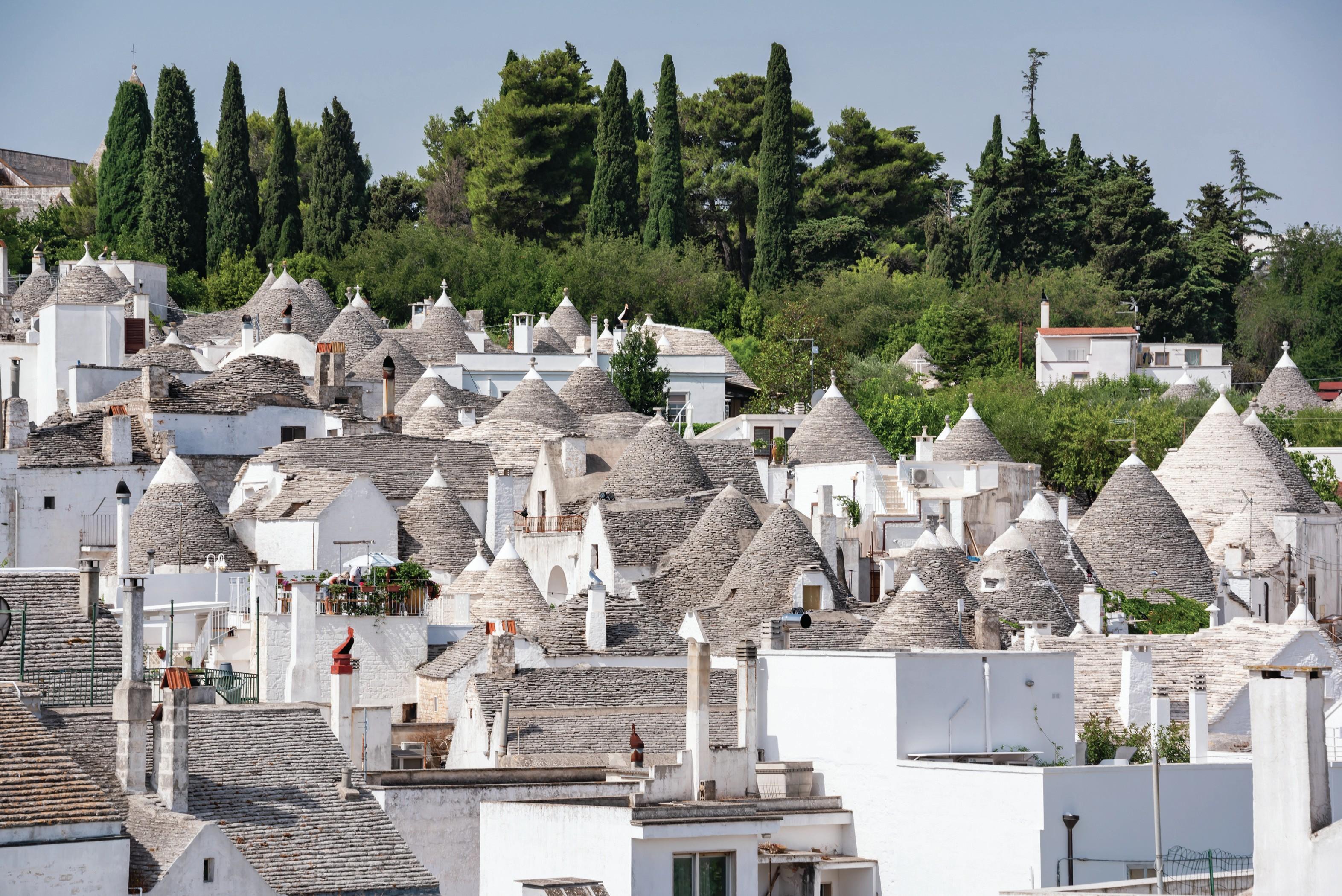
Local character: Primitivo has a strong association with Puglia
Alcohol levels tend to be high, and it is a subject which “really does divide people”, says Sarah Knowles MW, Italian buyer for retailer The Wine Society, which lists Dimitri’s Primitivo.
Partner Content


“There’s certainly a group of our members who would rather have levels under 12.5% or 13%, but there’s also quite a large group of people who are not as bothered about this as perhaps we think.” She also points out: “All the Barolos from 2019/20 were pretty much at 14%–14.5%, as are most of the Bordeaux being released en primeur at the moment.”
Knowles says: “Primitivo was once very much the workhorse, offering great value under £10, but I think that space is being really well catered for by other grapes, like Nero d’Avola.” While quality varies, well-made examples can definitely sell for more, in her view. One example is the Society’s 150th anniversary bottling of Primitivo from Dimitri’s co-operative that sold out, priced at £10.50.
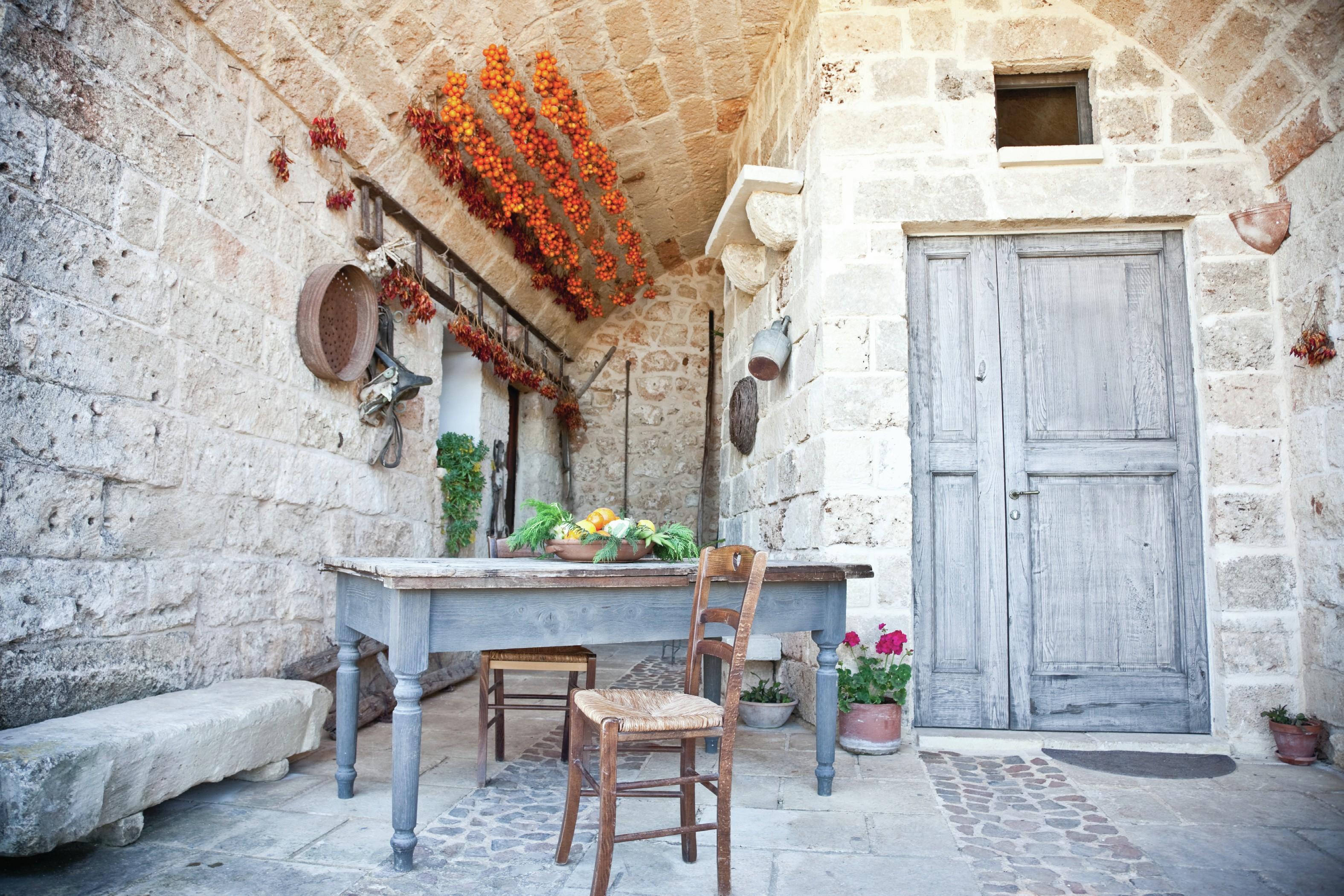
Rustic charm: but Primitivo wines are starting to command higher prices“I think once people find familiarity with Primitivo, they’re happy to treat themselves to a more superior wine, whether it’s a Manduria DOC or a passito,” says Elena Ciurletti, owner of Orion Wines, headquartered in Trento.
To prove the point, sales of Orion’s £12.50 La Masseria del Borgo Primitivo di Manduria DOC at UK supermarket Sainsbury’s are up 47% on last year, while its Terre di Faiano organic Primitivo (£10.99) is reportedly one of the topselling Italian reds in Waitrose.
For the on-trade and independent retailers, Orion produces Lucale Primitivo Appassimento at its Masseria Borgo dei Trulli estate, where it has 32ha of Primitivo vineyards. Encouraged by the success of Lucale, it has just added two more passito wines – Saracena and Mirea.
The craze for drying grapes has spread well beyond the Veneto and Valpolicella, but Primitivo seems an unlikely candidate, being already quite full-bodied and sumptuous. Ciurletti accepts the point, but says: “I still think people are really open to that style of wine, and consumers can’t get enough of them.”
Incredible history
With more than 30 years of making Primitivo, wine entrepreneur Stefano Girelli of TWP Wines is a big fan.
“It’s one of the greatest grape varieties we have in Italy,” he says. “Primitivo certainly has incredible history, heritage and, from a winemaking perspective, it’s extremely flexible. If it’s trained properly, picked at the right time and vinified the right way, you can go from a rosé to an intense red, capable of ageing.”
Giovanni Dimitri says: “In Puglia, nature is very generous,” and Girelli agrees, saying that even the bush-trained alberello vines he favours can easily yield 60hl/ha–70 hl/ha. To temper Primitivo’s natural exuberance, he likes to keep the maceration relatively short, and says you can choose whether to keep the pips, depending on the vintage and whether “they’re a little green, or toasty from fully-ripened grapes”.
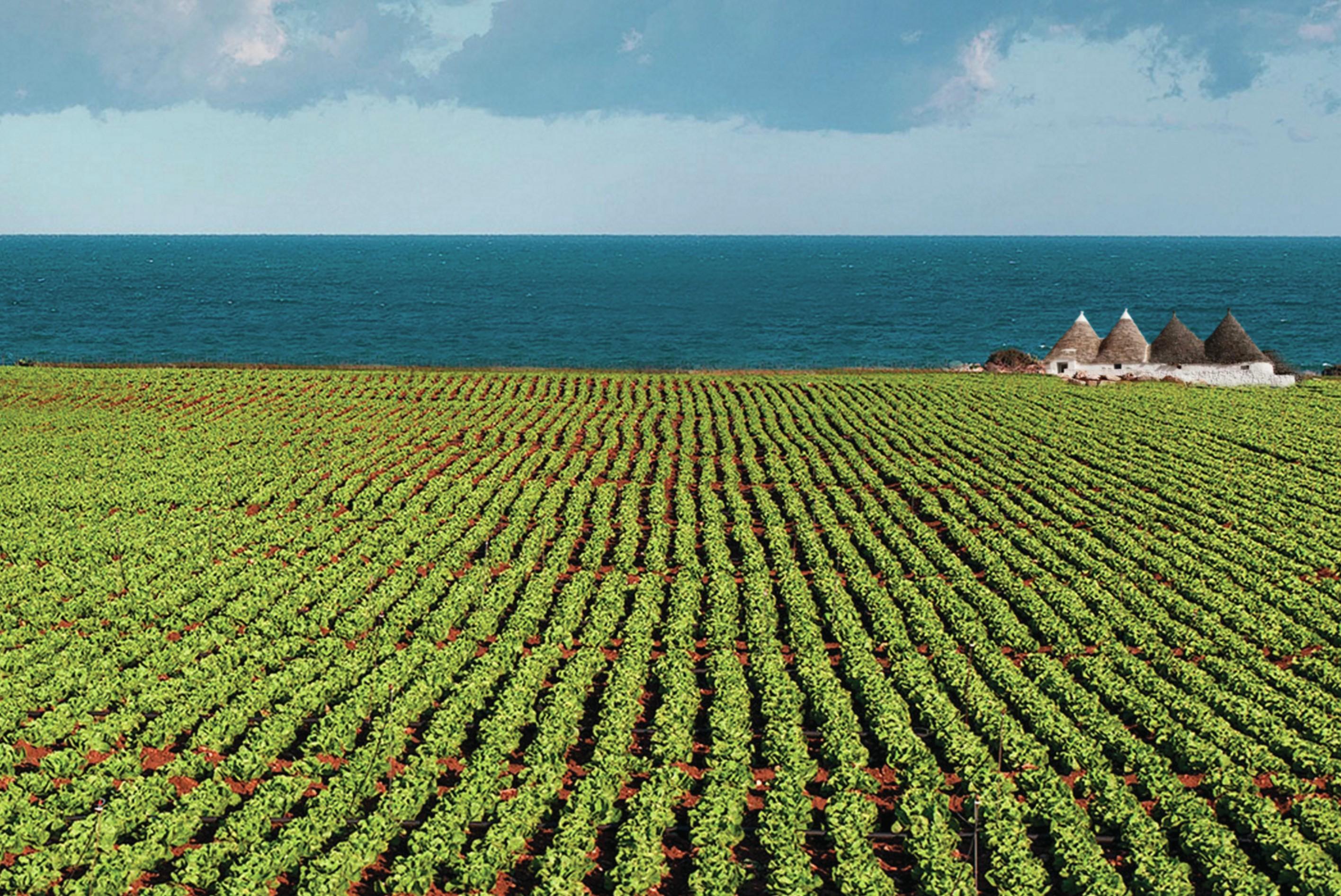
Sea view: maritime influence is one of the keys to premium Primitivo
“I think there’s a huge amount you can do in winemaking around management of the skins, tannins and sugar levels of Primitivo,” says The Wine Society’s Knowles, “and, in the vineyard, by trying to shade the bunches a bit more.”
The cumulative effect adds freshness to these often quite voluptuous wines. At the Tinazzi winery, where the top wine is Imperio LXXIV Primitivo di Manduria DOC, winemaker Antonio Testa says: “We can limit the last pruning to avoid sunburn and dehydration, and winter pruning helps manage the grape load per plant which, in turn, affects sugar level.”
At Masseria Altemura, which Zonin1821 acquired in 2000, director and agronomist Antonio Cavallo explains: “From mid-August we get some dried berries, so we try to keep the western side of our vineyards shielded, and we’re careful in the winery not to be too aggressive on the skins.”
Half the estate’s 155ha are given over to Primitivo to produce Sasseo, a Salento IGT, and its single-vineyard flagship wine Altemura, a Primitivo di Manduria DOC with only 20,000–25,000 bottles released each year.
Like others, Cavallo worries about the average quality and consistency of Primitivo, and says: “At the moment they’re discussing in the consorzio about tightening the rules.” But, with a wide variation in terroir and different priorities for big producers like Zonin1821 compared to much smaller players, finding common ground regarding quality levels and pricing won’t be easy.
That said, there is a new generation of winemakers coming through, and this gives Giovanni Dimitri real faith in the future.
“Every day I try a new wine from these new guys, and I’m so happy when I have a good one,” he says. “We’ve started to do in Puglia what they started doing in Tuscany in the 1960s and 1970s, and today we’re beginning to harvest the fruit of this change of mind.”
Vito Palumbo agrees. “In general, I’m optimistic about Puglia and Primitivo,” he says. “A lot of the younger generation are coming back here to invest in tourism and in wine, and I’m seeing a lot of small wineries run by young people.”
Related news
Zamora Company to distribute Bottega sparkling wines in Spain
Cabernet Franc on track to become the official grape variety of New York State


