



The hop water trend gathers momentum
With new alcohol-free categories such as hop water taking off, Jessica Mason investigates the halo effect it could have on the beer sector.

Utter the words “hop water” to anyone in the drinks industry and you are likely to be met with the assertion that this is “just another fad like hard seltzers”. But where hard seltzers have faded after huge initial success, hop waters may genuinely be able to thrive. In a market saturated with copycat craft beers and an increasingly enticing array of low and no-alcohol options, there is one crucial thing hop waters have nailed that hard seltzers didn’t: they taste great.
Hop water is, essentially, sparkling water infused with hops, which makes it a non-alcoholic, zero-calorie drink, but also one that isn’t ‘trying to be a beer’. Survey findings released in January 2024 by alcohol-free beer brand Lucky Saint revealed that drinking habits are changing. The responses, gathered from around 2,000 UK consumers, revealed that nearly two in three people (62%) now feel comfortable going to the pub and not drinking alcohol.
The step change we are seeing in behaviour has become a reflection of the moderation mindset that has swept the globe along with wellness trends, with the pandemic amplifying such considerations in the public consciousness. While the world stood still witnessing the horror of Covid-19, many people made a silent pact with themselves to prioritise self-care. Wellness products soared as, on a global scale, we began to grapple with a desire to feel more in control of our own health. And, as the next generation tentatively took to adulthood while the hospitality sector remained locked down, new social norms were created.
Club Soda founder Laura Willoughby MBE points out that “there is a unique opportunity to tap into customers’ health spending decisions” and identifies that, even if non-alcoholic drinks such as hop water are not solely targeted at nondrinkers, the element of control that people are now enacting over their own drinking habits is changing the kind of products they seek. Willoughby explains: “Choosing what you drink when you are drinking [alcohol] is also an important part of the narrative.”
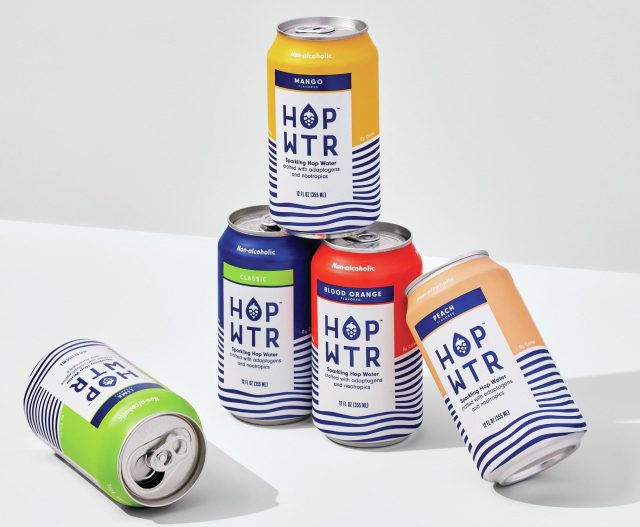
Echoing this, Jordan Bass, CEO and cofounder of HOP WTR, which is the largest hop water brand by market share and is available in more than 8,000 retail stores across the US, says: “Consumers are increasingly turning to hop waters before, during and after consuming full-strength alcoholic beverages. In fact, 58% of consumers switch between low/no and full-strength drinks within the same occasion. This shift highlights evolving drinking habits and the rising demand for a variety of beverage options that cater to different preferences and situations.”
Can hop water triumph in the UK where hard seltzers did not? Perhaps the reality is that British consumers weren’t ready for hard seltzers, whereas, when it comes to craft beer, Brits are already smitten. The progression to hop water seems a more natural fit.
Sheffield-based Abbeydale Brewery is one UK brewer to have entered the world of hop water. The company’s marketing and communications manager, Laura Rangeley, describes its hop water as “a beer-adjacent product” and explains: “It’s relatable to beer drinkers and uses ingredients they are familiar with – there’s that instant level of connection which a seltzer doesn’t have.”
After all, we often select drinks that we feel reflect our identity or values; the brands that say a little something about who we are. Could hop water be considered the soft drink of choice for beer fans? Northern Monk head brewer and cofounder Brian Dickson agrees, and says he thinks that “the concept of hop water is certainly easier to explain to the consumer”. As the Leeds-based brewer points out, there is no denying that “seltzers have been popular in the US, but less so in the UK”.
The hop water category, on the other hand, which has grown by 83% in the US in the 52 weeks ending 20 April 2024, is already showing promise in the UK. While it is still in the early stages of seeding into the market, the number of brand owners in the category is already nearing 20. But there is plenty of potential to shape the global future of hop water. Dickson observes that hop water is “self-explanatory from the name”, which means “you can build the story and concept further after that”. 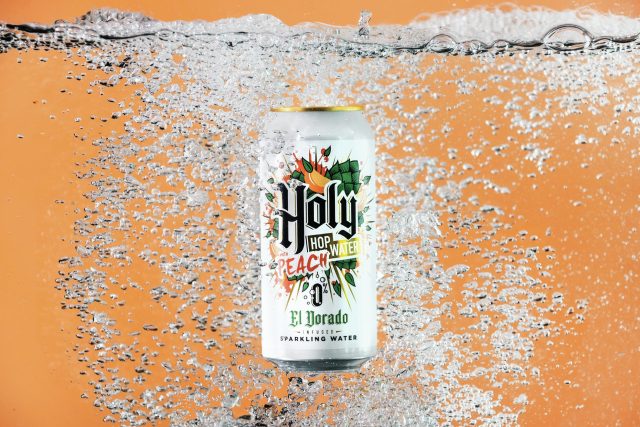
There are, of course, all sorts of reasons behind hop water’s rise in recognition. After whispers began in mid-2023 of brands working on hop water products, it has only been in the past six months that the sector has started to make some real noise about hop water, and its potential for the craft beer industry. If we consider the success that non-alcoholic beer is already experiencing, then hop water is surely an extension for the market that delivers very little risk.
Speaking at the Stella Artois brewery in Leuven earlier this year, Jason Warner, Anheuser-Busch InBev CEO Europe zone, pointed out that “Europe represents US$3 billion-worth of value in terms of non-alcoholic beer, and it has a very healthy growth rate”.
Partner Content

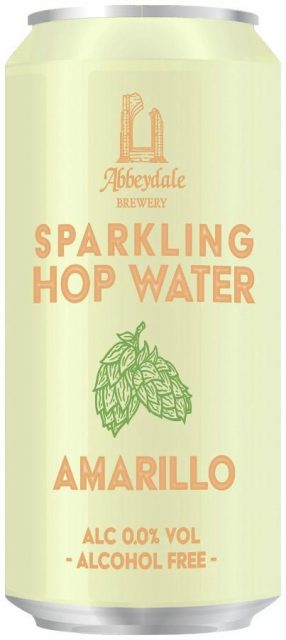 That’s one of the reasons behind the beer giant’s investment into its zero-alcohol beer brand Corona Cero, which is a sponsor at the Olympic Games in Paris this year. From AB InBev’s standpoint, the brewer plans to take full advantage of the non-alcoholic trend, which is, by Warner’s own assertion, “a massive opportunity and still growing”. But ask AB InBev about hop water and the company has no current plans to release one. However, hop water certainly makes sense for a brewery such as Abbeydale in Sheffield. There, Rangeley admits that creating a hop water instead of a lower no-alcohol beer works because the team is “able to use existing kit and ingredients”. She goes on to say: “This meant we didn’t need significant investment or extra space, which isn’t something we’re hugely blessed with in our current premises, and we could play to our existing strengths, using ingredients and equipment we’re already familiar with in a new way.”
The journey was a similar one for Track Brewing Co in Manchester which began business located beneath a small arch under Manchester Piccadilly station in 2014 before relocating to a new site in 2020. Hop water simply made sense as the next step. Track Brewing Co events and creative manager Stefan Melbourne says he considers hop water well-placed within craft beer because “it’s accessible to anyone and everyone” and is “a refreshing alternative to having a beer”.
According to Melbourne, Track has seen a big pick-up with members of its running club using hop water as a post-run drink, and he has seen first-hand how some of the brewery’s regular customers will “pick up a four-pack of hop water alongside our other beers”.
That provides proof, he believes, that there is scope for hop water “to evolve into other areas of the market”. But where will it go next? Into cocktails? It is still early days for hop water, but the journey for the category feels fresh and exciting. 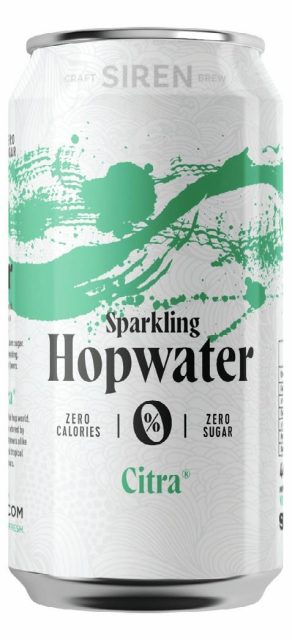
Berkshire-based Siren Craft Brew’s head of marketing Andy Nowlan says that, to some degree, it is the simplicity and transparency of hop water that has seen it sail through extensive taproom trials. When it comes to Siren’s offering, he explains that it’s “a sparkling water, infused with hops [and made] using the same dry-hop techniques that add flavour and aroma to our beers. We’re using those same fresh, aromatic hops to add a delicious and refreshing dimension to water”.
What most surprises people, according to Nowlan, is that hop water is so “clean and refreshing, and expresses a completely pure hop character”. Plus, he adds, in cans “there is no interaction with any other ingredients or biotransformation”, which is reassuring because this limits any concerns over bacterial issues and contamination. In terms of what people love about hop water, Nowlan considers that they’re already familiar with the scent of hops and have positive associations with it. As he explains: “If you took the oily, resinous residue of fresh hops between your thumb and index finger, that’s the aroma from hop water. If you’ve not smelt fresh hops before, it’s an addictive scent like nothing else”.
But that’s not all hop water offers. It also has structure and balance. Chris Furnari, senior communications manager at Athletic Brewing Company, which makes exclusively alcohol-free drinks, points out that “hops act as a natural flavour stabiliser in all beverages” and “help to enhance the overall sensory experience”.
Furnari describes it as uncanny that a “few plant-based ingredients can amplify a zero-calorie sparkling water quite like hops”. Perhaps this is another reason why the category offers so much promise. Athletic Brewing Co’s hop water, named DayPack, has followed the success that the business has seen from its nonalcoholic beers. But, as Furnari asserts, while hop water has taken off in the US, “that growth has now slowed considerably to just 25% over the last four weeks, according to NIQ. If category growth continues to slow, hop waters will remain a relatively small sub-segment compared to non-alcoholic beer, for example”. The sticking-point, he says, is that “hop waters are primarily merchandised alongside non-alcoholic beer” – and this could be a category misstep. Furnari suggests that the category could potentially expand further “if these offerings were sold in the sparkling water aisle” instead.
The suggestion that hop water could begin to cannibalise beer sales has been strongly refuted by the breweries creating these products, who have watched their core audience expand their drinking repertoires, and in some cases stay longer in bars and pubs thanks to the availability of alcohol-free and low alcohol products. Hop water is already being used by some people to alternate between rounds of beer as a way of managing their alcohol consumption. Hop water may also have a halo effect on beer sales by introducing more people to the ingredients used in beer, as well as bringing consumers up to speed with different hops and each of their aromas.
As any new trend develops, a fair amount of cynicism often prevails and critics question whether it’s ‘all hype’. But one resounding element that appeals about hop water in both the US and the UK markets is that it seeks to support, rather than replace, the wider craft beer industry; a product that was created to retain the excitement, flavour and independence inherent in the beer sector.
For all of the world’s post-pandemic losses, reshuffles, closures and myriad challenges, our shift in drinking preferences has, if anything, made us fussier, and led us to crave better options that do not compromise our health. For all of these reasons, hop water is answering consumers’ needs head-on. By reigniting their interest, not leaning on sugar and educating about different hop varieties, the hop water category is showing that beer drinking is evolving to become more of a conscientious pursuit.
Will more breweries launch their own hop water products to get a piece of the action? Sure. Will Citra, Idaho, El Dorado, Amarillo and Cascade all become better understood for their tropical fruitiness, gentle aromatics and sunshine flavours? Without a doubt. And should pubs, bars, taprooms, supermarkets and bottle shops begin stocking hop waters as soon as they can to capitalise on the trend? Absolutely.
Related news


