



Golden ticket: How Chardonnay became Califonia’s secret weapon
Decades ago, the mantra among wine fans was ‘anything but Chardonnay’, but today collectors are digging deep for the most luxurious expressions of this grape variety, writes Roger Morris.
“CALIFORNIA CHARDONNAY has struggled of late, declining between 9-10% in the last three years,” says Michael Bilello, head of US beverage alcohol sales tracker SipSource.
However, that drop becomes significantly lower the higher up the price chain you climb, with the luxury Chardonnay segment seeing a dip of just 4.4%.
Producers of premium California Chardonnays retailing for between US$50 and US$100 per bottle, and often well in excess of this, profess that they aren’t concerned about sliding sales. The market, they say, has merely hit pause rather than begun an irreversible plunge.
One such optimist is veteran Sonoma wine producer Paul Hobbs, who has just purchased a six-hectare vineyard along the rugged West Sonoma Coast, where he plans to grow grapes for his portfolio of top-end Chardonnays.
Julien Howsepian, winemaker at critically-acclaimed producer Kosta Browne, makes superb Chardonnay from his Russian River Valley and Anderson Valley estates. He, too, is considering adding extra sources for his premium Chardonnay.
“I’m very interested in making a Chardonnay from Santa Cruz, probably starting off by adding one to our most limited Observation series,” he says, referencing a collection described as being “a winemaker ’s playground” due to the “flexibility and ingenuity” it affords in the cellar. Wines in the Observation series start from around US$149 per bottle, giving a good indication of how the new Chardonnay might be priced.
Matt Sands produces only one white wine among a cellar of reds at Alejandro Bulgheroni’s Napa Valley estate. “I grew up with Chardonnay,” says the New Zealand native, “and we needed a white wine here to serve guests, so now we get the best grapes from Ritchie Vineyard in Sonoma for our Lithology Chardonnay.”
Guests get to enjoy a white wine rated by critics in the mid- to high 90 points, and priced at a cool US$150 per bottle.
Niche market
Luxury Chardonnay is undoubtedly a niche market. In spite of the grape’s ubiquity, SipSource says its two highest price tiers account for only about 2.4% of California Chardonnay production. So how is it that so many brands still sell these wines on allocation only, or directly to consumers via difficult-to-get-on mailing lists?
Mark Coleman is purchasing director for Polaner Selections, which distributes luxury California Chardonnays including Kongsgaard’s French oak-aged Napa expression, Littorai’s single-vineyard, organic offering and Gemstone’s handharvested wine, as well as importing grand cru white Burgundies. He sells most of his Chardonnay on allocation.
“Overall, premium California Chardonnay is a still a strong category, but it is producer-dependent. People tend to stay with the ‘tried and true’,” Coleman says. “It’s a challenging market for newcomers, as there is already a well-established group of producers that are well-known, with a good record. Given the high price points of these Chardonnays, most buyers tend to invest in known entities.”
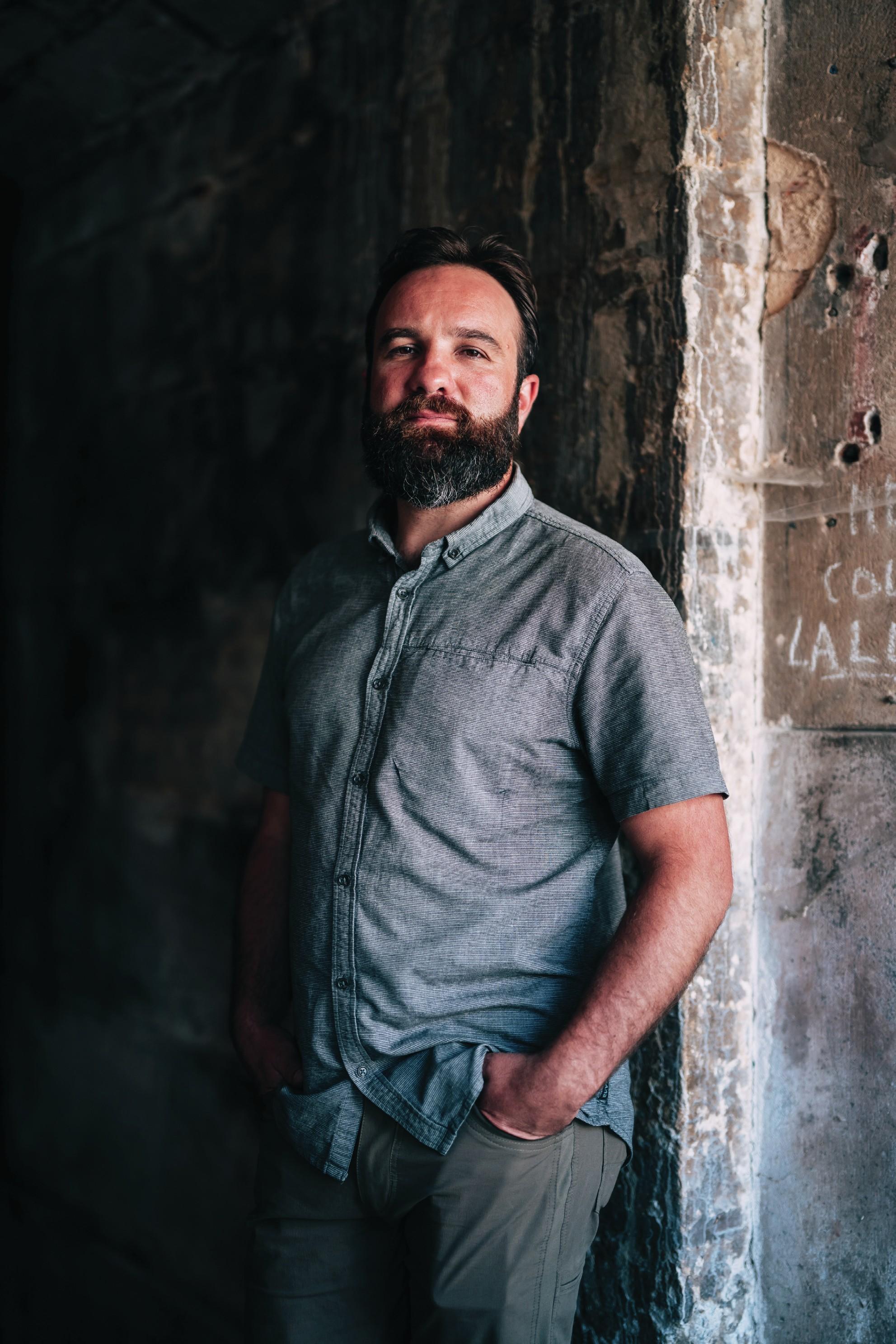
Photo: Albin Durand: Kosta Browne’s Julien Howsepian
With that said, it is difficult to bet against Chardonnay at any level.
In the 1980s, there was a surprising, industry-wide rebellion against California Chardonnays, especially the big, fruity, buttery, heavily-oaked expressions that were the industry darlings at the time – in keeping with the big, bold red wines of that era. The popular cry in the industry was as simple as ABC – “Anything But Chardonnay.”
In spite of this damning rhetoric, the ABC phenomenon appears to have been blown up in the media much more than in real life. In 2023, for example, there were 652,754 tons of Chardonnay crushed in California, according to the state’s official Grape Crush Report, almost the same quantity as that processed in 2010 and in 2000, and certainly more than the much smaller 286,000 tons crushed in 1995.
The latest Chardonnay crush even exceeds that of Cabernet Sauvignon, the second-largest variety crushed, at 646,941 tons. Chardonnay’s closest competitor for both low-end and premium white wines, Sauvignon Blanc, was 162,765 tons, or about one-quarter of Chardonnay’s total.
An equally telling group of statistics – one that reveals how grape growers are ‘guesstimating’ expected future wine demand – is the annual hectarage of new vineyards planted in the state of California.
Those figures show that, over the past decade, growers have annually planted about 1,000–2,000 new acres (404–809 hectares) of Chardonnay vines. In 2019, the last available year reported, there were about 90,000 acres (36,000ha) of fruit-bearing Chardonnay vines. Sauvignon Blanc, while gaining, stood at 15,678 total acres (6,000ha).
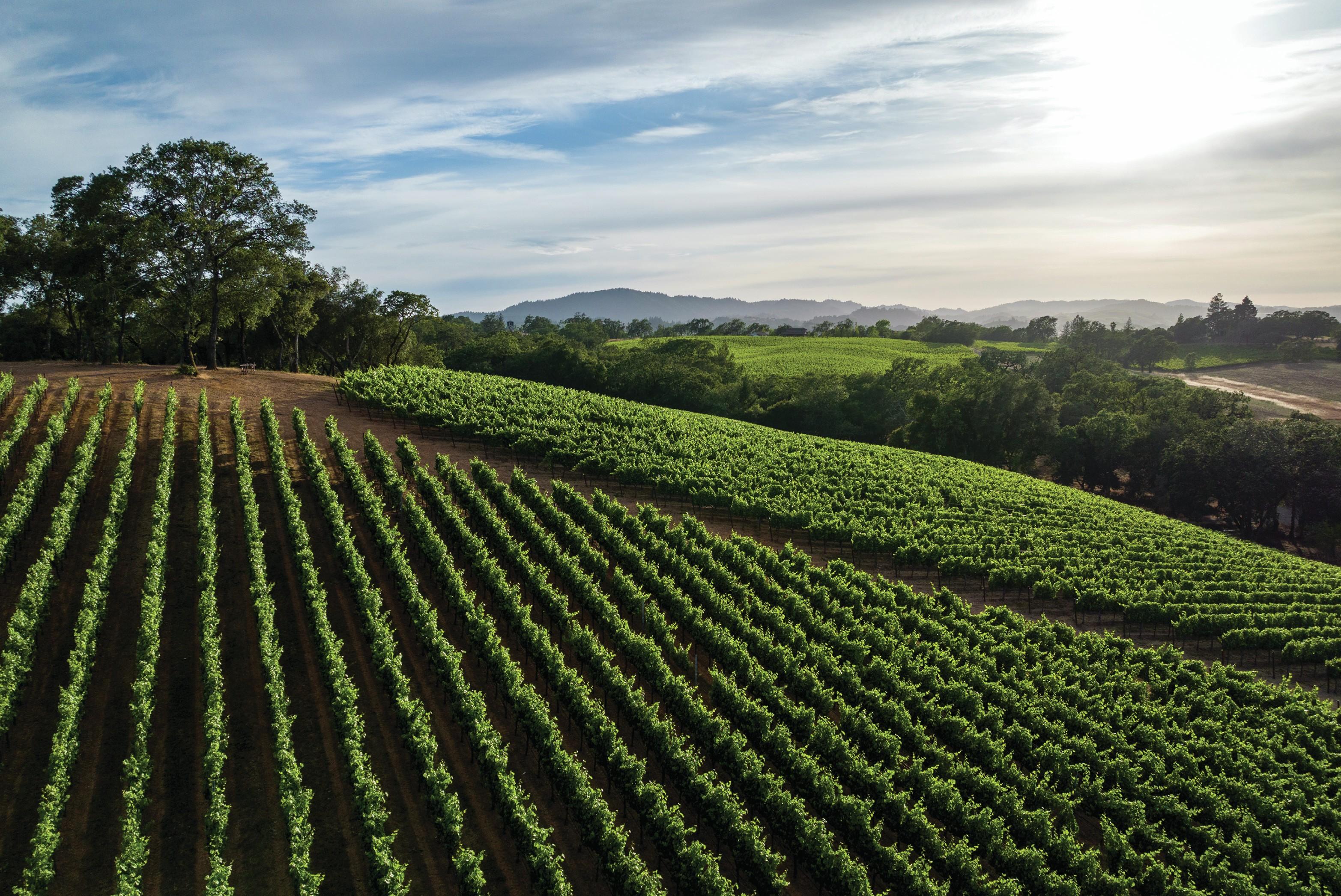
Photo: Rachid Dahnoun: Kosta Browne’s El Diablo vineyard in the Russian River Valley
So California growers are still planting Chardonnay, and sales are still faring well in the upper echelons of the US market. Why is this?
Firstly, the quality of premium California Chardonnay is excellent, and excellence is not a wavering trend. Look at annual wine media ratings and there will be dozens of California Chardonnays receiving scores in the mid- to high 90s, probably more so than any white wine group outside of Burgundy. Secondly, Chardonnay has likely profited from the “Sideways Effect”.
When the 2004 movie Sideways sparked a huge, continuing leap in sales of premium California Pinot Noir (at the expense of Merlot), those producers who were growing Pinots were almost always producing Chardonnays as well, buying or growing the best grapes from the best terroirs. The fact that California Chardonnay shares similar characteristics to white Burgundy but is much more affordable also helps.
According to Doug Frost MW MS, restaurants “continue to move a lot of white Burgundy for those who aren’t scared off by the prices, as well as domestic Chardonnay for those who are”.
Most California producers of luxury Chardonnay ape Burgundy producers in as much as they make multiple wines from multiple vineyards. Connoisseurs and collectors are thus tempted to compare the same grape variety from multiple vineyards produced by the same winemaker – arguably the truest way to evaluate terroirs.
Ryan Zepaltas, winemaker and general manager of Russian River Valley producer Copain, says that, within California, “there is a great comparison between grapes from the Sonoma Coast and Anderson Valley – both cool, but dramatically different climates. Sonoma Coast has a thin fog because of the altitude, and more UV, while Anderson Valley has thicker fog and is slower-ripening – about three weeks later. I think of Anderson Valley’s thicker skins as being ‘al dente’.”
Chardonnay also ages well – an important requirement for collectors. “When we used a higher amount of oak toast, it accented the grape’s fruitiness but worked against its ageability,” Paul Hobbs, owner of Paul Hobbs Winery, says.
“We changed that, since ageability is the mark of a great white wine.”
Another boon is that global warming, it seems, is not a pressing issue for California Chardonnay. Although the Sunshine State’s interior valleys are very hot, along the frigid Pacific the breezes are cool and the fogs limit the amount of sun to which grapes are exposed, whether it’s the Central Coast, the Sonoma Coast, Mendocino County or the lower Napa Valley.
And what about those buttery Chardonnays? They haven’t disappeared, but they do tend to congregate in the premium price bracket. However, even among luxury wines with minerality and lean acidity, there is often a dollop of toasty fruit in the finish.
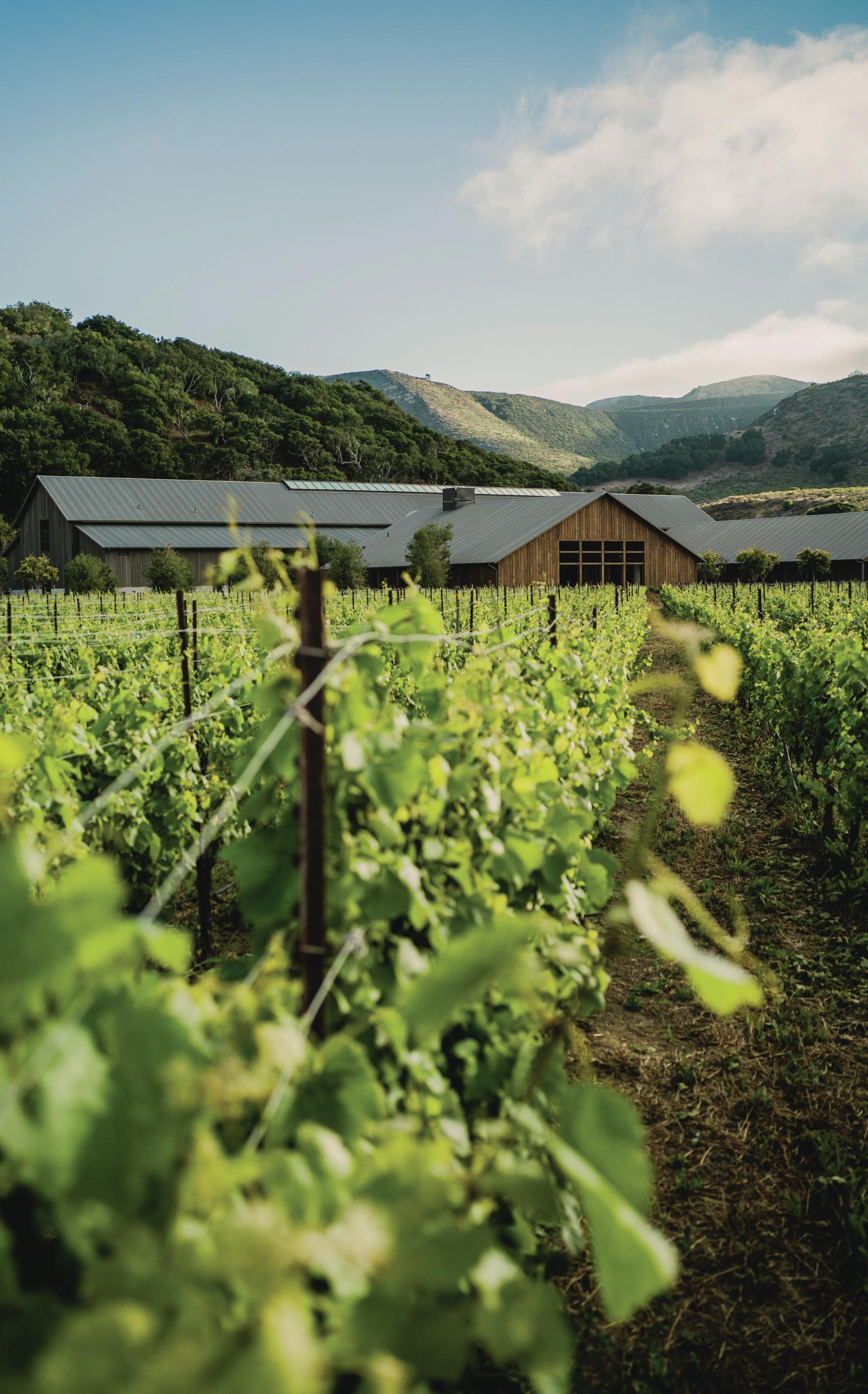
The Hilt is working with Chardonnay’s Musqué clone
Devil in the detail
It is one thing to want to be on the same wine lists as the best Burgundies, but another to produce wines mentioned in the same breath as the likes of Montrachet and Meursault.
“I use whole cluster with no added water or acidity. I may or may not inoculate with yeast,” says Guillaume Boudet, winemaker at Hyde de Villaine, the Napa producer owned by Larry Hyde and Burgundy’s Aubert de Villaine. “We use about 20–25% new oak.”
Lawrence Wine Estates produces luxury Chardonnays at its Stony Hill, Haynes Vineyard and Heitz Cellars wineries, and CEO Carlton McCoy Jr. says: “We want texture, but lightness and brightness. We can farm for that. We can age in the cellar on the lees. We can add more tannins and more texture without picking too early.”
John Conover, the PlumpJack partner in charge of production at Odette and PlumpJack, says a vineyard mix is important to Odette’s structure.
“Part of Lee Hudson’s vineyard is planted in the Heritage Shot Wente clone,” he explains. “As the regular berries ripen, the shot berries – called ‘hens and chicks’ – develop pure acidity, and the resulting wine has both richness and acidity.”
Matt Dees, winemaker at The Hilt in the Sta. Rita Hills, is adding more of the Musqué clone to his vineyards. “It’s been identified as Chardonnay, but it looks golden and has lenticels – those little dots on it that look the ones on Riesling,” he says. “It is just so perfumed, [with] a musty aroma almost like jasmine. Its acidity is a little lower, which isn’t a problem for us.”
At Kosta Browne, Julien Howsepian picks early, treads by foot before crushing, and does almost 100% barrel ferment with 20% new oak.
“We build richness with the lees,” he says. “We want the wine to be like a bell curve – bright and crisp on entry, a generous mid-palate, then a crisp finish. Sometimes if the wine is too crisp we will allow a little more residual sugar, but just a half or quarter gram.”
Those in the wine trade are not planning for a drastic change in sales for luxury California Chardonnays.
“I’m actually moving to add more Chardonnays to my wine lists for springtime,” says Frost, who is a long-time sommelier for Kansas City restaurants. “We haven’t focused enough on Chardonnay sales, even though we always have one white Burgundy and one American Chardonnay by the glass at all times. I think we need more.”
As prices of white Burgundy keep rising due to limited availability, consumers are likely to step up the search for alternative whites, favouring wines like medium- to high-end Cali Chardonnays.
“Most of our customers, whether restaurants or wine stores… even if things are slow, they still ask if they can take an allocation of Chardonnay for the next year,” says Polaner Selections’ Coleman.
Once a retailer or consumer gains access to California’s top-end Chardonnays, they are certainly hesitant to let their access to them vanish.
Related news
Château Galoupet puts sustainability at the heart of rosé
The winery betting on the ‘next chapter’ for cool-climate Australian wine
Goedhuis Waddesdon: ‘there is appetite for fine wine among the younger generation’


