



Uncharted territory: a deep dive into mountain wines
With no one-size-fits-all definition of high-altitude wine, Eloise Feilden explores what mountain viticulture means for different people on different slopes.

CLIMBING THINGS is in our nature. We climb trees as children; build treehouses; clamber up hillsides; hike; go bouldering.
More than 6,000 people have successfully climbed Mount Everest, the world’s highest peak. Many more have attempted it and failed.
So why would winemaking be any different? Humans are natural explorers, and when it comes to hunting down new winemaking terroir, the only way is up.
High-altitude wines, often also technically considered mountain wines, are no new feat for some. “Both Chilean and Argentine producers have been planting at altitude for many decades,” says Barbara Drew MW, content officer at UK merchant Berry Bros. & Rudd, “and some of the most exciting wines from this part of the world come from vineyards at more than 1,000m above sea level.”
Both countries benefit from the influence of the Andes mountains, with their steep slopes and stony soils. Now well-versed in mountain viticulture, Argentina’s Terrazas de los Andes began making high-altitude wines in the 1990s after discovering Finca Las Compuertas, a Malbec vineyard planted in 1929 with ungrafted vines, nestled in the district of Las Compuertas, Luján de Cuyo, at 1,070 metres above sea level. Once on the path up the mountainside, Terrazas de los Andes simply continued its ascent. The Moët Hennessy-owned winery planted Finca Los Castaños, nestled in Paraje Altamira, in the Uco Valley, at 1,100m, in 2006.
Then came Finca Licán, planted in 2007, located in Los Chacayes, at 1,200m. And finally, Finca El Espinillo, planted in 2008 and cultivated at 1,650m in Gualtallary, which currently stands as the highest productive vineyard in the region.
Climbing further and further up the mountain may seem like the most likely way forward, but it came as something of a surprise to those involved. “No-one could have imagined this 30 years ago in Argentina,” says Lucas Lowi, estate director of Terrazas. But, as is now all too familiar, “rising temperatures play a key role on our ascension journey”.
As temperatures rise, so too do the world’s vineyards. For each 100m of elevation, temperatures can decrease by up to 1°C.
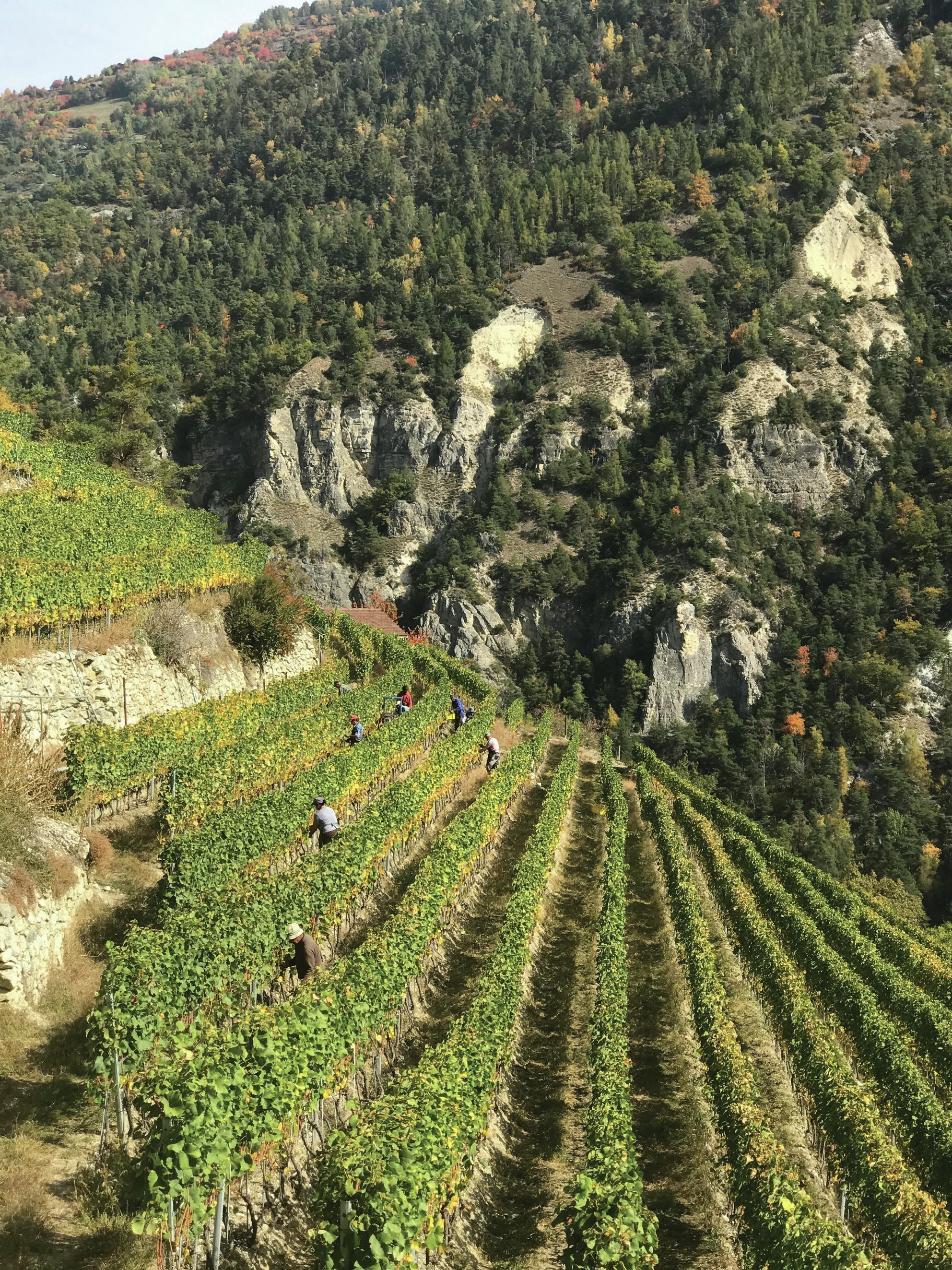
WINEMAKING VERNACULAR
Even in places like Spain, altitude is becoming an ever more important word in the winemaking vernacular. For Roberto Frías, director of viticulture at La Rioja Alta, it’s all about typicity. Ironically, the group is looking to new sites to retain its signature style, not develop new ones. “We want to produce grapes whose evolution in the vineyard and whose analytical and organoleptic characteristics at the time of harvest are similar to those we obtained in our growing areas before climate change,” Frías says.
Mountainous terrain offers a unique opportunity for winemakers. BBR’s Drew explains: “While days can be warm, night-time temperatures can be very cool. This diurnal temperature range results in wines with ripe fruit flavours, but really striking acidity – crucial for balance in the wine, and for helping the wines to evolve beautifully as they age.” In addition, the intensity of UV light allows skins to ripen fully, giving the wines added texture.
Higher-altitude vineyards in Rioja supply the raw materials for two wines from Spanish powerhouse Ramón Bilbao: Lalomba Finca Ladero and Ramón Bilbao Viñedos de Altura. Rodolfo Bastida, Ramón Bilbao director and head winemaker, says the freshness and potential for longer ageing is especially important in regions like Rioja, where Gran Reserva wines require at least 60 months of ageing in barrel and bottle. Rioja’s highest vineyards reach just over 700 metres above sea level; a puny figure in comparison to the altitude of some sites in Argentina or Chile. But high-altitude viticulture is not a one-size-fits-all designation.
Despite decades of producers planting on steep slopes, the International Organisation of Vine and Wine (OIV) has no comprehensive definition for high-altitude wines. It is, however, in the midst of a project to develop an internationally-recognised definition of mountain and steep-slope viticulture, and to provide the recommendations for the conservation and management of vineyards in this context, with plans to conclude the project in 2024.
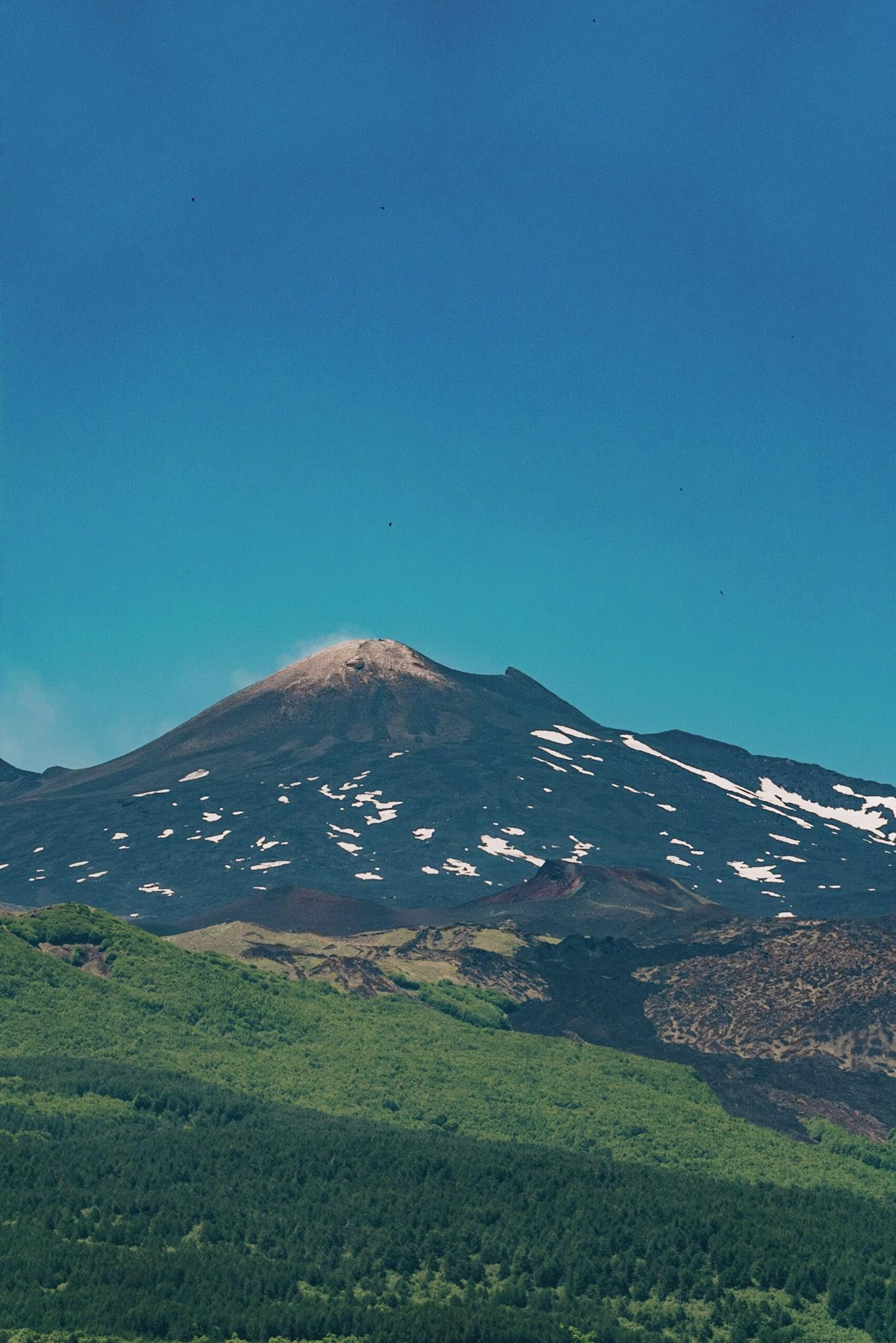
With no common definition, producers are free to make their own rules. All variations on a theme, mountain wines are bringing out the best from countries less commonly associated with high quality wines.
Lebanon’s history in winemaking is rich, going back thousands of years, but modern Lebanese winemaking is still relatively new. As a Mediterranean country with a hot climate, planting high in the mountains gives “flexibility”, says Gabriel Rivero, technical director at Lebanon’s Ixsir.
The winery has vineyards on six different sites across Lebanon, ranging from 400m to 1,800m above sea level. “Contrary to other areas that have more experience and know the land better, we are still discovering,” Rivero says of Lebanese viticulture; a “work in progress”, as he puts it. What’s really important, he says, is to “showcase the diversity that is Lebanon”.

BBR’s Drew agrees with this assessment, arguing that focusing on altitude is increasingly important when it comes to fine wines in particular.
“It allows for more diversity of regions, and that is so exciting for both merchants and consumers,” she says. Merchants can seek out bottles from new regions and introduce talented producers to new audiences. Meanwhile, consumers can drink wines from an ever-expanding range of areas. “We’re realising that you can get truly fine wines – those that age and evolve over time, those that are rare and become incredibly sought-after – from myriad regions,” Drew adds. What could be more appealing to producers seeking out a new selling point?
Mountain wines, by their very nature, always have a story to tell. This is certainly true of Sicily’s Planeta. “The site itself is unique,” says Patricia Tóth, winemaker at the Italian producer, of its Sciaranuova vineyard. “Considering that a volcano is defined [as] ‘active’ if it has had an eruption in the last million years, Mount Etna has about 13 to 15 eruptions per year,” she says. The vines grow in an environment which changes from day to day, and the soil itself provides “thousands of different combinations in terms of mineral content”.
“Adding to this colourful geopicture, the various microclimates around the mountain give us the chance to work in a vibrant and inspiring terroir,” Tóth says – providing opportunities for constant innovation.
DEEP IN THE MOUNTAINSIDE
Four hours from civilisation, nestled deep in the mountainside of Yunnan Province in southwest China, four villages house the vines used to produce Moët Hennessy’s Ao Yun.
Situated between 2,100m and 2,600m above sea level, the villages of Xidang, Sinong, Shuori and Adong sit under the shade of a mountain which stretches 6,400m high, protecting the settlements below from both the rain and powerful sunlight.
Local families, many of whom belong to Tibetan minority communities, farm the land. “They live in a virtuous cycle with nature,” explains Maxence Dulou, a Frenchman and the project’s winemaker since its first vintage in 2013.

“This is something specific to higher climates, because to be at this altitude you are usually far away from civilisation,” he says.
Stories like this add colour to the brand, but the distance from society proves too much for some. “To live where we are is very difficult because it’s so remote,” explains Dulou. Besides the work done by local families (110 to be exact), Dulou is also assisted by a team of winemakers. Holding on to these “talented young people”, while offering them “no social life” is the challenge. “We try to keep each team for three to five years, but you have to understand that you cannot have a family there. It’s in the middle of nowhere,” he says.
The work is tough, and all has to be done by hand, resulting in significant labour costs. Moët Hennessy has calculated that 3,500 hours of graft are put in to create each vintage of Ao Yun.
At some point, the cost of labour has to trickle down to the price of the bottle. For a fine wine house with a historic reputation such as Moët Hennessy, pricing is less of a major concern, although Dulou is keen to ensure that consumers get what they’re paying for. “People don’t want to pay this kind of money to taste Cabernet Sauvignon,” he explains. “They want to taste Xidang, Sinong, Shuori and Adong translated through the Cabernet Sauvignon.” BBR currently offers Ao Yun 2017 priced at £238.50 a bottle, and Ao Yun 2013 (the producer ’s first vintage) for £259.20.
For lesser-known producers, however, the typically higher price tag which comes with mountainous terrain can be a real handicap.
Rachael Pogmore is a wine buyer for Enotria & Coe focused specifically on wines from South America. “The thing that makes it difficult is we are still in a cost of living crisis, and these wines generally are very expensive,” she says. More often than not, they can’t be machine-harvested, the grapes tend to be from very small plots, and they are generally aged in oak or amphora, all adding dollars to the final bottle price. “It’s a very exciting area of wine, but it’s so difficult to sell because prices are very high,” Pogmore says. “If they can only be listed on a fine wine menu, there are limited options for them.”
For the wines that do sell, though, it’s not hard to see the appeal. Sure, high altitude is a sliding scale: the heights in Europe cannot be compared to that of the Andes mountains of Argentina. Nor can the Andes compete with a mountain range in Yunnan, which stands at 6,400m high. The common thread, then, is their complete uniqueness.
Growing grapes at altitude is hard graft. Putting in countless hours of labour, and harvesting almost all of the grapes by hand, winemakers aren’t in it for the glory. Ixsir’s Rivero puts it best: “The objective isn’t always to get new records and gain a couple of metres in altitude.” Instead, it’s about exploring. “We’re still discovering new things,” he says. The climb has only just begun.
Related news
Jackson Family Wines closes Carneros facility with 13 redundancies
US wine exports slashed by a third on back of Canada trade spat


