



How Chilean producers are joining the light side
Producers the length and breadth of Chile are striving to create lighter, fresher styles of wine, as Louis Thomas discovers.
“I like on the table, when we’re speaking, the light of a bottle of intelligent wine,” wrote the Chilean politician and poet Pablo Neruda in his Ode To Wine.
Earlier in the poem, which plays on the sensuality of drinking wine, Neruda even compares love to “an inexhaustible cascade of wine, light that illuminates my senses”.
Of course, the “light” that Neruda refers to is metaphorical, rather than stylistic – it is intended to represent the feeling that wine invokes within the drinker – but it is interesting to note that the notion of “lightness” has become a quality sought after by winemakers up and down the country.
Despite their proliferation in wine marketing and writing, “lightness” and “freshness” are not terms with clear-cut definitions – there is no line in the sand that can be definitively drawn to separate a “light” wine from a “heavy” one. However, there are certain characteristics, such as lower alcohol, more acidity and less of an overripe fruit profile, that are being displayed by a growing number of Chilean expressions, and are indicative of a broader shift in the style of the country’s wines. Producers are achieving this by changing what they plant, where they plant it and how they handle it in the vineyard.
Simply planting in cooler climates is not a guaranteed road to success, as Viña Garcés Silva general manager Ignacio Casali explains when discussing the group’s experiments with Cabernet Franc in San Antonio’s Leyda Valley: “In 2015, we had our first harvest of Cabernet Franc from Cordón Huinca, a hill near to our winery in Leyda Valley. The wine was horrible. Leyda has a cool climate, so it can be difficult to ripen the tannins.” For Viña Garcés Silva, experience was a great teacher. “In 2018, the vines were a bit older and the results were much better – today, we see Loire Cabernet Franc as the benchmark we aim for. We like to pick the grapes when they have a potential alcohol of 13%.”
The following pages explore what different Chilean regions are doing in pursuit of freshness.
Maipo and Cachapoal
Described by Sebastián Labbé, winemaker at Santa Rita, as “one of the greatest Cabernet Sauvignon terroirs of the world”, Maipo Valley’s mild Mediterranean climate makes it a stronghold for this late-ripening Bordeaux variety. In excess of 5,500 hectares of Cabernet Sauvignon are planted there – the next most common variety, Merlot, has less than 1,000ha in Maipo.
But, although Cabernet Sauvignon certainly can lend itself to the production of big wines with high levels of alcohol, body and tannins, a different style is emerging here – one that offers greater finesse. “Winemakers in Maipo Valley are learning to interpret subtle messages from the soil, climate, and topography – recognising that each vineyard has a unique voice,” suggests Ricardo Baettig, chief winemaker of Viña Morandé, which owns two estates in Maipo. “They’re producing fresher and more balanced red wines, with less alcohol and greater fruit expression. Especially notable is the transformation in Cabernet, which is now more approachable while still retaining its characteristic elegance and complexity.”
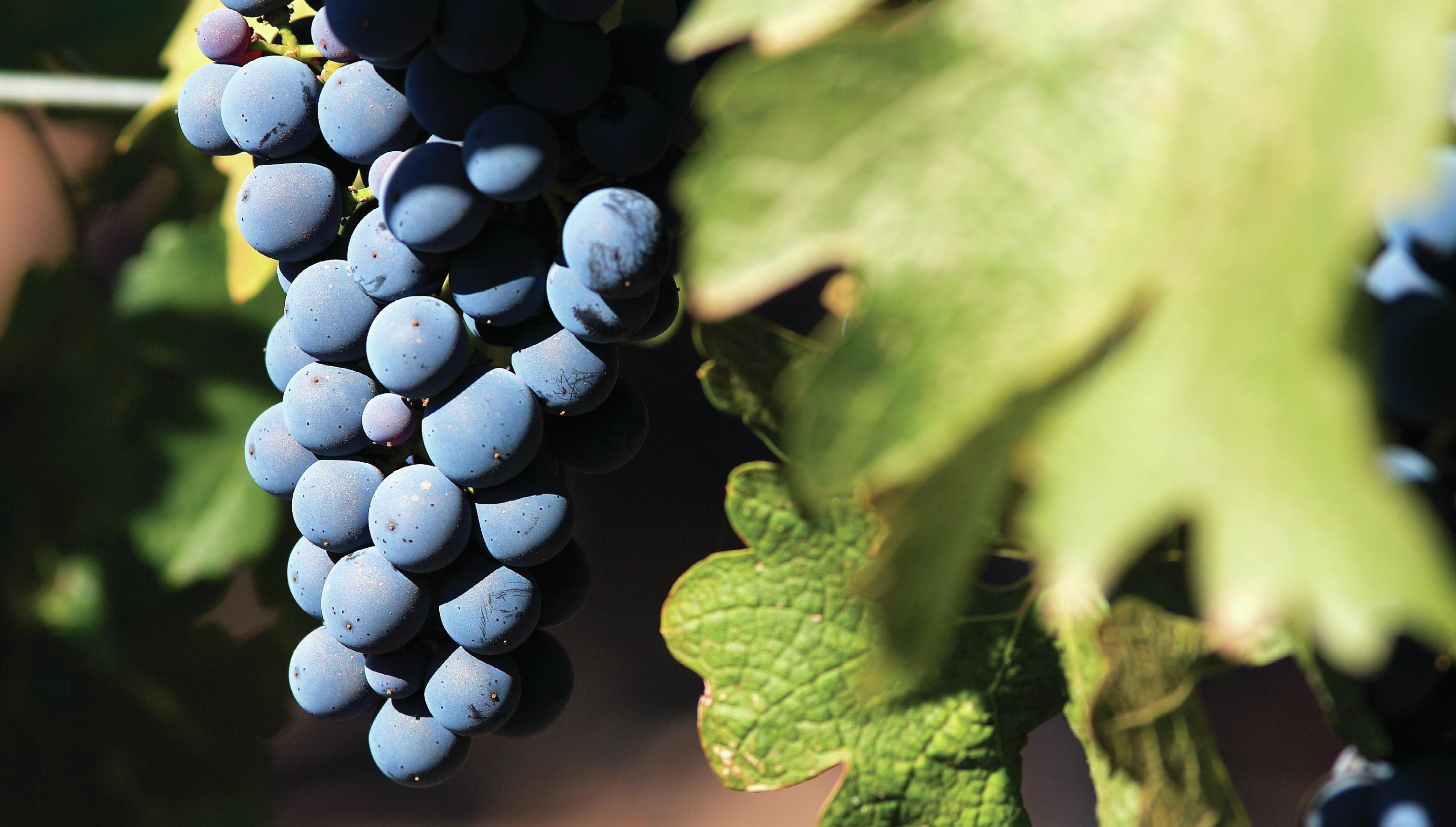
“In Alto Jahuel, this will be a great season, especially for Cabernet Sauvignon,” he explains. “The vines are perfectly balanced and entering the last few weeks with dry and fresh conditions.
Temperatures started to drop in the last weeks of the growing season and the flavour and tannin development seem almost perfect.”
Operating in Cachapoal, VIK, a relatively new winery on the scene, is also something of a champion of fresh Cabernet Sauvignon, a stylistic preference made possible thanks to the VIK vineyard’s proximity to the Pacific, with the sea breeze ensuring that temperatures seldom top the 20°C mark even at the height of summer – preventing the bunches from overripening.
San Antonio
The Pacific Ocean, chilled by the Humboldt Current that flows northwards, is also a major influence on the climate of San Antonio, which lies west of Santiago. Situated within San Antonio Valley, Leyda Valley’s cooler climate has made it something of a hotspot for producers seeking fresher grapes to vinify.
Among the varieties that could be on course to becoming trendy in Leyda Valley is Albariño, a grape most commonly associated with the northwestern corner of the Iberian peninsula.
Four years ago, MontGras planted 15 hectares of Albariño in its Amaral Vineyard, which is situated only 12 kilometres from the Pacific Ocean, joining other varieties such as Sauvignon Blanc (the most commonly planted grape in San Antonio with 1,000ha of vines) and Pinot Noir (the second most planted, at around 500ha).
The fruits of this investment have come through in the eighth and latest addition to its Handcrafted line – the single varietal Rare Albariño 2023, which has plenty of the citrus, fresh stone fruit, salinity and acidity that has made expressions of the variety so popular, and which comes in at a perfectly palatable 12.5% ABV. It is so new that when the drinks business tasted it at ProWein in March, the bottle was still without a label. Explaining how Albariño is distinguished from San Antonio’s emblematic variety, Sauvignon Blanc, MontGras CEO and winemaker Adolfo Hurtado says: “Leyda’s Sauvignon Blanc stands out for its high aromatic intensity, with more citrus notes, yellow chilli and high acidity. On the other hand, Albariño presents more notes of white stone fruit, white flowers, greater concentration on the palate and lower acidity. These differences make them suitable for different occasions of consumption. “However, if I was to mention just one advantage of Albariño over Sauvignon Blanc, it would be the novelty of it coming from Chile, and its suitability for cooler climates such as Leyda.”
One key similarity between Leyda and Albariño’s best-known location, Galicia’s Rías Baixas, is both locations’ proximity to the ocean.
Given the morning mists that Leyda Valley receives, fungal disease could be a concern, but fortunately Albariño is very thick-skinned, making it less susceptible to rot than other varieties. If more and more producers do choose to plant near the coast and in the cooler, rainier south, Albariño may well be the variety they go for.
MontGras fermented its Rare Albariño in stainless steel and then aged it on the lees in 2,000-litre foudres. Although the lees contact has given the wine body, it does not have too much in the way of autolytic flavours, such as biscuit and dough. Malolactic conversion was avoided in order to maintain a firm backbone of malic acid.
“If it’s successful, we will plant more Albariño,” says Hurtado. The grape variety certainly has a long way to go to become a major force in Chilean wine.
According to data from the Oficina de Estudios y Políticas Agrarias (ODEPA), as of 2022 Albariño was the 46th most planted grape variety in Chile, just ahead of Nebbiolo by a couple of hectares.
Nonetheless, these could be the first rumblings of an Albariño insurgence, with the variety lending itself to fresher styles of wine.
Other white grapes are also being experimented with in Leyda Valley, and in blends that might raise eyebrows among European winemakers. Describing the 2021 Amayna Garden Blend White from Leyda Valley, Viña Garcés Silva’s Casali notes that its combination of Riesling, Roussanne, Viognier and Sauvignon Gris is certainly unconventional. “You talk to a French guy about this wine, and he asks how you can mix Alsace, Provence, the Rhône and Bordeaux in a bottle,” he says.
Like Garcés Silva’s Cabernet Franc from Leyda, the result is certainly in keeping with the notion of a fresh wine, with the Riesling providing the backbone of acidity, but the Viognier lending some heft.
Colchagua
Despite being only the fifth most planted variety in the country (10,200ha, according to ODEPA data), Carmenere is arguably as synonymous with Chile as Malbec is with neighbouring Argentina. The first Carmenere vines were dug into Chilean soil in the mid-19th century, but producers are still searching for new ways to have this grape express itself in a lighter manner. “It was once believed that Carmenere only thrived and developed well in deep and flat soils, where concentrated and high-quality Carmenere could be obtained,” says Montes chief winemaker Aurelio Montes Jr. “However, in 2019, Montes decided to innovate with this variety and dared to launch the first highaltitude and steep-slope Carmenere. The style of this wine is very different and enjoyable. Slopes with poorer soils result in a wine with less power but more elegance and spice, making for a refined Carmenere with great personality.” Named ‘Wings’, the wine was made using fruit (85% Carmenere and 15% Cabernet Franc) sourced from Colchagua’s Apalta Valley.
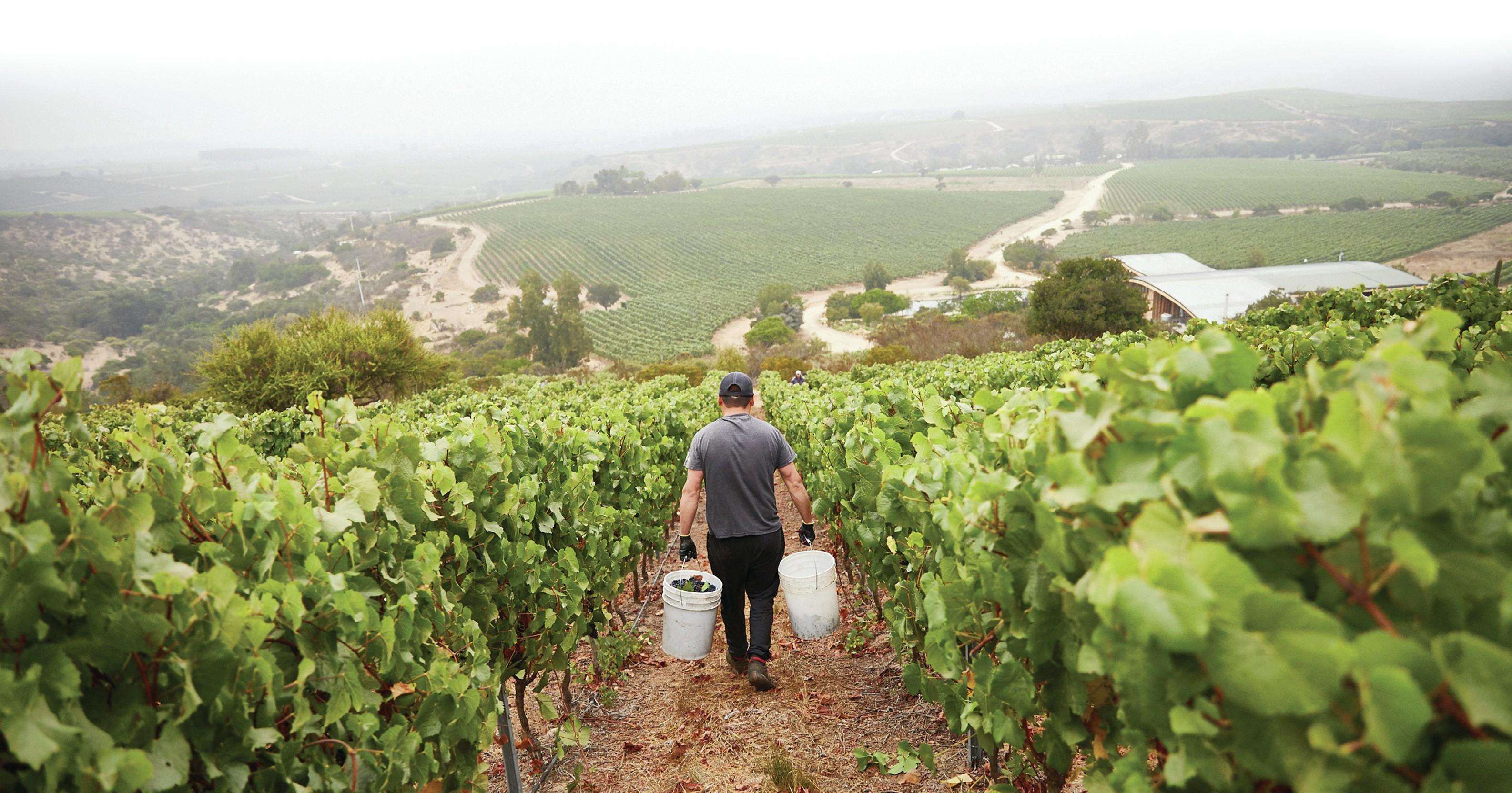
As for how the 2024 vintage is looking for Carmenere in Apalta, Labbé reports that “generous winter rainfall” and “high temperatures during veraison” have resulted in fruit with “an almost perfect balance”.
“We expect concentrated and balanced wines with depth and length,” Labbé adds. “The tannins feel rich and dense, with a solid, fruit-driven backbone.”
Another Colchagua-based producer that has been pushing fresher wines is Viña Maquis. This isn’t something new, though – the estate, wrapped by two rivers that cool the microclimate, has been planted with vines since the 18th century. Today that microclimate continues to ensure the gradual ripening of Cabernet Franc, Cabernet Sauvignon and Carmenere.
While reds certainly dominate plantings, the most widely cultivated white variety in Colchagua is Chardonnay (1,900ha), followed by Sauvignon Blanc (1,700ha).
Regarding how the 2024 vintage of the former is looking, a spokesperson for Cono Sur, a subsidiary of Concha y Toro, says that the harvesting of its Colchagua Chardonnay was under way in March and that the fruit was displaying “great acidity and great quality”.
Bío-Bío and Itata
Understanding wine regions through the lens of latitude has its limits. Situated 400km south of Santiago, Bío-Bío sits at a latitude of 36°S, putting it in a similar position to Jerez in the Northern Hemisphere. And yet, while the Spanish fortified wine region is experiencing searing heatwaves and crippling droughts due to its relative proximity to the Equator, Bío-Bío is lashed by wind and rain. For decades, it was considered the wild, untamed southern frontier of Chilean wine, but today its relative coolness is regarded as a major asset.
Emiliana’s Aparicio notes that the region has several factors that lend themselves to the production of lighter wines: “Its volcanic soils give the wine soft tannins and drinkability,” he says. “Temperatures are not extreme, so ripening is slow, and the grapes have a very good acidity. It also receives a good amount of precipitation – about 800mm per year.” Aparicio says that Emiliana has plantings of Pinot Noir, Chardonnay and Sauvignon Blanc in the region.
“In the coming years we will increase the production of Pinot Noir in Bío-Bío,” he adds, reporting that Emiliana has also increased its Pinot Noir plantings much further north, in Limarí Valley. The “heartbreak grape”, so named due to its vulnerability to disease, is certainly not easy to cultivate, but given its high acidity, low tannins and recognisable name, Chilean Pinot Noir seems set to continue to be a commercial success. It isn’t just Burgundian varieties that are thriving in more southerly regions – Cabernet Sauvignon is also finding a home here. At present, in Itata Valley, north of Bío-Bío, there are about 750ha of Cabernet Sauvignon planted. That is a fairly small amount compared to the almost 4,000ha of País and 3,600ha of Muscat of Alexandra, but these old Cabernet vines are more than capable of producing exciting new wines.
“Despite being far further south than would typically be considered, Itata and Bío-Bío Valley are creating outstanding Cabernet Sauvignon wines from old vines,” reports Baettig. “These old vines are producing Cabernet Sauvignon wines with unique characteristics that set them apart from wines made from younger vines; they’re refined, well-structured and balanced, offering concentrated flavours, complexity and nuanced aromas. Plus, despite being elegant and well-structured, they’re also approachable, with softer tannins and velvety textures.”
Baettig shares his belief that old-vine Cabernet Sauvignon from these more southerly latitudes “carries a strong promise of scalable success and commercial sustainability”. However, commercial plans for these regions do not come without risks. In February 2023, a series of wildfires tore through the Itata and Bío-Bío regions, killing 24 people and causing significant damage to vineyards. Heavy rainfall in the winter months, caused by El Niño, then resulted in widespread flooding across many of the country’s wine regions.
There is, however, still a place for wines that buck the “lightness” trend. Viña La Rosa’s Ossa, from Peumo in Cachapoal Valley, is a Carmenere-forward blend (usually with some Cabernet Sauvignon and Syrah, and maybe some Cabernet Franc and Merlot too) that spends 18 months in French oak. It is structured, it is intense and, as export manager Ricardo Ullrich puts it, it is “very traditional.” Despite this, however, Ullrich also believes that the tide is turning away from this style of winemaking. “We have seen a move towards lightness in our portfolio,” he says. “We are excited about these fresher wines that are harvested earlier and have more acidity. Ultimately, our winemaker is looking for juiciness and pleasurable drinking. These wines are less formal, less severe.”
Commercially, these more “pleasurable” wines have great potential in international markets, as Anita Jackson, UK director for Wines of Chile, suggests. “Led by Chilean winemakers, styles have evolved over the last few years, with lighter, fresher styles emerging in its red wines, and white wines increasing in differing innovative and expressive styles, all of which have huge appeal to UK palates and provide enjoyable drinkable experiences,” she says.
“The UK is a mature market, and is viewed as a trendsetter for Chile,” Jackson explains. “What becomes popular here eventually is reflected [in] and appeals to other international markets.” In a post-Robert Parker world, where winemakers are deliberately going against the intense, heavily structured wines that the critic famously (or infamously) favoured in his scoring, Chile is well on its way to joining the lighter side.
Related news
Auction update: Lamy's Rising Star
Cruz de Alba takes 'virtually homoeopathic' approach
Ramón Bilbao helps people grow a deeper understanding of Rueda


