



The Big Interview: Sukhinder Singh
He may have sold retail business The Whisky Exchange, but Sukhinder Singh isn’t standing still, with not one but two distillery ventures to oversee. Lucy Shaw reports.
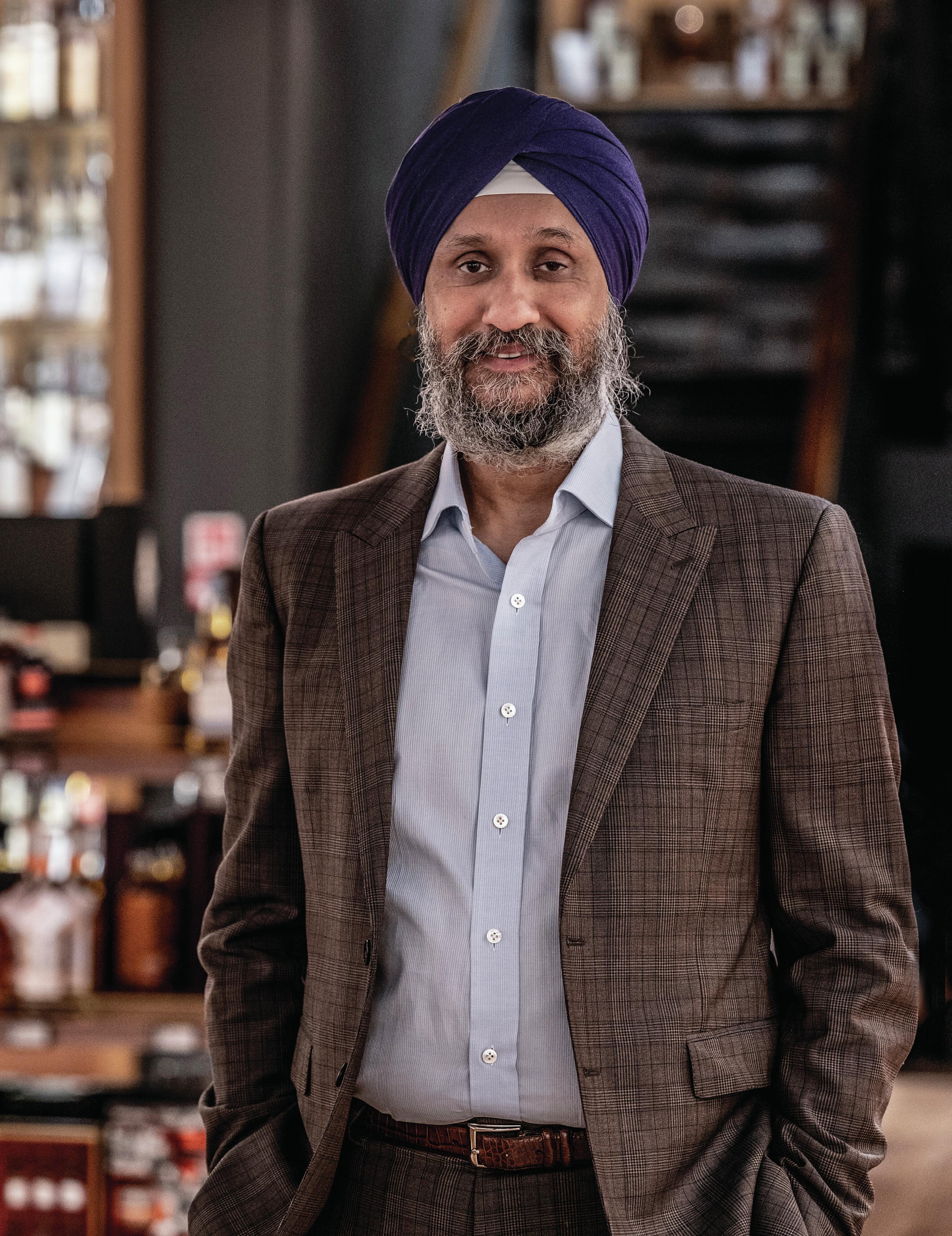
SUKHINDER SINGH isn’t a man to let the grass grow beneath his feet. Having sold The Whisky Exchange – the retail business he founded with his younger brother Rajbir in 1999 – to drinks giant Pernod Ricard in 2021 for an undisclosed sum, he’s currently putting the finishing touches to his Portintruan Distillery, just outside Port Ellen on Islay’s south coast.
It’s six years since Singh submitted a planning application to build the distillery, and he’s hopeful that Portintruan will open to the public in spring 2025. Having bottled whiskies under his Elixir Distillers label for years – including the Port Askaig and Elements of Islay brands – Singh was keen to create a permanent home for his enterprise.
As with many fledgling ventures, it’s been a bumpy ride, with water proving difficult to access, and building materials having to be sourced from the mainland, but things are starting to take shape – the roof is currently being completed and thoughts are turning to more enjoyable projects, such as interior design.
A tourist magnet in the making, the distillery will include an expansive visitor centre with a shop, restaurant, educational facilities and a tasting lodge.
“We’ve designed the distillery around the visitor experience, which was always a key consideration, as the space needed to function as a working distillery, but also have a good visitor flow so people can see what’s going on,” says Singh. “Distilleries were really small in the 1800s, with lots of outbuildings, and they have their charm, but there’s something special about making everything connect.”
In terms of the style of whisky he wants to make there, Singh stresses the importance of carving out a signature style within the Islay framework.
“Lagavulin is rich, oily and heavy, while Bowmore is medium-peated and fruity, and Ardbeg is heavily peated. We want to have our own style that plays into the peated Islay character,” he says, adding that Portintruan will be the first distillery on the island to make grain whisky.
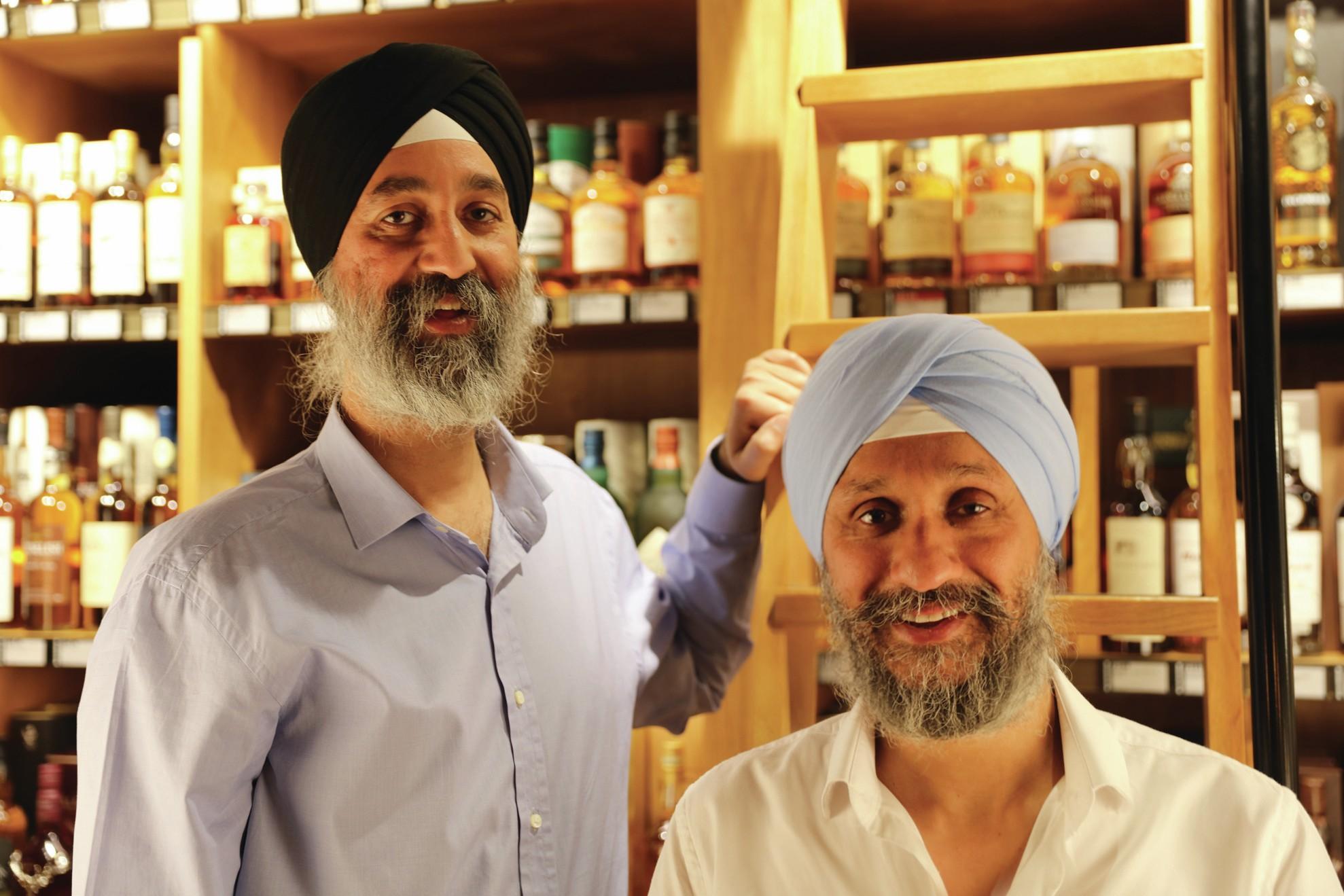
Brothers in arms: Sukhinder (right) and Rajbir Singh co-founded The Whisky Exchange
BACK TO BASICS
While Singh welcomes experimentation within the Scotch category, he wants to take things back to basics at Portintruan and honour a simpler style of whisky he feels is all but lost.
“Following The Macallan’s lead, whiskies are getting bigger, richer, heavier and more Sherried in style, so I think there’s a space for a lighter, cleaner, more elegant style of whisky to emerge – it’s a style I’m keen to bring back,” he says.
Mindful of the venture’s carbon footprint, Singh is open to using Scottish oak casks – a sustainable practice being championed by Gregg Glass at Whyte & Mackay.
“Scottish oak is quite tannic and spicy, and behaves differently to American and French oak, so the liquid would need a long time to mellow out, but it could work well as a blending component,” he says. “It will be interesting to see how Scottish oak fares after a long maturation, as I’ve only ever tried whiskies finished in it.”
Singh’s obsession with Scotch started at a young age, when he was given a copy of Wallace Milroy’s Malt Whisky Almanac, which opened a door into an exciting new world ripe for exploration. He had the perfect playground to pursue his passion in the form of his parents’ off‐licence – The Nest in Hanwell, west London – where he helped out at weekends and during school holidays.
Starting out with single malt miniatures, Singh now owns one of the most comprehensive private Scotch collections in the world, spanning more than 12,000 bottles.
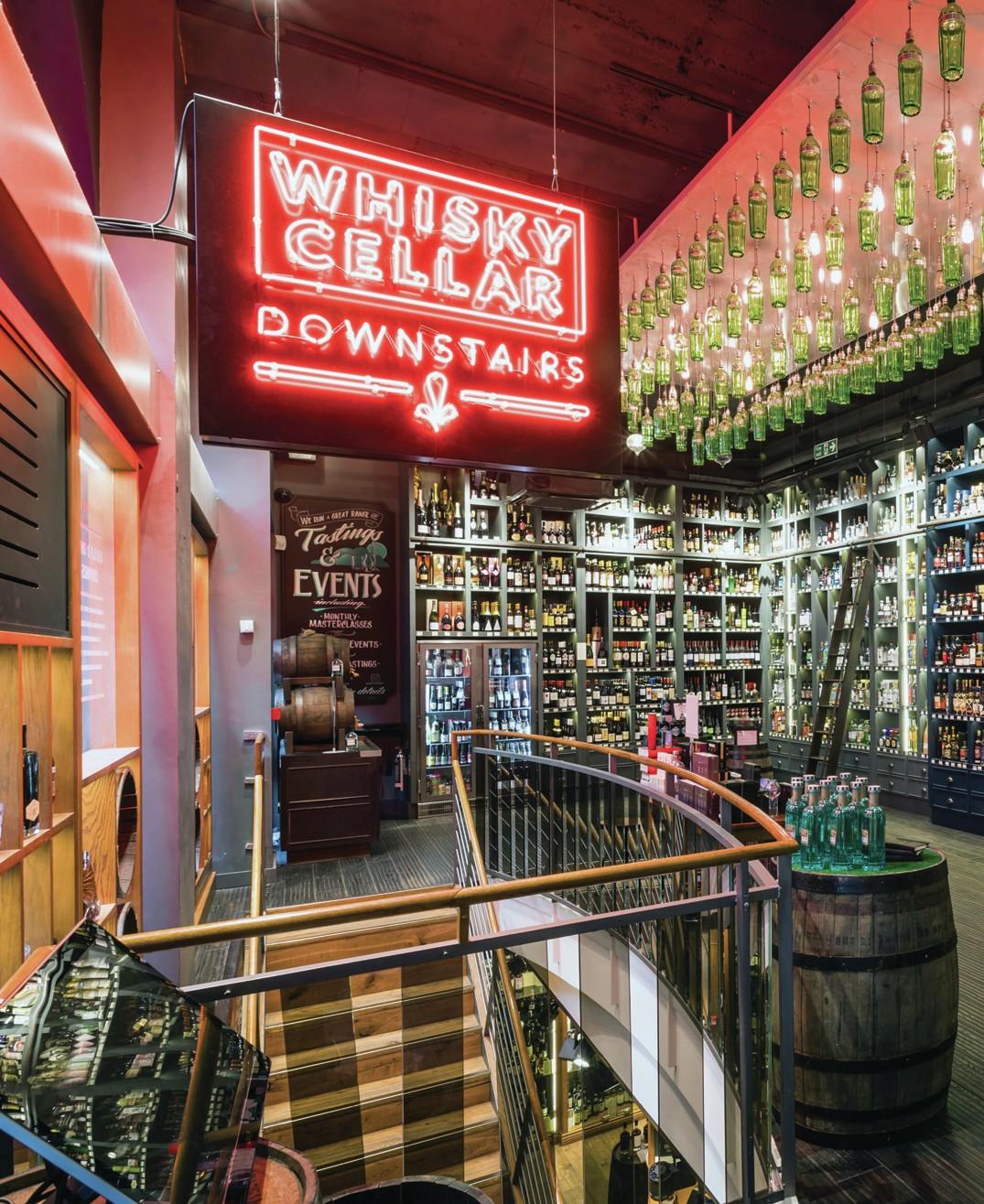
The Whisky Exchange, Covent Garden
Another marker in the sand came when Suntory approached TWE seeking a collaboration that might help Japanese whisky to make a splash in the UK. Singh stirred up interest by including Yamazaki 12 Year Old miniatures with select orders to showcase the whisky to top customers.
Keen to expand outside the online realm, in 2006 Singh opened his first bricks-and-mortar shop at Vinopolis in London Bridge, which hosted tastings and masterclassses to push whisky education; a goal that eventually led to the founding of The Whisky Show.
Launching with a punchy ticket price of £90, his idea of offering attendees the chance to taste rare, high-end drams turned out to be a winning formula, leading to the launch of a successful sister show in Edinburgh.
Over a 22-year period, Singh and his brother became the golden boys of the whisky scene in the UK, growing their business to more than 230 employees, winning every industry gong going, and launching or acquiring successful spinoffs including spirits wholesaler Speciality Drinks, importer and distributor Speciality Brands, auction site Whisky.Auction, online magazine Scotchwhisky.com and consumer event London Cocktail Week – in addition to opening thriving shops in Covent Garden, Fitzrovia and, most recently, London Bridge, taking the retail arm back to where it started.
Having been adamant that he would never sell up, in 2021 Singh was presented with “an offer I couldn’t refuse” from Pernod Ricard to acquire The Whisky Exchange website, its three shops and its sister businesses, save for Speciality Brands, which remains under his control. While difficult to let go of, the sale has freed him up to focus on his distillery projects.
In addition to Portintruan, he and Rajbir own Tormore distillery on Speyside, which they acquired from Pernod Ricard in June 2022, giving them instant access to Speyside stock while they get their Islay venture off the ground.
Tormore is headed up by ex-Macallan whisky maker Polly Logan, who has been busy tasting through thousands of casks with a view to launching a single malt under the Tormore name next year. Already known as an independent bottler under the Elixir Distillers brand, Singh is excited to give Tormore a new lease of life.
“We’ve been assessing our inventory over the last year to better understand the quality, age profiles and different cask finishes of what we’ve got,” he says.
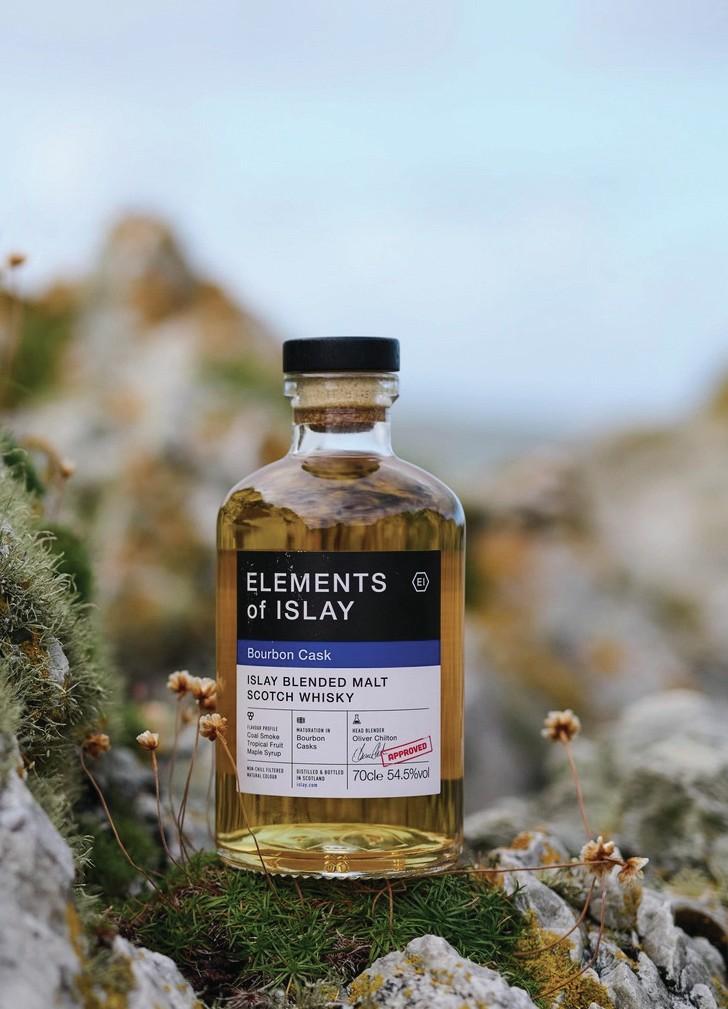
Elixir Distillers’ Elements of Islay
ENGLISH WHISKY
While Singh’s focus remains firmly fixed on Scotch, he isn’t ruling out the possibility of making English whisky in the future, and believes Scotch producers can’t afford to rest on their laurels, given the emergence of ambitious new distilleries everywhere from France and Sweden to Tasmania and Taiwan.
Though he’s excited about the potential of English whisky, he feels distillers aren’t doing enough to capitalise on their current freedom from restrictive regulations in order to stand out from Scotch.
“England and Scotland share a similar climate, so it’s very easy to make good whisky in the UK. The question is: should England be making whisky in the same way as Scotland or have a point of difference?” he asks. “There is no definition for English whisky right now – English whisky is literally Scotch.
England is lucky as it operates outside of the strict rules governing Scotch, so distillers have more flexibility to do things differently. I don’t think anyone is really capitalising on that yet.”
Experimenting with different cereals is a good place to start.
“England is like the US in that you can use pretty much any cereal you can think of, from rye and corn to millet and oats,” says Singh. “English distillers should be using mixed mash bills to create unique expressions that stand out from Scotch. Mixing malt and rye works really well.”
He also thinks English distilleries should borrow from Irish whiskey’s playbook and create the English equivalent of pot still whisky from a blend of malted and unmalted barley. The category is certainly one to watch.
According to The English Whisky Guild, which was founded in 2022 to promote best practice within the industry, the volume of spirit produced by English distilleries is forecast to have grown by 189% between 2019 and 2024, with 50,000 maturing casks set to be in situ by the end of 2024, worth a total of £1 billion.
While it will take time for English whisky to really flourish internationally, Singh has noticed a few leading labels popping up on back bars across the UK.
“I have a lot of respect for the likes of the Cotswolds Distillery, Lakes Distillery, Spirit of Yorkshire, White Peak and The English Whisky Company, which are starting to develop a loyal local following,” he says, although he admits that it will be a while before we see English whisky making a splash on the secondary market.
“First releases from distilleries are always superhot and collectable, but it’s still early days,” he says. “Bimber has done quite well on the secondary market, but is in the press for all the wrong reasons at the moment [following the arrest of its founder]. Its Spirit of the Underground series was genius, but it’s quite a packaging-led brand and you wonder how many people are actually opening these bottles and want to drink them.”
As for the health of the Scotch market during these turbulent times, Singh doesn’t seem to be worried, considering the continued global thirst for top-end expressions.
“Whisky has performed better than wine on the secondary market recently because there’s not so much of it to go round. There are just over 100 Scotch distilleries, and only a couple of dozen serious players,” he says.
“The industry didn’t foresee what the future demand would be, and the current shortage of aged single malts has really helped the category. You can’t just turn on the tap – it takes time to produce these liquids.”
Related news
Why comfort-food cocktails are dominating bar menus in 2025
Chivas Brothers weathers mixed markets as first half sales fall 5%


