



Rioja doubles down on precision winemaking
Rioja is capable of producing stunning single-vineyard wines, and crowd-pleasing blends – but how can producers reconcile the contrasting approaches? The answer lies in precision winemaking, writes Lucy Shaw.
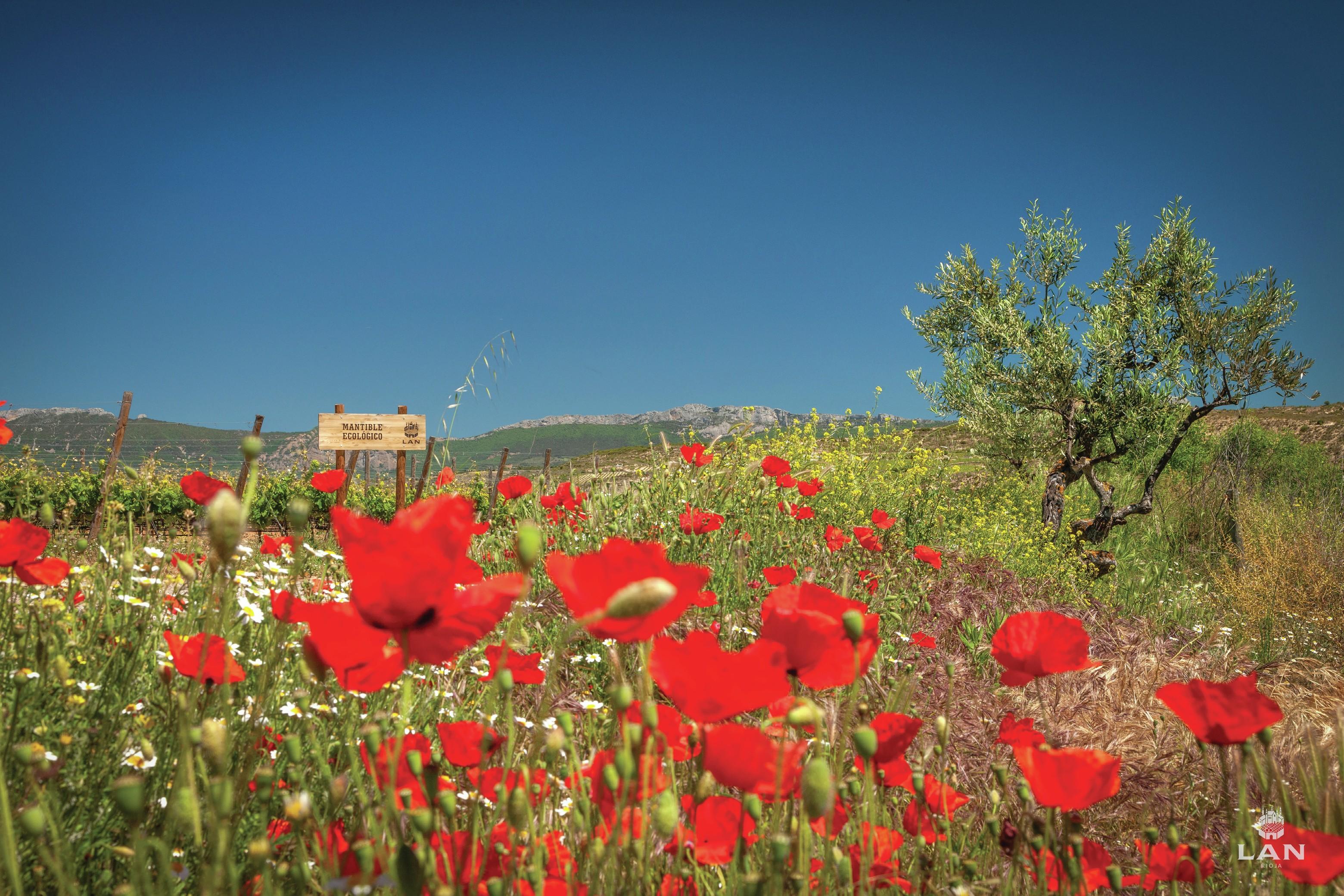
RIOJA IS a land of contradictions, its winemakers walking paradoxes. Keen to embrace the latest cutting-edge tech while keeping a respectful eye on the past, there’s a thriving culture in the region for single-vineyard wines that sing of their soils and polished, long-aged blends that offer consistency and a house style to latch onto.
“The best way to buy Rioja is by producer, because it’s the winemaking philosophy that determines the house style,” argues Pierre Mansour, director of wine at UK retail operation The Wine Society.
But can ‘traditional’ and ‘modern’ styles of Rioja happily coexist, and are these reductive labels still relevant in a region that simultaneously embraces the old and new?
Taking a Champagne approach to winemaking – where blending and extended ageing trumps site specifics – has served Rioja well over the years, and consumers the world over have found its crianza, reserva and gran reserva quality pyramid easy to get on board with. But the region has been forced to shift its focus recently, as transmitting terroir has become the holy grail of viticultural achievement, making wines that neglect to recognise their origins seem fusty and out-of-date.
Driven by a desire to highlight vineyard sites that reflect Rioja’s diverse villages and microclimates, a number of the region’s top producers, including single vineyard specialist Artadi, have turned their backs on the Rioja DOCa.
Keen to avoid a mass exodus, in 2017 Rioja’s regulatory council introduced the ‘Viñedos Singulares’ and ‘Vinos de Municipio’ designations to allow winemakers to recognise single vineyards and villages on their labels.
Álvaro Palacios, one of Spain’s leading terroir trailblazers, is hopeful that the new designations will spur a revived interest in site-specific Rioja.
“Rioja Alta, Rioja Alavesa and Rioja Oriental differ greatly from each other. There will always be generic Rioja, which will constitute the vast majority of production, but perhaps in the future, 10% of the wines made in Rioja could represent vineyards that are of indisputable historical heritage,” he says.
Spanish wine specialist Simon Field MW applauds Palacios’ approach.
“What some may describe as polarity others would acclaim as diversity, and there’s nothing wrong with a Burgundian template,” he says. “It’s good to see that Artadi now offers six single-vineyard wines and there are appreciable differences between them.”
However, this dirt-driven approach isn’t without its critics.
“There’s a certain confusion between what winemakers call a sense of place and what others could see as a new Rioja style. I tend to think that the latter is a more interesting option, since Rioja’s success is built upon the Bordeaux brands model, rather than the Burgundian vineyards model,” says Spain’s first master of wine, Pedro Ballesteros MW.
New Brigade
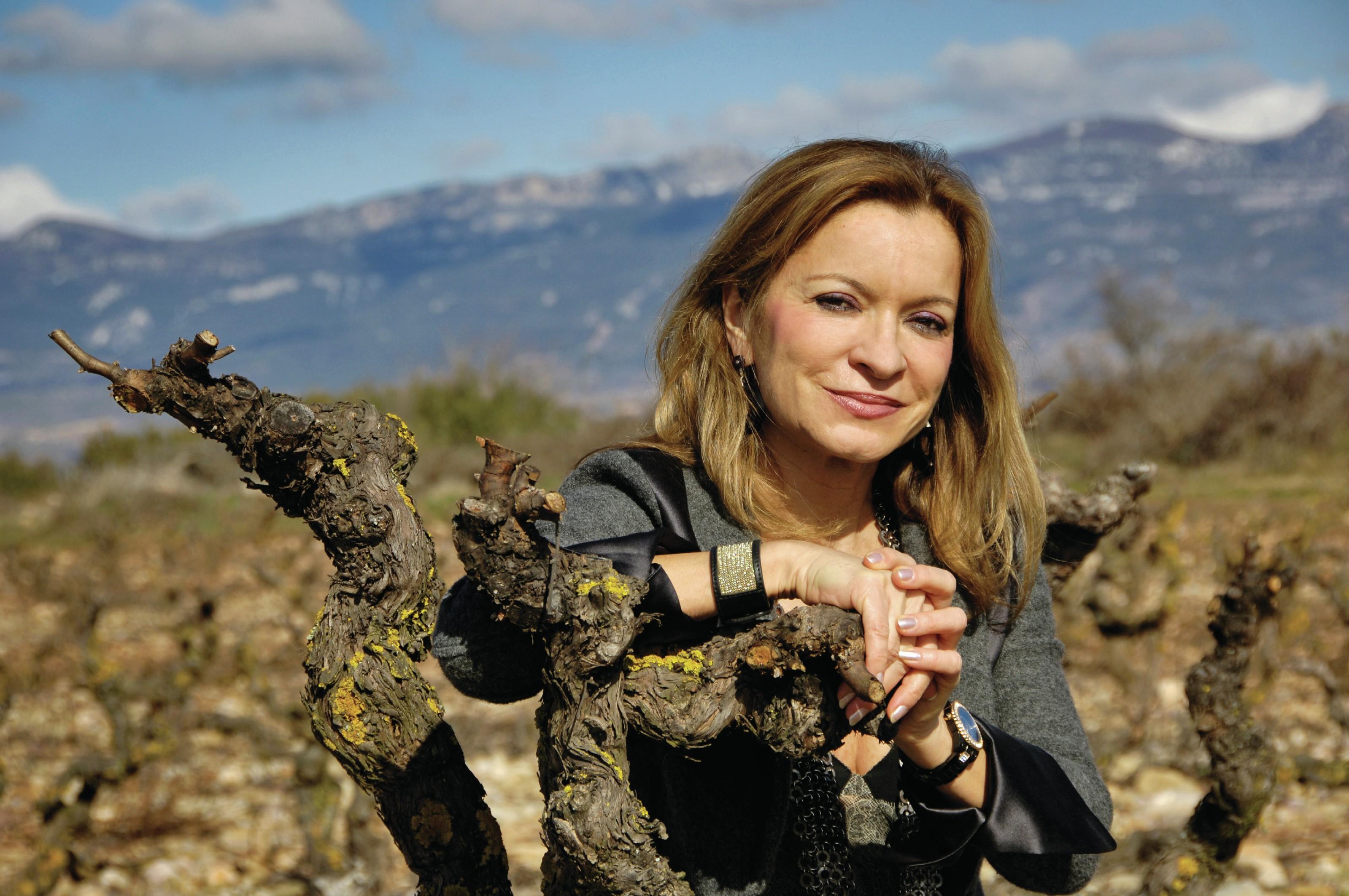
Whether you’re crafting a small-production, single-vineyard wine or a best-selling blend, both approaches require skill, and quality wine comes from knowing your vineyards intimately – a trend winemakers across Rioja have been pursuing recently, as a new brigade of vintners rises up through the ranks.“A younger generation of growers in Rioja, led by the likes of Oxer Bastegieta, Arturo de Miguel and Olivier Rivière, has been advancing the cause of better viticulture in a search for terroir character, including some new plantings of bush vines and the rediscovery of the long-despised (and uprooted) Garnacha grape,” says Spanish wine critic Victor de la Serna.
While styles may vary dramatically, there’s a shared consensus in Rioja that understanding your patch of dirt leads to wines of higher quality and greater character.
“Winemakers in Rioja have a better understanding of the ‘why’ of things now, and a better knowledge of the terroir of each vineyard. Microvinifications are also helping to create wines with a deeper identity of origin,” says Álvaro Martínez, head winemaker at Bodegas Martínez Lacuesta.
Vintners are also making the most of cutting-edge tech to help them make key decisions during the growing cycle.
“New technology is allowing us to manage our vineyards more efficiently,” says Alberto Saldón, marketing director at Bodegas LAN. “Drone flights allow us to monitor our vineyards all year round and pinpoint the plots and even individual vines that need specific attention.”
“Winemakers in Rioja used to be in their labs, but they’ve started to get out into their vineyards more, tasting the grapes and getting their hands dirty to better understand the potential of their soils, so they can capture character in the glass,” reports Rodolfo Bastida, technical director of Ramón Bilbao.
Cristina Forner, president of Marqués de Cáceres, believes that precision viticulture is “fundamental” for quality-focused bodegas.
“We’ve been practising precision viticulture for years. We not only harvest plot by plot, but also from different zones within the same plot, where the picking dates differ by several days,” she says.
Rigorous selection
Bodegas LAN’s 72-hectare Lanciano estate is divided into 22 plots, from which 12 separate vinifications are done following a rigorous fruit selection.
For Javier Arizcuren, winemaker at Arizcuren Vinos, precision winemaking happens by default.
“Choosing a harvest date for each of our 14 plots forces us to vinify them separately, which allows us to understand each resulting wine as the end of an evolution of what has happened in that plot during the year, which gives us valuable information for the following growing season,” he says.
Vinifying plot by plot has helped Bodegas Muga to bottle its revered gran reserva, Prado Enea, more regularly. “Thirty years ago, we were only able to make three or four vintages of Prado Enea every decade. Today, we can make six to seven. Thanks to precision viticulture, we’ve taken a big leap forward in the consistent style of our icon wines in years that pose more difficulties,” says Muga’s technical director, Isaac Muga.
“Precision viticulture allows us to better understand the potential of each vineyard and classify each parcel for the different wines that we make. In a normal harvest, we can have up to 350 different wines ageing in casks, which gives us greater control over our wines.”
With both approaches playing an important role in the region, arguments about the merits of single-vineyard Rioja over blends have simmered down. While they may not be as interesting or unique, blends allow for volume and consistency of style, while single-vineyard wines are at the mercy of Mother Nature, but tend to offer a more sincere expression of the land.
Bastida of Ramón Bilbao, which is shining a light on its single vineyard sites via its Lalomba label, is candid about the challenges involved in taking a sitespecific approach. “The main advantage is the distinctive ‘soul’ of the wine that we achieve – our Lalomba wines taste of their terroir, and have plenty of character and a very honest expression,” he says.
“The biggest challenge is that you only get one chance. With no option to blend with other vineyards, this can lead to a lot of vintage variation each year. But that’s the magic of wine and, if the vintage isn’t good enough, then we won’t make a wine.”
José Urtasun, owner of Bodegas Remírez de Ganuza in Rioja Alavesa, understands why both consumers and the trade have been attracted by the romance of singlevineyard wines.
“I understand the appeal of the romantic idea of knowing the place where the grapes come from, but blending from different plots has many advantages. Each vintage is different and the same plots don’t deliver the best grapes every year,” he says.
“Working across different plots and being scrupulous in your grape selection enables you to make great wines nearly every vintage, while it’s almost impossible to do so when you produce single-vineyard wines.”
Oak influence
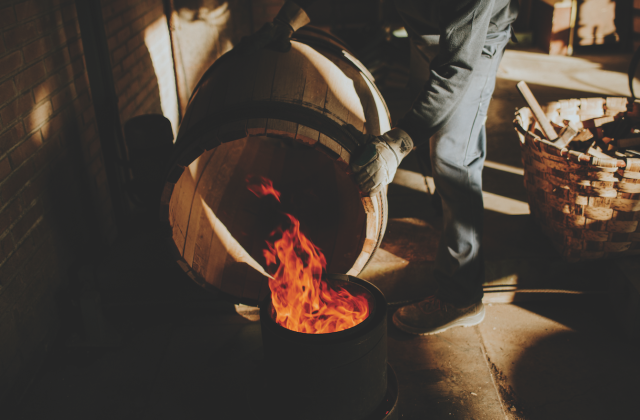
Meanwhile, both traditionalists and Rioja’s more radical renegades are seeking to lessen the oak influence in their wines. At LAN, experiments are under way with a host of different oaks, from
Hungarian, Pyrenean and Russian to Persian. “Our barrel warehouse allows us to play with an infinite number of oak types and toasting levels. It’s not an exact formula, but the sum of many tests and tastings,” says Alberto Saldón.
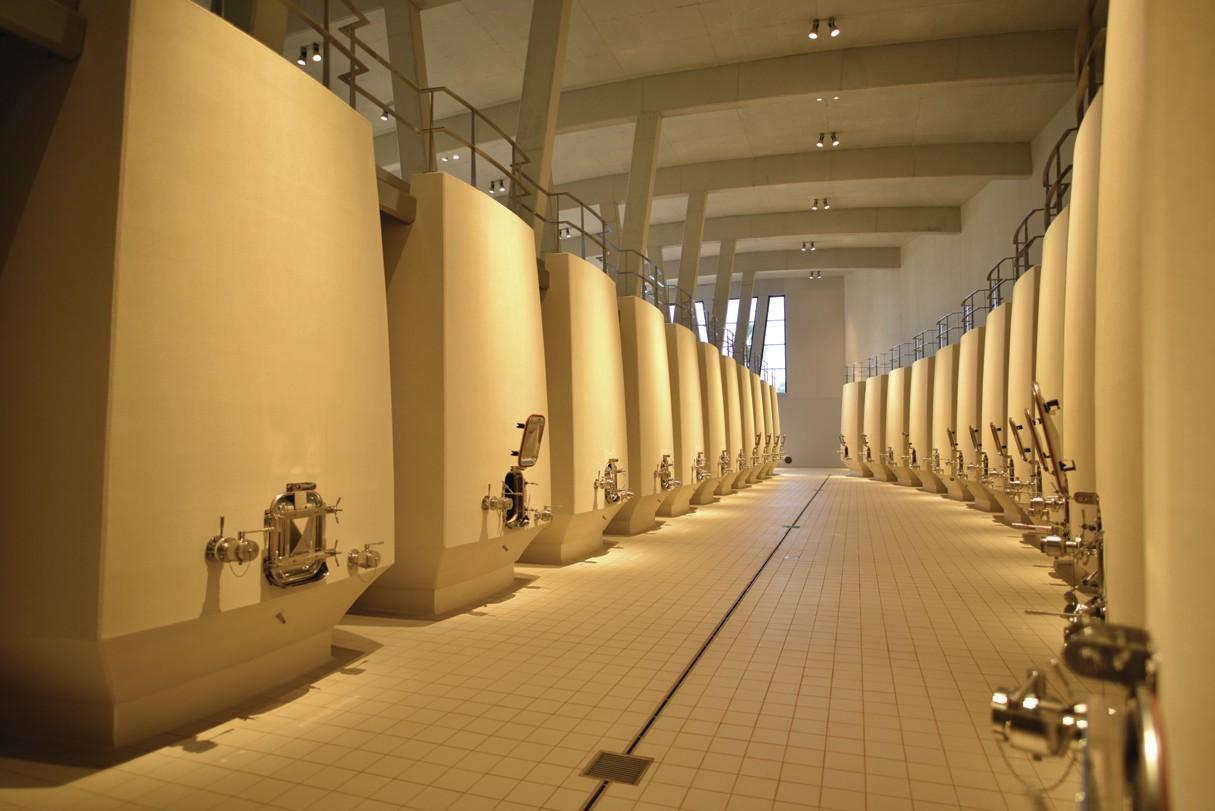
Marqués de Cáceres is currently conducting a number of ageing trials looking at acacia wood, Central European oak, 600-litre barrels and egg-shaped concrete tanks.
“We have a white Rioja that’s partly fermented in concrete eggs and partly in acacia wood that we couldn’t have imagined making a few years ago. Every year is different – recipes are no longer valid,” says president Cristina Forner.
Taking tailor-made wines to new heights, Bodegas Muga boasts its own cooperage, where a team of in-house craftsmen make bespoke casks of different sizes and toasting levels.
“Working closely with our coopers has taught me that wood in fact has a fleeting lifespan and, after around 15 years, the cask becomes harmful for ageing wine,” says Isaac Muga.
There’s an encouraging movement towards transparency in the region and an increasingly open-door approach to sharing ideas and exchanging knowledge. The hard work has been done and the focus has shifted to fine-tuning practices in the vineyard and winery to produce ever-greater wines each year.
While mass-produced Rioja will always have a market, there’s a positive shift towards lower-volume, higherquality expressions, as Isaac Muga points out.
“There’s a revolution going on in Rioja right now, led by young winemakers who are demonstrating the great diversity and potential we have,” he says. “The calibre of our growers, engineers, oenologists and resources is at an all-time high. If we manage to work together so that this exciting potential can be realised, people will discover the high quality and consistency that our land offers, and the magnificent wines we’re capable of making.”
Beyond the barrique: pioneering maturation techniques in Rioja
Breaking with tradition, winemakers in Rioja have been experimenting with an array of ageing vessels, from concrete eggs and amphorae to cocciopesto – Roman concrete mixed with terracotta and marble dust – in their quest to tease out more character and refinement from their wines.
To do so comes at a cost – those who shun 225-litre oak barrels aren’t able to label their wines as crianzas, reservas or gran reservas – but it doesn’t seem to be putting winemakers off.
“From the 2019 vintage, Cosme Palacio Vino de Laguardia will no longer be made as a crianza,” reveals Almudena Alberca MW, chief winemaker at Entrecanales Domecq e Hijos. “We’ve been experimenting with concrete eggs and oak foudres for a few years, and believe that moving outside the traditional ageing category allows us to best reflect the character of the village in each vintage.”
Cosme Palacio’s icon wine 1894 is also made outside traditional categories to allow more freedom to experiment with alternative ageing materials and barrel sizes. “The source of oak in Rioja is much more diverse now, and concrete eggs are a regular sight in wineries, while tinajas (amphorae) are becoming more common,” says Spanish wine specialist Sarah Jane Evans MW.
This approach is particularly beneficial for Garnacha; its delicate floral aromas and purity of fruit are highlighted when the oak influence is dialled down. “I’ve tasted some brilliant field blends from Rioja Oriental made mostly from Garnacha by winemakers who are using a variety of ageing vessels, notably concrete,” says Pierre Mansour of The Wine Society. Javier Arizcuren of Arizcuren Vinos ages his old-vine Garnacha in 500-litre French oak barrels, and his younger Garnacha in amphorae to “enhance the floral aromas of the vineyard and the ethereal character of the wine”.
At Bodegas Riojanas, micro-winery La Galería is a hotbed for innovation. Ageing trials involve cement tanks, stoneware and cocciopesto to enhance the flavour profiles of specific plots. “When it comes to making our Viñedos Singulares wines, we’re experimenting with different ageing vessels in order to create wines that most faithfully reflect their terroir,” says technical director, Emilio Soto.
Related news
Château Petit-Village unveils its new relationship with La Place de Bordeaux
The Italian region selling rosé to the French
China is rebuilding its on-trade around a new kind of drinker


