



Beyond Steak. What’s next for Argentine wine pairing?
Jessica Mason finds out how the South American country’s gastronomy offers rich pickings for winemakers.
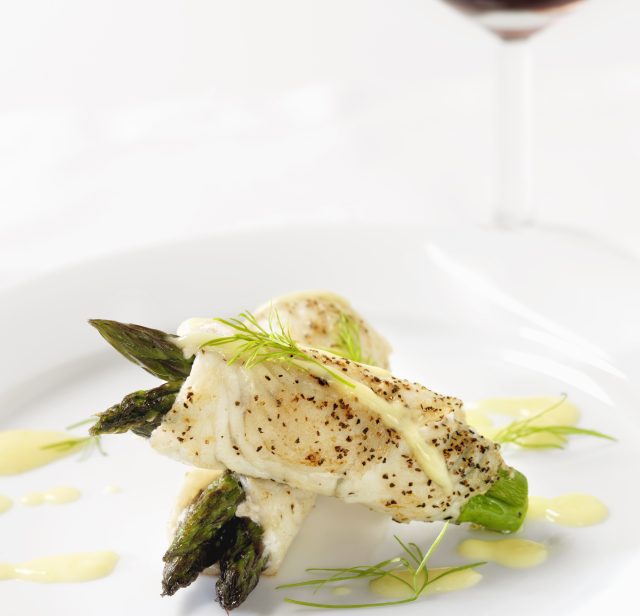
Ask any gastronome where in the world they would most like to visit and Argentina always gets a mention. You can almost see the reflection of fired steak in their gaze as their mouths water at the thought of it all.
So, what if it also became common knowledge that it is not, in fact, steak and Malbec that flavour-seeking tourists are seeking after all? That things have moved on and the draw of Michelin-starred cuisine, along with wines that offer complexity, diversity and finesse, is what’s drawing tastemakers to the South American country?
Domaine Bousquet CEO and co-owner Anne Bousquet explains: “In the early 2000s, Mendoza saw a huge leap in the quality of its wines, and an enthusiastic response towards Malbec from global markets. This spurred an increase in wine tourism, and in turn resulted in an increased focus on gastronomy.”
Naturally, when wine tourism kicked off in Mendoza more than 20 years ago, Argentina’s finest bottlings were showcased, alongside its knack for fine dining. Restaurants where chefs and sommeliers worked together in symbiosis to create menus spotlighted local wine producers, giving tourists a taste of what they were missing in other markets.
Altitude often played a vital role in the wines’ freshness and length of finish. Over time, food and wine pairings developed to something close to mastery. And the best part? Everyone embraced the revolution.
Speaking about the start of Argentina’s gastronomy wave, Graffigna wine ambassador Federico Colombo tells db that what began as a way to show importers the calibre of the country’s wines grew to become a trend in its own right. He recalls: “In Mendoza, high level gastronomy was born precisely as a need of the wine industry: many years ago, when European importers came to this region, we had to give them high level food to show off the quality of our grape varieties.”

Gastronomic scene
Just ask Flavia Amad, hospitality, tourism and gastronomy manager at Argentinian wine producer Susana Balbo. Amad points out: “Argentina is often linked to the stereotype of meat and Malbec, but its gastronomic scene extends far beyond that perception,” and reveals that now the main aim is “to challenge the conventional belief that red wines exclusively complement red meat, while whites are reserved for fish and vegetarian fare”.
Looking at the top five markets for Argentinian still and sparkling wines (by volume), the IWSR reveals that the UK, the US, Brazil, Canada and Paraguay are importing the largest number of bottles. While the US and Brazil are well-known for their adoration of red meat, Paraguay has historically been revered for its Guaraní-style surubí (catfish) soup.
While the country’s wine export volumes have been nudged down, the compound annual growth rate (CAGR) of Argentinian still and sparkling wine soared in value by +13% between 2017-2022, according to the IWSR. From 2022 to 2027, that value growth looks far more modest (a CAGR of +1%), while for the same period volumes are predicted to decline at a CAGR of -1%. It shows that, while Argentinian wine volumes are showing small declines, value growth is positive.
According to Professor Charles Spence, the head of the Cross modal Research Laboratory at the University of Oxford, how people perceive the world around them often contributes to their other senses. If a person likes the flavour of something, he says, it can have as much to do with their associations with that food and drink as with the actual taste of the item.
As a result of this, chefs and sommeliers need not be afraid of veering away from traditional wine and food pairings, and should perhaps explore common themes among food and drink, such as ingredients or culture, that unify one with the other.
Speaking about how versatile food and drink pairings can be, Prof Spence explains: “There is both growing interest in unconventional pairings like tea and chocolate, cheese and beer, etc, but then also a range of bases for pairing; for example, pairing products that have in some sense both been developed in the same way.” He suggests matching a fermented food ingredient with a fermented drink, or a food and drink based on common origin.
Willing to experiment
Instead of immediately jumping to pair Malbec with steak, Anne Bousquet recalls the winery’s chef Adrian Baggio preparing “an amazing fish dish of poached trout on potato, crème fraiche and herb with our Gran Malbec”, showing that there are rewards to be had for those willing to experiment.
Amad also recommends that people look beyond serving typical meat-fired fare and consider how a pairing is conveyed from plate to palate. In Susana Balbo’s winery restaurant Osadía de Crear, she says, “we serve pasta stuffed with braised rabbit and saffron cream, which is a perfect match for our BenMarco Sin Límites Organic Malbec, or equally, a bottle of Susana Balbo Signature White Blend”. In other words, the menu is a conduit for illustrating a wine’s complexity without reverting to the usual suspects of red wine paired with red meat.
Amad explains: “We’ve crafted dishes such as sweet potato ice cream with Andean chips, and pine mushroom broth, both paired with Susana Balbo Signature Malbec.” The restaurant also offers “a risotto with sliced zucchini [courgette], fermented Turkish lentil cream, black garlic aioli, and charcoal oil”, which is “beautifully paired” with the producer ’s barrel-fermented Torrontés.
Traditional Argentinian dishes such as humitas, which are tamales-like in appearance and steamed inside corn husks, balance well with blush wines that have just the right amount of fruit and acidity to add a tantalising sprightliness to a traditional comfort food.
As Colombo points out: “Humitas are very typical of South America — but each country has its own variation.” In Argentina, he says, “humitas go very well with a rosé wine”.
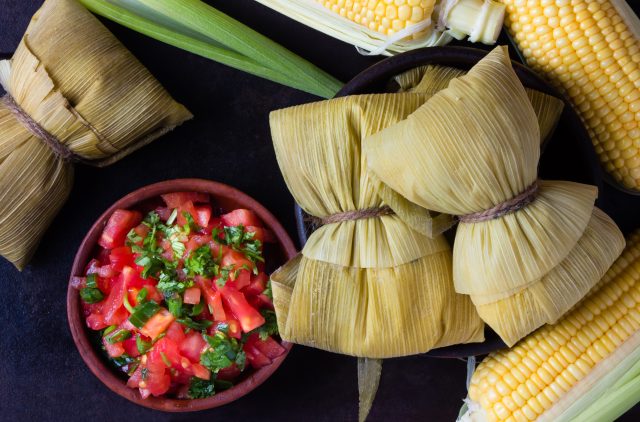
According to Doña Paula’s new wine director Cristóbal Undurraga: “Generally, Malbecs without too much structure” are a great match for dishes where vegetables are the hero, as the veg “highlights the freshness and acidity of the wine”.
Similarly, Trivento chief winemaker Germán di Cesare highlights that “a Malbec-based rosé can be a nice pairing with earthy flavours of quinoa and roasted vegetables”. A provoleta (grilled provolone cheese) is another great fit for Malbec, as the boldness of the wine can stand up to the richness of melted cheese. “We create our wines to reach everyone, which is why we have had a vegan certification for three years,” says di Cesare.
Laurie Webster, managing director of Ucopia Wines, which imports and distributes Argentinian wines in the UK, believes that “the most exciting new development from Argentina” is that there are “at least 80 Criolla varieties known so far, and more to come”. Webster is referring to the recent discovery and identification by research bodies in Argentina and Chile of more than 100 different Criolla varieties. In November 2023, Argentinian researcher Jorge Prieto revealed that the family tree of Criolla varieties is far greater “than we ever expected” and highlighted their “huge diversity”.
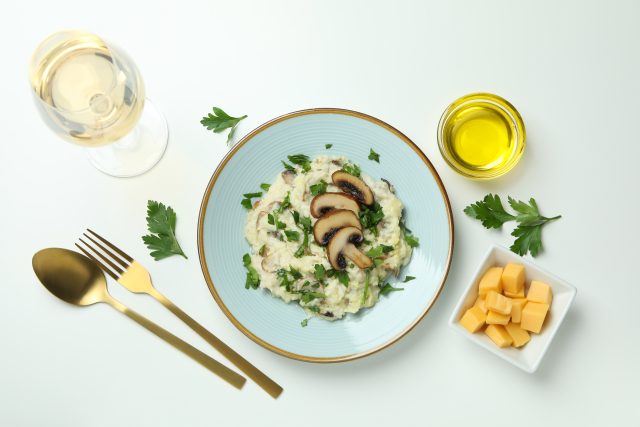
Webster asserts that “Criolla Blanca – sometimes referred to as Pedro Ximénez but entirely unrelated to the Jerez variety – has enormous potential as a ‘foodie’ grape”. He adds that “Torrontés is also now known to be a Criolla”, and says that “the leaner, more delicate styles now emerging are fantastic with aromatic cuisine such as Thai food”, as well as a range of “seafood ingredients such as crab or lobster”.
As the trend continues for seeking out flavour diversity across Argentina, Webster believes that Criolla Chica, ”the ‘father ’ of all the Criollas, aka Listán Prieto/País, has massive potential with its lighter, more aromatic profile and high natural acidity”.
He believes that Criolla Chica is “a wonderful accompaniment to rich, fatty meat dishes such as lamb, and is a fantastic diversion from Pinot Noir for those seeking new or different flavours and amazing value for money”.
Ever experimenting, Susana Balbo’s marketing and hospitality director Ana Lovaglio reveals that last year her team organised vertical tastings of Susana Balbo Signature Barrel-Fermented Torrontés in London, the Netherlands and New York, and speaks avidly about the dishes the wines were paired with, including “pea risotto with truffle and Parmesan, cod with wild mushroom velouté, and sea bass fillet with courgette flower”.
She admits that there is still a path to be walked in terms of “letting the world realise the full potential of food pairing that Argentinian wines allow”, but suggests that things are moving rapidly forward. “The journey,” Lovaglio says, “has started already.”
Related news
Beyond Vineyards’: How Château La Coste is carving its own path in the UK market


