



Cono Sur showcases the impact of its sustainability drive
Over 30 years, Cono Sur has pioneered sustainable practices in Chile. A recent masterclass in London examined its initiatives and impact.
It is quite the CV for a 30-year-old. Cono Sur achieved its first organic certification in 2003, Wines of Chile sustainable certification in 2013 and B Corp accreditation in 2021, to name just some of its many accolades. It secured these achievements while growing into one of Chile’s key wine producers, and there is no sign of slowing down.
In fact, when Patrick Schmitt MW introduced a Cono Sur masterclass in London this September, he conveyed the impression of a young company pushing the industry forward. With appropriately youthful vigour, the business has long been a trendsetting operation.
Schmitt identified two fields in which the company has led the way. Firstly, and befitting a company founded in the 1990s, organics and sustainability are firmly embedded in Cono Sur’s business practice. Even though sustainability has been on the radar for several years, it remains high on the list of consumer concerns. Secondly, Schmitt highlighted lighter reds as a wine style in demand. He praised Cono Sur’s Pinot Noirs, which include the UK’s top-seller, as leading examples of the grape.
In both cases, the expertise is plain. It is particularly impressive, given that Cono Sur produces some of the world’s most affordable organic wines and Pinot Noirs. However, it is no accident that Cono Sur has made it this far; its investment in quality through sustainability has been well ahead of the curve.
Challenges and opportunities
Schmitt transferred proceedings to Matías Ríos, head winemaker at Cono Sur for two decades. He has seen it grow into Chile’s third-largest producer, with 1,344 hectares under vine and present in more than 85 markets. For the assembled wine trade professionals, it proved an opportunity to track both company initiatives in sustainability and personal experience in winemaking.
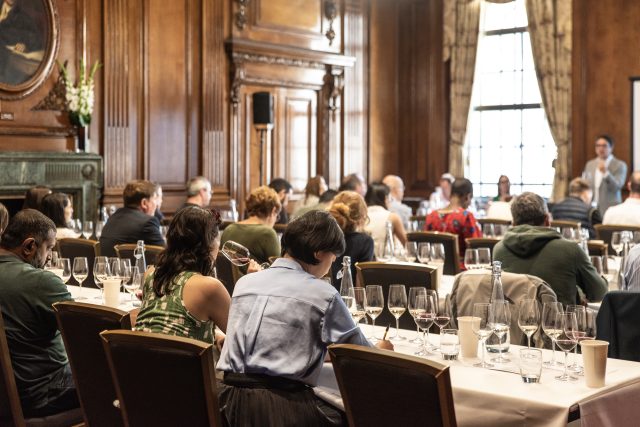
Before tracking the company’s history of sustainable initiatives, Ríos opened with two recent dispatches from the winery. Together, they illustrate both the necessity of Cono Sur’s sustainability initiatives and the opportunities it fosters.
The first, as he reported on the season’s rainfall, proved the delicate balance in Chile’s water cycle. Chile’s water system, the source of longstanding debate that even features in current constitutional wrangling, has been put under increasing strain by climate change.
Ríos spoke of low snow lines on Chile’s peaks this year, with usual snowfall replaced by rain. The result has been flooding, dangerous in itself, but which also prevents water gathering in lakes. Yet the story is not universal: in Limarí, there has been little precipitation of any kind, leaving lakes low and water scarce. Though each region is different, the necessity of water management, among other sustainability initiatives, is plain.
His second recent development, somewhat more celebratory, concerns the 30th-anniversary bottling of Cono Sur’s icon wine, Ocio. The next release, the 2021 vintage, will be the first sourced entirely from San Antonio Valley; previous vintages featured 85% of grapes from neighbouring Casablanca Valley. The project has been a long-term investment, with the vines Ríos planted in 2000 finally ready to produce the high-quality fruit required. The seeds (or rather the rootstocks) planted 20 years ago are now supporting both sustainability and quality: the region offers a cooler climate, less risk of viruses, a more consistent water supply and healthier vines.
The environment can provide many challenges for a winemaker, but it can also open up new opportunities, even for top-end wines. The challenge for Ríos is to make fine wines with minimal environmental impact.
Little surprise, then, that sustainability is at the heart of the business. Along with innovation and quality, Cono Sur lists it as one of the three pillars of the company’s work. The three pillars inform work across all its vineyards, from Bío-Bío to Aconcagua, and across its entire price range. Emerging as a leader in sustainability has been a defining project.
Four focuses in sustainability
As previously mentioned, water management is prominent in Cono Sur ’s sustainability agenda. Indeed, it was the first green focus that Ríos addressed as he guided attendees through the company’s initiatives.
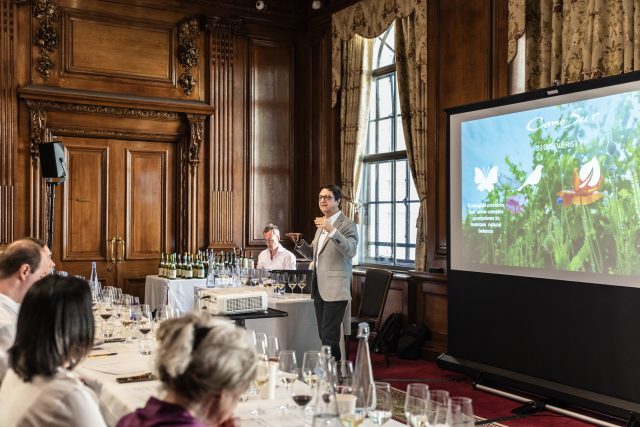
Minimising water use across the winegrowing and winemaking processes at Cono Sur has been a substantial challenge, but it is vital work. Though this year ’s rainfall has led to unusual flooding, the previous 15 years were dangerously dry across Chile. With lakes drying up and pressure on public supplies, there is a careful balance to strike: enabling the agriculture that supports the economy while ensuring the resource is fairly distributed. Minimising waste is of utmost importance.
To that end, Cono Sur has changed its processes from the vineyard to the winery. It has rolled out precision irrigation systems, ensuring that each vine gets the water it needs without waste, and has consequently driven down the water used per row of vines. The hardy systems are designed for remote operation and to withstand the elements, future-proofing the investment.
The company has also reduced water usage in its cellar. Since starting to track its usage in 2015, the amount of water needed has been cut by more than a quarter, particularly through recycling water used for hydrating barrels.
There are even opportunities to think radically about water reduction, with some regions in the famously long nation providing more consistent irrigation than others. In particular, Bío-Bío, an emerging region towards the south of Chile’s winemaking country, is proving more viable in terms of water management. In a changing climate, radical moves such as switching production location are entering the conversation.
The company’s next area of focus is soil health. Long a focus of sustainable viticulture, with the risk of contaminants leaching into soils often cited as a reason for pursuing organic practices, the wine world’s understanding of soil ecology is still developing. Indeed, research increasingly indicates that soil microbiology informs the expression of terroir. The concern is not just for the overall ecosystem; it matters for the wine too.
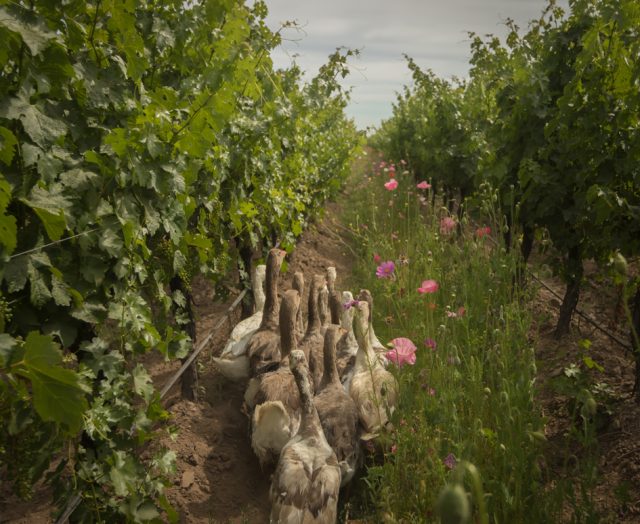
Ríos explained Cono Sur’s practices in terms of natural alternatives. Rather than use artificial fertilisers, for instance, the vineyard team uses compost. Geese – more than just a hook on the company Instagram account – are active pest controllers, roaming the vineyards for insects to eat and reducing the need for insecticides.
Meanwhile, cover crops promote the soil’s resilience and overall health. With a wide diversity of plants on the estates, Ríos has seen soil structure improve, as well as better water and nutrient retention. The cover crop scheme dramatically reduces the need for fertiliser, sometimes cutting the amount needed by 90%. Moreover, he sees this balance between vines, soil and cover crops as essential to each estate’s unique identity, a “fingerprint of terroir”.
Interrelated to soil health is Cono Sur’s third sustainability focus, biodiversity. Much as the geese prove a natural solution to certain insects, promoting competition is a natural means to balance species populations. In practice, it redefines what you might assume to be a pest; in Ríos’ definition, a pest is simply a species that is draining too much from the ecosystem. Pairing natural competitors – fungi to compete with fungi, insects to compete with insects – ensures that no one species can threaten the vineyard. It can even have a regenerative impact. Birds of prey, which naturally would have hunted in the Chilean countryside, are now encouraged into the vineyards in order to control bird populations.
Though at points this process may need a nudge, for instance in the selection of cover crops, Ríos was keen to emphasise that it is a relinquishing of control rather than an imposition. The core tenets of Cono Sur’s biodiversity policy are to enable nature to find a balance. Its 456ha of organic vineyards, one-third of its plantings and extending every year, are already a haven for wildlife. However, dedicated green spaces and ecological corridors are instrumental in connecting the vineyards to the natural landscape. In granting animals, plants, fungi and microbes access to the vineyards, the company allows nature to maintain a healthy balance, and saves Ríos from having to micromanage it.
The final focus of Cono Sur ’s sustainability initiatives is in managing its carbon footprint. While its other schemes are embedded in its landscapes, this has to take a global perspective. Some initiatives are direct in limiting carbon emissions; for instance, solar panels in five vineyards are an immediate source of clean energy, while LED lighting minimises consumption in the cellar. However, at other points the company has had to recognise the logistical limitations of carbon neutrality.
Transport is a particularly thorny issue. It accounts for 56% of the company’s carbon emissions, and yet Cono Sur has set, and met, a target of its transportation system being carbon-neutral since 2007. The bold target has required both internal and external changes. Lightweight bottles are now found throughout the company’s range, a switch well within the company’s power that reduces emissions in the transport chain. However, for those emissions that are truly unavoidable, it works with carbon offsetting experts to achieve a neutral process. Cono Sur’s offsetting has, for instance, helped build wind power infrastructure in India, Chile and Guatemala.
Looking forward, there is plenty of work in progress. Irrigation systems are being tweaked for energy efficiency; solar panels are being installed on rooftops; and electrical forklifts and frost fans are lessening the need for polluting fuels. Though Cono Sur has progressed much in 30 years, there is no sense of resting on past achievements.
Sustainability in the bottle
Ríos freely admits, however, that the focus must always be on high-quality wine, which Cono Sur chooses to make with green practices. To this end, he and Schmitt presented seven wines that proved a commitment to quality as well as sustainability.
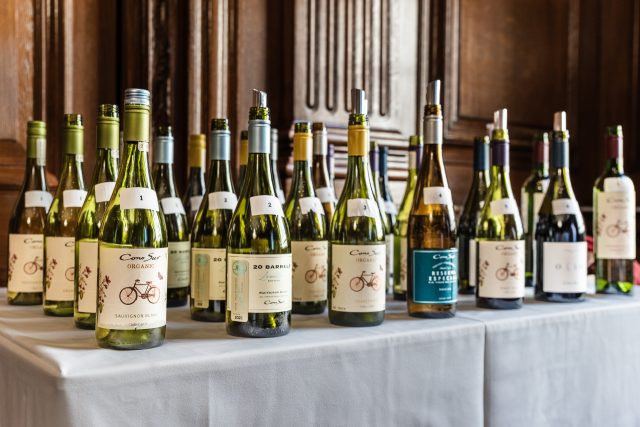
The Organic Sauvignon Blanc 2022, a blend of three estates, showed the freshness of Chile’s cool-climate Sauvignon Blanc, with notes of lemon grass, lime and pear. It also demonstrated the virtues of organic viticulture; the balanced ecosystem means that no green harvest is required. Meanwhile, the 20 Barrels Sauvignon Blanc 2023 is the company’s approach to gastronomic Sauvignon Blanc, an example from Casablanca Valley that demonstrates fresh green aromatics against a texture that is salty and rich.
Next came the Organic Chardonnay 2022, 50% of which comes from Chimbarongo, the coolest part of Colchagua. The wine, with aromas of grapefruit pith and pineapple, undergoes no malolactic fermentation and ages in stainless steel, making for a fresh, yet still textured, expression of the grape. Meanwhile the Reserva Especial Riesling 2022 uses many of the same winemaking techniques, but for a markedly tropical fruit character accented by white blossom aromas that are the hallmark of Bío-Bío.
As Schmitt explained, Pinot Noir is integral to the Cono Sur range, and the Organic Pinot Noir 2022 evidenced both the challenges and rewards of the variety. The approach is lighttouch, intending to balance soft tannins against the grape’s natural cherry and raspberry flavours, and all in a wine that retails for under £10 in UK supermarkets. The Organic Red Blend 2022 offered a stylistic counterpoint: the Cabernet Sauvignon-led wine showed blackcurrant, cherry and olive notes against juicy acidity and firm tannin.
The star red, however, was Ocio 2020. Hand-picked and then selected again in the cellar, only the very best Pinot Noir grapes across two estates make it into the wine. The entire process, from cold maceration to 14 months spent in barrel, is a celebration of the variety, allowing its delicate flavours to shine. Schmitt noted the depth of the outstanding wine, even as it showed delicate aromas of sour cherry, redcurrant, flowers and smoke. Though aided by Burgundy expert Martin Prieur in its conception, Ríos was proud to emphasise that Ocio is a distinctly Chilean style, rather than a copycat endeavour.
As a statement of intent, nothing could beat the producer ’s icon wine. However, with such a range of styles and price points, the tasting truly demonstrated that sustainability can inform quality across a range. As Cono Sur looks to push even further in sustainable viticulture, the portfolio looks poised to go from strength to strength.

Related news
Cono Sur shows off terroir-led range
Historic Polish vodka distillery heads to auction with £53m redevelopment potential


