



Heavyweight contender: How the 2023 Champagne harvest fared
Producers are reporting an extraordinary 2023 Champagne harvest, characterised by some of the heaviest grape bunches on record, writes Giles Fallowfield.

For the majority of producers in Champagne, the 2023 harvest finished between 20-22 September. It is hard to generalise about quality, as variability can be significant from cru to cru and plot to plot. There are, however, several common characteristics.
The agronomic yield is very large indeed for black grapes, with reports of more than 20,000 kilograms per hectare (kg/ha) in some crus. Potential alcohol levels are generally lower than in 2022, but phenolic/aromatic ripeness was achieved more easily, at a lower level of sugar ripeness.
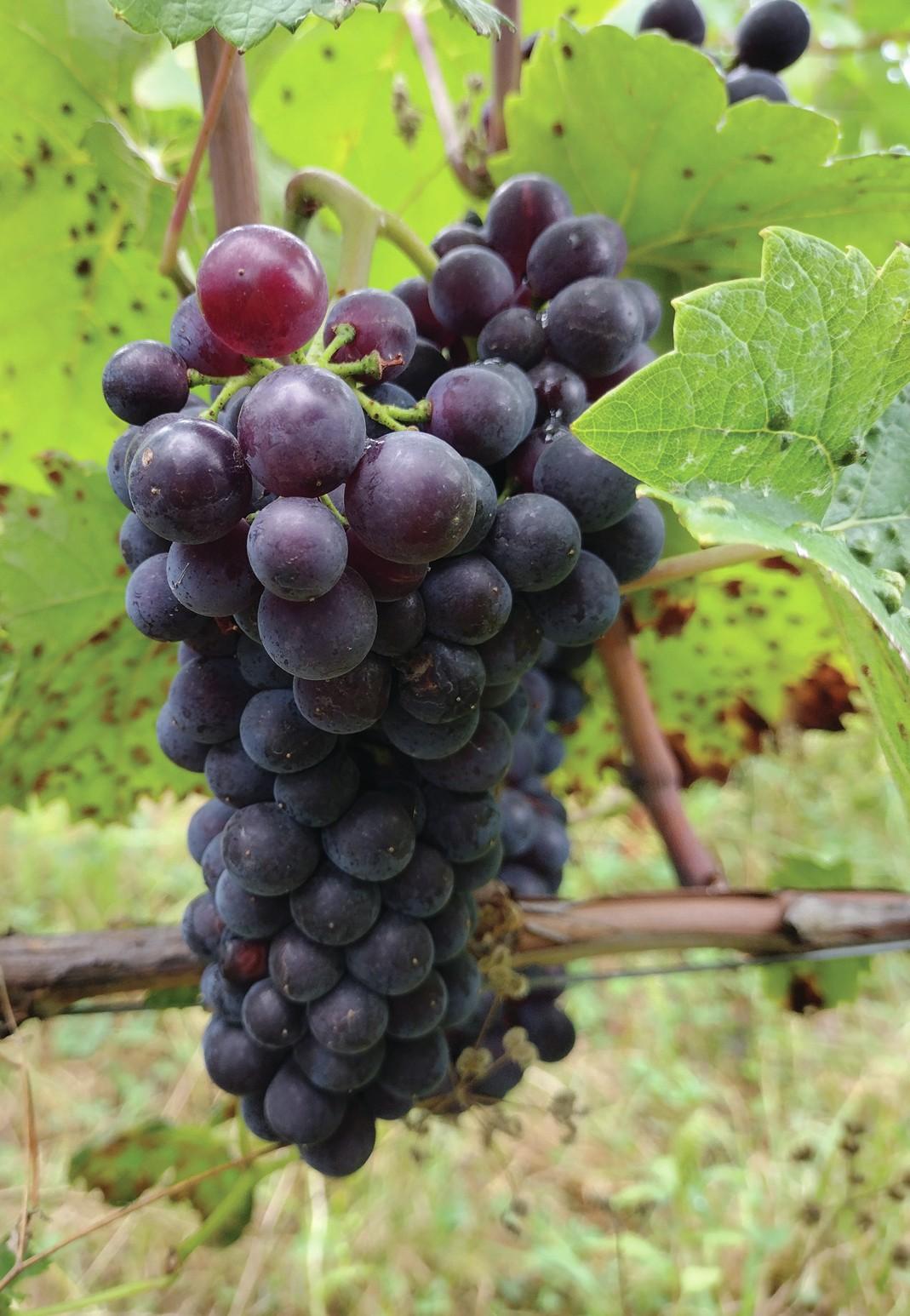
Bunches of grapes and individual grapes have some of the highest weights ever, and the heaviest bunches since 2005; this is particularly true of Pinot Noir. The previous record, logged in 2005, was 180g, but in 2023 it is more like 220g.
“I’ve seen one bunch over 800g for Pinot Noir and over 200g for Meunier. I’ve never seen that before,” Gosset cellar master Odilon de Varine says.
After the wet and humid weather in the latter parts of July and much of August, botrytis looked like developing into a big problem, but the very warm, dry weather at the end of August and start of September improved this situation considerably, largely keeping rot in check.
Selection in the vineyard by the pickers was particularly important this year, with the large bunches and abundant crop making the jobs of harvesters much easier – in the sense that they could afford to entirely avoid and discard rotten bunches, leaving those on the ground, because there were plenty of large, healthy bunches.
This also enabled them to work more quickly, and as they are paid by the kilo, helped boost their earnings. However, the very high temperatures of 35°C and above in week one (2-10 September) made the work much harder, and the oppressive, potentially dangerous heat contributed to the deaths of four harvest workers, as reported in local paper L‘Union.
Uncomfortably hot
Alice Paillard, director of eponymous house Champagne Bruno Paillard, says Chardonnay picking began in the middle of the first week (6 September), after which temperatures rose steadily, becoming uncomfortably hot and sticky in the vineyards.
Hannelore Chamaux-Rima, directrice générale at Castelnau since mid-April, tells db that some producers started picking before dawn, using head torches, to escape the heat, and that on 10 September temperatures rose as high as 38°C. High temperatures also meant that grapes were arriving in the winery too warm, with a danger that the first alcoholic fermentation might start automatically, but in an uncontrolled way.
“If grapes arrive in the winery too hot, you have to cool them first before processing,” says Castelnau cellar master Carine Bailleul.
“We’ve never had this sort of temperature before in Champagne during the harvest, especially not in a September harvest. We were not prepared for it, but [given global warming] it will probably happen again. We need to think about how to adapt to this temperature level in future harvests.”
Chardonnay is the quality pick of the crop this year, but Pinot Noir is also decent if selection is good, while Meunier is the most vulnerable to disease and the more difficult of the three grape varieties in 2023.
For Charles Fourny of Veuve Fourny & Fils, “Chardonnay should be king of the year, and with Pinot Noir we can expect a good result after sorting, but it’s too early to talk about whether it’s vintage-worthy or not”.
“This 2023 harvest is more challenging than last year ’s [2022],” says Lallier directeur général and chef de caves Dominique Demarville. “The yield is very big, the weather was a little bit cold and humid in most of August, but for the past two weeks it has been very hot and dry. Not too good for the people picking, but it’s helped the quality a lot.”
He adds: “There’s some damage due to botrytis, mainly on the Meunier with a little bit on the Pinot Noir, but the Chardonnay, most of which is already picked [by 14 September], is very nice.
It’s the success of the year with a good level of ripening, no botrytis and a good level of yield. The high yield for the Pinot allows us to leave all the damaged, rotten fruit and still reach a good level. I’m very confident because the pickers are doing a good job.
“We lost at least 20% of the grapes here in Terre des Basses Vignes [Cuis], but with the high yields – as much as 18,00019,000kg/ha for Pinot Noir – we can leave 25-30% of the crop on the ground and still easily reach the appellation level of around 12,000-13,000kg/ha. This year the expertise of the pickers is very important.”
This is a point reiterated by Phillippe Brun of Champagne Roger Brun, who runs one of two independent presses in the grand cru village of Aÿ, where the house of Lallier is also based.
When I dropped in to visit Brun towards the end of a long day of harvesting and pressing, he was feeding his largely Polish crew of pickers, who return to work for him year after year, as they cheered on the victorious Polish volleyball team on TV.
“You can have all the certifications in the world, but you will never make good wine with bad material, and to get that you have to look after your pickers,” says Brun. “Today in Aÿ and Mareuil-sur-Aÿ they picked and sorted 15,000kg/ha of healthy Pinot Noir, with sugar levels at between 10.4 oo and 11.2 oo.”
Hervé Dantan, chef de caves at Champagne Lanson, concurs. “The key is selection. With the rain and the problems with rot, some black grapes exploded. You had to select, select and select again to have a healthy crop of black grapes. But this was relatively easy because of the size of the harvest,” he says.
“The Chardonnay was all good, from Montgueux in the south to the crus in Vitryat, Sézannais and Montagne de Reims. It’s back to the kind of vintage we had in the 1980s, with very nice fruit flavours. Not high levels of concentration, but that doesn’t mean it’s not good. Black grapes are a bit more sensitive to large volumes than Chardonnay.”
As for the yield level, Lallier ’s Demarville says they reached around 15,000-16,000kg/ha for the Chardonnay in Oger, while for Pinot Noir agronomic yields were 18,000-19,000kg/ha, making it easy to pick about 12,000-13,000kg/ha of healthy grapes, leaving about 25-30% of the grapes in the vineyard.
Healthiest possible
At Champagne Deutz in Aÿ, the winemaking team of cellar master Michel Davesne, who is retiring after the 2023 harvest, and his successor Caroline Latrive decided to pick early to get the healthiest possible grapes, starting with Chardonnay on 6 September. Unusually, yields were lower in Chardonnay than in Pinot Noir.
“The heat in that first week of picking was very intense, with the fruit reaching perfect ripeness, but at a lower level of potential alcohol,” says Chloé Verrat, Deutz marketing, PR and communications director.
While each producer would normally have a planned picking circuit based on the known typical maturity development of their plots in different crus (dependent on grape variety, age of the vine, soil, aspect, orientation and altitude), that kind of plan had to be largely abandoned this harvest, with everything scheduled daily at the last minute, in late-night or early morning meetings between winemakers and vineyard management teams.
This is a point underlined at Jacquesson by new managing director Jean Garandeau, who joined the maison in September 2022. He has been commuting to Champagne from Bordeaux since Artémis Domaines, owned by the Pinault family, bought the Dizy-based house last year.
Garandeau has clearly spent a lot of time working with Jacquesson’s Jean-Hervé and Laurent Chiquet, during and since the 2022 harvest, when he says: “You could make a plan for the order of picking at the start of the week and not have to change it at all. But this year that’s quite impossible; you must be flexible and present in the vineyard.”
By travelling three days a week on the train from Bordeaux, Garandeau has seen the whole 2023 viticultural cycle in Champagne.
Flowering was near-perfect and, as a result, it was looking good in terms of volume. But the poor weather in July and most of August was a concern, with disease issues and large grapes and bunches struggling to ripen.
“However, the hot weather from the end of August accelerated the ripening process and we started picking on 11 September. The Meunier gained nearly 2oopotential alcohol in just one week,” Garandeau reports.
There has been no clear order in which the grapes are picked. In terms of rot, Chardonnay was the least-affected, while with Pinot Noir there was a bit more, but “2023 was not a 2017. It wasn’t a 2022 either in terms of either intensity or potential alcohol and ripeness levels”, says Garandeau. “We didn’t have the same homogenous level as in 2022. The heat at the end of August was intense – we rarely see temperatures over 35°C for five of six days at the end of August, and start of September.”
Throwing out the past established order of picking is a point underlined at Mailly Champagne by director Xavier Millard.
“We started picking the Chardonnay (about 25% of our crop) first this year in Mailly, which has never happened before, starting on 9 September,” he says. “This was partly because the yield was smaller. We started on the Pinot Noir on 11 September.
“We can usually plan the picking order in Mailly each year across the 2km from the bottom to the top of the slope in the village. It’s not a year for high degrees, with the potential alcohol around 10° for Chardonnay and 9.5-10° for Pinot Noir, but tannins are mature at that level, [and] pips are mature/ripe. The alcohol maturation was slower than the phenolic this year. We had to reach 11.5° to reach phenolic ripeness last year.”
Speaking to Michel Drappier, whose family business is based in Urville in the Côte des Bar, on the day after his harvest ended (22 September), he said it had been the most hectic 15 days of harvesting he had ever experienced and the largest volume of grapes they had ever pressed, with yields in the region of 21,000kg/ha in Drappier ’s own, largely organically certified estate.
“It was almost a double crop,” he says.
In fact, Drappier ’s problem was finding enough tankers to transport the juice, and enough tanks to store it, reaching full capacity in only two days during a “very concentrated period of pressing”.
In fact, he says, “we’ll never really know how big the harvest was and whether it was a record or not, as with some plots of Pinot Noir and Meunier, up to 50% of grapes were left on the vineyard floor”.
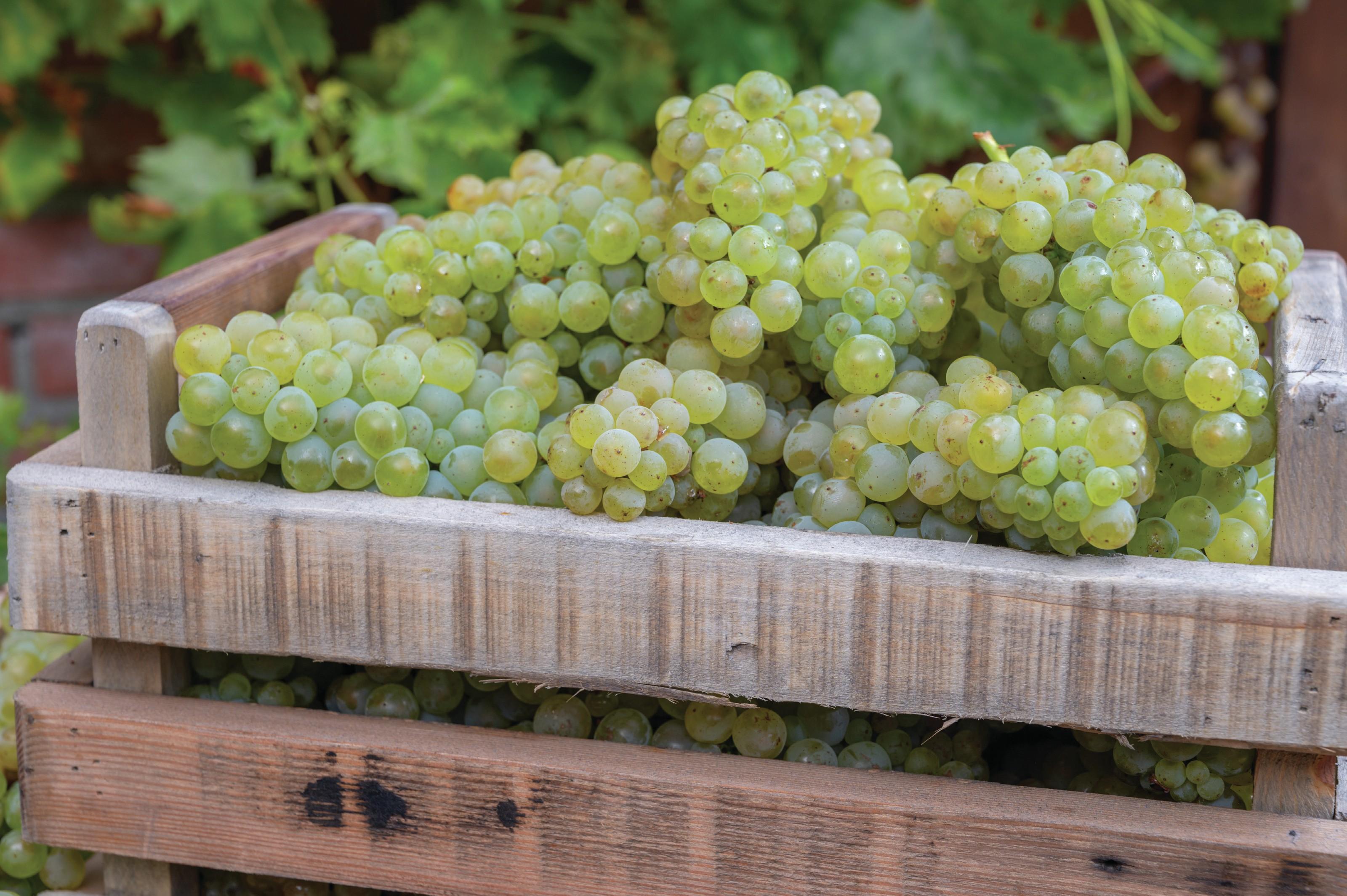
Drappier adds that Chardonnay “was a surprise” this year as “we had a beautiful and large crop, and it tasted like grand cru Chablis.”
Drappier experienced less disease with its organic fruit “because we are careful and sprayed more often with copper and sulphur, but only very small amounts each time”. He believes that the quality of the organic grapes was even better than conventionally-grown fruit.
”We were scared of a mildew attack like in 2020 or 2016, but we are more confident with the organic than the conventional approach, where there was more evidence of oidium.”
Drappier puts the high yield down almost entirely to the very successful flowering, and the successful ripening to the fact that, with very low yields in 2022, 2021 and 2020, the vines had more energy to feed that big crop.
Comparing 2023 with the previous, highly successful, 2022 harvest, Lallier ’s Demarville says: “Last year it was almost too easy. Everything was good and we will certainly be making some vintage wines. It was very dry in July and August; we never worked with a higher level of sugar to get a good phenolic flavour in the grapes. This year [2023] is more of a ‘normal’ year because the grapes have ripened earlier [aromatically speaking] in the cycle than in 2022, if you look at the lower level of the sugar.
“We know that in hot years like 2022 and 2019 you can’t just look at the sugar, you must look at the level at which you get good phenolic balance. This year for Meunier, 9-9.5 oois a good level, while for Pinot Noir it’s 10 oo. It was a balance between achieving the preferred sugar level, while monitoring and keeping at bay the onset of botrytis. You had to be in the field to see what a good level was. Some parcels were destroyed by botrytis before they reached 8.5 oo potential [the lowest potential alcohol level at which the Cahier des charges allows grapes in Champagne to be picked].”
Demarville considers that, until now, global warming has been largely beneficial for Champagne, and he thinks that will continue to be the case for the next few years.
“When I started working as a winemaker, the first four harvests (1991-1994) were very challenging years, with botrytis pressure on grapes struggling to mature at lower temperatures in late September and early October. In four of the past five years, we’ve had exceptional harvests and currently all the [extensive] reserve wines held by producers are top-quality as a result.”
According to Champagne Billecart-Salmon CEO Mathieu Roland-Billecart, “Chardonnay was by far the star of the year – universally in the grands crus of the Côte des Blancs, in Sézanne and in Vitryat. The thicker skin of the Chardonnay coped better with the ‘unusual’ weather pattern, if we can say ‘unusual’ about any weather pattern now in Champagne.”
The harvest was also different sequentially, in that all three main sectors of vineyards started at around the same time and, at the beginning, there was an element of firefighting.
“The experience of an older generation, where they expect to always pick this village first and end with that one, no longer works and to cope we need a much bigger picking team,” says Roland-Billecart. “We picked over 16 days, which is a long time, but you need it to be much more flexible.”
Asked what makes a great vintage today in Champagne, Roland-Billecart says: “One that gives great wine. This has to be judged over the coming months as we follow the wine. I tasted the grapes and some of the must at pressing, and I’m very confident with Chardonnay.
“Great wine is just a concept, but each vintage is different and today it’s not going to be the same as those considered great in the 1950s, 1960s and even the 1990s. Each year we have to adapt to find the right balance, often working with riper fruit, but our degree of influence is limited as nature ultimately decides. Today adaptability is key.”
Chalky texture
Castelnau winemaker Bailleul says she’s looking for grip and chalky texture in wines like Castelnau’s vintage blanc de blancs style. “It’s less about acidity and more about tannins in Champagne today. That’s very important for the long ageing of wine on its lees,” she says.
For Charles Fourny, “Champagne is changing, and we are faced with new conditions. We have passed from an acidic freshness to a saline or mineral freshness. Forty years ago, the wines were still quite acidic even after a second fermentation and, with two years in the cellar, needed quite a high dosage. For the past 10 years, dosage is barely necessary.”
Odilon de Varon at Gosset is quite confident about the 2023 harvest, because it offers the possibility of choice he wants for blending. He is not looking for uniformity. “What we have had this year is more interesting than a hot, even harvest,” he says.
“If the last few years have taught us anything,” concludes Alice Paillard, “it is that we cannot set defining standards for a ‘great year,’ as each vintage can perform better or worse based on a multitude of factors. If we compare the last two vintages alone, there is no such thing as a linear path. We need different levels of both acidities and maturities in order to achieve great aromatics.”
Is 2023 the largest harvest to date in Champagne?
There is certainly strong evidence to support this suggestion, as the maximum yield, including the réserve, was set at 15,500kg/ha. Since the turn of the millennium, that level has only been set on four previous occasions – in 2007, 2008, 2018 and 2020.
The latter two are not contenders, as the actual yield achieved came nowhere near this in 2020 (8,284kg/ha) although it reached a decent level of 12,360kg/ha in 2018.
This leaves 2007 and 2008, although 2004, when the maximum yield including the réserve was set at 14,000kg/ha and nearly that much was picked (13,990kg/ha), isn’t far behind on paper.
In 2008, it was a case of high quality plus big volumes. The yield reached 14,228kg/ha, but in the previous year, 2007 – a great year for Chardonnay, but less exciting for black grapes – it was higher still at 14,270kg/ha. So that is the target for 2023 to surpass.
And it seems that it’s more than just large volumes which 2023 has in common with 2007 — everyone db has spoken to so far sees Chardonnay as the star of the show this harvest.
However, while Chardonnay volumes usually comfortably exceed those of both Pinot Noir and Meunier in nine harvests out of 10, that was not the case this year.
Some people have talked about picking 16,000-18,000kg/ha for Pinot while leaving around one-third of the grapes produced by the vines on the ground. The real question is: how much of the vineyard was hit by rot? And was this widespread enough to bring the achieved yield below 2007’s high of 14,270kg/ha?
Related news
Napa Valley's Bouchaine Vineyards appoints new DTC director
Alcohol cancer labels: public health measure or scare tactic?
WineGB Awards reveal growing diversity of English and Welsh wine


