



The future is bright for Austrian Sauvignon Blanc
With Sauvignon Blanc coming second only to Grüner Veltliner in terms of grape popularity in Austria, Gabriel Stone finds out why there aren’t more Austrian Sauvignons on the shelves and what the best styles have to offer.
What was the first music album you bought? With the exception of those most irritatingly sophisticated types, it’s very likely that your tastes have since moved on some distance. Just like Abba or the Spice Girls, Sauvignon Blanc has been highly successful at recruiting young fans with its infectiously perky attitude. But after a while this charisma can start to feel too obvious, too saccharine, too hen party.
Maturing disciples drift off in search of more refined pleasures. A shot of respectability comes under the regional (dis)guise of Sancerre, but even this is so often deployed on restaurant lists as a respectable safety net for the unimaginative. Then, of course, there’s the perennially unfashionable Bordeaux Blanc. Can Sauvignon Blanc ever be an edgy, original, connoisseur ’s choice? Enter Austria.
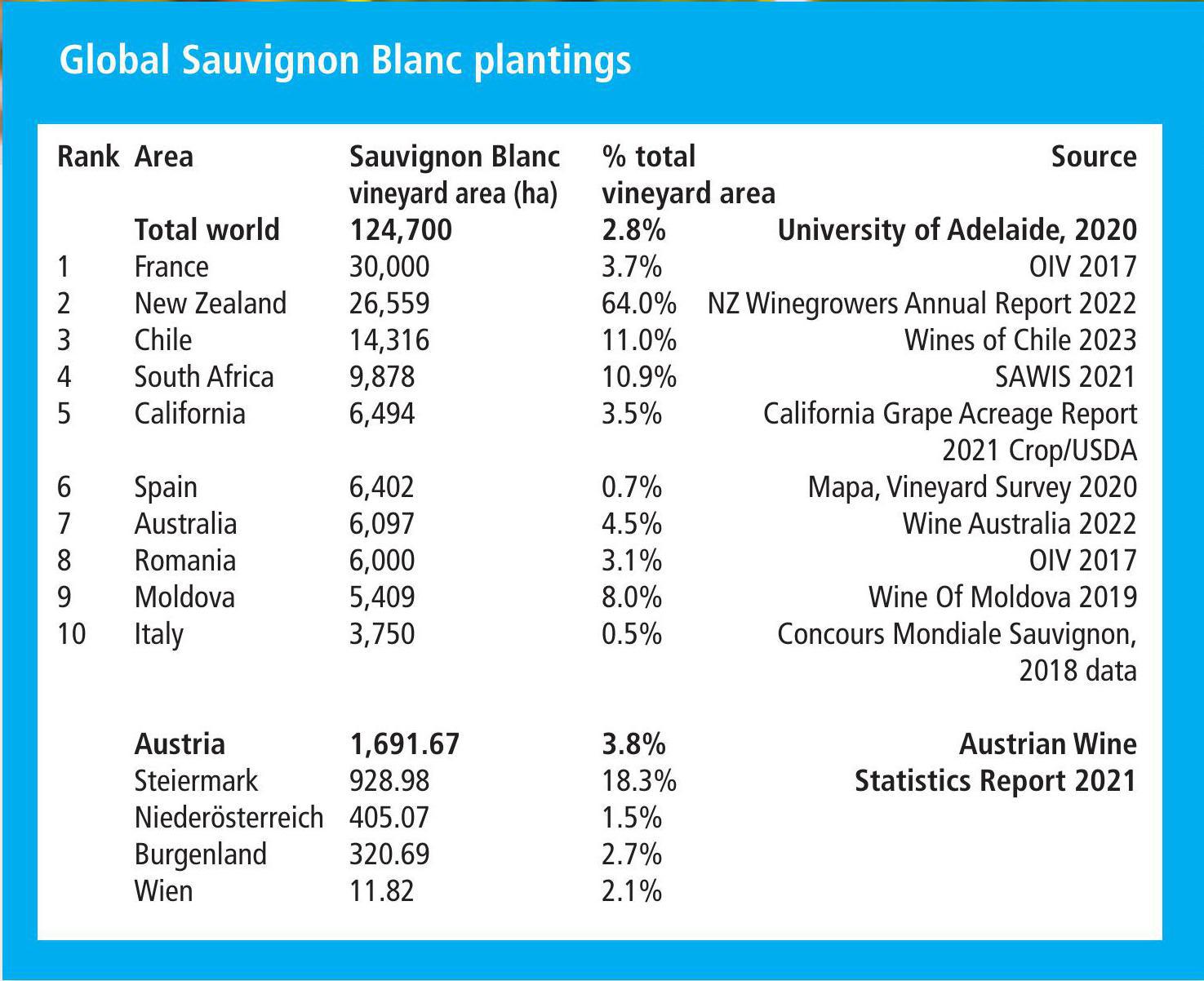
In recent decades there’s been a quiet Sauvignon Blanc boom in this corner of Europe. It’s a trend that reflects the variety’s wider global surge: from 65,190 hectares in 2000 to 124,700ha by 2016, according to the University of Adelaide. More recent data is elusive, but evidence from individual countries strongly indicates a trend that has only picked up pace since then.
Mighty Marlborough and the Loire are unlikely to quake at the relatively modest 1,691ha recorded in the Austrian Wine Statistics Report 2021 (see chart), but anyone who has already embraced Austria’s other styles will know that this country’s excitement lies not in its quantity but its quality.
INCREASED PLANTINGS
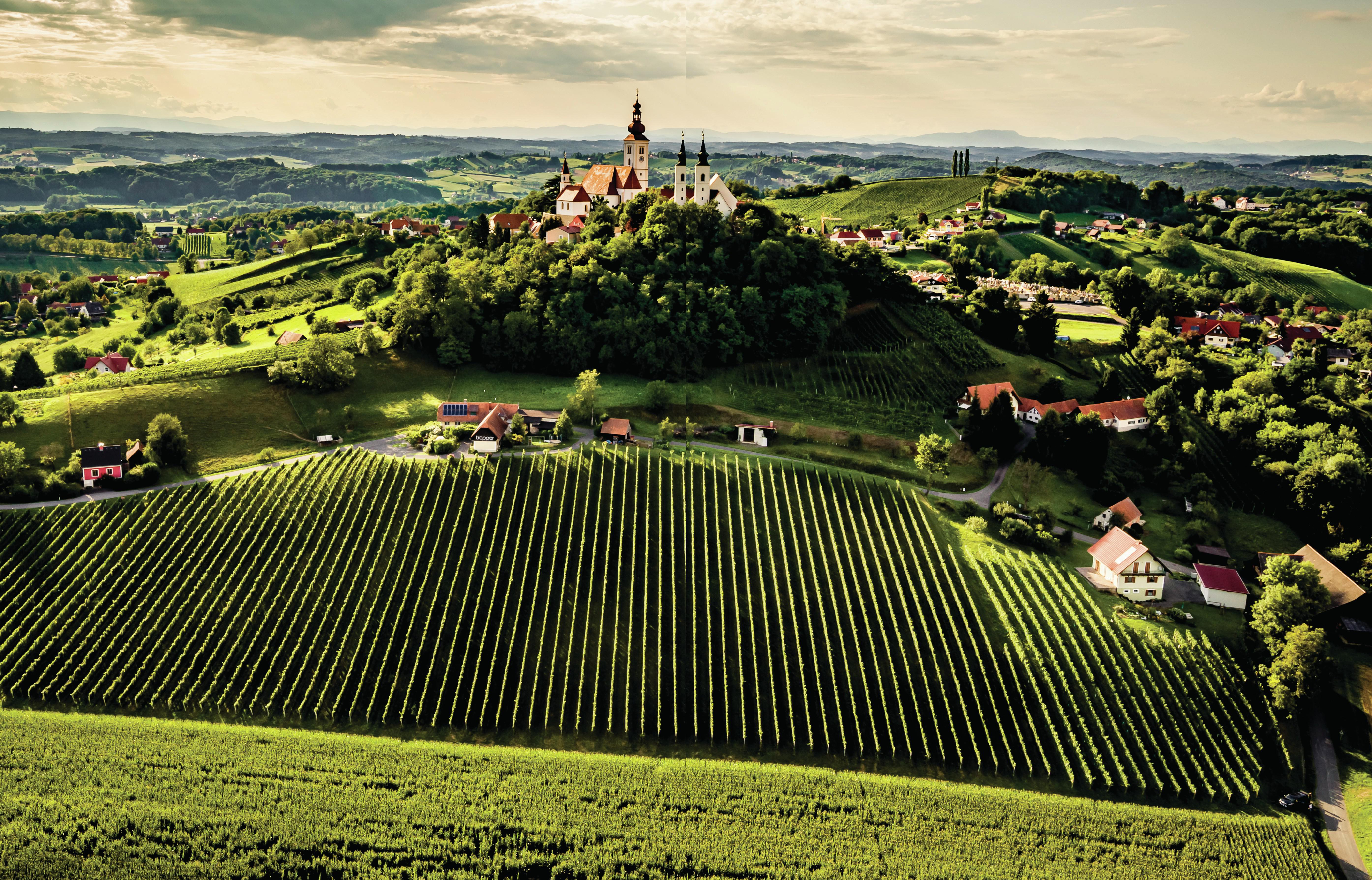
While a small sprinkling of Sauvignon Blanc vines can be found in every region, it is the unapologetically scenic Styria, also known as Steiermark, that has emerged as both the largest and most distinguished hub. Here, Sauvignon Blanc plantings have tripled in the past 20 years. This growth may partly have been inspired by the variety’s soaring global popularity, but Sauvignon Blanc is no opportunistic newcomer. It is believed to have been first planted in this southern corner of Austria during the 1850s, under the synonym Muscat Sylvaner.
Crucially, notes Alex Sattler of leading Südsteiermark producer Sattlerhof, “our ancestors planted it on the best sites and used the variety for their top wines”. However, in the era before grape varieties assumed such great marketing weight, this Sauvignon Blanc would rarely have received solo billing. Instead, Christoph Neumeister of another Styrian star, Weingut Neumeister, suggests that it would invariably have appeared as part of a field blend.
“Only in the past 50 years has Sauvignon Blanc been made and bottled as a single variety,” he explains. “And I would say only in the past 20 or 30 years have we, as a region, been able to find our style and succeed in bringing that style of Sauvignon Blanc to fruition.”
So what exactly is that style?
Chris Yorke, managing director of the Austrian Wine Marketing Board, says: “It has conquered the middle ground between the aromatic Marlborough and the taut and mineral Sancerre style. Austrian, and especially Styrian, Sauvignons are able to combine fruit and minerality, ripeness and freshness in a very elegant way.”
Anyone who tasted some of the 40 Sauvignon Blanc examples on show at the Austrian Wine trade tasting in London this year will recognise that beneath this sweeping definition lies considerable stylistic variation.
A useful initial guide lies in the three-tier classification system that was incorporated into the Styria DAC when it was created in 2018. In common with a growing number of Austrian regions, Styria DAC wines may be classified as either regional Gebietswein, village Ortswein, or singlevineyard Riedenwein.
As Yorke explains: “While the Gebietsweine cover the fresh, zippy and juicy styles of Sauvignon, the Ortsweine already show more terroir and complexity. And the single-vineyard wines from individual Rieden are among the best, most multi-layered, and ageworthy Sauvignons in the world.”
It is only recently that Styria’s producers have really begun to understand enough about how best to manage Sauvignon Blanc on their steep slopes, which combine Mediterranean and alpine climate influences, an area where warm temperatures are regularly punctuated by rainfall.
“In the beginning, we tried to follow the style of other regions, such as South Africa or New Zealand, but we quickly realised that under our own conditions, it would be ridiculous to try to follow any particular style,” reveals Neumeister.
For Sattler, who has worked in New Zealand, and regularly tastes Sauvignon Blanc from around the world, there was no desire even to attempt to replicate what he refers to as “stereotypical” expressions.
“We believe this style leaves little space for terroir expression and could be done – and is done – equally in Chile, the US, New Zealand, and many other cool-climate regions,” he says. “We focus on a deeper character, which can only be seen when harvesting ripe, and leaving room for oxidation, malolactic fermentation, and time for long ageing”.
For a grape with such a strong signature, it is particularly striking that so many Styrian estates focus on singlevineyard bottlings. Sattler maintains that when winemaking decisions shift from expressing varietal character to origin “all of a sudden Sauvignon behaves like a chameleon and reflects terroir perfectly”.
He cites Sattlerhof’s Ried Kranachberg as a prime example. The vineyard’s 450m altitude, 80% gradient – hand harvesting is obligatory in Styria – and soil mix of quartz with marine limestone are captured in a wine where, as Sattler puts it, “the variety merges with its terroir, giving a sense of smoke and roasted aromas with salty lemon on the finish”.
While the vast majority of Sauvignon Blanc found on supermarket shelves has little ambition to last much beyond the weekend, many Austrian examples, especially those village and singlevineyard tiers, can actively benefit from cellaring.
Again, Neumeister emphasises this difference, stressing: “We are not looking to produce a young fruity style of Sauvignon Blanc that the variety is often known for.” Instead, he builds in depth with skin contact, and large, neutral barrels to create an expression that “becomes quite strongly structured, complex and multi-layered”.
But Austria’s Sauvignon Blanc story certainly isn’t limited to ageworthy, single-vineyard Styrian examples.
For the past three years, Bancroft Wines has been working with Weingut Michael Opitz in the warm, flatter landscape around Burgenland’s Lake Neusiedl. Here, Sauvignon Blanc receives a biodynamic, minimal-intervention approach as part of a blend with varieties including Muskateller, Muscat Ottonel, and Pinot Gris. The importer’s senior brand manager, Lenka Sedlackova MW, who admits that she’d never identify herself as a Sauvignon Blanc fan, cites the appeal of the Opitz wines as bearing little relation to any individual component of the type.
“When it comes to alternative or natural wines, the variety is actually not that important in itself,” she suggests. “What the grape lends to the blend is a freshness and zestiness, and helps balance the richness and relative neutrality of something like Pinot Gris.”
Organics aside, there may be little obvious common ground here with Styria’s most serious examples; yet both offer a very different drinking experience to anyone seeking an alternative to your average pub Sauvignon Blanc.
For the above-average pub or restaurant however, these diverse Austrian styles offer inspiring potential for some thoughtful food matches. Marc Almert, chef sommelier at Baur au Lac in Zurich, Switzerland, and ASI Best Sommelier In The World 2019, regularly pairs Styrian single-vineyard Sauvignon Blanc – Weingut Polz has a particularly longstanding foothold on his list – with the elegant dishes at his hotel’s two-star Michelin restaurant, Pavillon.
“Due to the grape’s structure and aromatics, it is an excellent match to many seafood dishes,” he suggests. “My personal favourite are lighter, lukewarm dishes of shrimps, especially when you add an acidity component, such as lime vinaigrette.”
Global Sauvignon Blanc plantings
EMBRACE AUSTRIAN WINE
Anyone who has already embraced Austrian wine will be comfortable with the fact that this country’s appeal does not lie in an ability to undercut the world’s largest-volume regions and producers. But then that’s less of an issue with a grape such as Grüner Veltliner, whose international plantings are so limited. It’s quite a different consideration when Austria starts to play in such a competitive field as Sauvignon Blanc.
Ioana Statescu, assistant buyer at Sattlerhof importer Liberty Wines acknowledges the challenge. “Despite the recent shortages and price increase, the ever-popular Marlborough style remains below the £15 RRP threshold, while Loire offers consumers a ladder in the form of Vin de Pays du Val de Loire and Touraine Sauvignon, which is even more competitively priced and where the volumes lie.” By contrast, she continues, “Austrian Sauvignon Blanc today often sits in the £15-£30 range.”
That may look dauntingly uncompetitive, but Ioanescu suggests that “the quality found at the top end of this price band can be often comparable with wines that sell for significantly higher prices on international markets, including some iconic Sancerre and Pouilly-Fumé”.
These price and style considerations make it unsurprising that, when considering opportunities for Austrian Sauvignon Blanc in major export markets such as the US, Canada, and the UK, Yorke suggests these wines are “perfectly positioned in restaurants”.
However, there are already several promising signs that more mainstream availability is a realistic prospect.
UK retailer Majestic now lists Sattlerhof, whose village Eichberg Sauvignon Blanc 2017 appeared in the first edition of its Wine Club’s Geography Series, Altitude. It’s unlikely that sales even come close to the retailer ’s more familiar, considerably cheaper Sauvignon Blanc options, but that’s hardly the point. If you’re looking to show that you’re serious about becoming a destination for customers in pursuit of interesting, distinctive wines that punch above their price point, then it might just be time to shrug that Sauvignon Blanc chip off your shoulder.
Where does Austrian Sauvignon Blanc fit into the international Sauvignon Blanc spectrum?
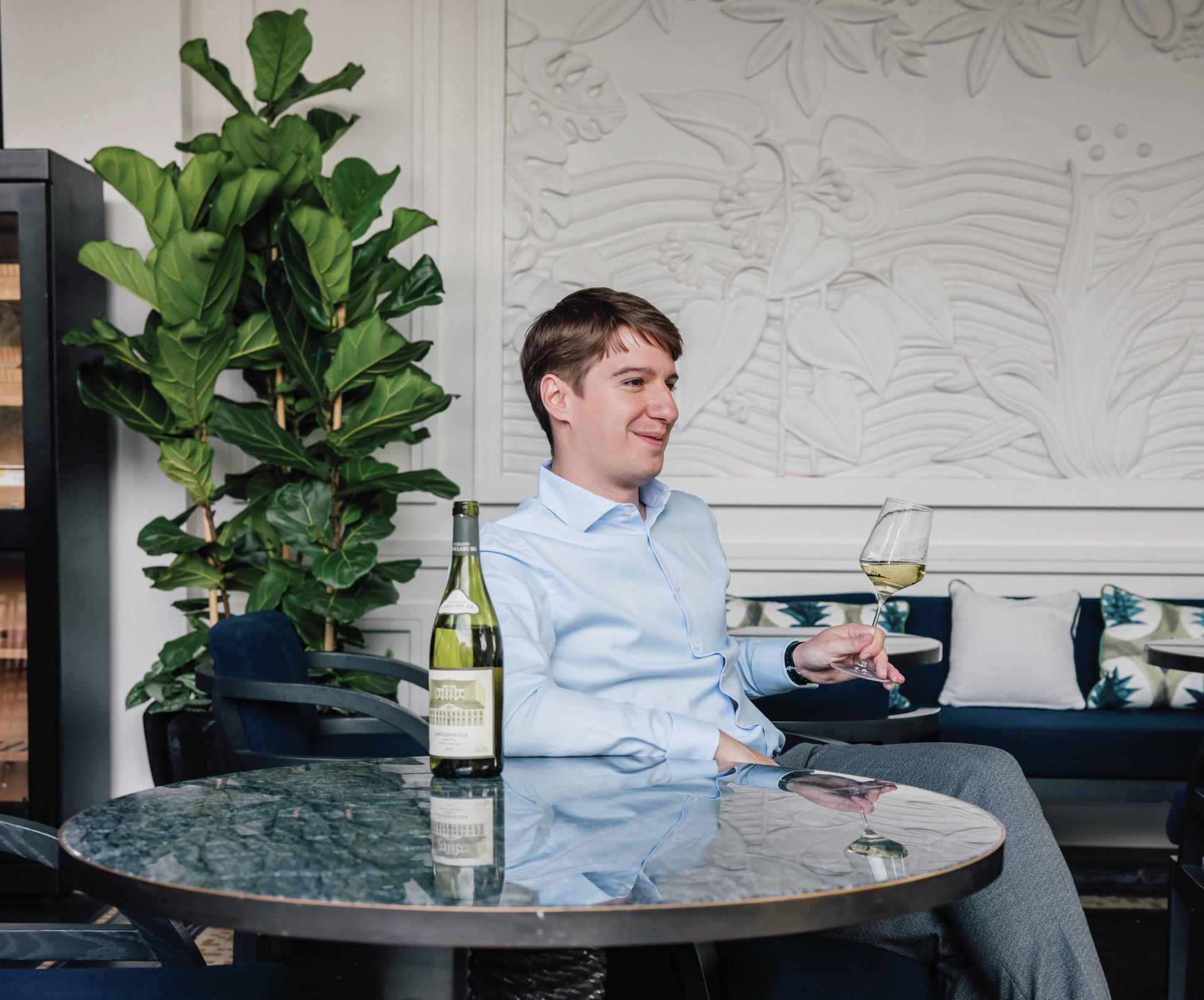
Marc Almert, chef sommelier (pictured above), Baur au Lac in Switzerland & ASI Best Sommelier In The World 2019:
“Thanks to the great variety of Austrian Sauvignon Blanc, it is difficult to determine an overall style or price. I tend to describe it as less fruity than New Zealand, and slightly less mineralic than Loire, thus a great all-rounder, sitting in the balanced sweet spot in between those famous international examples.
Ioana Statescu, assistant buyer, Liberty Wines
“Ranging from bone dry to botrytised sweet, Austrian Sauvignon Blanc is often described as ‘mature’ and ‘multifaceted’, impressing with its serious profile, lively and bright, with ripe and rich aromatics. Best expressions share the same mineral core that define the characterful Sancerre and Pouilly-Fumé wines. Compared with the power and intensity of Marlborough Sauvignon, and the fresh and fruity expressions from Chile, Austrian Sauvignon has a more restrained yet complex style, with excellent ageing potential.”
“I think mainstream consumers probably don’t know much or anything about Austrian Sauvignon Blanc. Even those of us working in the trade probably don’t have a huge amount of experience with it. There isn’t much of it around. For me, they are certainly in the Old World mould, more savoury and elegant and with good ageing potential – a good alternative to Sauvignon Blanc from the Loire. Certainly more for the purist than the hedonist, I would say.”
Related news
Thai food meets Austrian wine at AngloThai
Under-the-radar red wine proves Austria's versatility
Austrian Wine goes after Gen Z with ‘rot weiss rosé’ rebrand


