



On the downlow: can wine compete for a share of the no- and low-alcohol sector?
The no- and low-alcohol space, now worth more than £9 billion in value, is dominated by beers and spirits. But can wine play catch-up?
Dealcoholisation is not a sexy word. The process to which it refers also fails to ignite inspiration; it is technical, complex, and overtly scientific. Dealcoholisation – removing alcohol from a substance – feels antithetical to the ways we talk about wine. Winemaking is ancient; intuitive; an art form.
Even so, dealcoholisation has a function, and alcohol-free drinks continue to gain a platform in the industry. In 2022 no- and low-alcohol products grew by more than 7% in volume in 10 key global markets, according to a new study published by IWSR Drinks Market Analysis, and the value of the category has now surpassed US$11 billion (£9bn).
Over the next four years, the pace of the category’s growth is also expected to overtake its previous gains. Volume CAGR is forecast at 7% between 2022 and 2026, compared with 5% for 2018 to 2022.
Premium wine and spirits supplier Enotria & Coe has experienced this growth first hand. The importer listed its first 0%-ABV wines by german producer Leitz at the beginning of 2020, and, after a slow start with the onset of the Covid-19 pandemic, saw a 220% increase in sales volume in 2021 compared with the year before, and a further 25% rise in 2022.
“This growth definitely outstrips what we would expect for a new producer to the portfolio,” says managing director Ants Rixon, who believes this is driven by a heightened interest in healthy living coming out of the pandemic.
“It still isn’t a dominant product category by any stretch of the imagination, but it is seeing rapid growth, especially in the on-trade.” Indeed, more than 80% of UK bars plan to capitalise on a healthy-drinking trend by increasing their range of no- and lowalcohol drinks in 2023, according to the Leading the Way in No/Low Spirits report, produced by hospitality-research firm CGA by NielsenIQ, and non-alcoholic spirits brand Crossip.
And no- and low-alcohol drinks are making their mark further afield too. ProWein, the world’s largest wine-trade fair, is dedicating an entire hall to alcohol-free alternatives in 2023; a sign that these drinks are no longer playing second fiddle to their higher-ABV counterparts. But where is the buzz for no- and low-alcohol alternatives coming from?
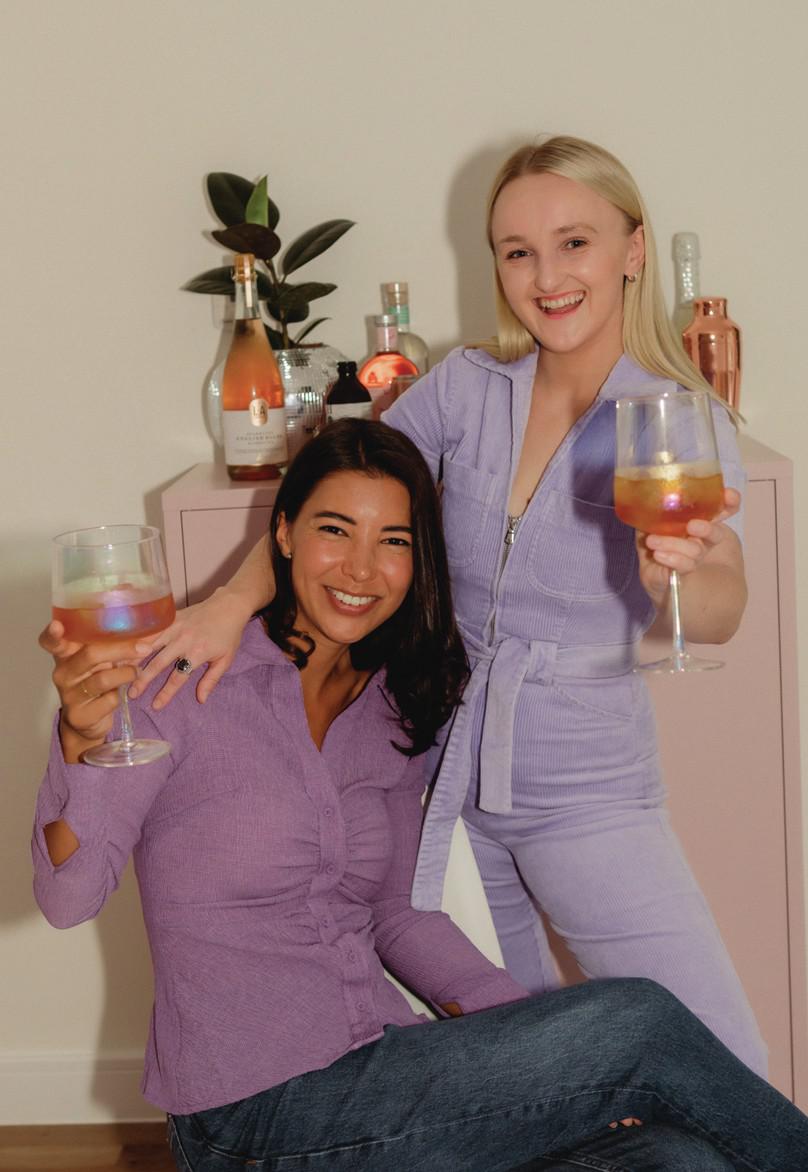
Millie Gooch is the founder of the Sober Girl Society, an online platform dedicated to promoting sobriety among women. Gooch launched her website in 2018, and after publishing her book, The Sober Girl Society Handbook, in 2021, has now developed a dedicated no- and low-alcohol UK online store called Sippers. Gooch, who launched Sippers with co-founder Talia Broederlow, says her Sober Girl Society followers are like a “readymade audience” for the new venture. “It’s for people exactly like me,” she says. “It’s for people who are cutting down, trying to drink less, or trying to go totally sober.”
For the majority of consumers, however, no- and low-alcohol products are becoming integrated into their weekly drinking habits, rather than being an alternative to them.
Brandy Rand, chief strategy officer at IWSR Drinks Market Analysis, explains that switching between alcohol and no- and low-alcohol products is common, both on the same occasion and between different ones. According to Rand, 78% of no- and low consumers in key focus markets also drink alcohol.
The category is shifting away from its roots in healthy living movements such as Dry January, and becoming part of regular consumer behaviour. Enotria & Coe’s Rixon explains that “while there is the most buzz and hype around the category” in the first quarter of the year, this time has historically been the weakest in terms of sales. “Instead it has been the second half of the year – from July to December – where sales of this category ramp up the most,” he says. “We think this shows that no- and low-alcohol products are most appealing to customers who are trying to moderate their intake by opting for alternatives between alcoholic drinks during periods of high consumption, such as Christmas.”
No- and low-alcohol as a category continues to boom, but while beer and spirits lead the charge, wine is still just catching up. “I don’t think alcohol-free wine has done as well as alcohol-free beer or spirits,” says Robin Copestick, managing director of Freixenet Copestick. Freixenet remains the fourth-largest brand in the alcohol-free wine category, with an 8% market share and sales value
reaching well over £3 million, IRI data for the year to 30 October 2022 shows. These figures reveal the large-scale success of Freixenet’s alcohol-free wine range, showing no- and low-alcohol wine’s slow start compared with its beer and spirits counterparts is all relative. But Copestick believes the category is still “forming”.
Figures from UK drinks retailer Majestic show that sales of lower-alcohol content wines were up by 32% in 2022, with lowand no-alcohol beer up by 144% year on year at the retailer.
Beer and cider, with a 75% volume share in no- and low-alcohol, is the largest category in the alcohol-free space, with non-alcoholic ready-to-drink beverages and alcohol-free spirits following behind. The wine category is the exception, but why is it hanging back? Sandro Bottega, founder and managing director of Italian winery Bottega SpA, believes that “it is a question of time”. He explains: “Non-alcoholic beers were born about 15 years ago, and have slowly been ‘cleared through customs’ by consumers.”
Paul Schaafsma, CEO of Benchmark Drinks, agrees. “We have all become more familiar and accepting of alcohol-free beer and spirits as quality products,” he says. “However, this acceptance has not yet been reflected in the wine category.”
Schaafsma believes the biggest challenge in wine is “shaking off the stigma and perception that products are of a lower quality – with flavour, availability and acceptance being the biggest barriers to no- and low wine becoming mainstream”.
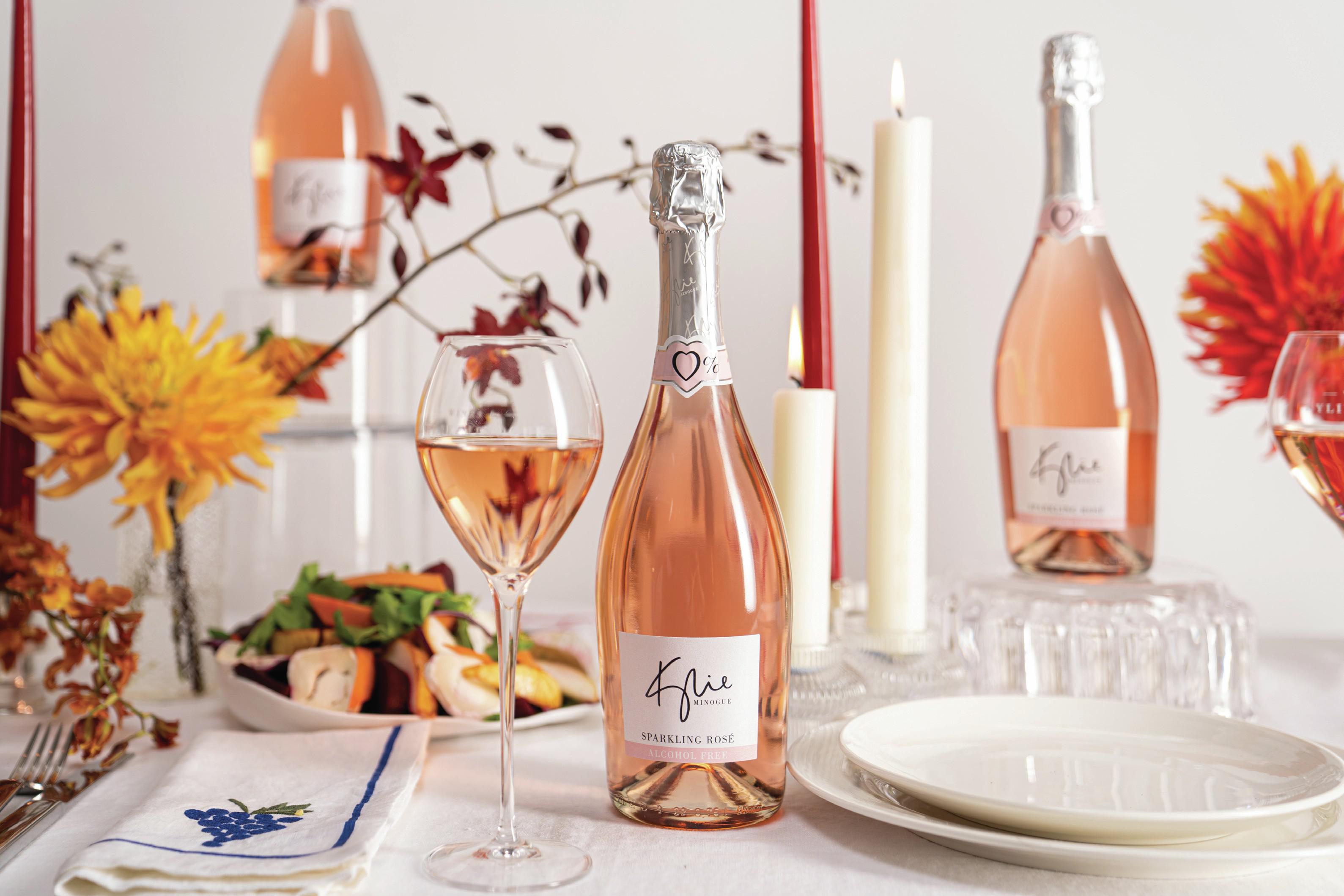
But big industry names are working to break down the stigma. Benchmark announced the addition of an alcoholfree sparkling rosé to its Kylie Minogue brand, which is currently valued at £18.9m and has sold more than 1m bottles worldwide.
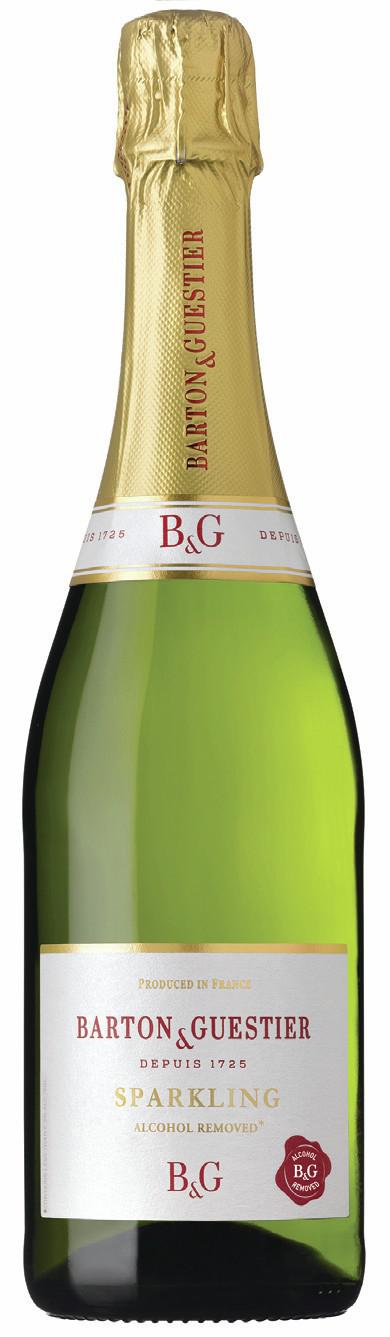
Last year Chile’s Santa Rita Estates launched both a low-alcohol and a 0% range. And French producer Barton & Guestier, which already offers an alcohol-free sparkling wine, is bringing a smaller-format canned wine to its no- and low-alcohol range in 2023. Cost has become less of a barrier for consumers when it comes to no- and lowalcohol products, the IWSR has said, dropping from 14% in 2021 to 7% in 2022, despite the added economic pressures of the cost-ofliving crisis.
The biggest hurdle facing the no- and low category is therefore one of availability. And with big name brands championing diversity in their wine ranges, this roadblock looks set to be conquered.
Robin Copestick says that while he has been impressed with the quality of products out there, he still sees one hurdle left to jump over. “If brands believe that this is a product of the future then it’s up to those brands to get the message across to the consumer,” he says.
Related news
Vinexpo Drinks America returns to New York for second edition
Team Green: how VinLog is tackling shipping emissions
London masterclass celebrates 30 years of Chilean 'wine legend' Casa Real


