



Raising the bar: how are luxury spirits holding up as purse strings tighten?
Rising inflation and the cost of living are triggering a shift in buying habits. Where does this leave luxury high-end spirits?
ECONOMIC HEADWINDS are the hot topic of the moment. The landscape is changing, that much is clear, but to what extent remains to be seen.
With inflation in the UK at 11.1% – a40- year high – brands are keeping a constant eye on the evolving economic situation.
Early findings from the IWSR’s Consumer Price Sensitivity Barometer, published in November, reveal that the response to rising inflation has huge fluctuations, varying from country to country.
India and China remain buoyant, with a strong consumer desire to uptrade in the spirits sector. But others, particularly markets in Europe, look to be in recession mode, with worried customers keen to save money wherever possible.
A report by Dutch financial-services company Rabobank looked at how a recession could affect the consumption of super-premium wine and spirits in the US, predicting that demand for luxury brands will “soften notably’ in the fourth quarter of 2022, and “turn noticeably negative” in 2023.
Reports like this are unsurprising, considering the rise of operating costs for businesses, paired with a decline in disposable income for consumers. But the news is not all bad.
Luxury spirits look to have a somewhat brighter future than categories lower down the price ladder, as we gear up for a challenging winter.
The long-term growth trend of super premium brands will “remain intact”, Rabobank’s report says, and analysts predict the segment will eventually return to historic growth trends after weathering the current storm.
Indeed, despite variation by country, the IWSR has reported that certain alcohol categories are performing consistently better than others when it comes to premiumisation.
Early findings reveal that in the current climate, drinkers of brown spirits, such as whisky and Cognac, plus Tequila, are more likely to spend more on those categories than drinkers of beer, RTDs and wine.‘Selective uptrading’ – a term coined by the IWSR – refers to a new trend in consumer behaviour, which sees shoppers refining their purchases, spending less money overall, but on higher-quality products.
Speaking to the drinks business, Richard Halstead, chief operating office of consumer insights, IWSR Drinks Market Analysis, explains: “In response to constrained incomes, consumers are more selective about which brands they buy, and how often, while trying to save money on more quotidian beverage categories. It also aligns with a growing trend towards moderation, not only for wellbeing reasons, but for economic ones as well.”
PREMIUMISATION
Julie Trewren, senior buyer at online retailer Master of Malt, and Jess Williamson, the company’s content manager, have also seen customer spending become more polarised. To put it in simple terms: “Our customers are spending both more and less,” they say. “As drinkers are on the search for the best, premiumisation is certainly happening, with sales of products priced over £100 soaring on Master of Malt, more than doubling throughout last year.”
Indeed, premium and super premium consumers tend to be educated in the categories they drink, and are therefore less willing to compromise on taste and quality. “However,” say Trewren and Williamson, “in tandem with this we’ve noticed, that due to the current rise in the cost of living, the lower end of the price range is also seeing increased traffic.”
Spirits occupying the middle ground are seeing much more of a decrease – “where customers can, they will premiumise, but where they can’t, they will often go for the cheapest option,” they explain. Premiumisation is nothing new, and this spending shift was already an established trend before the economic turmoils that have come to characterise the end of 2022.
Peter Donnelly, director at Pol Roger Portfolio, believes the ‘selective uptrading’ trend has been a long time in the making, particularly when it comes to whisky. In his view, the interest in unique, one-of-a-kind spirits has been growing for the past 15 years.
As such, whisky is the obvious choice. “If you’re talking about trends, I think whisky has always and will always be an ultra-premium spirit that works in the ontrade as well as the off-trade. And partly that’s because, particularly in the UK, people associate it with craft and history and tradition,” Weil says.
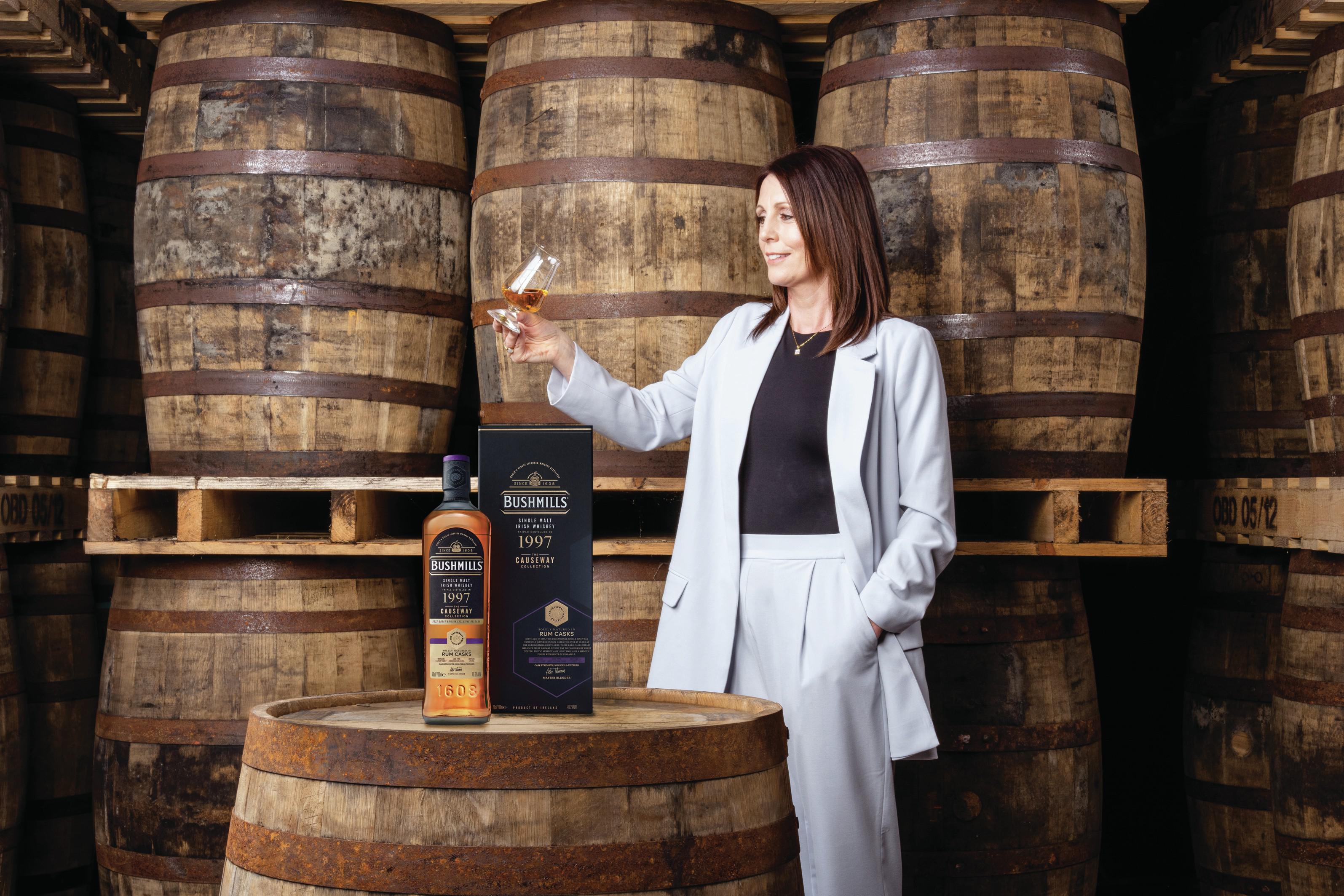
Historic it may be, but there are also new voices shaking up the whisk(e)y category with a fresh take on the spirit. Born in Ballymoney, just 15 minutes from The Old Bushmills Distillery in County Antrim, Alex Thomas was appointed master blender for the oldest licensed whiskey distillery in 2021.
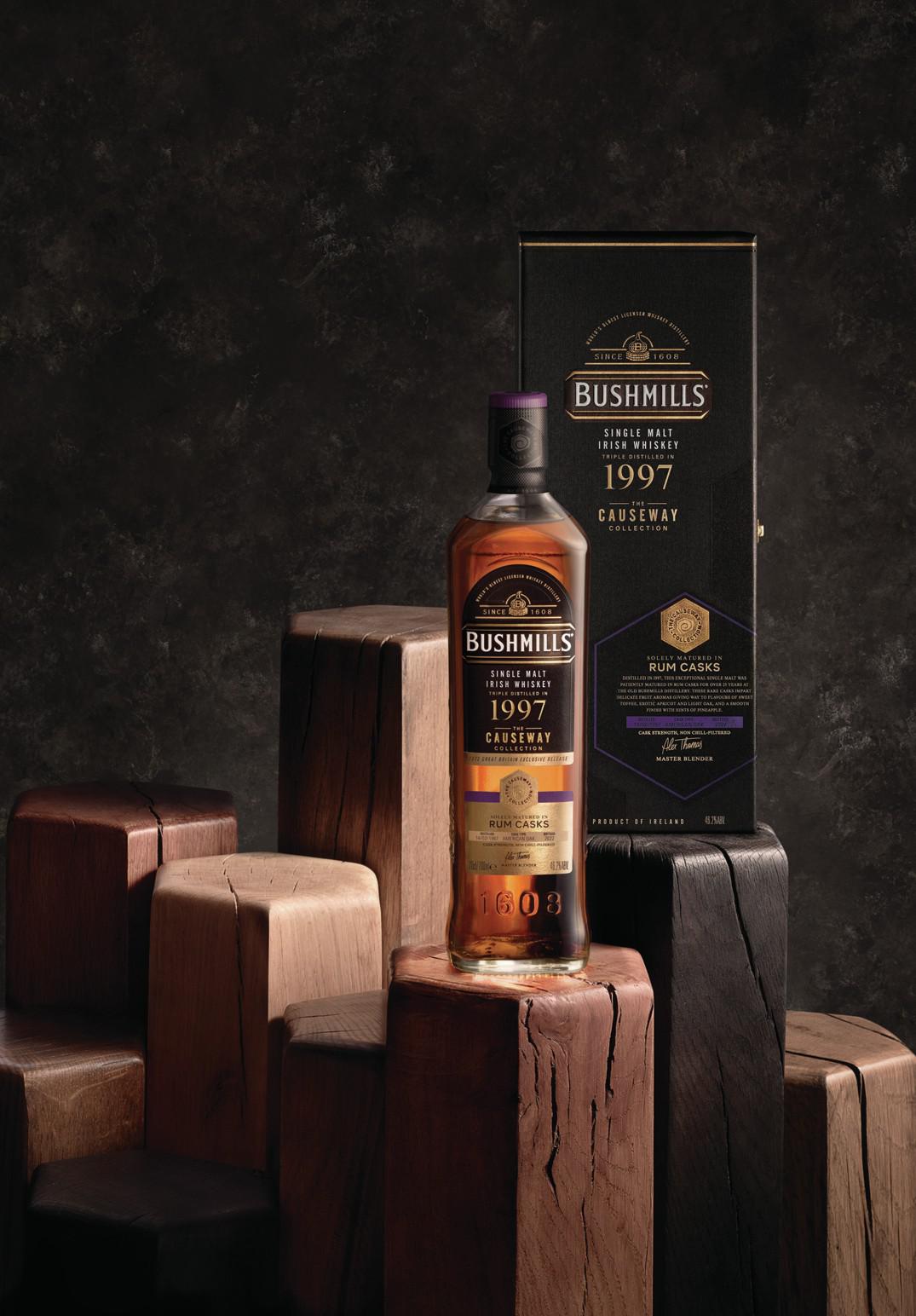
Bushmills recently launched its limited-edition Causeway Collection 1997 Rum Cask, Thomas’s first release as master blender. “People are falling back in love with single malt, and they are looking for something prestigious, something different,” she says. Bushmills is in the perfect position to provide this, with more than 430,000 casks – equivalent to 61 million litres of alcohol – laid down in the warehouse, “and a good proportion of that is high-end exclusive whiskey”.
For retailers, whisk(e)y fits perfectly into the ‘less but better ’ trend we’re seeing in spirits nowadays; a trend that Bryan Rodriguez, junior wine and spirits buyer at luxury department store Harvey Nichols, fully backs.
“Drink less but drink better, and understand what you are drinking,” he advises. “Spending a little bit more on an age statement Scotch and slowly enjoying it over time is a wonderful experience. “We know that some of the big-name Scotch whisky brands can be quite expensive, so this is a good opportunity to discover new and smaller producers, or independent bottlers that can provide superior-quality liquid at a lower price point.”
David Palacios, global communications manager at Diplomático rum, believes that “rum’s versatility in the cocktail scene” is to thank for its growing popularity. Indeed, this versatility is helping rum’s reputation to mature.
Ron Carúpano’s marketing director, Lucia Alliegro, says rum has “traditionally been seen as the ‘little brother ’ of spirits. The category as a whole was producing rums that were not aiming to increase value-added.” Now, he says, this has completely changed. “Trends have evolved; for example, the decline of white rum in favour of dark rum. But the biggest change lies in the category’s commitment to diversity that adds value to the distillate.
“Spiced and flavoured rums are driving growth in the category, as are premium and super-premium aged rums.”
According to IWSR data, after a strong post-Covid recovery last year, premiumplus rum volumes are expected to increase by a compound annual growth rate (CAGR) of 6% between 2021 and 2026, with value increasing by a CAGR of 6.5%. Christian Barré, CEO of Havana Club, says that the growing excitement in quality, aged rums has been enhanced by the spirit “establishing itself as a fashionable and credible alternative to high-end classics such as Scotch and Cognac”, further highlighting the value of versatility.
Premiumisation and selective uptrading also extend beyond dark spirits. According to Master of Malt, Tequila in the price bracket of over £150 has grown 234% from Q2 2020/2021, and a further 102% from 2021/2022 – an astonishing total growth of 578% over two years.
Interestingly, there has been premiumisation at the lower end of the scale, too. The £20-£40 price bracket is also increasing, because quality brands are slotting in seamlessly, with affordable prices and high quality products.
What’s in vogue for super-premium spirits?
Sabine Sheehan, senior brand manager and global brand ambassador at Dublin’s Lambay Whiskey, has seen limited releases and unique finishes catch people’s attention. “Consumers are seeking more than just the product – they want the story, the inclusiveness at the point of purchase,” she says.
Irish whiskey is in the middle of a “renaissance”, according to Sheehan. “From four distilleries in 2010 to now over 43 with more to come, it’s an industry that shows strong export growth and continued employment across multiple sectors.”
For rum brand Takamaka, transparency is the word of the day. “We find that the clearer the message, the better reception we receive from consumers, especially at the top end of super premium rum,” say brothers Bernard and Richard d’Offay, founders of the Seychelles-based distillery. Takamaka even includes its recipes and production processes on the labels to promote this message.
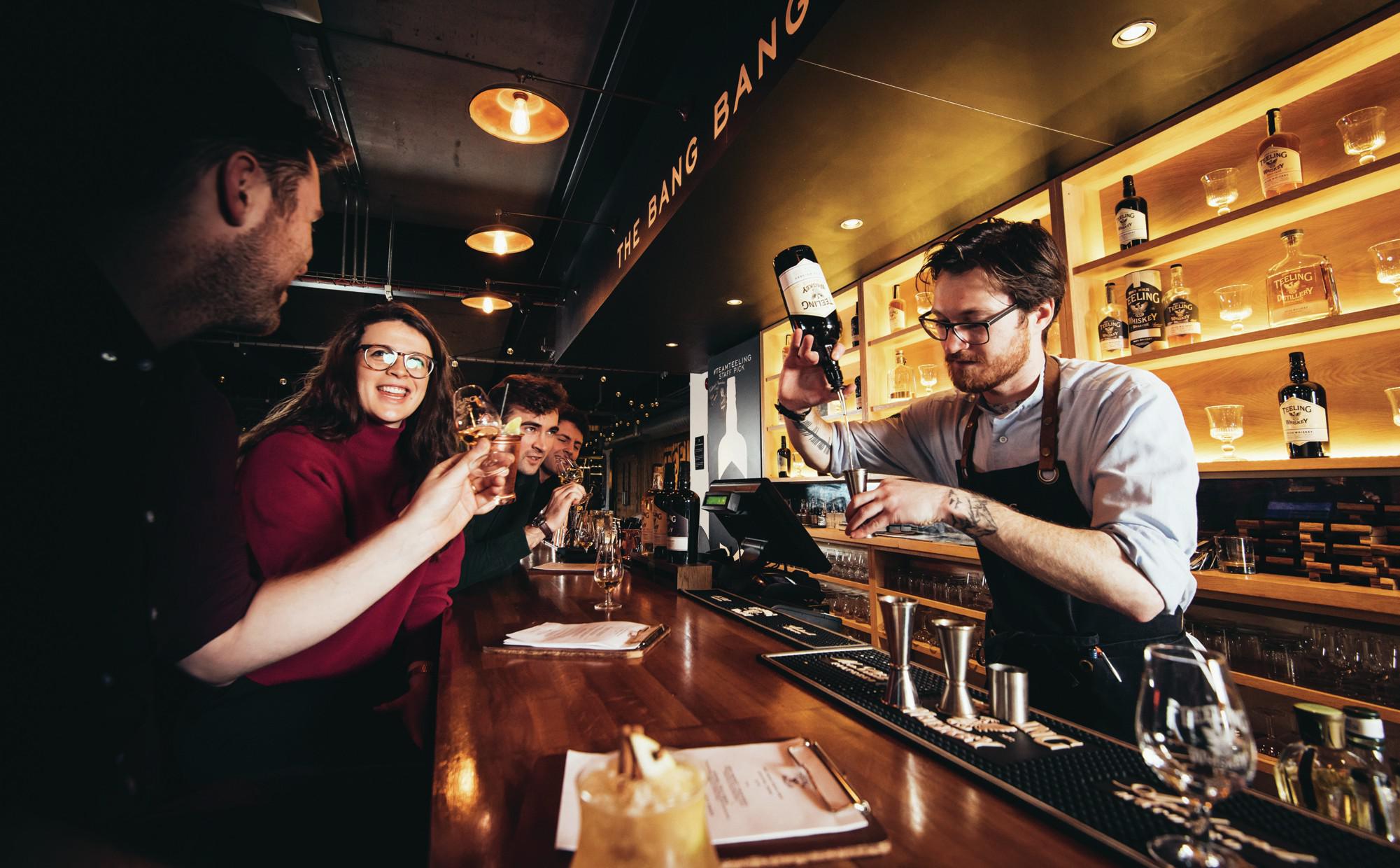
Given the financial circumstances many people are facing, brands have to work hard to highlight the value in the super-premium category, and make consumers feel that they are getting a high-quality product at a reasonable price. “Consumers are still going for the luxury, super-premium offering,” says Ruth Dunne, marketing manager at Teeling Whiskey Company, but how they drink them is what’s changing.
“People aren’t going out as much anymore but still like to treat themselves when they can and so can see the value and difference in super premium and above spirits,” Dunne explains.
This trend was established during the pandemic, when home consumption rocketed, and has triggered more spirits drinkers to become increasingly adventurous. As Dunne puts it: “People will always have their go-to drink of choice, but with the number of new SKUs coming onto the market it is hard not to want to explore.”
Agave spirits such as Tequila and Mezcal have staked their claim in 2022, in part due to the influence of celebrities like Dwayne ‘The Rock’ Johnson and Kendall Jenner stepping into the category.
“As expected throughout 2022, Tequila and mezcal is a really hot category, with customers understanding and appreciating the quality of superpremium 100% agave,’’ say Julie Trewren, Master of Malt senior buyer, and Jess Williamson, the company’s content manager.
Tequilas in the £150+ category are enjoying a 71% increase in value at the online retailer, and have seen a total growth of 578% over the course of two years.
“With regards to gin, the market is no doubt saturated, but that doesn’t mean consumers are giving up on it,” they explain.
Flavoured gin is driving the category, making up more than two thirds (66%) of total gin sales at Master of Malt in 2022, a 5% increase from 2021.
Meanwhile, shot culture no longer plagues the category, as consumers embrace more mindful and premium drinking. IWSR’s Richard Halstead believes that both production methods and the influence of celebrities will help to boost agave spirits.
On top of this, “the much shorter maturation cycle of agave spirits compared with brown spirits allows for faster production ramp-up, and the relative youth of the category makes it much easier for new entrants,” he explains.
We all know that rising inflation is driving up global interest rates. This means that, according to Halstead, “the market for pure investments is likely to cool”. But from a retailer perspective, this is yet to happen. Investment in premium rums is “growing rapidly” for Harvey Nichols, with social media acting as a catalyst and influencing more people to buy limited-edition products that might be worth more on the secondary market.
The rise of cryptocurrencies and NFTs in the drinks world has also led investors to diversify their portfolios, Master of Malt has found. Investment, which traditionally took the form of one-of-akind aged spirits auctioned for thousands of pounds, is also shifting. “We have also witnessed a growing interest from collectors for more affordable new distilleries such as Lochlea, Lagg, and Wire Works in the £50-£80 price bracket,” Trewren and Williamson explain, “meaning that collectibility and investment do not necessarily always mean high prices”.
Economic uncertainty continues to plague the industry, with no signs of it abating. However, for those taking risks to provide new, exclusive and exciting serves, there is a way to weather the oncoming storm. And plenty of hope that the category might weather it pretty well.
Related news
Canadian MP moves to scrap law banning inter-province wine sales
How to impress the DB Awards judges
Fabergé egg linked to rare Irish whiskey set worth more than £2m stolen


