



The Big Interview: Enrique Pascual
Enrique Pascual, president of the Ribera del Duero DO, tells Sarah Neish about the region’s unshakable spirit, and the excellent potential of its whites this year.
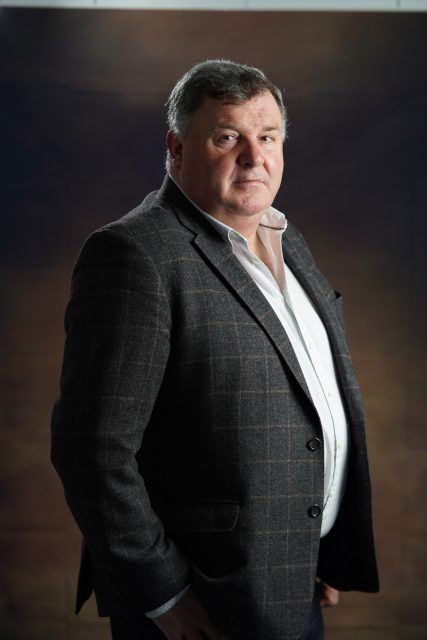
You have to be made of stern stuff to become a winemaker in Spain’s Ribera del Duero. One of the highest altitude winemaking regions in Europe, Ribera has a brutal climate, with temperatures plummeting to -10ºC in winter. Frosts are a constant threat, and a colourful local expression sums it up rather astutely when it claims that Ribera has “nine months of winter, and three months of hell”.
Making wine there is challenging enough, but to lead the region’s winemakers from the front one must also be, I suspect, an eternal optimist.
“My grandfather, my father, and my whole family have always dedicated themselves to the cultivation of vines and I’ve lived in vineyards since I was born,” says Enrique Pascual, who since 2013 has been president of the Consejo Regulador de la Denominación de Origen Ribera del Duero.
“The love for this job and the legacy that I’ve inherited have led me to become who I am today.”
This is Pascual’s second term as president, having ridden out a longer-than-usual first tenure (seven years instead of five) due to an extension granted following the Covid pandemic. His latest inauguration, in December 2021, coincided with the publication of the balance sheet for the region’s 2021 financial year, which showed a record-breaking result for the Ribera del Duero DO, with more than 100 million bottles distributed in the preceding 12 months.
During his custodianship, Pascual, who also owns Ribera winery Bodegas Pascual, has guided the DO through some truly shocking instances. In 2017, many of the region’s winemakers lost 50% of their crop to frost, where it was so cold that wineries lit bonfires in the fields to warm workers. Then in June 2021, a series of violent hailstorms swept across France and Spain, with Ribera del Duero one of the worst-hit regions. According to Spanish newspaper El Norte de Castilla, 2,000 hectares of Ribera vines were damaged, representing 10% of the region’s number, with the lion’s share of the havoc wreaked around the town of Pesquera de Duero. During this climatic anomaly – where hailstones the size of fists rained down on vineyards – Vega Sicilia, one of the fine wine jewels in Ribera’s crown, suffered severe damage to a 32-hectare vineyard used for its premium Alión wine.
It was a dramatic precursor to the DO marking its 40th anniversary this year, and almost, but not quite, stole the limelight away from the preparations for the celebration.
“This is just the beginning,” says Pascual brightly. “Celebrating 40 years of the Ribera del Duero Designation of Origin has brought great satisfaction, because I am at the helm of a family that is united, excited, and proud to see that great goals are being achieved. We are a national benchmark, present in more than 100 countries, and recognised the world over for the quality of our wines. Celebrating this success together has been wonderful.”
Pascual says that “the great secret of our winemakers” is that they know the characteristics of Ribera’s soils perfectly.
“They know how the grapes will evolve, they create the perfect vineyards, and tease the greatest expression out of each varietal. Such exhaustive knowledge allows us to make wines with our own identity.”
Wine critic Tim Atkin MW echoed this sentiment last year when he attributed Ribera del Duero’s enormous potential for fine wines to the region’s “mosaic” of soils. Such is the diversity in the region’s terroir – from “blindingly white limestone” to sandy clay and alluvial, that Atkin called for the DO to produce a detailed soil map charting Ribera’s estimated 30 or so soil types to help consumers understand exactly what they are tasting. According to Atkin, the quality of Ribera’s fine wines is down to producers “blending across the region”, essentially cherry picking from this rich tapestry of soil types to create something extraordinary.
Pascual believes that “all wines from Ribera del Duero fit into the category of fine wines, or quality wines”. But what position does he see the region’s wines occupying in the wider landscape of Spanish fine wine?
“There are many great wines in Spain; the winemaking tradition of our country is our calling card, but we are not competitors. Each DO seeks its own place and presents itself differently to the consumer, who knows how to differentiate between them,” he insists.
However, there can be little question that established wineries from other Spanish regions are starting to move into Ribera, establishing their own operations there, and looking to benefit from the typicity of its terroir. One such outfit is Rioja’s Bodegas Riojanas, which this year launched its Alacer range of wines made from grapes grown in the Ribera municipalities of Sta. Cruz de la Salceda and Vadocondes, in plots at more than 900m altitude. Riojanas readily admits it bows to the expertise of local winemakers to produce this wine, as the area is uncharted territory for the neighbouring winery.
“Ribera del Duero has its own characteristics that determine the personality of its wines,” explains Pascual, who seems nonplussed about the arrival of outsiders. “Our climate is very particular, extreme and intense, giving way to powerful fine wines, bursting with flavour. The way we make our wines, the management of the ageing, and the hands of our professionals create inimitable wines, which are the complete expression of the soils in which they were born.”
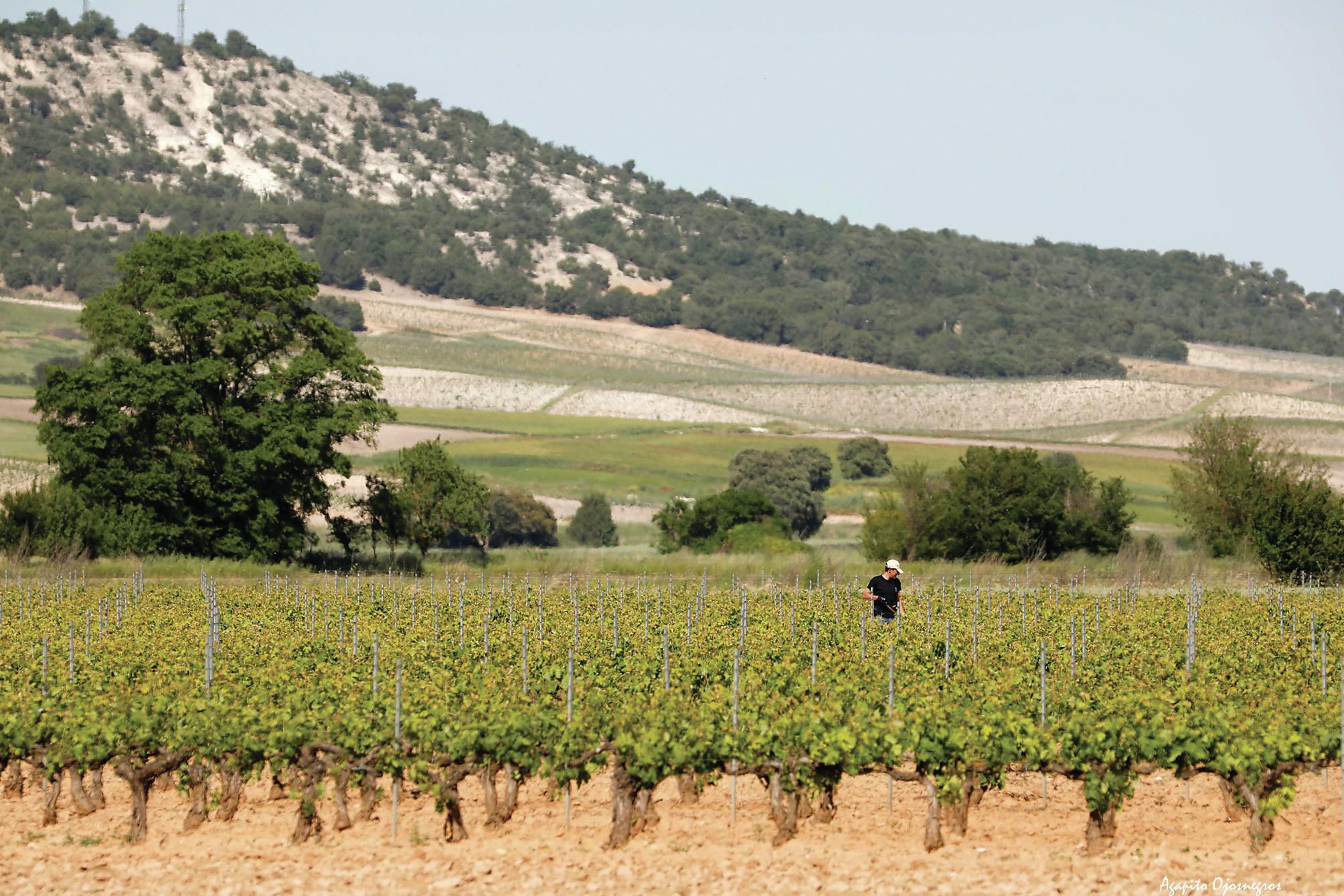
Ribera del Duero sits on a mesa, or high mountain plain, with altitudes of between 701m and 1,097m above sea level. Because of this, Tempranillo grapes from Ribera tend to have thicker skins, and more intense, concentrated flavours, than their counterparts in nearby Rioja, for example. Ribera wines are largely based around Tempranillo (called Tinto Fino or Tinta del Pais locally), with around 23,000 hectares of the DO’s total 24,000 hectares planted with the variety.
A wine must contain a 75% minimum of Tempranillo to be part of the DO. It’s for these reasons, and more, that the region has become synonymous with powerful reds, but one of the most intriguing changes to take place under Pascual’s leadership was the incorporation in 2019 of the white Albillo Mayor grape variety under the DO banner, a decision he says is paying off, as evidenced by the “excellent quality potential” it is showing in the 2022 harvest.
Pascual calls Albillo Mayor “a very special native variety that’s difficult to work with, but with a huge potential that we have only just begun to discover. There is real enthusiasm around this grape, and the white wines being made from it are complex, and with very limited production. We will surely see a growth in our whites, but it will be slow and measured, because we are not striving for quantity, but looking to preserve a variety that is part of our local heritage.”
Ribera del Duero saw an early harvest this year, which began on 30 August. “It was interrupted by some rain, but overall, it progressed well,” says Pascual. “After a very hot, dry summer, which caused a delay in the ripening cycle, the September rains were a blessing. The grapes picked are healthy, of high quality and will certainly lead to great wines, with potential for laying down.”
FIGHTING SPIRIT
The fighting spirit in Ribera del Duero is what sets it apart from other Spanish winemaking regions. “We are very clear that we cannot change our way of being; of making and understanding wine. That’s what makes us special and authentic,” says Pascual.
This trademark tenacity is helping Ribera winemakers weather a different storm; the geopolitical situation sparked by the war in Ukraine, triggering a spike in energy prices, shipping delays, and difficulties in getting hold of raw materials.
In comparison with some other leading figures in the trade, Pascual seems sanguine about what might lie ahead. “Of course, we are no strangers to what is happening in the world, and our main concern as human beings is the social stability and wellbeing of the population. From there, the rest can be overcome,” he says resolutely.
“In Ribera del Duero, we already live with an extreme climate that makes things very challenging, so we are used to overcoming obstacles. We will face the different scenarios of this crisis with courage and without ever losing the desire to move forward. But it is clear that we are not in a good time. The situation is worrying and it will affect us.”
Nor can climate change rain on Pascual’s parade, though that’s not to say the DO isn’t taking strict measures to protect against it. Safeguarding the region’s old vines, which are at risk from increasingly violent weather patterns, has become a top priority.
“Our older vineyards have been assigned enormous value, and we consider these to be great treasures,” says Pascual. “Our growers and winemakers are very attentive to the consequences of climate change, and we try to avoid these old vineyards wherever possible when it comes to any new plantings, focusing on higher altitudes or terroirs in which the effect of increasingly extreme weather patterns is less acutely felt.”
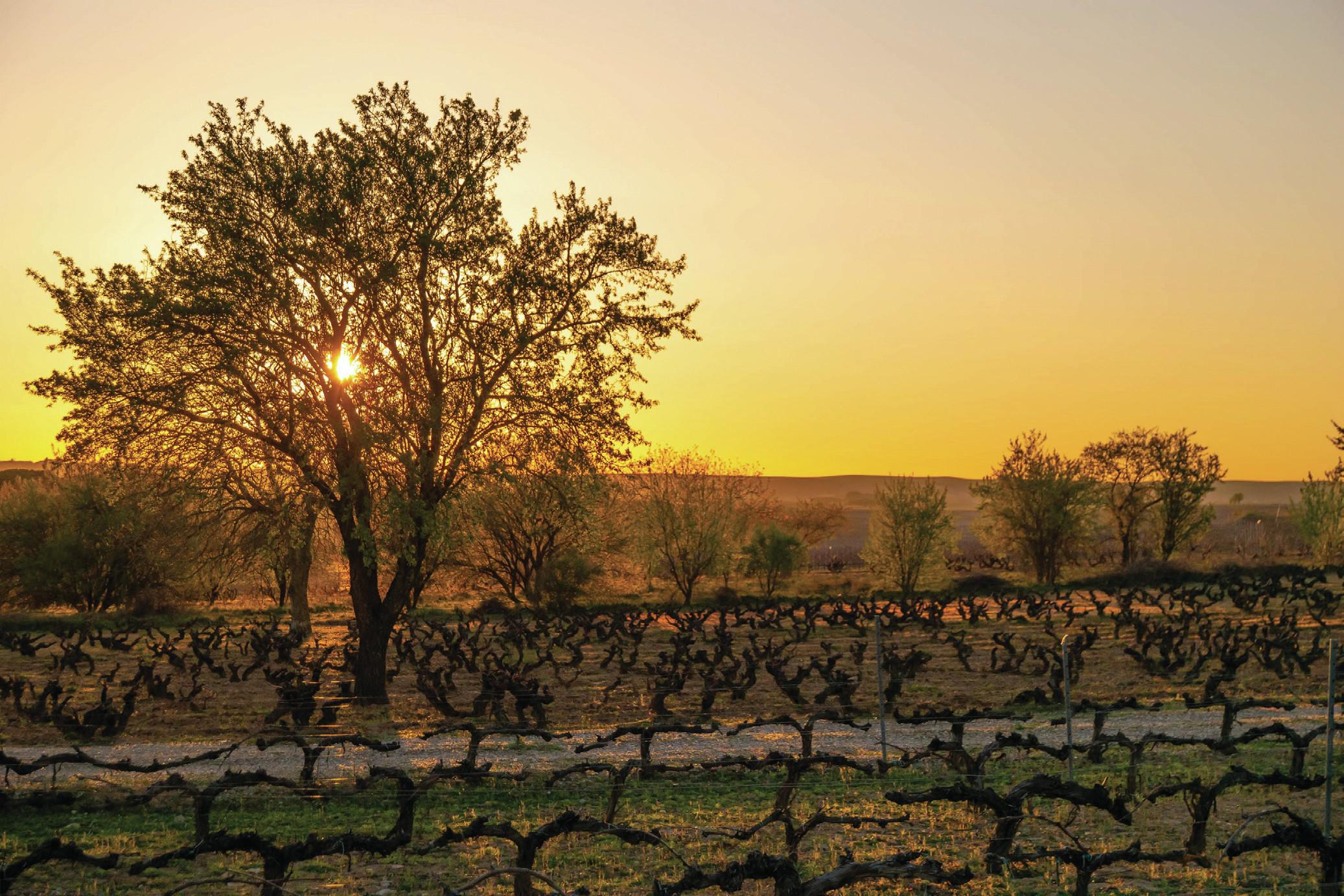
“Ribera del Duero was born as a project of the people, who together with the authorities, managed to convert a rural region historically linked to vines and vineyards, into a quality brand,” says Pasqual proudly. “The DO was born in 1982, after an overwhelming amount of work to give value to the grapes, the vineyard and the winemaking tradition. In those early years, there were only a dozen wineries, a number that leapt to 100 within a decade. Ribera del Duero soon received support from the Spanish hospitality sector, and, consequently, from consumers the world over.”
Indeed, the on-trade has been an unwavering supporter of the DO’s wines, with Pascual calling it “our greatest ally”. The sector, he believes, “values and recognises what we have to offer, and therefore our wines have a prominent presence on the menus of restaurants and hotels all over the world”.
So having blown out 40 candles on the cake this year, what are the DO’s plans for the next 40 years?
“Our main objective is to continue growing in foreign markets. To present our work, our identity and what we do to consumers around the world,” says Pascual.
He also highlights that the DO is “living through a revolution of our rosés, or claretes as they are traditionally called here. We are seeing wines with different colour ranges, different ageing times, even claret reservas. In essence, they are a creative expression, and the consumer is very much enjoying this new face of Ribera del Duero.”
Related news
Master Winemaker 100: Cynthia Ortiz
Château du Tertre partners with Ulysse Cazabonne to launch 'iconoclastic' white blend


