



The Big Interview: Simon Thorpe
According to Simon Thorpe, CEO of WineGB, those who think English wine is a ‘one-trick pony’ are in for quite a surprise, writes Sarah Neish.
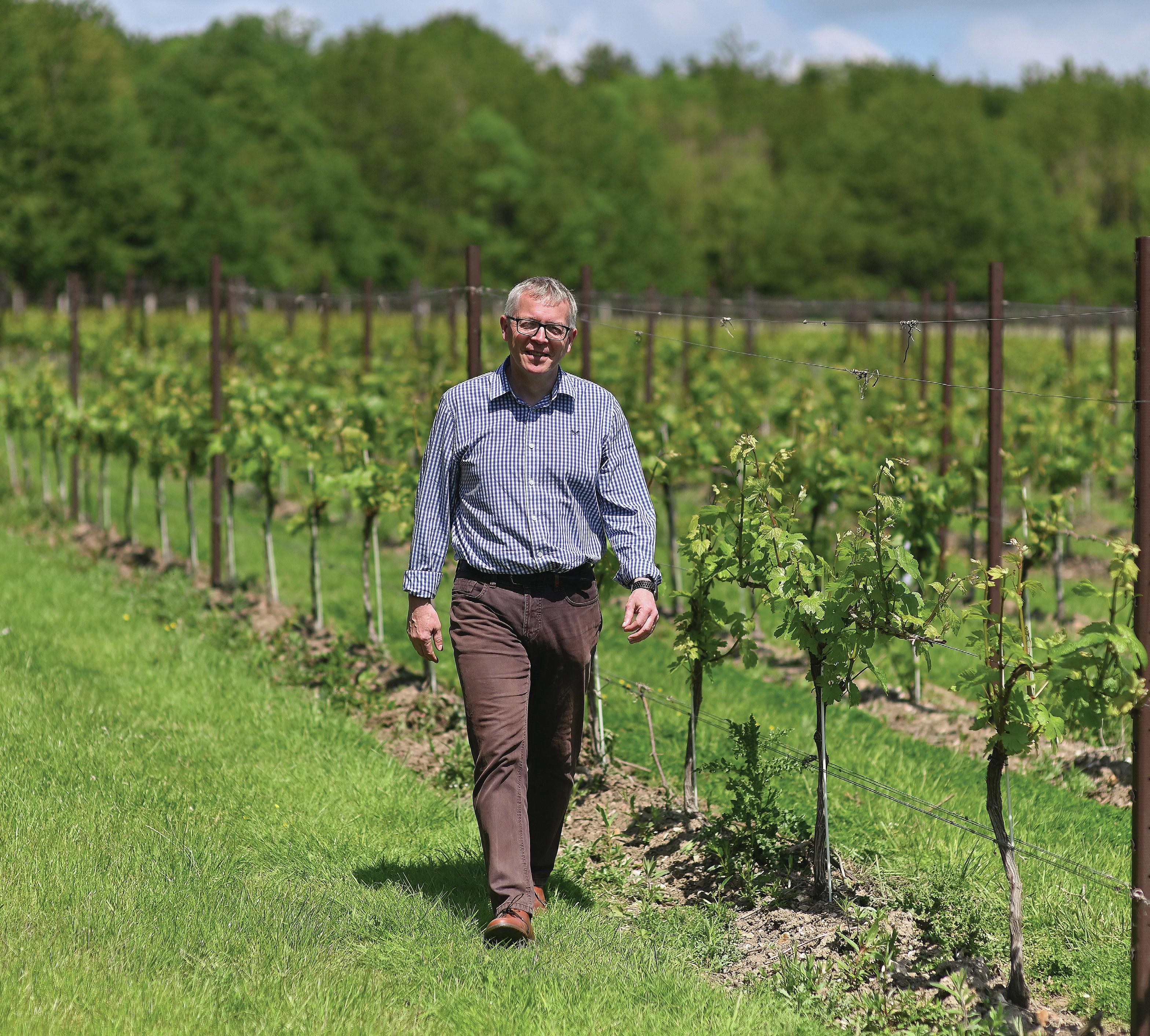
THEY SAY in life we must learn to take the rough with the smooth, in which case Simon Thorpe must have got this down to a fine art during the last year. While it has been a rampantly successful 12 months for English and Welsh wine, with 9.3 million bottles sold, and growth across all channels, his beloved Arsenal FC did not perform quite so well. After failing to scrape into the Premiership’s top four, the North London team missed out on its chance to re-enter the UEFA Champions League, forfeiting the opportunity to bitter rivals, Tottenham Hotspur.
One can only imagine how many bottles of English fizz it took to get over that one.
So it’s a good thing that Thorpe has had one of his busiest years yet. Having joined WineGB as chief executive officer in October 2020, and spent a large chunk of 2021 setting and driving green targets for the industry, this year has been a blur of tourism campaigns, vineyard acquisitions, and hobnobbing with government departments to ensure that English and Welsh wine stays at the top of Westminster ’s agricultural agenda.
There is no shortage of stakeholders to keep happy, as Thorpe alluded to when he said last year: “Our members are also our customers, which is a very different dynamic to brand management.”
With 30 years under his belt in the commercial and retail spheres of wine, he spent much of his career on the other side of the fence, and is now relishing the chance to direct policy and put English wine centre stage.
“The stars are somewhat aligned right now,” he says. “The quality of wine is great and getting better, production will increase (providing we get a good vintage), there has been a significant increase in plantings – around 4,000 hectares – which has doubled in the last seven years. And we’re also seeing major businesses – some of them international – investing in the industry.”
GLOBAL BRANDS
The arrival of more global brands seeking a slice of English pie has undoubtedly played a role in the wine industry’s latest glowing sales figures – up by 31% on last year. There are three big international players in the game: Taittinger, with 69ha of vineyards in Kent; Vranken-Pommery, with around 40ha in Hampshire, and, most recently, Freixenet Copestick, which, in January 2022, snapped up Sussex’s 15ha Bolney Estate.
“The general sense is that it’s a positive thing. There’s no protectionism that I’ve heard of,” says Thorpe. “It gives confidence to the industry that it’s worthy of the investment, and that it has a very definite future.”
The international nature of vineyard ownership also opens up valuable export-and-distribution channels already well established by the groups, which, given that 96% of English wine is still sold on home soil, could revolutionise the sector.
But just how easy is it for international companies to push through the web of red tape to buy English land, and acquire the necessary permits to build on it?
“It’s constantly difficult, especially in areas of natural beauty, regardless of whether it’s a domestic buyer or one from overseas,” Thorpe says. “It seldom seems simple.”
The challenge, as he sees it, is that the English wine industry is still in its relative infancy, and is therefore an unknown entity to many UK communities. “Local planning departments don’t necessarily have the experience of what opening a winery in their area will involve, or the understanding of why a community might benefit from having a winery on its doorstep,” Thorpe says.
Of course, some of the more mature English winemaking regions are more forthright when it comes to instigating change. In June, for instance, came the announcement that Sussex Sparkling Wine had been awarded PDO status, which recognises the craftmanship and quality of wines made in the county. However, only wines that are entirely grown and vinified in Sussex qualify for this classification, and for this reason not all Sussex producers will benefit from it.
Those who buy in contract grapes from outside the county to make up their blends are likely to find themselves left out in the cold.

Thorpe admits he did not anticipate what came next, which was disgruntled producers from other English counties dismissing the Sussex PDO as little more than a “PR exercise”. It was probably, says the CEO, a classic case of sour grapes.
Thorpe is keen to play it down, stressing that the few negative comments blown up in the press were “not really a true reflection of things”, and that the PDO is “certainly not a divisive initiative. One of the key things that typifies the English and Welsh wine industry is how collaborative it is.”
That being said, he does have some sympathy with producers over the matter of whether the quality of terroir on one side of the Sussex border differs markedly to that on the other.
“It doesn’t, so there is some validity to the commentary,” Thorpe concedes. “The boundaries are more political than geographical, and it’s impossible to denote one specific terroir to the whole of Sussex. It’s probably still too early to be able to establish specific regional identity as we don’t yet have the history to determine what grapes in one particular area will do from year to year.”
He is faintly amused at the suggestion that the PDO is “nothing” but a marketing tool: “Well, a large element of it is a marketing tool. It’s there as a shortcut for the consumer to be able to understand more about the wines they are buying and drinking. And it did create noise, so it all helps to raise awareness of the industry.”
It’s worth noting that the Sussex PDO was not a WineGB initiative, nor does WineGB necessarily support the rolling out of individual PDOs for each county.
“You don’t need a PDO system to be able to talk about the great characteristics of an area. I’m not sure you need to establish a PDO to tell those stories,” Thorpe says.
DETAILED REVIEW
In a statement issued at the time of the Sussex ruling, Thorpe assured producers that WineGB was “committed to ensuring there is an appropriate GI structure for all” in the English and Welsh wine community.
He also revealed that the trade body was carrying out a detailed review of existing regulations, and was on the cusp of sharing a missive detailing its results. According to Thorpe, the findings “will allow all producers to have their say.” When we speak in late June, the ink is drying on the paper, which Thorpe is aiming to release in July.
He treads a cautious line when it comes to imposing regulations in the wine world: “We don’t want to put something in place that inhibits innovation, and puts boxes around winemakers in terms of what people from this or that county must do. We don’t want to fall into a trap of replicating what’s happened in some parts of the Old World. Let’s enjoy the journey of being able to see which regions are exploring what.”
He pinpoints Crouch Valley in Essex as being a “really interesting area, with a distinctiveness to its wines” but acknowledges that the vintage is as big a factor as any in how wines around the country perform.
“There is so much vintage variation, and temperatures are rising across the whole country. The more easterly the vineyard, the warmer and drier it tends to be. Further west is more challenging, but there are exceptions to every rule.”
Indeed, it was a Cornish sparkling wine – Camel Valley Pinot Noir Rosé brut – that was served to world leaders at the G7 summit that was held in the county in June 2021.
WORK TO BE DONE
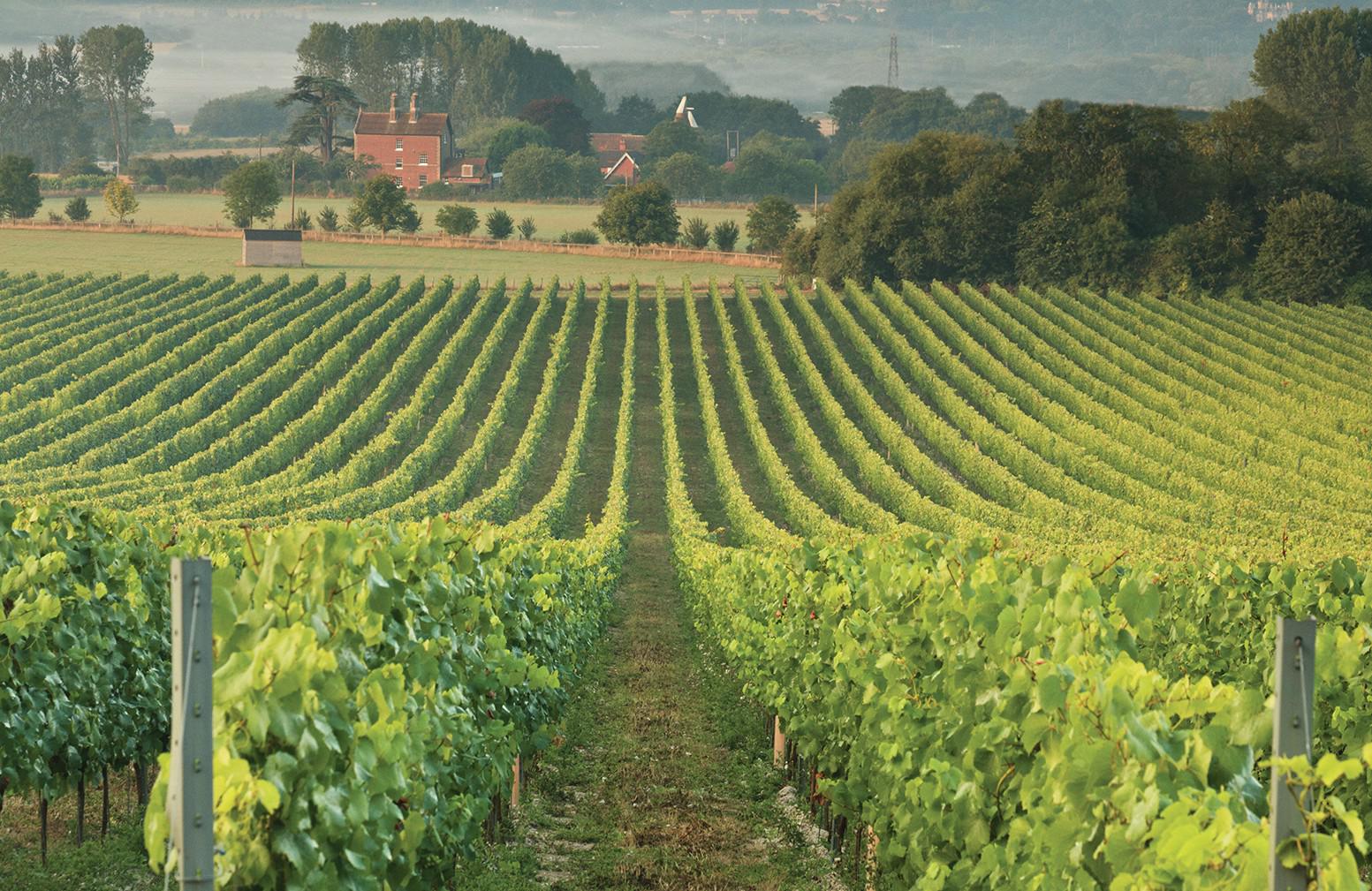
Photo courtesy: Chapel Down Vineyard
Arguably, the most important factor in the regional groupings debate is whether or not consumers have reached a level of engagement where they care which county their English wine comes from, an area in which Thorpe says there is “still a large piece of work to be done.”
According to the CEO, “people are more frequently walking into a pub or restaurant and saying ‘Have you got any English wine?’”.
He continues: “The sales growth demonstrates that it’s happening. But as English wines command a premium price due to their often limited production, it’s going to be easier for some venues to be able to supply them than others. As venues get used to having more English wine in their repertoire then consumer interest will grow in terms of different producers and where they are based.”
While two thirds of English and Welsh wine sales today are sparkling, diversity is starting to creep in.
“This industry is not a one-trick pony,” Thorpe says. “We are capable of much more than making traditional-method sparkling wine.”
He nods to English rosé as performing especially well, but there are now around 66 varieties planted in England and Wales, including Pinot Gris, Chenin Blanc, and even Pinotage, that South African grape used to far balmier climes. As temperatures around the world continue to change, these varieties will become more viable.
Just as integral to the evolution of the industry is the level of government backing it receives. One of Thorpe’s key missions when he took the reins at WineGB a little over 18 months ago, was furthering the industry’s relationship with Westminster. If reports are to be believed that more than half of wines served at official UK government events are now English or Welsh, then it would suggest this is going rather well.
“There is a really active wine-policy team within the Department for Environment, Food and Rural Affairs (Defra), which is the department most closely involved in what we do,” he says. “But the reality is that post-Brexit they’re doing a whole load of stuff they’ve never had to do before. What used to be a simple shipment of vines from a nursery in Europe to the UK has become an increased process since leaving the EU. It’s my job to explain what the delays mean.”
In terms of tangible changes to policy, Thorpe namechecks Defra’s recent agricultural-grant scheme, launched this year, as being a strong step forward.
“This scheme now includes viticulture, which is the fastest-growing agricultural sector in England. It means vineyards can apply for quite substantial grants,” he explains.
SUSTAINABILITY SCHEME
It remains to be seen whether such funding will lead to a rise in the number of wineries signing up to WineGB’s sustainability scheme. Launched in 2019, the initiative currently has 83 members, with 40% of the area under vine in England and Wales falling under the Sustainable Wines of GB umbrella. But the auditing process is lengthy and expensive, meaning only a small number of wines on today’s shelves actually carry the SWGB hallmark stamp.
“The real watershed for the programme will be seeing more bottles with stamps,” says Thorpe, who is looking into how to make it fairer and more attractive for smaller producers to join the scheme.
As for future plans, he is keen to address labour shortages so that “we can get the best viticulturalists into our country”. But he stresses: “You don’t switch that kind of thing on overnight. We need to make sure we’re not running before we can walk.”
Sound advice, too, perhaps, for the mighty Gunners?
Related news
Château Cheval Blanc CFO appointed estate director at Domaine Beauséjour
Napa Valley's Bouchaine Vineyards appoints new DTC director
Alcohol cancer labels: public health measure or scare tactic?


