



Organic wine finds new audience with younger demographic of drinkers

GARY BARLOW is a good, albeit unlikely, barometer for the organic wine category. Proving that organic wine is no longer the preserve of sandal-wearing, kale-munching hippies – and can be produced at scale – the Take That frontman launched two organic Spanish wines at 460 Morrisons stores in the UK last October, priced at £8 a bottle.
The range, made in collaboration with Benchmark Drinks, will no doubt prove pivotal in helping organic wine to go mainstream in the country, expanding its reach beyond specialist retailers. For Barlow, creating an affordable organic wine brand was an obvious move, given the global shift towards eco-conscious living. “When it became an option to make organic wines I knew we should go for it,” he told the drinks business at the time of the launch. “Being organic doesn’t take anything away from the wines when it comes to the taste. I was really pleased that we could go down the organic route, as you don’t want to be releasing a car that runs on diesel with your name on it.”
‘People are realising how easy it is to make informed choices about what they buy, and are conscious of the impact that their purchases are having on the planet’
Demand for organic wine is at an alltime high, and the category is growing at a faster clip than that of non-organic wines. According to the IWSR, global volume sales of organic wine were up by 8.3% last year, though the category still only accounts for 3.3% of total still wine sales, leaving plenty of room for growth. In last year ’s Organic Wine Report, the IWSR forecast that the organic wine market would reach 87.5 million cases by 2022, with Europe accounting for a 78% slice of the pie. While Sweden was an early adopter of organic wines, and continues to lead the charge, Germany is the biggest market, accounting for around 24% of global consumption.
GREEN AGENDA
In France, Bordeaux, the Loire, and the Languedoc are all putting organics at the top of their green agendas, with 17% of vineyard land in Bordeaux certified organic or in conversion, and the Languedoc blazing a trail as the country’s largest organic wine producer. Unsurprisingly, France is the numbertwo market for organic wine, with a 16% share of global consumption, while the UK is in third place, with a 10% share, and the US in fourth.
Things are moving in the right direction, but there’s still a lot of work to be done to educate consumers about organics and convince producers that it’s a route worth going down. The pandemic helped organic wine sales as consumers started treating themselves to higher-quality produce during lockdowns, swotting up on wine while they were at it. “During the pandemic the focus shifted towards the best ingredients and the best wines, and a lot of people educated themselves about wine at home,” says Brodie Meah, co-founder of natural wine specialist restaurant and retailer Top Cuvée in north London. “It’s hard to go back to £5 bottles from Aldi after that. People who were on the borderline of wine broke through during lockdown.”
Feature findings
• Global demand for organic wine is at an all-time high and the category is growing at a faster clip than nonorganic wines.
• Germany is the biggest market for organic wine, accounting for around 24% of global consumption, while France is in second place and the UK in third.
• Rising consumer demand for organic wines is having a positive effect on the gatekeepers in the industry, which is leading to bigger and broader offerings in the on- and off-trade.
• While organic wine has a broad demographic, it’s the younger generation that are really pushing for change and are driving the growth of the category.
• In the off-trade, Waitrose is carving a niche as the go-to supermarket for organic wine, with 88 listings available in-store and through Waitrose Cellar.
• Sommeliers around the globe are getting behind organic, biodynamic and natural wines in a big way, which is helping to introduce them to a new audience.
Meah believes a rising consumer demand for organic wines is having a positive effect on the decision-makers in the industry, which is leading to bigger, broader offerings in both the on- and offtrade. “Five years ago if you rode a bike instead of driving a car you were seen as a bit of an eco warrior, but now it’s the norm,” he says. “People are realising how easy it is to make informed choices about what they buy, and are conscious of the impact that their purchases are having on the planet. They want to make ethical buying decisions but they don’t want to be negatively impacted by them.”
Tom Beattie, the former general manager of wine bar and bottle shop P Franco in Clapton, east London, who left his role in summer 2021 to work full-time on his natural wine import business, Beattie & Roberts, believes people are switching to organic and minimum-intervention wines because they’re better informed about the negative impact of pesticides and herbicides, both on their bodies and on the planet. “I’ve seen a massive change over the past few years in terms of better communication and education about the detrimental effects of herbicides and pesticides in agriculture and viticulture,” Beattie says. “People are considering what they’re eating and drinking more, and climate change is playing its part. We can’t do what our fathers did in terms of farming practices – that needs to change.
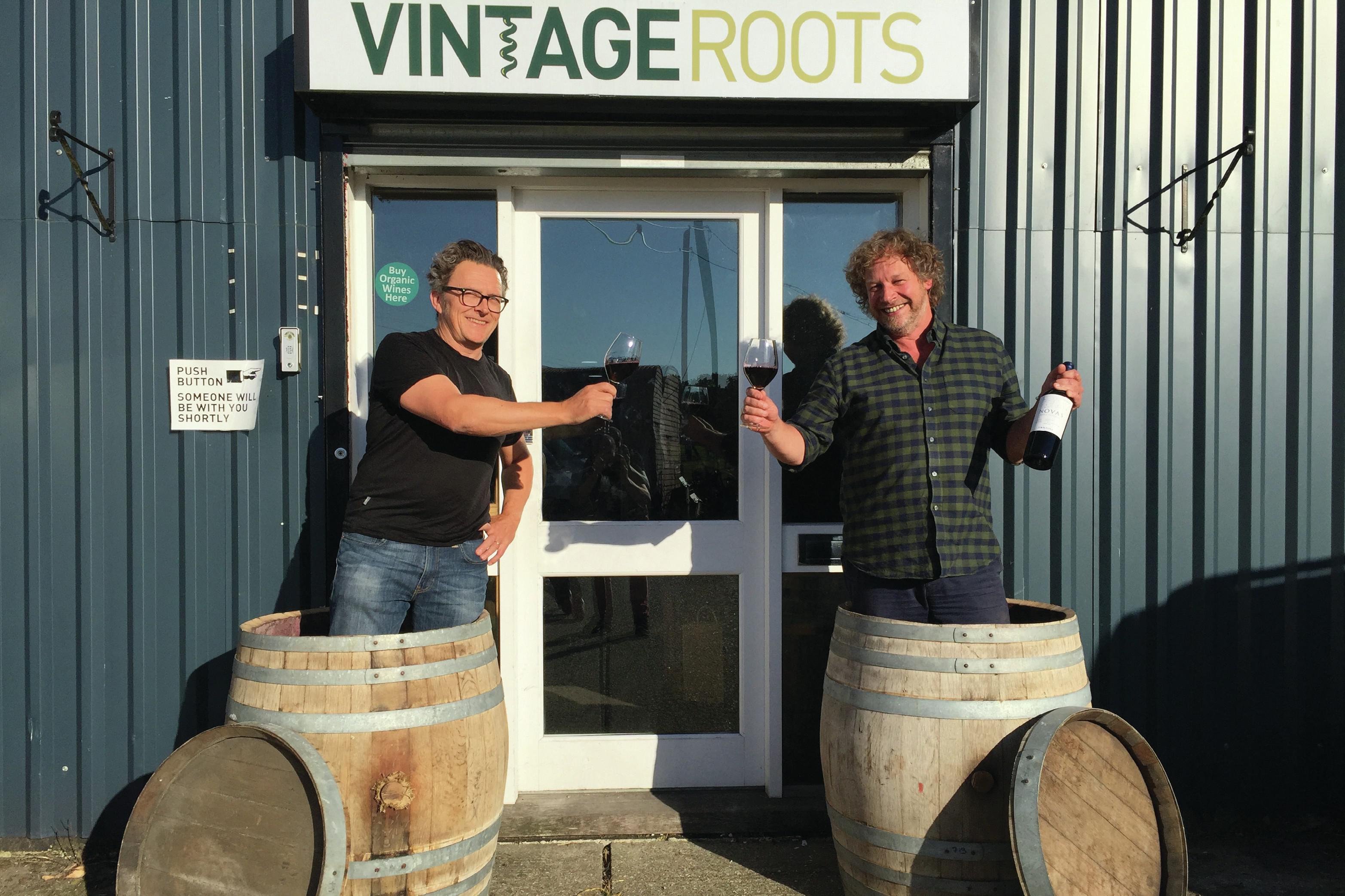
Organic pioneers: Neil Palmer (left) and Lange Pigott of Vintage Roots
‘It would be great if we can get to a stage where we don’t have to put an organic symbol on wine lists anymore, as all of the wines are organic’
In the ’80s and ’90s herbicides and pesticides were seen as great cures in bad vintages, but the long-term effects on soil health is better understood now.” While organic wine has a broad demographic, it’s the younger generation that are really pushing for change and are driving the growth of the category. “There’s been a change of diet from meat to plant-based food, and Millennials and Gen Z consumers are wanting to see entirely organic wine lists in restaurants now,” says Beattie. “It would be great if we can get to a stage where we don’t have to put an organic symbol on wine lists anymore, as all of the wines are organic. You’ve got a clean slate with younger consumers, and organics isn’t a hard sell.”
Organic production starts from the ground up, and the category is being given more airtime in wine schools now, with teachers encouraging their students to adopt organic practices as a good thing for both the planet and for profits, which is helping to recruit a new generation of fired-up young winemakers to the cause.
The broader range and availability of organic wine around the world is also helping to make it easier for consumers to make the switch without hurting their bank balance. Offering good value to his customers is a must for organic, biodynamic and natural wine specialist importer and retailer Doug Wregg of Les Caves de Pyrene, which, despite its French name, champions lowintervention drops from all over the globe. “There’s so much choice in the market now that people can make ethical wine choices and it’s not a sacrifice to do so,” says Wregg, who recently developed a range of own-label organic wines from France, Italy, Spain, Austria, and Georgia due to rising demand. “We want to bring the wines to a wider audience and make organic wines a fact of life. We’re also producing the wines at a good price so that we can be sure to pass the savings on to the consumer.”
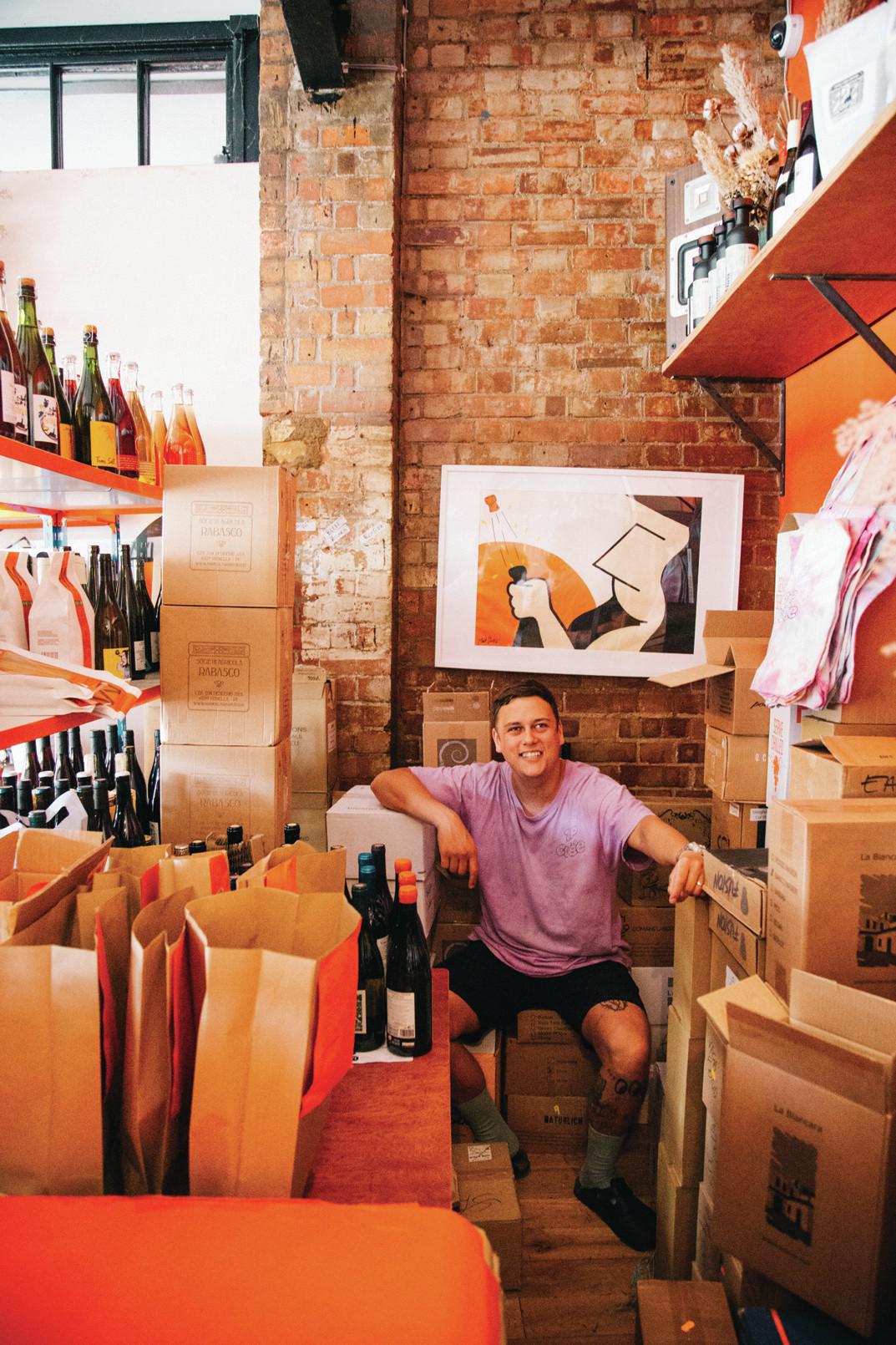
Short cuts: Brodie Meah of Top Cuvée
Sustainability at scale
Proving that sustainable practices aren’t limited to small growers, California wine giant E & JGallo has been green-minded in its approach since its foundation in 1933.
“As a family-owned company, we feel a responsibility to future generations. As winemakers, we feel a great respect for the land, and have implemented over 200 vineyard-management best practices and innovations to address land use, canopy management, energy efficiency, water-quality assessments and carbon emissions,” says Chris Savage, Gallo’s vice-president of global environmental health and safety.
In 2020 Chilean wine brand Cono Sur launched its organic wine range in the UK, featuring labels made from recycled paper. “Our organic collection is the fastestgrowing range in our portfolio with double-digit CAGR growth over the past three years,” says CEO Paul Konar. “Last year was our best year yet for the range, with 3.5m bottles sold, and growth led by our top export markets: Canada, Japan the US, and the Nordics.” To keep up with growing demand, Cono Sur has expanded its organic vineyard area by over 50% in the past four years to 456 hectares.
Since the launch of its Naturalis Organic range last September, Angove Family Winemakers in South Australia is seeing “extremely strong” demand for its wines around the globe, with the UK, Canada, Taiwan and the US leading the way in terms of exports. “With the attention being given to climate change and its effect on the planet, there is a strong trend towards wellbeing and reducing our impact on the environment,” says Mark Ramm, regional export manager. “Our organic wines, with their lightweight, fully recyclable packaging, certainly tap into this movement. As one of a handful of wineries certified to Australian, US, Canada, EU/UK and China organic standards, we’re in an enviable position of being able to take our wines to all corners of the world.”
Across his expansive range, Gérard Bertrand’s wines boast six types of eco-friendly certification, from AB and vegan certification to Bee Friendly. With its abundance of sunshine, Bertrand believes the south of France can set the global example when it comes to organics, and predicts that half the vineyard land in the region will either be certified organic or be converting to organics by 2030.
Coral Ethical Rosé launched in March 2021 and has gained distribution across four continents since then, with sales growth of 150%. Certified organic, carbon-neutral and recyclable, 10% of profits go towards the conservation of coral ecosystems.
‘By their nature, organic wines are a bit more expensive, as there is less output and it’s more labour intensive, so we struggle to list wines under £8. The sweet spot is between £9 and £15’
Both he and Neil Palmer of organic wine pioneer Vintage Roots in Hampshire feel £10-£15 is the sweet spot when it comes to finding excellent quality and value in the organic category. Palmer says: “By their nature, organic wines are a bit more expensive, as there is less output and it’s more labour intensive, so we struggle to list wines under £8. The sweet spot is between £9 and £15, where you’ll find many wines that are fantastic value for money for the quality.” Palmer puts all of his potential listings through a rigorous selection process before they make the cut. “We don’t just buy them for the organic sticker. We select the best examples offering the best value to show organic wines in the best light.” Palmer admits the picture was different in 1986, when he and his business partner, Lance Pigott, started out, driving around Bordeaux and the Loire Valley in an old yellow Citroën and knocking on winemakers’ doors. “People didn’t know what the term ‘organic’ meant back then as the concept was still in its infancy, so you had to explain that organic wine wasn’t made from carrots, and actually had alcohol in it,” admits Palmer, whose first list for Vintage Roots featured just a dozen wines. “We’ve gone from nobody knowing what organic means to all the supermarkets having a good smattering of organic products. The quality of organic wines has shot up recently, and it’s easy to find good examples now.
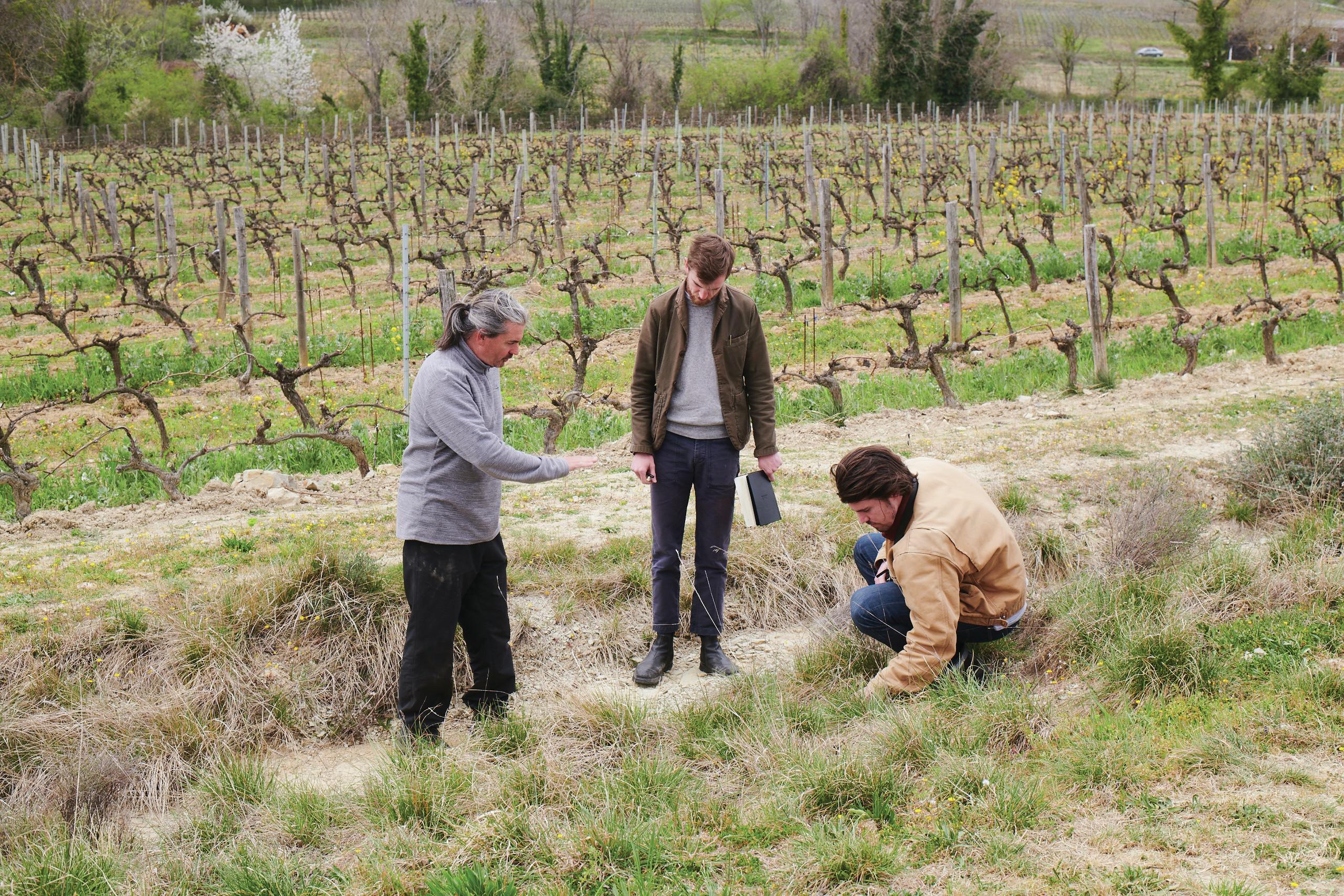
Field work: Tom Beattie and Francis Roberts of Beattie & Roberts in the vineyards with winemaker Sylvain Boch
“At the first Millésime Bio organic wine fair in 1992 there were only around 15 tables of wines, this year there were more than a thousand,” he enthuses.
In the off-trade, Waitrose is carving out a niche as the go-to supermarket for organic wine, with 88 listings available in the stores and through Waitrose Cellar, including best-seller Terre di Faiano Primitivo from Puglia and popular bagin-box drop Waitrose Duchy Organic Pinot Grigio. Meanwhile, Majestic has tripled its organic range in the past two years to meet increasing demand.
‘Launches from Old World regions that you might not associate with being at the cutting edge of the movement have all gone down a storm, showing that innovation can sit alongside tradition ‘
“What’s been particularly interesting to see is that launches from Old World regions that you might not associate with being at the cutting edge of the movement, such as the Loire, Rhône and Spain, have all gone down a storm, showing that innovation can sit alongside tradition, and make the organic category as a whole stronger,” says Rob Cooke, Majestic’s chief commercial officer. Among the big four, Sainsbury’s and Morrisons have an own-label organic range, but the overall offering among the big guns is small and feels like an opportunity missed. “From vintage to vintage, organic wines can be chalk and cheese, which is hard for supermarkets, as consistency is their whole selling point,” says Wregg, while Palmer feels the supermarket approach to organic wine is fickle. “They like to list organic wines because it’s good to be seen to be doing them. Whenever there’s a food scare they clamour to get a few more on the shelves, but they’ll quickly be dropped if they don’t perform,” he says.
In France the picture is a little brighter. “All the supermarkets want to be champions of organics, so there’s healthy competition between Carrefour, Intermarché and Leclerc, as the market share of organics grows and it becomes increasingly important,” says green pioneer Gérard Bertrand, who is aiming to be 100% organic in his range by 2030.
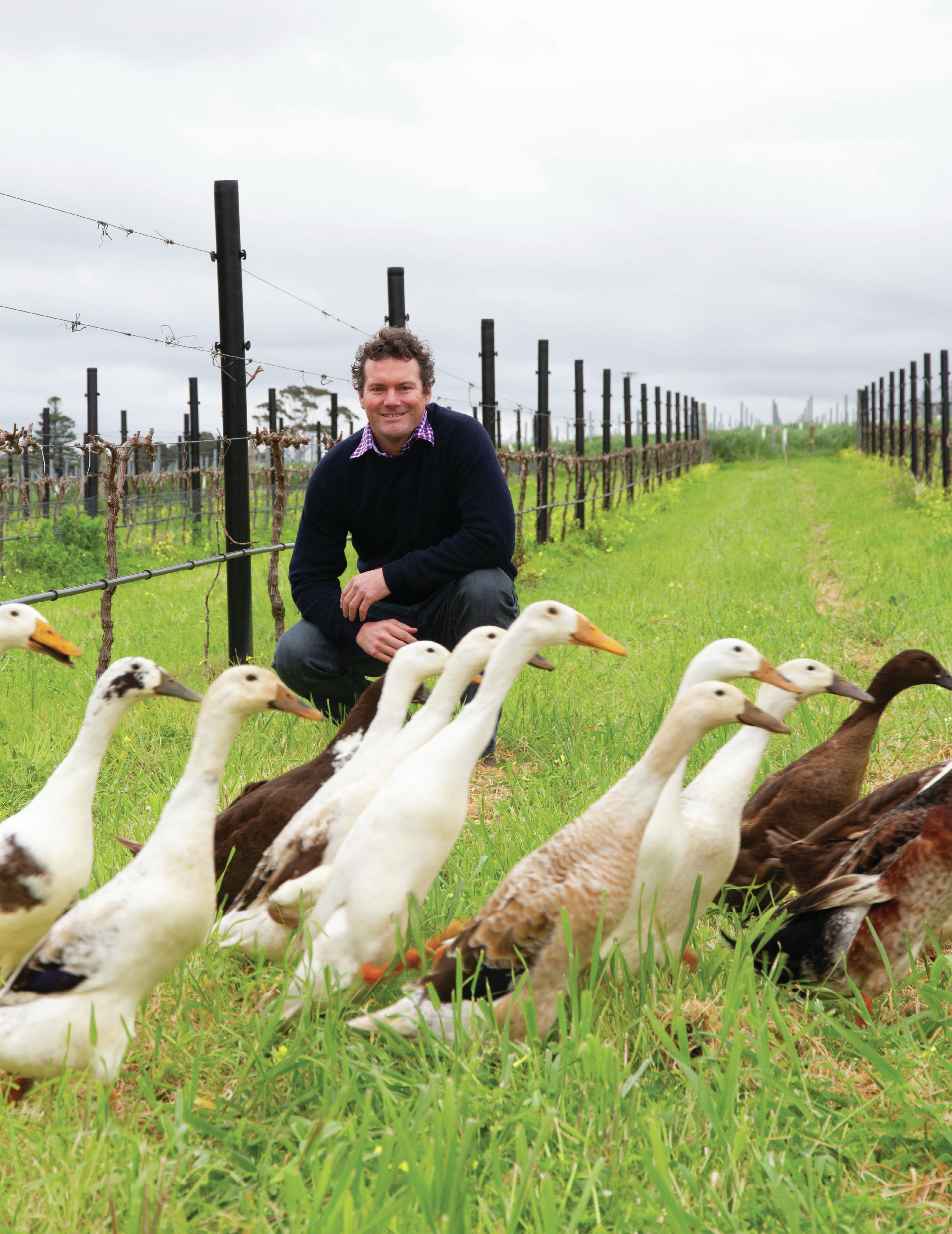
Birds of a feather: Richard Angove of Angove Family Wines with Indian Runner ducks
‘With the attention being given to climate change and its effect on the planet, there is a strong trend towards wellbeing and reducing our impact on the environment’
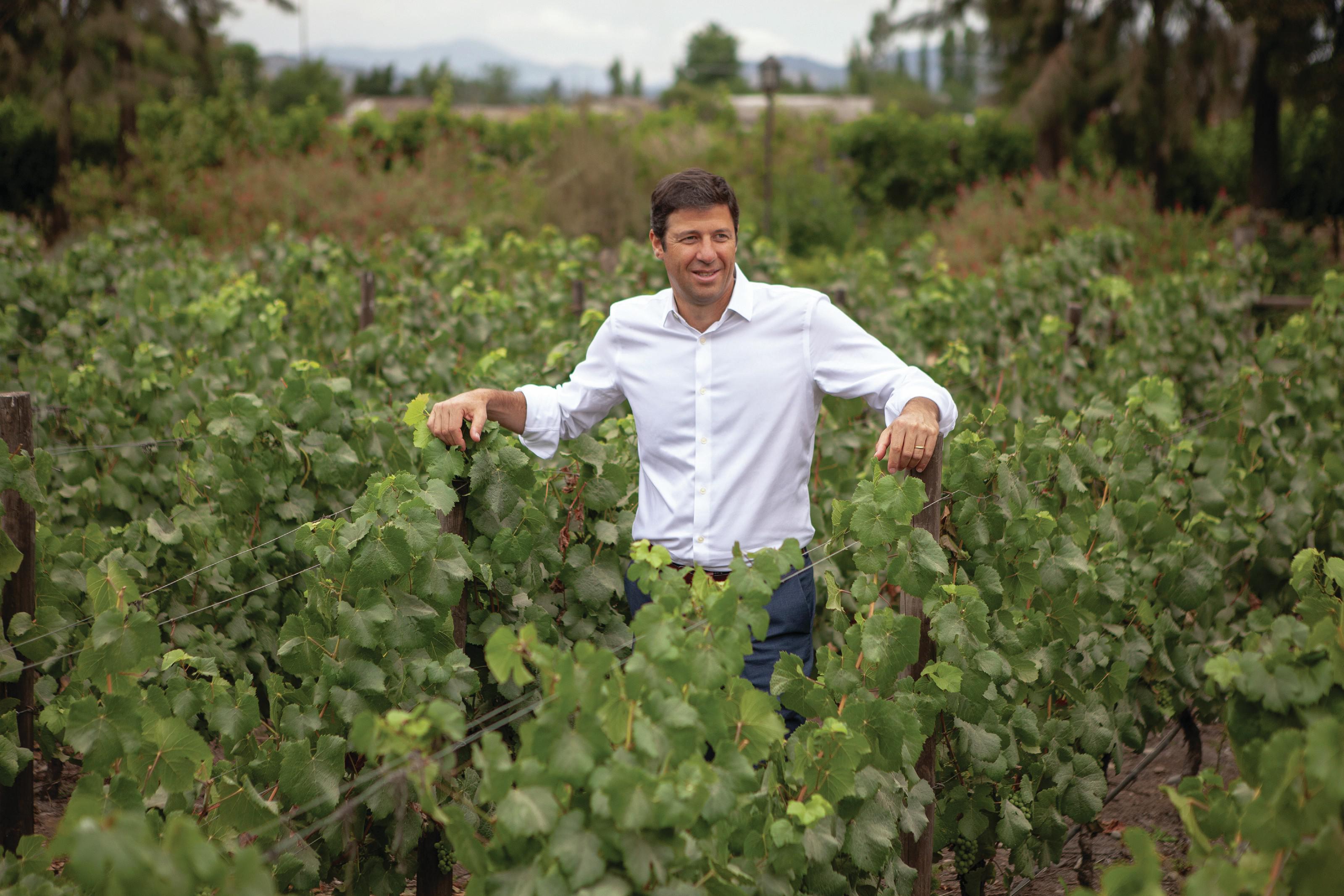
Organic growth: Paul Konar, CEO of Cono Sur
While things are rosy at home, Bertrand would like to see UK supermarkets doing more to push organic wines. “The organic trend is not where it’s supposed to be in the UK right now compared with France and Germany,” he says. “This is a window of opportunity for the supermarket chains. There is still a lot of room for growth in the organic category – the demand is there, people are ready for change, and there’s enough organic wine in the market now to create exciting new brands and concepts.” Bertrand recently struck up a partnership with Whole Foods to sell his organic wines in the US.
‘The organic trend is not where it’s supposed to be in the UK right now compared with France and Germany. This is a window of opportunity for the supermarket chains’
FLYING THE FLAG
In the on-trade, sommeliers are getting behind organic and biodynamic wines in a big way, which is helping to introduce them to a new audience. And it’s happening at the highest level – trailblazer Noma in Copenhagen has flown the flag for low-intervention wines since it opened in 2003, with current head sommelier Mads Kleppe presiding over an all-natural wine list.
In Edinburgh, the Radford family has been championing organic and biodynamic wines since they opened Timberyard in a former Victorian warehouse a decade ago, and scooped the award for the best natural wine list in db’s 2022 Wine List Confidential guide. Meanwhile, at this year ’s WLC winner, Trivet in London Bridge, former Fat Duck sommelier Isa Bal makes it easy for diners to hone in on sustainable drops via a set of symbols that flag up their organic/biodynamic/vegan/orange/ sulphite-free status.
At Sixpenny in Sydney, Australia, meanwhile, head sommelier Thomas Pajak finds storytelling to be a good way of introducing guests to organic wines. “When I’m pouring a glass, I like to talk about the producer ’s farming methods to open up a conversation about organic viticulture and why it’s important.”
With consumer demand for organic wines growing by the year, the category looks set to keep increasing its market share. Grand View Research valued the global organic wine market at US$9.8 billion (£8bn) this year, and predicts it will be worth a whopping US$21.5bn in 2030, with a compound annual growth rate of 10.2% between now and then.
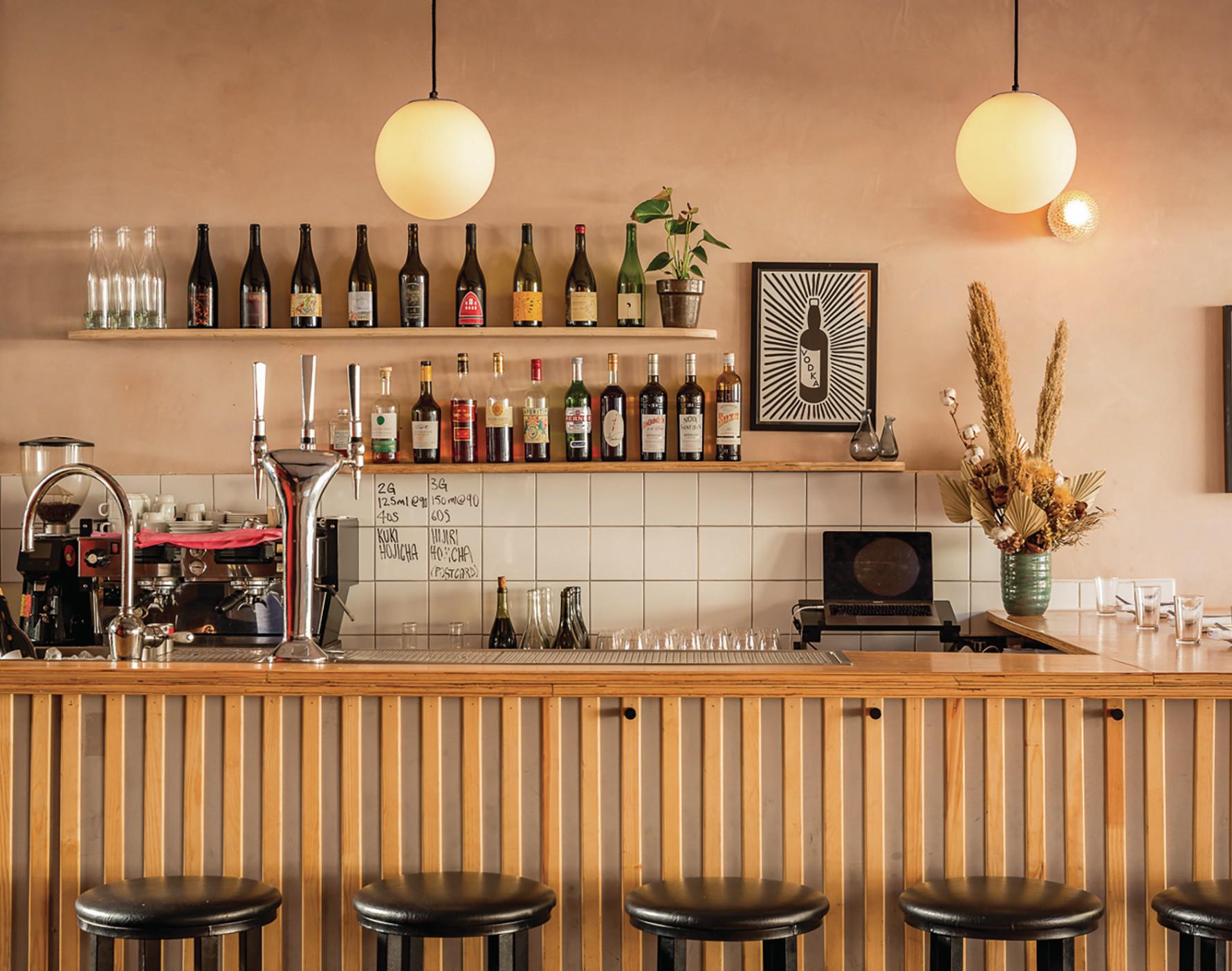
Take a seat: the bar at Top Cuvée
While Gérard Bertrand would like organics to become standard practice in the wine industry, he knows he has a fight on his hands. “It’s always a battle, as some people don’t want to move forward and make changes, but the popularity of organic wine is snowballing,” he says.
That may be so, but organics isn’t without its challenges, and the whole supply chain needs to be on board for it to work. “The extra expense in growing grapes organically and making them into Certified Organic wines is not for the faint-hearted, and it takes a real commitment from everyone within the wine business, from the vineyard manager right the way through to the retailer, to ensure that it can occur,” says Mark Ramm, regional export manager at Angove Family Winemakers in South Australia.
Fast facts on organics
• Global volume sales of organic wine were up by 8.3% last year, though the category only accounts for 3.3% of total still wine sales.
• The top five markets for organic wine are: Germany (8.6% volume growth in 2021), France (7.4%), the UK (1.3%), the US (3.6%), and Sweden (-2.5%).
• Grand View Research values the global organic wine market at US$9.8 billion this year, and predicts it will be worth US$21.5bn in 2030, with a CAGR of 10.2% between now and then.
• In North America, the organic wine market is anticipated to witness a CAGR of 10% between 2022 and 2030 in terms of revenue.
• Spain, France and Italy lead the way when it comes to certified organic vines, accounting for around 75% of organic vineyard land around the world.
• 17% of vineyard land in Bordeaux is certified organic or is in conversion, while the Languedoc accounts for around 35% of France’s total organic vineyard land.
• In a 2021 Wine Intelligence survey, 48% of consumers indicated they were likely or very likely to purchase organic wine, with 36% of consumers viewing it as more expensive than non-organic wines.
(Sources: IWSR, Grand View Research, OIV)
‘The extra expense in growing grapes organically and making them into Certified Organic wines is not for the fainthearted, and it takes a real commitment to ensure that it can occur ’
With the cost of living increasing, consumers are going to be watching their pennies in the weeks and months ahead. “The notion of paying extra for organic wines is not widely supported,” warns Richard Halstead, chief operating officer of consumers insights at research body Wine Intelligence.
“In times of rising costs and declining incomes, cost differential may prove to be a bigger headwind than in the past.”
He adds: “What will likely keep growth alive is the general move towards drinking less but higher value and more interesting wines.”
While an idealist at heart, Wregg believes organics is the only sensible way forward for the wine industry: “If you’re in the vineyard every day you’ll probably make better wines than if you rock up with a machine at harvest time. It’s about stewardship of the land and passing it on to the next generation.
Related news
Driverless tractors to GPS planting: how one New Zealand winery is paving the road to success


