



How wine is tapping into the growing vegan trend
PLANT-BASED foods and vegan alternatives have become so popular that even fast food chains and global conglomerates are tapping into the trend. From the McDonald’s McPlant burger to Hellman’s vegan mayonnaise, and Ben & Jerry’s non-dairy ice cream, big brands are taking a piece of the vegan pie.
In the UK, consumers spent almost £600 million on meat-free food items in 2020, according to market-data company Statista. This is almost twice the size of the spending four years previously, which totalled £300 million.
Statista data shows that nearly 2.6% of Brits identify as vegan, meaning that brands choosing to tap into the trend could make a lot of money.
‘Offering vegan wines sends the message that we’re committed to ensuring everyone has an opportunity to recognise themselves, and what’s important to them, through their wine choices’
The retail sales of vegetarian food and drink products and plant-based alternatives in the UK amounted to an estimated £885m in 2017. And numbers are rising, with the retail sales of both vegetarian and plant-based products reaching around £1.5 billion in 2020.
The trend extends further than the UK, of course. The retail sales value of meat substitutes in the EU and the UK together amounted to nearly €1.4 billion (£1.2bn) in 2019, and is forecast to reach €2.5bn by 2025.
What about wine? With the trend in plant-based foods rocketing, their liquid counterparts are surely destined to take off. Public awareness is the first hurdle.
While the majority of consumers understand the difference between meat and plant-based foods, the same can’t always be said for the knowledge of what makes a wine vegan.
Matt Smith, buying director for Naked Wines, says: “As far as consumer awareness of what goes into making wine, I think a huge amount of the population would assume it to be a vegan product anyway.”
LIMITED INFORMATION
Producers are not obliged to put fining agents – or ingredients – on wine labels, and information given to consumers remains limited.
“There’s still an education piece to do, as there always is with wine,” says Smith.
“It remains a large and challenging sector to pitch the right level of communication and education.”
Despite all this, demand for wines made without animal products is gaining traction.
Andrés Alvarado, export director for North America and Europe for Morandé Wine Group, says: “An increasing number of markets are showing demand for vegan wines.”
Alvarado adds that demand is particularly strong in more mature European markets “where consumers typically have a greater knowledge about wines”.
In 2010, Morandé converted its entire range to vegan fining methods. For Alvarado, making the producers’ wines accessible to those following a vegan diet is part of putting consumers at the heart of the company. He says: “Offering vegan wines sends the message that we’re committed to ensuring everyone has an opportunity to recognise themselves, and what’s important to them, through their wine choices.”
Vegan wine sections have popped up in major online retailers, including Majestic, Sainsbury’s, and Waitrose Cellars.
Feature findings
• UK consumers spent almost £600 million on meat-free food items in 2020, according to Statista; almost double the spending of four years prior, which totalled £300 million.
• The retail sales value of meat substitutes in the EU and UK together amounted to nearly €1.4 billion in 2019, and is forecast to reach 2.5 billion by 2025.
• Brands producing vegan wines are doing so as part of a wider movement to become more sustainable. Many certification boards require wineries to take animal welfare, as well as workers rights and the environment, into consideration.
• Public awareness of vegan wines is growing, though many are unaware of that wines can be made using animal products, but as awareness about vegan winemaking methods grows, so does demand.
In 2019, UK retailers M&S and Spar both announced that all their own-brand wines would become vegan-friendly within the next three years, as the trend for veganism in the UK gathers pace.
Rob Cooke, chief commercial officer at Majestic, agrees that consumers are influencing the trend. “Vegan wines have certainly grown in awareness over a number of years at Majestic,” he says.
“We see it not only online, in our search terms, but also in the conversations our store teams are having.”
According to NielsenIQ, a recent survey showed that 3% of US adults identify as vegan, only slightly higher than the 2% figure of 2012.
With the number of vegan consumers increasing by such a small fraction, what is motivating this upward trajectory of vegan wines?
For Cooke, the answer lies in transparency. He says: “It’s by no means the case that non-vegan wines are not part of a wider ethical trend. What it does show is that customers are eager to understand all points of the production scale – and ensure wine, like other food and drinks, has that transparency.”
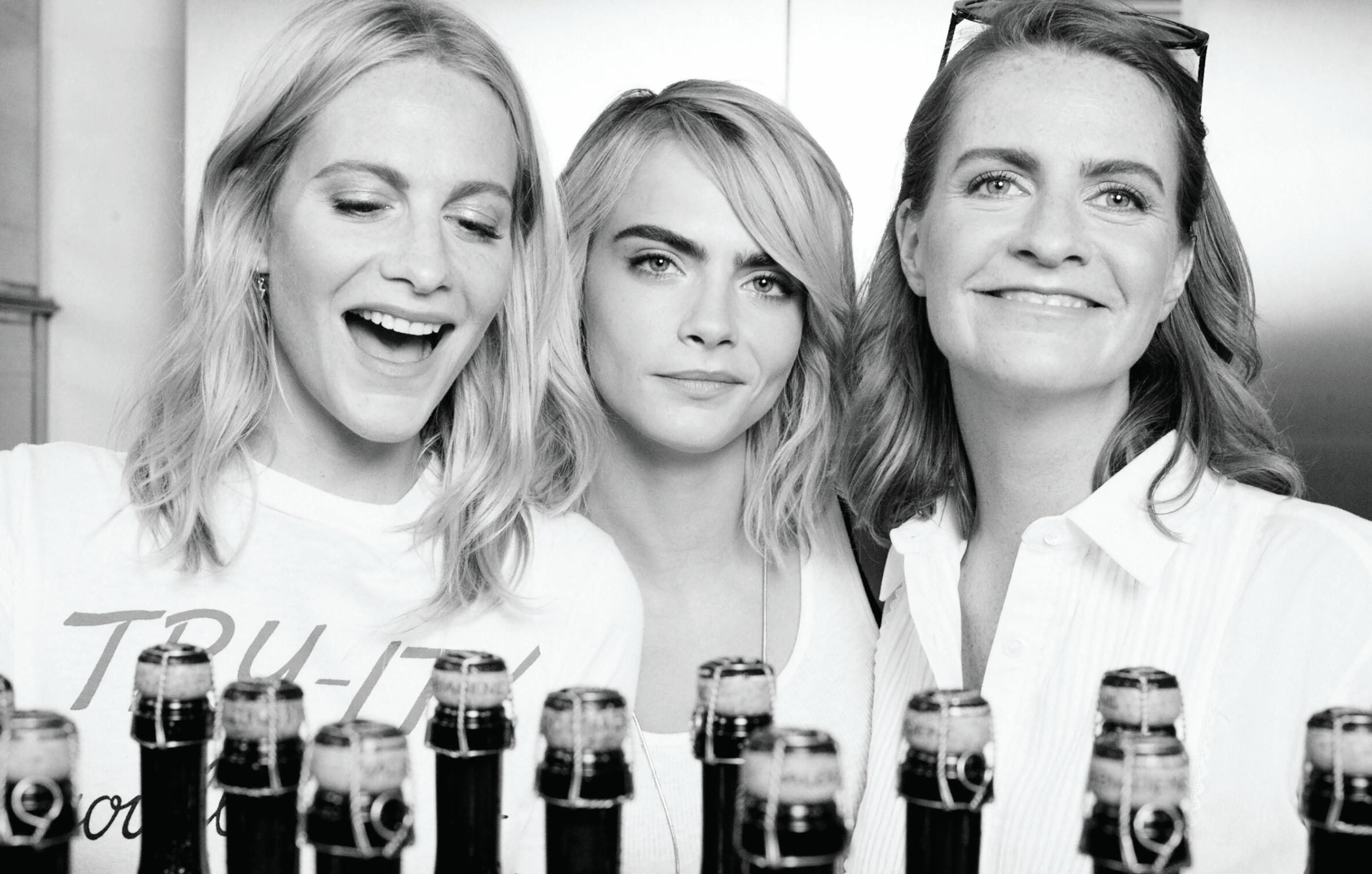
Vegan Prosecco: the Delevingne sisters’ Della Vite brand is made with vegans in mind
Crucially, not everyone buying into the vegan trend is cutting out animal products altogether. Consumers are increasingly looking to incorporate more vegetarian and vegan dishes into their lives without necessarily converting altogether. So, while the number of fully fledged vegans might not be growing, the demand for plant-based food and drink continues to rise.
‘I think we in the wine industry need to be open about what our role is. I still see a lot of wineries and people in the wine business that try to keep the product complex’
According to NielsenIQ, the demand for plant-based products increased by 12% from 2020 to 2021.
Smith from Naked Wines agrees. “Consumers continue to want to know more and more about what they are consuming,” he says, “and that goes for every bit of what they consume. That will only serve to convert more wines over to being vegan friendly.”
According to the company’s internal data, 75% of the bottles sold at Naked Wines in the financial year to 2022 were classed as vegan.
Naked is keen to lean into the trend, with 60% of its range coming in the financial year to 2023 also being vegan.
The popularity and demand for vegan alternatives shows no sign of slowing. Smith adds: “I cannot see it going backwards; I can see it only getting more important.”
Derrick Neleman, the founder and owner of Bodegas Neleman in Spain, believes that the industry’s old guard is to blame for the opaque information passed down to consumers. “I think we in the wine industry need to be open about what our role is,” says the Dutch-born CEO. “I still see a lot of wineries and people in the wine business that try to keep the product complex. That’s why we have a wine that’s called Just Fucking Good Wine. It’s our statement against wine snobbery.”
Bodegas Neleman was the first wine brand to put its carbon footprint on all wine labels, highlighting its dedication to transparency, in a bid to stand out from other companies keeping consumers in the dark. “We as a company in the wine industry are open to adapting to new methods to become better for the world,” he says.
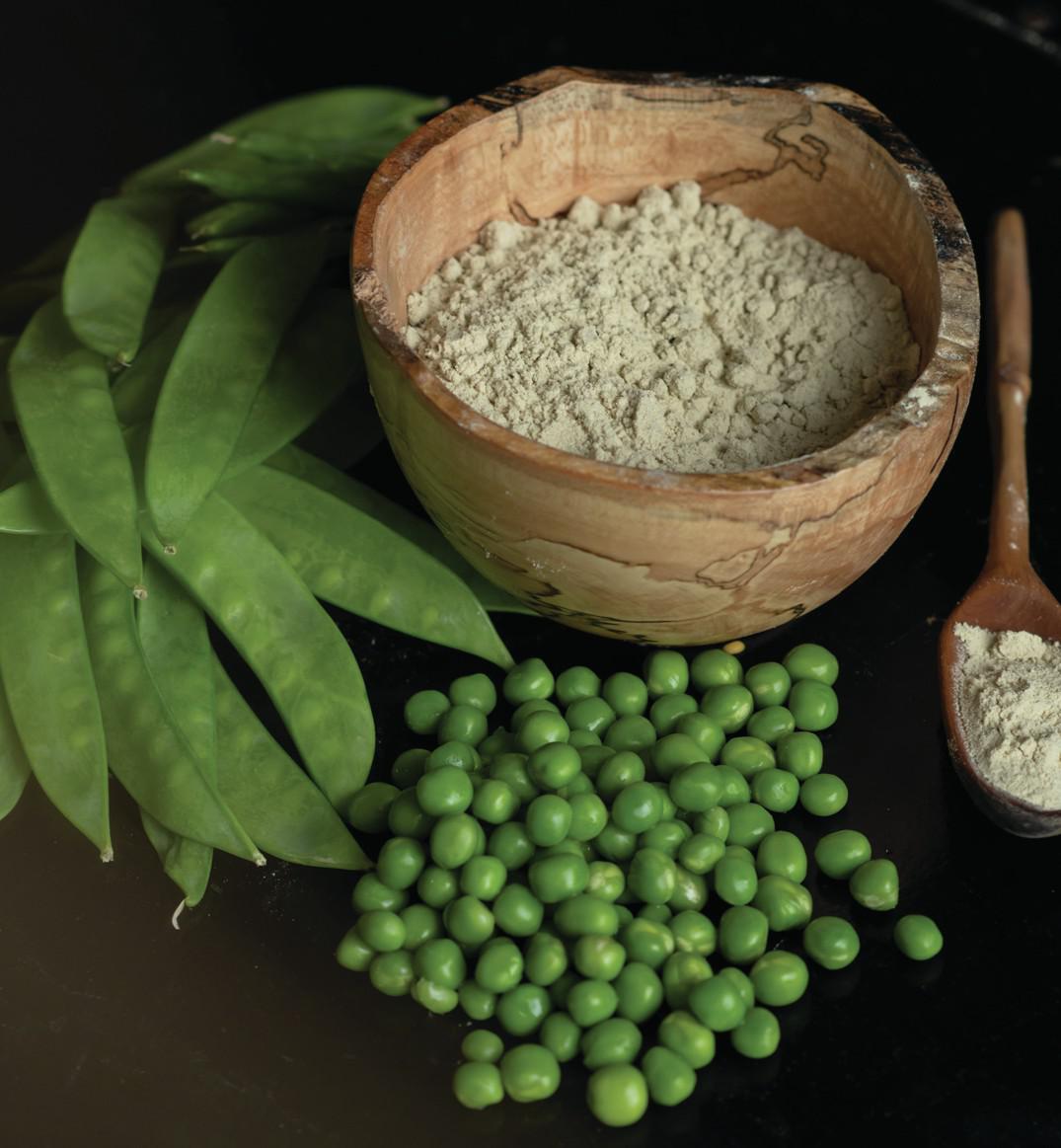
Winemakers are using vegan-friendly pea protein
What makes a wine vegan?
Creating a vegan wine involves winemakers moving away from using from animalbased fining products that filter wines and improve the clarity, such as egg whites, milk protein, casein, animal gelatine, and isinglass, which is extracted from fish bladders. Instead they use vegan-friendly alternatives, such as pea protein, potatoes, and carbon- and clay-based agents. Modifying vine management and winemaking techniques can also ensure that wines are suitable for vegans. What are individual producers using to make their wines vegan?
Emiliana avoids using any type of clarifying agent
The winery avoids an excess of tannins in fermentation by using a delicate vinification and extraction method, avoiding the use of any type of clarifying agent. “We also use plant-based fining agents such as potato or pea protein,” says general manager Cristian Rodriguez Larrain, “These fulfil the same function of dragging tannins out of wine, with the advantage of makingwines suitable for vegans.”
Morandé Wine Group uses minimum doses of bentonite to clarify white wines
Export director Andrés Alvarado says: “We decided to use bentonite for the fining method because it’s a naturally occurring mineral that is quick and effective at stabilising proteins and preventing cloudiness, without impacting wine flavour.”
Della Vite filters with a ceramic system, instead of animal fining agents
All Della Vite Prosecco is filtered using a crossflow ceramic system, rather than using fining agents derived from animal products, meaning the wine is 100% vegan.
For new producers getting into the wine game, making vegan-friendly products is almost part and parcel of developing a brand.
Numa Heathcote, co-founder of Della Vite, agrees that the demand for vegan products comes from an increased focus on origin which has burgeoned in the last few years. “Consumers are demanding more from brands when it comes to their provenance, ingredients, and their environmental credentials,” she says.
‘As a new brand it was important for us to address those expectations and create a wine using production methods that enabled as many people as possible to enjoy it’
“Wine production is clearly surrounded by generations of history and heritage, with vegan production techniques being the less ‘traditional’ method. However, as attitudes around food and drink evolve, so too can production processes. As a new brand coming onto the market amid this more consumer-aware environment, it was important for us to address those expectations and create a wine using production methods that enabled as many people as possible to enjoy it.”
Vegan certification also fits within a larger ethical message that producers want to communicate. Conversations around organic wines and sustainable credentials are becoming a more mainstream part of public vernacular. As younger consumers begin to make buying decisions based on their ethical values, vegan certification in some ways becomes an easy win for brands looking to recruit new drinkers to their products.
Labid Al Ameri is president and co-founder of Domaine Bousquet in Argentina. He says his sights have always been set on a greener future. “I am not about making wines for everybody,” he says. “I would love everybody to buy my wine, but we are focusing on a mission, on a niche, and that niche is about organic wines, protecting animals, protecting farms, protecting people. That’s why veganism is part of that philosophy.”
In June 2022, Domaine Bousquet earned Regenerative Organic Certified (ROC) status. The certification makes the company one of only four wineries to do so to date, and the first outside of the US to meet ROC’s requirements. The California-based Regenerative Organic Alliance has adopted USDA organic standards as a baseline, which means that gaining ROC status requires certification in soil health and land management; worker fairness; and animal welfare.
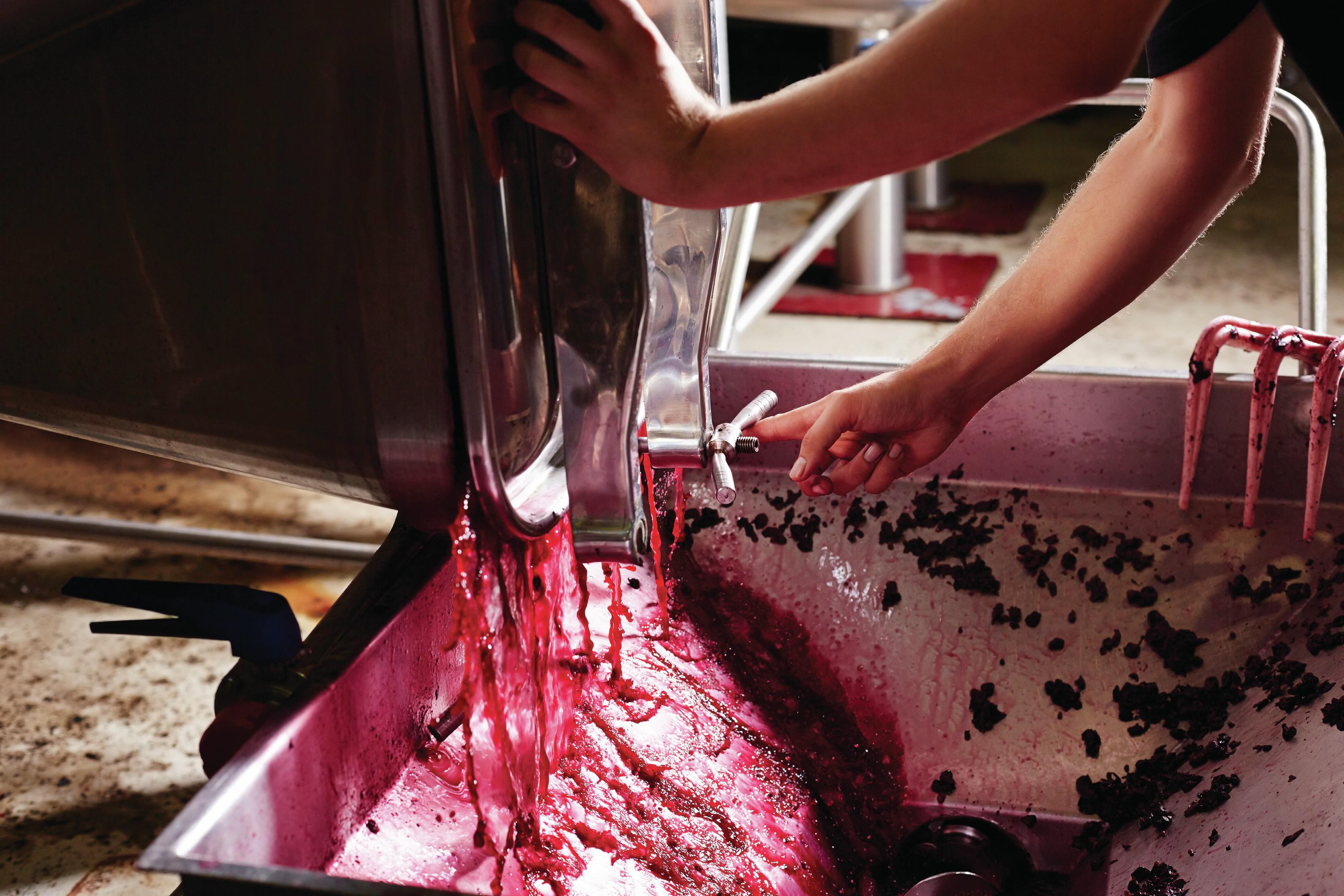
Go with the flow: more wine producers are using vegan methods
Also based in Argentina, organic wine brand Emiliana is similarly motivated by a broader ethical philosophy, which has resulted in a conversion to vegan production methods. Emiliana wines are made with what general manager Cristian Rodriguez Larrain calls “very delicate vinification and extraction”, avoiding an excess of tannins during fermentation, and “thus avoiding the use of any type of clarifying agent”.
But it’s the brand ethos that first motivated the decision to cut out animal products. He says: “For many years we have produced wines as vegan, not because of market requirements or the need to be certified ourselves, but simply because we considered it linked to our organic philosophy. To produce organically, Fairtrade and vegan are all related in the sense that we produce according to the highest standards of sustainability, including nature, human rights, and also animal welfare.”
‘We have produced wines as vegan not because of market requirements but simply because we considered it linked to our organic philosophy’
Vegan-friendly wines are also making their way into the on-trade, and plantbased dishes are becoming more mainstream, even in fine dining. In 2020, The Michelin Guide revealed a new category in the form of its Green Star award.
The prize was introduced into several of the 2021 editions around the world, celebrating restaurants at the forefront of the industry when it comes to their sustainable practices. And many of these restaurants are making vegetables the focus.
MENU PAIRING
Michelin-starred London restaurant Pied à Terre offers a 10-course vegan tasting menu, complete with dishes such as baked soybean terrine with a sesame and poppy seed crust, and beetroot meringue with pistachios, waffle, morels and breakfast radishes.
Essex-born Chanel Owen is head sommelier at the Fitzrovia restaurant, which has maintained its Michelin star since 1993. Owen has the job of pairing wines with the vegan tasting menu; a task that comes with its own set of challenges.
“I tend to have a repertoire of wines I know are vegan,” she says. Again, a lack of transparency from producers makes accessing vegan wines difficult.
Owen relies on communication with the winemakers to navigate around this issue.
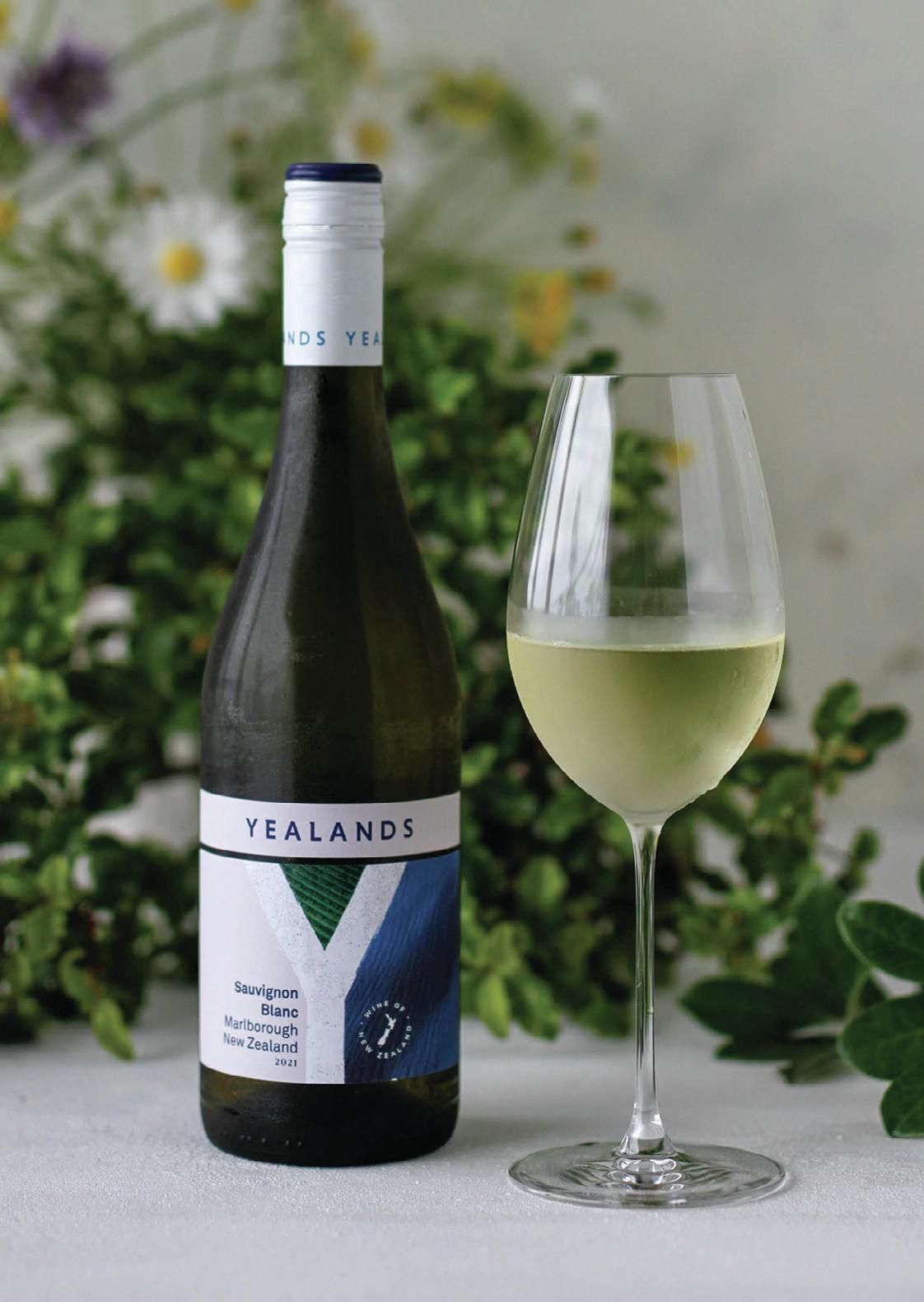
Inclusivity: Yealands Wine Group
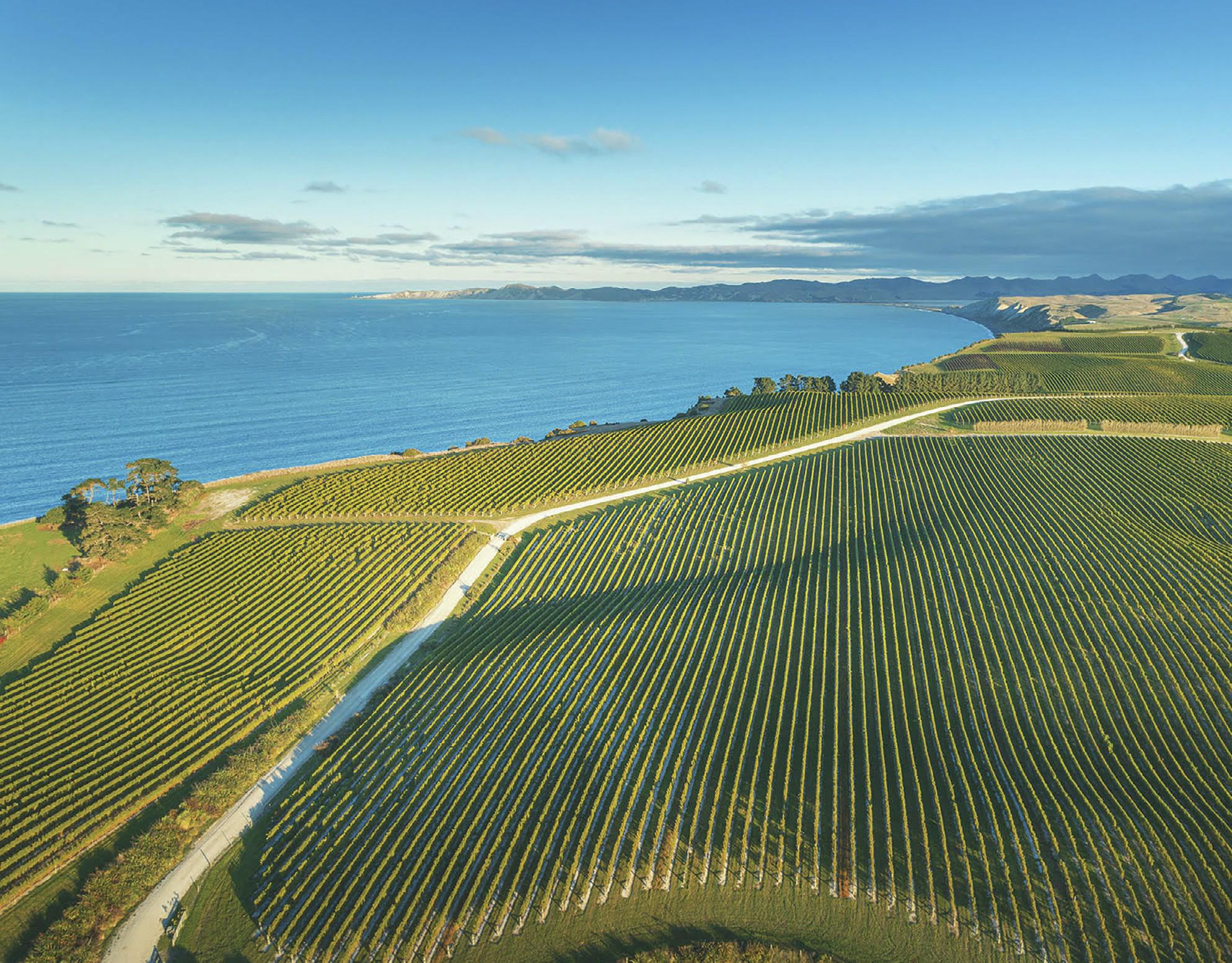
Shore thing: Yealands is one of many producers that make vegan wines
“Most of my suppliers are getting wines from very small producers. I like things to be quite niche. And their assurance, or actually being able to speak to the winemaker, does make a big difference, as does seeing their processes often firsthand, to be able to pass that confidence on to our guests,” she says.
With consumer consciousness growing every day, and becoming the driving force for this trend, there is potential for vegan wines to become an easy tick box for wineries to advertise ‘green’ credentials.
‘With great plant-based alternatives available, we can make wines in a vegan way, and therefore why wouldn’t we?’
But whatever the motivation, a transition to plant-based methods can only be a positive thing when it comes to inclusivity. Owen says: “I would never want to alienate someone just by saying ‘Oh, actually, this has got egg in it’.”
Consumers want their ethical choices to be respected, so why wouldn’t wine brands want to listen to their customer base?
Natalie Christensen, chief winemaker at the New Zealand-based Yealands Wine Group, sees it as an obvious step. She says: “With great plant-based alternatives available, we can make wines in a vegan way, and therefore why wouldn’t we? It results in us being able to provide wines that are as inclusive to as broad a range of consumers as possible.”
Matt Smith of Naked Wines agrees that the trend can only be a good thing for both consumers and producers. He says: “In purely commercial terms, you’re appealing to the broadest customer set when you make that choice.”
Colleague Ray O’Connor MW, who works as the company’s wine director, agrees: “Winemakers want to sell wine, and provided it doesn’t compromise on quality, they’ll get on the right bandwagon.”
Related news
How do people under 40 find their way into fine wine?
‘Bonkers’ rosé sales in UK driven by four wine brands
How a visit to California convinced Mirabeau to sell to Concha y Toro


