



Kicking up a storm: the impact of natural disasters on wine production
Producers are used to dealing with all types of weather, but how do they cope when their grapes are ruined by hail, drought or even earthquakes? Roger Morris speaks to winemakers worldwide to find out what action they have taken.
THE NIGHT of Sunday, 8 October 2017 was hot in Napa Valley. Although tourists had flooded into the area for the weekend, many had now drifted back home. But for people working at the wineries, weekends during harvest are no different than weekdays, except for more traffic to negotiate to get to and from work. Around 20% of the year’s grapes were still on the vines. Now, with the setting of the sun, seasonal winds came up from the east – strongly. Robert Sinskey, owner and winemaker of his eponymous winery in Stags Leap, and his wife, cookbook author Maria Helm Sinskey, were on the East Coast, where both daughters were in school. Late that night, Sinskey received a a phone call.
“My general manager, Phil Abram, received a note on social media that there was a fire in the Stags Leap region,” Sinskey later recalled. He asked Abram to retrieve the Sinskey dogs from the winery and alert people in their guest house.
“Roads around the winery were closed shortly thereafter,” Sinskey says, “and everyone was evacuated.” The next morning, Sinskey searched social media for news and monitored a remote camera at the winery – until it failed. “The winery was completely surrounded by flames that towered over the mountains,” he says. “I feared we had lost everything – and social media was saying we sustained a total loss.” Two days later, Sinskey says: “Some of my crew sweet-talked the guards blocking the roads and hiked in on the Wednesday to do pumpovers.” There was damage, but the winery was still standing, and the wine was still fermenting. A smaller building was destroyed, and about five acres of 30- something-year-old vines were badly burned. “The wines,” Sinskey noted, “were doing their magic unattended.”
A few months earlier, on the other side of the Atlantic, Berenice Lurton, the owner of Château Climens in Barsac, also had a sleepless night. It was a cold April night – too cold – and Lurton worried about the tender new growth on her vines. “We knew there was a risk that night,” Lurton later told me, “but there are not really good preventive measures for that occurrence, especially for a surface as large as ours – 30 hectares.” Early next morning, Lurton was out in her vineyards, trying to gauge the damage. “The effect of frost is not visible at first, but we knew we were severely hit,” she said. “After a few days, the vines were totally brown, as though burnt. Most of our neighbors in Barsac had big losses, but we were the most severely touched.” There would be no 2017 Château Climens.
Conversations such as these with Sinskey and Lurton seem more commonplace, and more severe in magnitude today as winegrowers around the world try to adjust to the parade of natural disasters that have turned the historic incertitude of farming into a larger, more expensive gamble. While wildfires have been in the headlines recently, especially in Australia and California, reports have increased of spring frosts, vine-shredding hailstorms, droughts one season and flooding the next, even violent earthquakes, especially along the Pacific Coast of the Americas. Surviving these disasters – and trying to prevent or lessen the impact of future ones – is becoming a major preoccupation for wine producers worldwide.
TAKING A GAMBLE
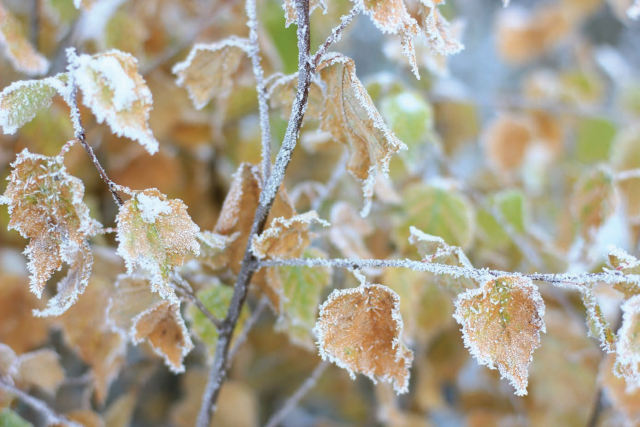
Farmers, whether they grow grapes, lettuce or peaches, realise they are gamblers, and weather is the house dealer. Crop losses, even occasionally of a complete harvest, as Lurton experienced, are expected. But the gamble is worth it if good harvests significantly outweigh disastrous ones. Frost has always been a problem in temperate climate vineyards, sometimes with disastrous results. One in Bordeaux in 1954 killed not only the green buds but also many vines, including the early-budding Malbec. Because of the variety’s vulnerability, most growers didn’t replant it, and only now are Malbec vines being planted widely in the region. In recent years, winters have become shorter and less severe, encouraging varieties that normally bud in March in the Northern Hemisphere to emerge weeks earlier, in February. At the same time, frosts in April or even May have not gone away. For example, daily temperatures in Bordeaux in February, March and April are averaging 4.7ºC, 6.5ºC and 8.1ºC, about a degree higher than corresponding monthly temperatures from 1981 to 2010, encouraging earlier vegetation.
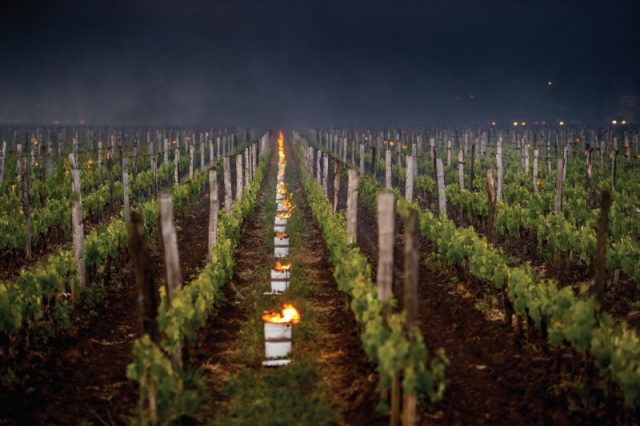
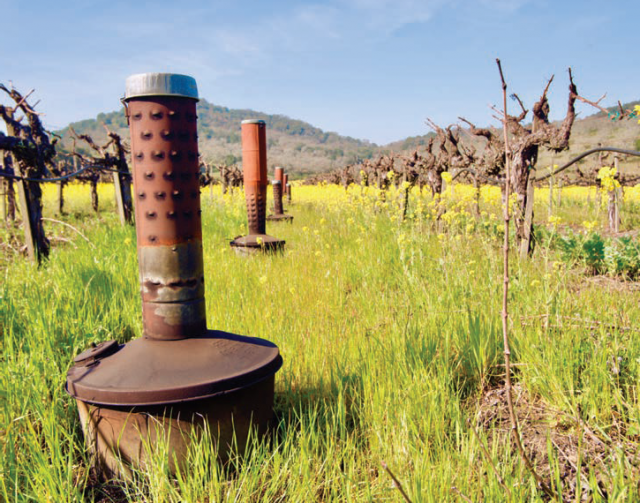
To counter this, one approach is to protect vines by raising temperatures a degree or two on cold mornings, which is often sufficient. Spring visitors to Napa Valley 50 years ago would have seen hundreds of smudge pots between the rows, looking like small black pumpkins. When they were lit on cold mornings, it looked like Halloween in the vineyards. Increasing air flow is an important measure, so hillside vineyards are often less affected than those in the valley. Some vintners have installed giant wind machines, and LVMH-owned Cloudy Bay in Marlborough, New Zealand, even hired a fleet of helicopters to hover over the vines one cold morning a few years ago. Conversely, elevated water sprayers are sometimes installed to coat vines before they freeze. Counter-intuitively, ‘freezing’ the foliage temporarily protects it for a few degrees.
Another approach is to alter the viticulture by maintaining one vertical branch during winter pruning, a practice maintained by Anthony Vietri, owner of Va La Vineyards in southeastern
Pennsylvania. “We position this extra emergency cane to stand straight up in the air. For every foot above the vineyard floor, the air can be as much as 1ºC warmer,” he says.
HAIL MARY
Hailstorms are generally associated with summer, but they can also occur when vignerons are still worried about frost. On 17 April this year, a violent thunderstorm struck northeastern Bordeaux, causing extensive hail damage in much of the region. Early reports estimate between 600ha and 800ha of vineyards were more than 80% affected. The following day, a second hailstorm hit the Medoc.
France in general, and Argentina’s Mendoza region, are frequently subject to hailstorms. One storm in Chablis in May 2016 destroyed around 80% of the crop. Producer Louis Moreau told the drinks business: “Actually, I had never seen before in one hour the vineyard going from spring to winter, and hail that stayed on the soil for hours.” Frost and hail can mean the total or partial loss of one vintage, but a severe storm can also kill vines. Virginia winegrower Jim Law, of Linden Vineyards, had to replant many of his vines after a 2014 storm. Not only was there significant costs in ripping out the vines and buying and replanting new ones, it was four years before he got a significant harvest.
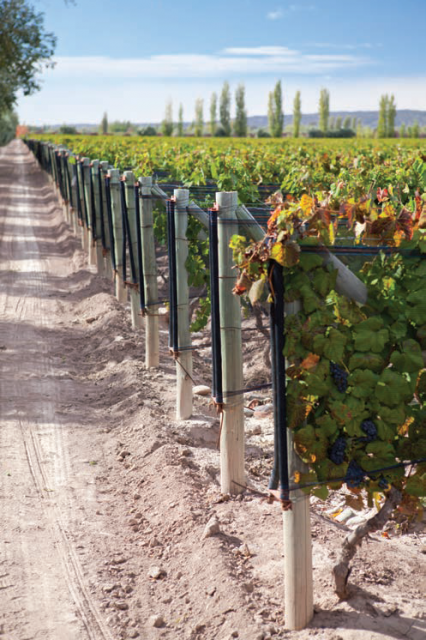
France has in place a hail-prevention network to lessen the impact. From April until October, 650 manual ground generators help protect 55,000 square kilometers of vineyards in the Loire and Rhône valleys and along the Atlantic Coast from Bordeaux. They burn a silver oxide solution that drifts into the clouds to break up hail formation. Metal netting has long been used as a shield in the Mendoza region. According to Laura Catena of Catena Zapata, netting is made of virgin polyethylene and costs about US$3,000 (£2,409) per hectare. “It protects the vine very well against hail,” she says. “However, the netting carries along some operational costs since we must move the fabric up then put it back over the vines again during pruning and harvest.”
SMOKE GETS IN YOUR EYES
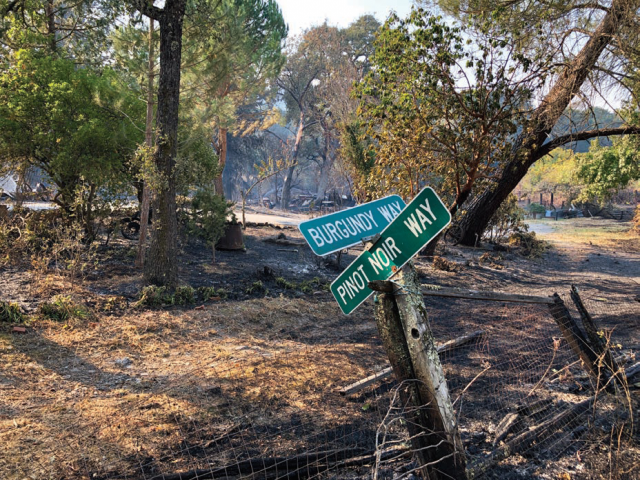
Wildfires once were a rare danger to winegrowing, but in recent years have done major damage in California, southern France and, especially, in Australia. There are several reasons for this increase. One is increasingly dry periods, including multi-year droughts, which allows for fires to start more easily and continue without rain relief. Forest undergrowth has added to the fuel. And, increasingly, winegrowers have expanded into areas in, or adjacent to, woodland or vast stretches of dry grasslands. One-third of Adelaide Hills’ crops were lost in the Christmas 2019 fire, and most other areas in southeastern Australia suffered as well. Eight of California’s most-destructive wildfires have occurred since 2017, and in the past three years more than 1.5 million hectares have burned and over 150 people have been killed.
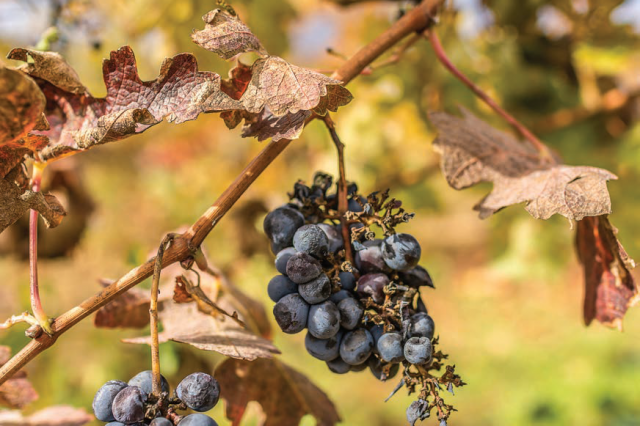
Sometimes vineyards constitute firebreaks, slowing the fiery onslaught, and it is winery buildings and equipment that go up in flames. But an even greater danger, as Australia discovered, is smoke taint. The producer Tyrrell’s says taint – the flavour of smoke on grapes and hence often in the wines – would cut its 2020 production by as much as 80%.
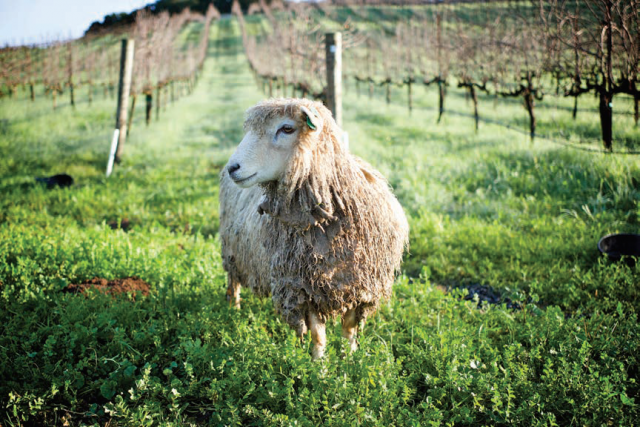
“The severe drought and unprecedented bushfire emergency has made 2020 the toughest year in living memory,” says Clonakilla winemaker and CEO, Tim Kirk, who will not produce any New South Wales wine this year because of smoke taint. Fire prevention on a grand scale is difficult, although some advocate a traditional method of setting controlled fires in forest margins to rob later wildfires of fuel. Beyond that, wineries are cleaning up their own properties. John Jordan, owner of Alexander Valley’s Jordan Winery, says he is increasing the number of cattle in the company’s herd and letting them graze over a wider area. “This is an effort to reduce the fuel load in as many acres as possible in the spring and summer months,” he says.
DROUGHT AND FLOODS
Most dry areas in the New World have irrigation, so drought is not the direct problem it once was. Finding future sources of water is problematic, however, as aquifers are over-stressed and
dwindling mountain snow packs make runoff water less dependable in California and Mendoza. The main problem, especially in Europe, is concentrated heat, which results in riper grapes with unacceptably high levels of alcohol. Even in classic regions such as Bordeaux, heattolerant grape varieties are being tested, And, as noted, dry conditions encourage a greater probability of severe wild fires.
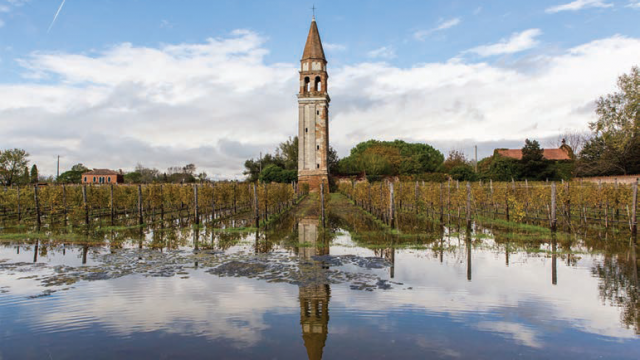
Most quality wine producers would prefer to plant on well-drained hillsides rather than the wetter flatlands with richer soils, although even in some classic areas riverside plots are valued. In Napa Valley, for example, serious vineyard flooding has historically occurred once every seven years. Tom Gamble’s family has been farming riverside property for more than 100 years, and he wasn’t too concerned when water swept through vines at Gamble Family Winery in 2017. “Having experienced many floods, I’d rate floods this year, so far, as having created some headaches in my vineyards but far fewer than the floods of ’05–’06, the ’80s and ’90s,” Gamble told Sonoma News. In most cases, trellising posts and wiring suffer more than the vines. Of course, there are only three choices in avoiding flooding: deal with it, as most growers in Napa and elsewhere do; build dams and dykes that may result in worse damage if they are breached; or move operations elsewhere.
EARTHQUAKES
One winegrowing disaster that often escapes public attention is earthquakes, which are prevalent in many of the world’s winegrowing areas, especially Italy, Chile and California. “When we look back at damage from fires – which get a lot of media attention – the property damage is relatively small when compared with earthquakes,” says Tom McMillan, who heads the wine division at Silicon Valley Bank. “The 2016 earthquake resulted in about US$1bn in damages.”
While there is no such thing as preventing earthquakes, most modern winery construction in earthquake zones is built to resist damage. For Silver Oak winery in Napa, CEO David Duncan, new construction mostly did its job. “Since we had a fire in 2006, we had completely rebuilt the winery in 2008,” he says looking back on the 2016 quake. “We definitely designed the winery with the most up-to-date code and seismic best practices. For example, we store our barrels on racks that hold four barrels each. These have a heavy ‘footprint’ and don’t tend to ‘walk’ during an earthquake. They worked beautifully.”
WHAT COMES NEXT?
The first questions after a winery suffers a disaster are: “Can we afford to start over, and do we want do?”; and “What, if anything, can we do to avoid this disaster from happening again?”
There are no easy or even good answers, as most natural disasters cannot be predicted, let alone prevented. Lurton, of Château Climens, took out frost insurance, but, worldwide, crop insurance is expensive, often reimburses less than half of the actual loss and isn’t available for certain threats. Optimistic growers always look for silver linings in the storm clouds. Vine loss may give a grower or region a chance to replant better grape varieties with better rootstocks to meet future needs. And, says McMillan: “Experiencing a disaster helps you with the next one. Once you understand the risk, it helps you make a clear-minded evaluation.”
Risky business – is it worth taking out insurance?
Whatever the catastrophe, a wine estate’s survival often depends on whether there is insurance to cover at least part of the loss. In most cases, wineries and other structural areas are likely to have at least some insurance coverage, but, depending on the country and region, there may be little coverage for crop loss or damage to vines. Bérénice Lurton did not have crop insurance when frost wiped out a year’s vintage at her Château Climens estate, but she bought it before the next one. “We took out insurance,” she says, “even though we were thinking that while we didn’t have the means to do so, we even less had the means to lose another crop.”
According to the Bordeaux Wine Council, there are two types of insurance available in France. “One is called multirisques climatiques,” says the council’s Cécile Ha, “covering crop losses following hail, storm and frost.” It is partially funded by the European Union and “requires long and fastidious administrative procedures. Between 30% and 40% of winemakers in Bordeaux are covered by this insurance. The other is grêle parcellaire, insurance covering exclusively the consequence of hail. The winemaker can insure only some plots and not all their planted surface area.”
In the US, crop loss can be insured, primarily through the US Department of Agriculture, but many farmers say that its rewards are limited. Even though Robert Sinskey lost some production at his eponymous California winery and part of his vineyards to wildfires, he was not eager to take out insurance. It “only lessens the sting”, he says, by providing limited reimbursement according to complicated algorithms that determine loss. Catastrophic insurance, which would cover replanting and loss of income, does not exist in the US.
Australian winegrowers that had devastating wildfire losses this season – burned wineries and vineyards as well as loss of crop because of smoke taint – are also ambivalent about coverage. “Most businesses in the Adelaide Hills bushfire probably did not have enough insurance,” says James Tilbrook, who lost vines, winery buildings and wine inventory at his Tilbrook Estate last December, “but I am guessing people whose properties were burnt out or damaged will now be thinking very hard about what is essential to be insured. “In our case our biggest loss was the all of our wine, which was bottled, in barrel and in vat. It meant our income dropped to zero immediately. Even though it took several months to get insurance paid out, we’d be in a much different situation now if it had all been insured for full retail value rather than bulk wine prices,” says Tillbrook
David Bowley of nearby Vinteloper saved his winery, but lost his vineyards. “From what I understand from our insurer, crop insurance is ridiculously and prohibitively expensive for wine grapes and vineyards because of the nature of pests and disease,” he says. “It’s uneconomical. I don’t know of any growers in the Adelaide Hills who have crop insurance for their vineyards,” he says. Tilbrook adds that even for frost coverage, insurance may not make economic sense. “You have to insure your whole property, not just the area that gets frosted, and this means that if you only have a frost one year in, say, five, it would cost you more in insurance than you’d get back.”
Feature findings
- Frost has always been a problem in temperate climate vineyards, sometimes with disastrous results.
- To prevent it from forming, some vintners have installed giant wind machines, and Cloudy Bay in Marlborough even hired a fleet of helicopters to hover over the vines one cold morning a few years ago.
- Wildfires in Australia have been a major problem of late, with vintages being ruined by smoke taint.
- To fight damage from hail, in France, 650 manual ground generators help protect 55,000 square kms of vineyards in the Loire and Rhône valleys, and along the Atlantic Coast from Bordeaux. They burn a silver oxide solution that drifts into the clouds to break up hail formation. Metal netting is also used.


