



Could Viura bail Spain out of this year’s tough harvest?
While it’s easy to be seduced by experimental varieties, a year like 2023 reminds us of the beauty of familiar faces. Sarah Neish investigates how this is especially true for white grape Viura in Spain.
TALK TO anyone with more than a passing interest in Spanish white wine and they will no doubt sing the virtues of exciting, new or perhaps resurrected indigenous grape varieties. As the country’s plantings have diversified, winemakers across Spain have basked in the welcome glow of possibility; Albariño from Rías Baixas, Godello in Valdeorras and Chacolí from the Basque Country are all starting to find their feet.
Then came 2023, the year Spain almost ran dry.
In September, the Government pledged €12 billion towards tackling the ongoing drought that is likely to result in Spain registering its smallest harvest for six years. Suddenly, those lesser-known and often temperamental ‘new’ grape varieties (a bonus during good years for bringing complexity to blends) are shedding some of their novelty factor as vintners are reminded of the merits of sturdy, reliable workhorse varieties that can fill barrels. Take a bow, Viura.
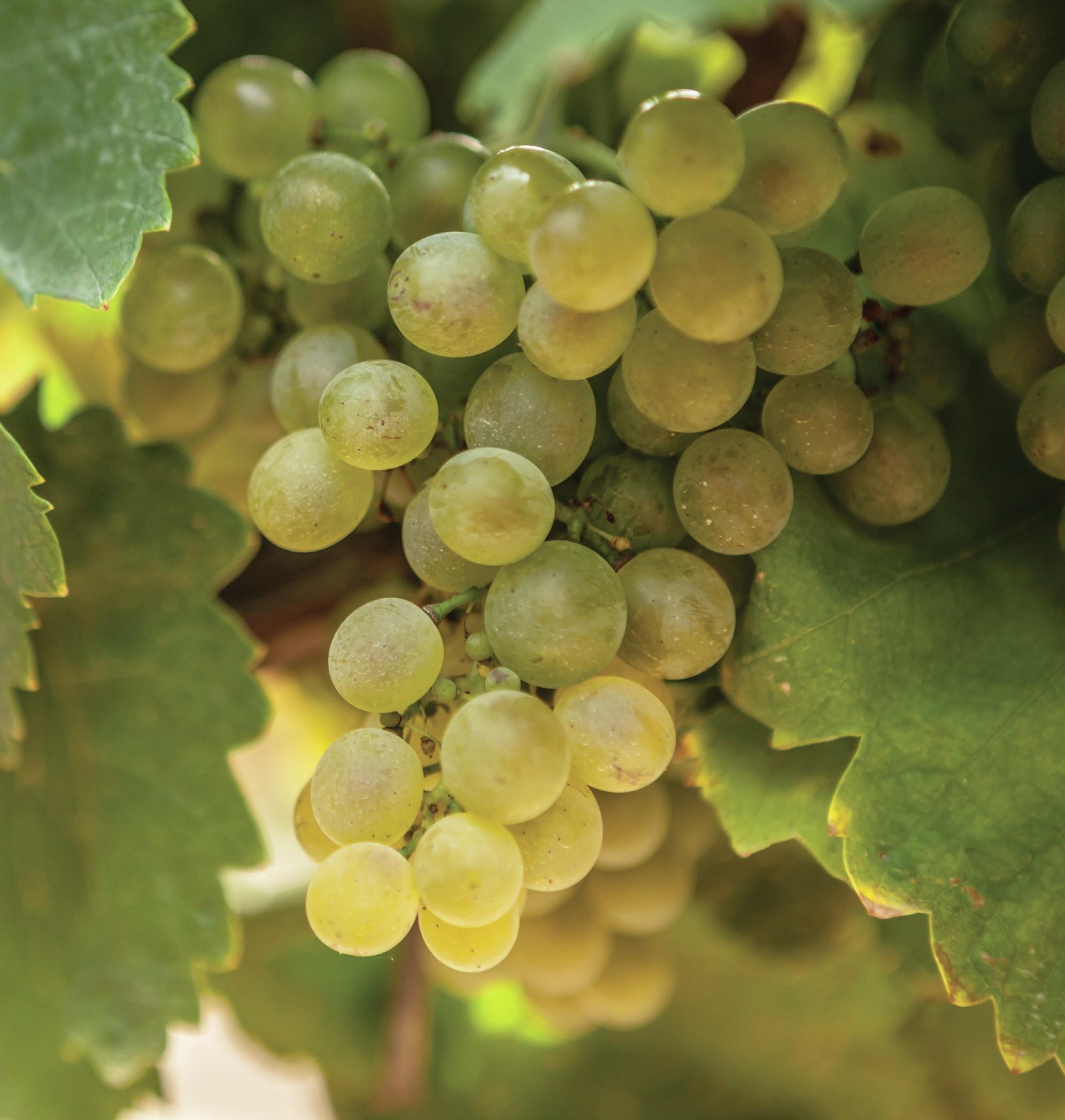
The second most widely-planted white variety in Spain after Airén, and the lead white grape in Rioja by a long way, Viura (or Macabeo) is also the backbone of the Spanish sparkling sector, with the lion’s share of Cava wines incorporating it into their blend.
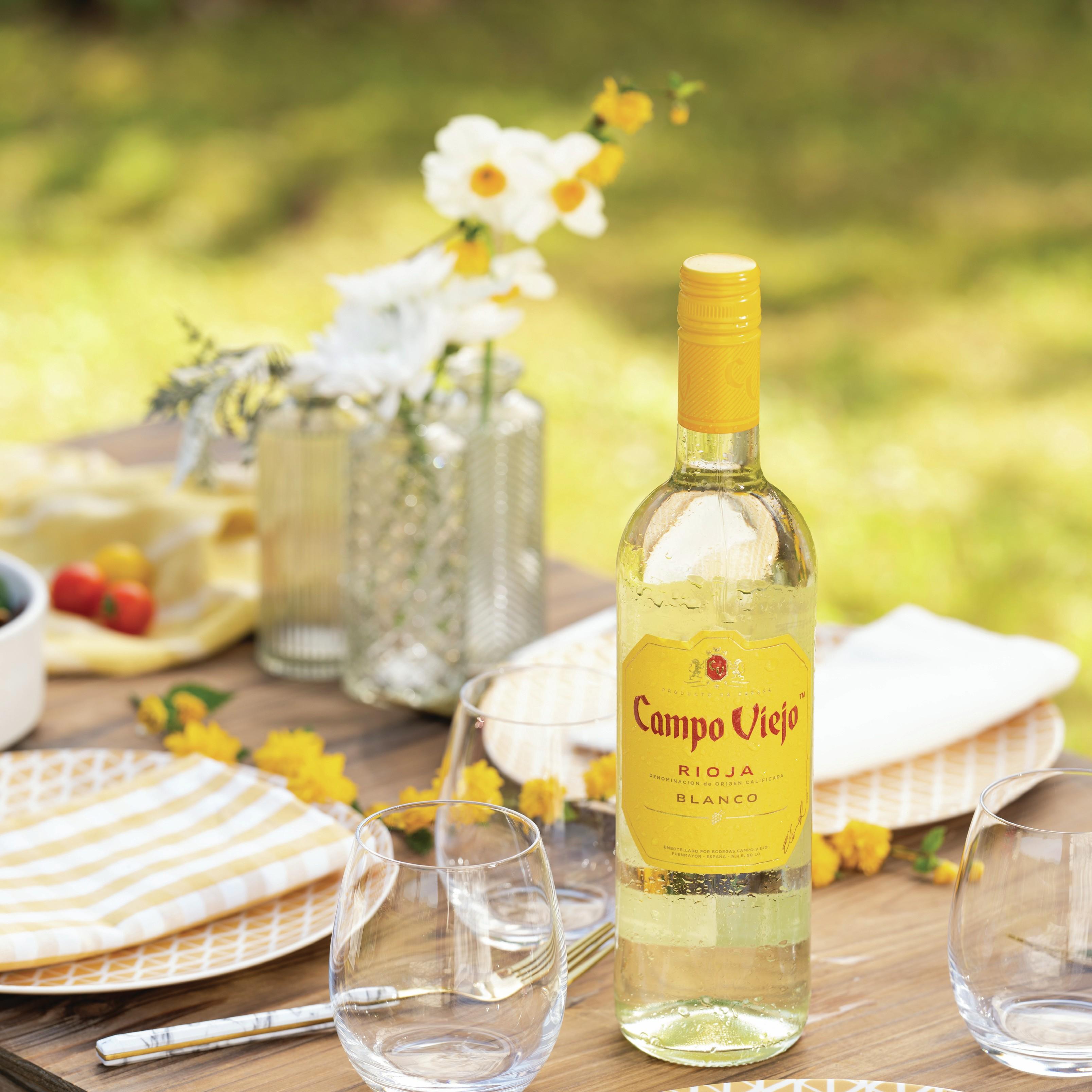
It may not have the headline appeal of smaller, experimental plantings, but with 56,266 hectares across Spain, what the highly productive Viura does have is volume, and this year volume counts. “Viura is highly resilient, asks for very little, and delivers with greatness,” Ilargi Leturia, senior brand manager at Campo Viejo, tells the drinks business.
“It’s a late-ripening variety, which makes it resistant to challenging situations such as drought, late frosts or high rainfall, compared to other white varieties, and it brings volume and texture to wines.”
TREASURE TROVE
And if you thought it was only the commercial end of the spectrum that appreciates Viura’s characteristics, think again. Some of the most collectable white Riojas have Viura at their core, courtesy of Spain’s treasure trove of old Viura vines.
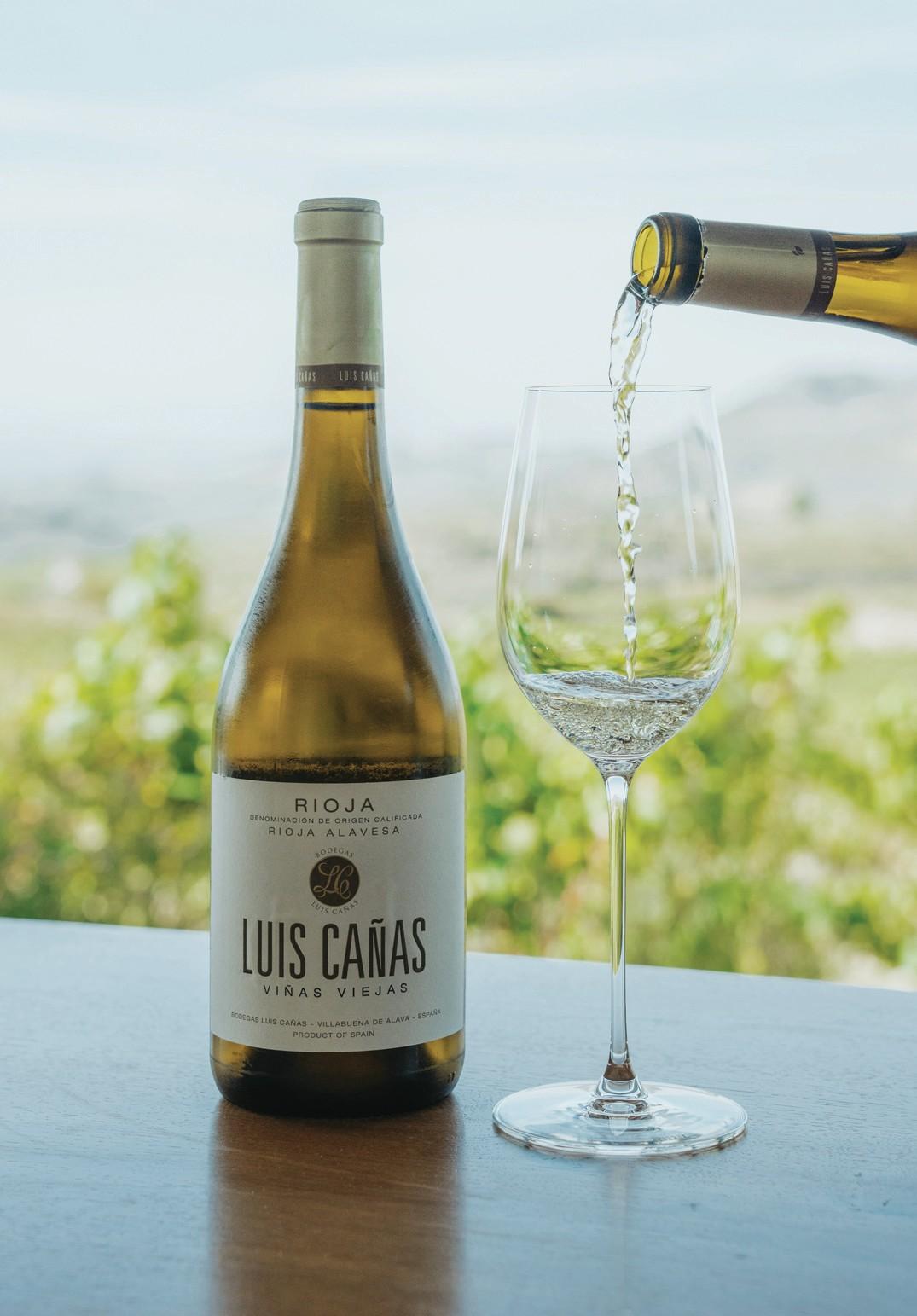
Araex Grands, for instance, works with Viura plants ranging from 40 to 65 years old to craft its top-tier whites, including Manuel Quintano Blanco Sobre Lías, which is aged for 11 months in French oak, and Luis Cañas Viñas Viejas, which spends five months on lees with bâtonnage. These are wines that retail from £16-£23 per bottle, depending on the merchant, and both are comprised of 90% Viura, with 10% Tempranillo Blanco and 10% Malvasia, respectively.
According to Remi Sanz, director of communications for Araex, while Viura may not have the same explosive aromatics as other white varieties, “it is more complex, and with lees work produces wines with great body and structure, capable of staying alive for many years”.
Ramón Bilbao, which uses Viura in its single-vineyard rosé Lalomba Finca Lalinde (RRP: £25), has similarly praised Viura’s “long ageing potential”, while Remírez de Ganuza uses 60-yearold Viura vines from its vineyard in San Vicente de la Sonsierra to craft its Gran Reserva Olagar (RRP: £70-£100).
So, with Viura loyally serving both ends of the market, is it time we gave it a little more credit?
Patterns emerge
Delve into the plantings across Spain in the last few years and a pattern begins to emerge.
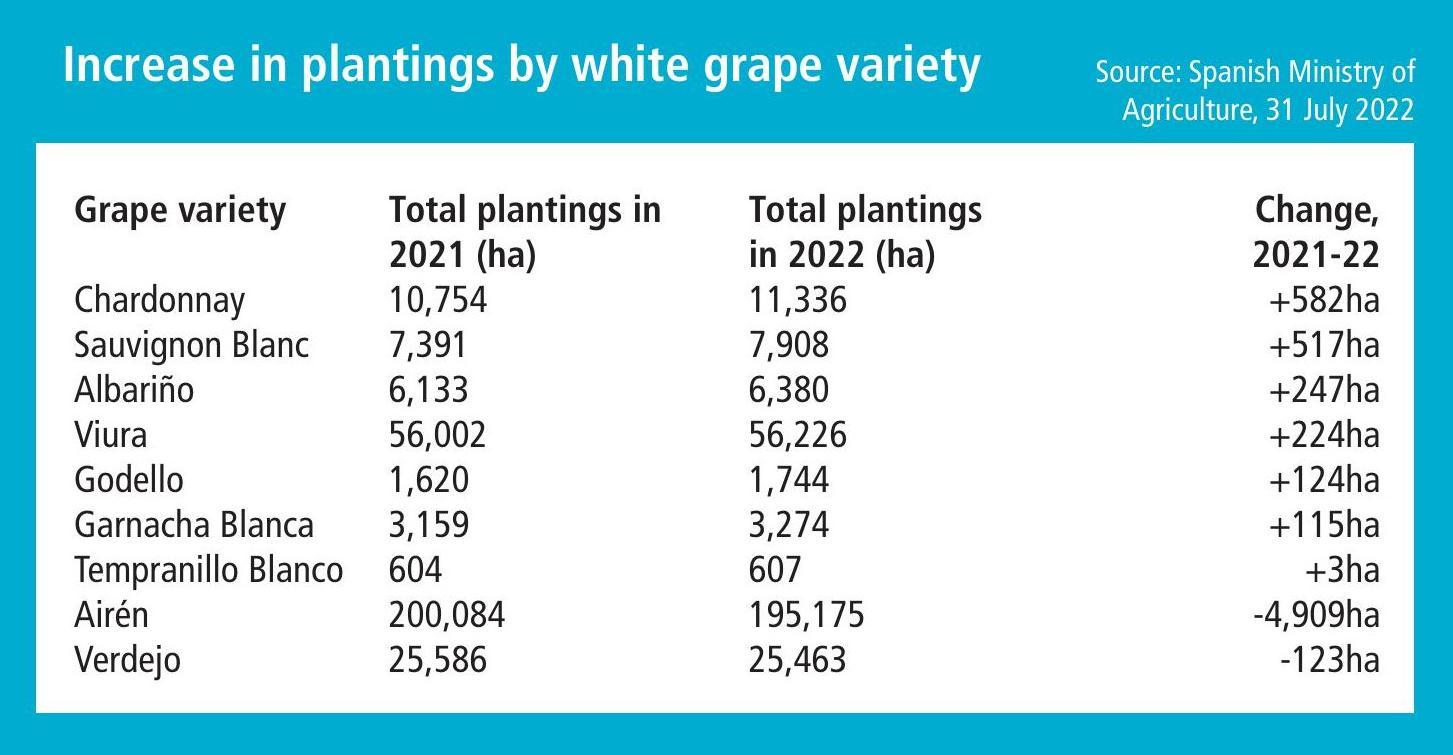
While Airén still unquestionably dominates the Spanish white wine scene in terms of surface area plantings (see box at the bottom of this feature), according to data from the Spanish Ministry of Agriculture, between 2021 and 2022 the vineyard area dedicated to Airén dropped from 200,084ha to 195,175ha. That means that around 5,000ha of Airén vanished within 12 months.
Likewise, 123ha of Verdejo (the third most-planted white grape in Spain) also disappeared.
Not so with Viura. Within the same period an additional 224ha of Viura went into the ground. Therefore, of the top three white grape varieties in Spain, Viura was the only one to see vines planted between 2021 and 2022, suggesting that growers continue to see and connect with its value.
That doesn’t, of course, come without risk. While Viura is widely planted and reliable, its high productivity also places it under increased stress from global warming.
As Raúl Gil, marketing and international director for Marqués de Cáceres, puts it, stress suffered by the vines as a result of rising temperatures “is more noticeable in young vineyards or those with higher production rate”, meaning that winegrowers have had to keep a close eye on Viura this year.
“In Rioja, we work with very old Viura vines that have a relatively low production, and have noticed good adaptation this year under the climatic conditions,” says Gil.
Altitude also plays a role in how Viura performs in the vineyard.
Araex plants its Viura in its highest plots, Ramón Bilbao has the variety at 520m in Rioja Oriental, and Remírez de Ganuza places its Viura vines “in the northern part of Rioja, close to the Sierra Cantabria mountains”, according to owner José Urtasun, who tells db that the variety “is performing pretty well, given the conditions we have had this year”. High praise indeed.
At present, of the total 56,226ha of Viura planted across Spain, the vast majority (23,000ha) is found in Castilla-La Mancha in the centre of the country, with a further 12,000ha planted in Catalonia to the north, 8,000ha in Extremadura to the west, and 5,000ha in Valencia in the east, highlighting another highly advantageous attribute of Viura, namely that it seems to thrive almost anywhere.
“Viura has the capacity to adapt to many areas of Spain, whereas other white varieties need more specific conditions to provide quality wines,” says Gil.
For Rodolfo Bastida, who heads up the winemaking team at Ramón Bilbao, this flexibility is one reason why Viura will continue to be among Spain’s leading grape varieties.
“It’s very well spread across the country,” he says. “Yes, there are other trendy varieties such as Albariño, Godello or even Chardonnay, but these should be adapted to the specific microclimate of a sub-region. One of the most challenging issues right now is adapting grape varieties to hotter conditions, and Viura is a great option.”

That’s not to say that these “trendy” varieties aren’t playing their part in ushering Spain’s white wine into the future. Though critics and sommeliers may espouse the characteristics of Garnacha Blanca and Godello, in real terms these represent only a small fraction of Spain’s total white plantings.
The strongest growth curve by far in terms of white varieties lies with Chardonnay and Sauvignon Blanc (see box, directly below).
DO Navarra in the north of the country is putting all its chips on black when it comes to Chardonnay, which it believes has deep-rooted ties with the region stretching back centuries.
“Whilst historically Viura has been planted in Navarra, the region has also established itself as one of the leading producers of excellent Spanish Chardonnays,” says Elena Arraiza, manager for DO Navarra. “When Navarra was a kingdom linked to France, with which it borders, the main dynasties such as those of Champagne, Capetos, Évreux and Foix reigned on both sides of the Pyrenees between 1234 and 1512. It is believed that the Chardonnay they cultivated in their vineyards had its roots in both France and Navarra.”
TRICKY TO GROW
Tempranillo Blanco is also stepping into the spotlight, having become the second most prolific grape cultivated in the Rioja region after Viura, though it can be tricky to grow.
“Tempranillo Blanco is part of Rioja’s identity, so it’s great to see it taking its place amidst this new white wine wave,” comments Campo Viejo’s Leturia.
“However, it’s a difficult variety to grow, with late budding and very early ripening. Moreover, its productivity is very low because it cannot be irrigated. Well worked, Tempranillo Blanco produces very interesting whites, with aromas reminiscent of citrus and tropical fruits with floral echoes, and a palate with balance, structure and persistence.”
Few winemakers, however, believe Tempranillo Blanco has the potential to hold its own as a mono-varietal wine just yet.
“There are very few single-varietal Tempranillo Blanco wines that are worth it,” says Araex’s Sanz. “I think the line to follow is to continue using it in small percentages to enhance Viura even more. We also have to see how the first Tempranillo Blanco vines, planted not long ago, behave when they grow old.”
What Rioja producers seem to agree on is that Tempranillo Blanco and Viura, blended together, are perfect dance partners. Gil of Marqués de Cáceres points out that the two varieties have “different and often complementary profiles, with Viura providing aromas of white and stone fruit, and Tempranillo Blanco bringing a more citric profile and slightly more vegetal notes. This interplay between sensations is fundamental to our barrel-fermented white wine Antea”
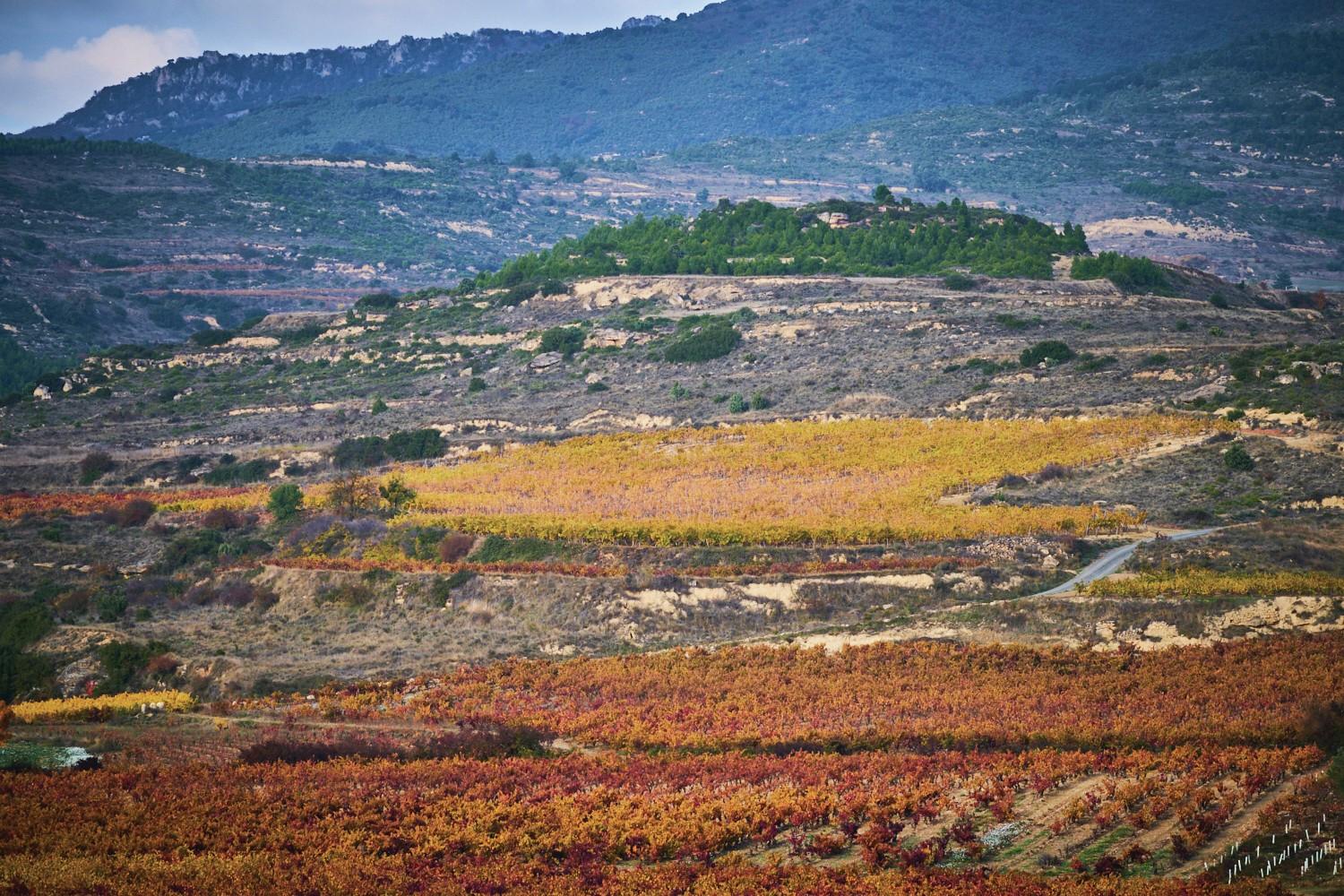
The concern among Viura’s supporters is that vines may end up being pulled out as vineyards regenerate.
“It is likely that the most predominant varieties will be the ones that will decrease their percentage of cultivation area as the vineyard is converted and updated,” says Gil.
In light of the climatic events of this year, and with temperatures only likely to rise further, there is an argument to be made for excluding the likes of Viura from this viticultural playbook.
Fortunately, plenty of innovation is underway, which may help to shield this variety from being replaced.
“I believe the lees work that is being done will clearly contribute to ensuring that Viura does not only not lose weight in our viticulture, but may end up even gaining it,” predicts Sanz, who is confident that it will continue to have a strong presence at both a national level and within Rioja.
Campo Viejo is not afraid to put its money where its mouth is, with its research and development team leaving no stone unturned to ensure that Viura is around for many decades to come.
“We believe that, for Rioja, Viura is the big bet for the future,” says Leturia.
“That’s why we are putting so much effort into studying and performing trials all around the region, looking at different soils, altitudes, sun exposure and harvest points. For us, Viura is the past, the present and the future of white wines. It is a variety with a strong heritage, but still with so many great things to show.”
Top white grape varieties in Spain (by hectares planted)
• Airén: 195,175ha
• Viura: 56,266ha
• Verdejo: 25,462ha
• Pardina: 22,300ha
• Cayetana Blanca: 11,915ha
Source: Spanish Ministry of Agriculture, 31 July 2022
Related news
English investor buys historic Château Vignelaure
Wales bids for world’s first natural wine appellation
How service crop management could save vineyards in dry years


