



Finding quality and stability in the Rhône
Interest in the wines of the Rhône has risen recently, attracting both significant critical attention, and greater activity on the secondary-market, Liv-ex has reported, while the region experienced some of the lowest volatility compared to its peers.
The Rhône attracted significant critical attention in November, with Jancis Robinson publishing a series of articles on the 2021 vintage, and Jeb Dunnuck reviewing the 2018s and 2019s from the northern appellations. This was reflected in the region’s secondary-market activity, which was on the increase.
In 2022 it was the 2019 (16.4%) and 2018 (14.9%) vintages that led the region’s trade. Châteauneuf-du-Pape (54.7%), Côte-Rôtie (19.0%), and Hermitage (16.7%) have been the most-traded appellations.
Of the leading regions traded on the secondary market, the Rhône has been the least affected by the rising dominance of Burgundy and Champagne. While its trade share in 2022 (4.0%) has been lower than the 2021 average (4.5%), it declined less than that of Bordeaux, Tuscany, Piedmont, and California, which were all affected by demand for the two French regions.
The Rhône has remained extremely stable – both in terms of trade and prices.
As our 2020 report on the region highlighted, the region has been solid as a rock, with consistently high scores, healthy production volumes, market availability, and relative value.
In terms of value, the Rhône has continued to represent the lowest entry point into the fine wine market.
However, prices have been on the rise; the Rhône 100 index was up by 7.0% at the time of going to press in December, outperforming the California 50 (6.3%), Bordeaux 500 (6.1%), and the Rest of the World 60 (5.4%).
LOW VOLATILITY
Historically, the Rhône 100 index has also experienced the lowest volatility.
In general, the lower the volatility the lower the risk. This is because the index prices depart less from the moving average.
Over the past three years, the Rhône 100 index has risen by 27.4%, and has shown an average annualised volatility of 13.8%.
With a smaller increase of 21.2%, the Bordeaux 500 index volatility has been 10.2%. By contrast, the Burgundy 150 index has increased by 62.9%, but its volatility has also been one of the highest, at 25.2%.
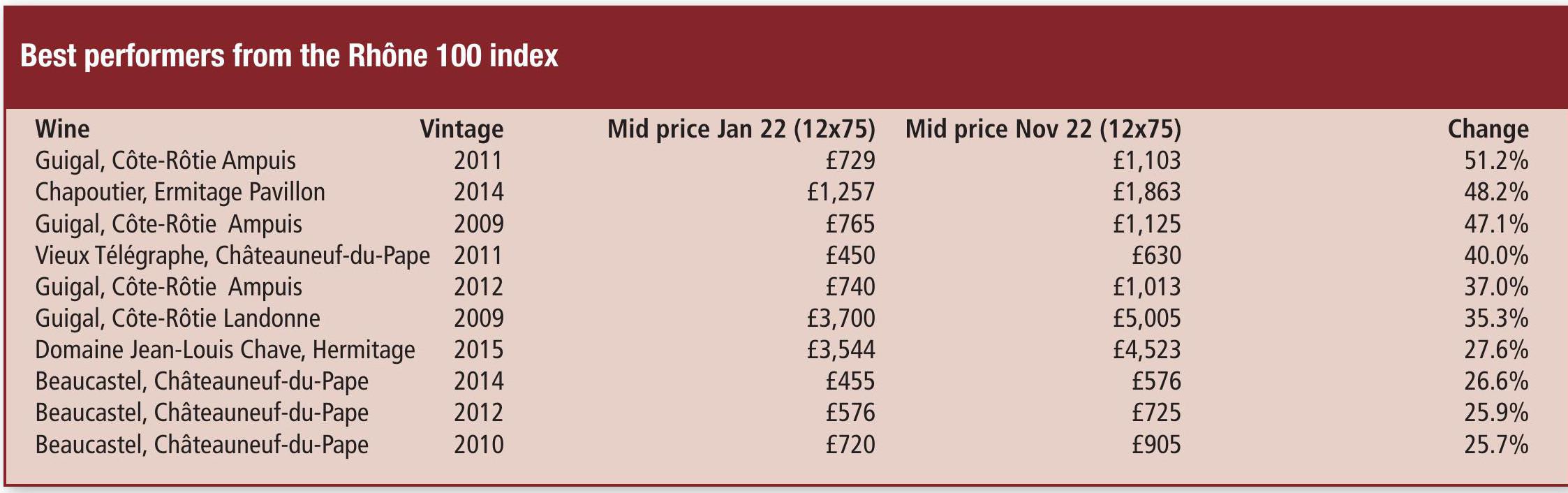
BEST-PERFORMING RHÔNE WINES
Some wines in the index delivered impressive price performances last year. The biggest risers in the table above have all risen between 25.7% and 51.2%. These include six wines from the northern Rhône, and four from Châteauneuf-du-Pape in the south.
E. Guigal Château d’Ampuis 2011 has led the way, with its 2009 (47.1%) and 2012 (37.0%) in leading positions. In the 2022 Power 100 rankings, E. Guigal was the third-highest-ranked brand by volume traded.
The top-ranked Rhône label in the Power 100 was Michel Chapoutier, driven by a high number of different wines trading. Meanwhile, Château Rayas re-entered the top 100 with a jump of 55 places thanks to a strong average trade price and price performance.
While the Rhône remains one of the quieter secondary market players, the region delivers an embarrassment of riches.
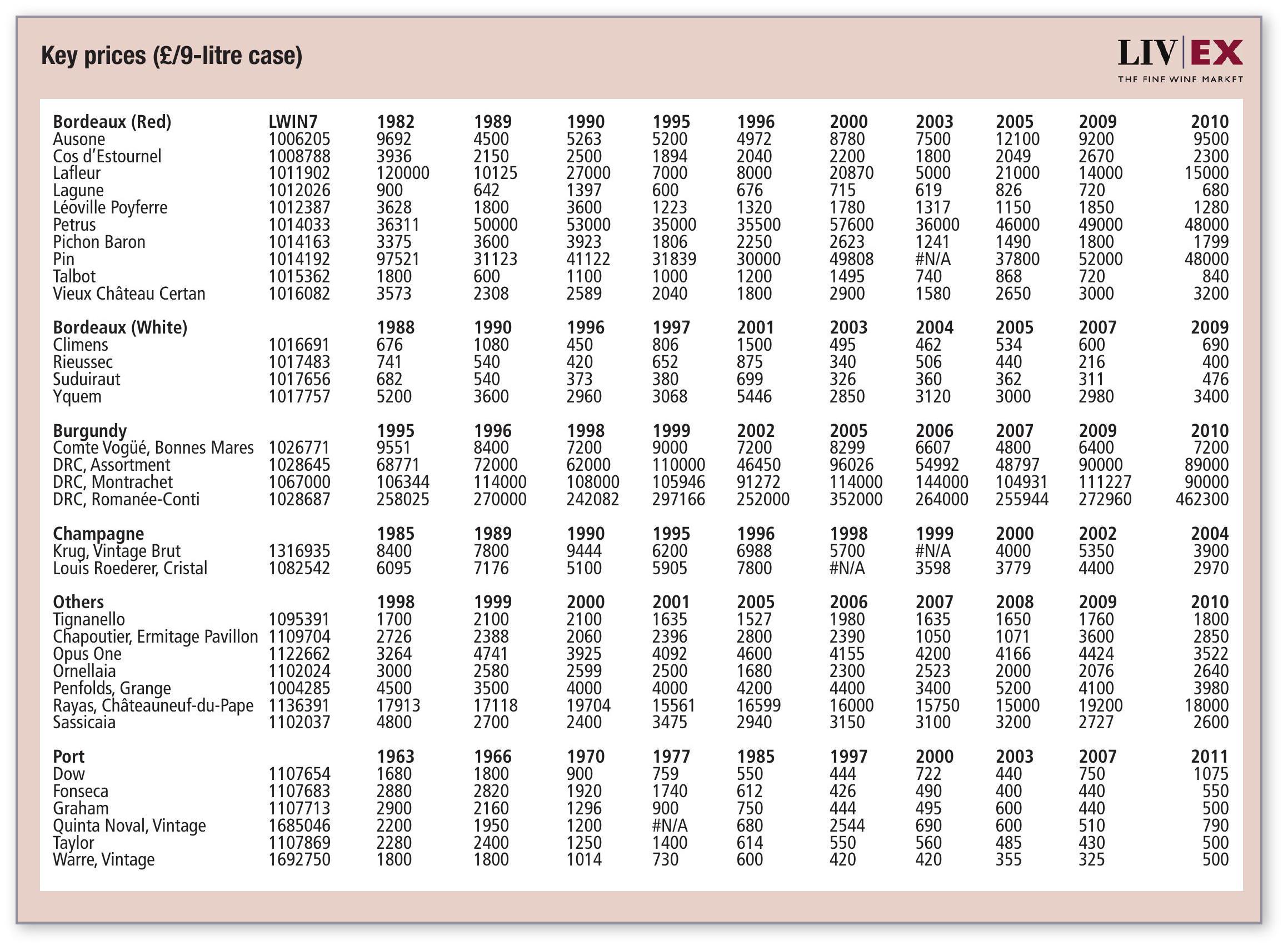
fine wine monitor – in association with
Liv-ex is the global marketplace for the wine trade. Along with a comprehensive database of real-time transaction prices, Liv-ex offers the wine trade smarter ways to do business. It offers access to £81m worth of wine and the ability to trade with 500 other wine businesses worldwide. It also organises payment and delivery through its storage, transportation and support services. Wine businesses can find out how to price, buy and sell wine smarter at: www.liv-ex.com
Related news
Mezzacorona offers a taste of the Alps for a hot summer


