



The Champagne Digest
Despite its reputation for adhering to tradition, Champagne continues to be a cradle of innovation, both within its vineyards and far beyond. From spaced-out vines to bottles destined for outer space, the region has seen its fair share of recent, exciting developments.
Indeed, though the adverse conditions of 2021 presented numerous difficulties for producers, the “solar” 2022 vintage saw production rebound, a much-needed recovery, particularly given the growing demand for Champagne.
However, db editor-in-chief Patrick Schmitt MW argued in last year’s Champagne Report that scarcity presents advantages: “…the leading houses, while frustrated by having to turn down business today, can see an upside to a restricted supply in the longer term. It pushes Champagne towards a more premium position. And it encourages the development of higher-value cuvées to help maximise the returns from each bottle. Already, Champagne is moving away from being primarily a Brut NV business to becoming a sparkling wine category with a varied offering, with styles on the rise including single site bottlings, blanc de blancs, along with rosés and prestige cuvées.”
As Champagne becomes more valuable, interest in investment continues, and here we share some of the data on the big sellers that you might want to have in your cellar.
Furthermore, we also give our pick for 10 of the best Champagnes on the market at the moment, as judged during the Global Wine Masters by our panel of experts.
The following provides an abbreviated overview of the current state of Champagne, for a more in-depth examination, our Champagne Report can be read here.
News from the Champagne region
326 million bottles shipped in 2022

The official shipments from Champagne for 2022 were released in January 2023, showing a year-end total of 326 million bottles – the highest annual figure in 15 years, and third greatest since the pre-Millennium surge in 1999.
Representing a rise of almost 2% on 2021, when the region shipped 320m bottles, the Comité Champagne, who compile the figures, said the sparkling wine’s performance in the past 12 months “proved the dynamism of the Champagne market”, while expressing “cautious optimism for 2023”.
The official figure for 2022, while positive, is in fact lower than expected, with the drinks business previously reporting an estimated total for the past year of 331m bottles, based on growth rates in the final months of the year.
The smaller-than-anticipated figure for 2022 is doubtless a result of restricted supply, rather than any reduction in demand for Champagne leading up to the festive period, with the biggest producers and strongest brands in the appellation having to limit shipments in the run-up to Christmas due to a shortage of stocks.
Champagne makers placed restrictions on shipments towards the end of last year to ensure there was enough supply for New Year’s eve celebrations, as well as upcoming Valentine’s Day.
Driving growth rates for Champagne shipments have been exports of the fizz, which were up 4.3% in 2022, taking the final sum to 187.5m bottles, compared to 138.4m bottles distributed within France, a decline of 1.7% on 2021.
The Comité Champagne pointed out that the market share for exports versus domestic demand has changed significantly over the past decade, with the proportion of Champagne exports rising from 45% 10 years ago to 57% today.
While the shipments in 2022 were restricted by supply, a result of growing demand during a time of reduced output from the region, the Comité Champagne expressed confidence concerning stocks in the future following the “sunny 2022 harvest, which was remarkable both for its quantity and quality”.
The 2022 wine harvest in Champagne has been declared “miraculous”, after coming in 45% above the five-year average, with official data showing a doubling of yields compared to 2021, when vineyards were devastated by frost and mildew.
Meanwhile, the combination of increasing shipment volumes of Champagne in 2022, coupled with higher prices – a product of limited supply, rising production costs, and greater sales of pricier cuvées – have pushed up the value of shipments to a new record, with the global sum surpassing the €6m threshold for the first time.
Total turnover in 2021 had reached a record sum of €5.7m, which was more than 12% higher than its previous peak in 2019.
Champagne shipments (bottles) 2022-1999:
2022: 326m
2021: 320m
2020: 245m
2019: 297.5m
2018: 301.9m
2017: 307.3m
2016: 306.1m
2015: 313m
2014: 307m
2013: 305m
2012: 309m
2011: 323m
2010: 319m
2009: 293m
2008: 322.5
2007: 338.7
2006: 321.8
2005: 307.7m
2004: 301.4
2003: 293.5
2002: 287.7
2001: 262.7m
2000: 253.2m
1999: 327m
All figures are sourced from the Comité Champagne
Spacing rules
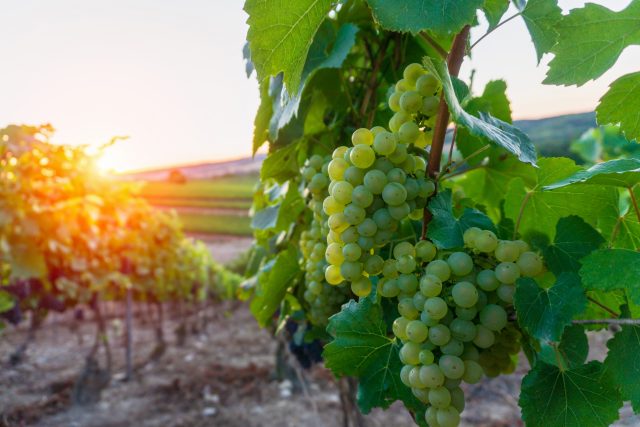
One of the biggest stories from the region in the last year has been the approval of the ‘vignes semi-larges’ initiative. After a vote from growers in summer 2022, the century-old rule on vine spacing was changed, increasing the necessary distance between rows of vines to 2.2 metres, up from the previous maximum of 1.5 metres. Theoretically, the further apart vines are, the less they compete for water, resulting in increased yields of lower quality grapes.
The decision was motivated, according to some, by a desire to tackle the effect of climate change on the vineyard. One such supporter was Maxime Toubart, president of the Syndicat General des Vignerons del la Champagne (SGV): “The aim is to accompany the necessary agro-ecological transition by adapting Champagne vines to climate change, while at the same time preserving the quality and unique quality of Champagne vines, and the economic sustainability of wine growers”.
Indeed, a study conducted by SGV over the course of 15 years found that larger spacing between vines could lead to a 20% reduction in greenhouse gas emissions.
But the initiative, which is optional, has not been without controversy. Some have suggested that the real reason was rather different. When the proposals were made, Patrick Leroy of the CGT-Champagne trade union said: ““Under the cover of environmental concerns they are implementing a business project of cost cutting”.
Pinault merger with Maisons & Domaines Henriot
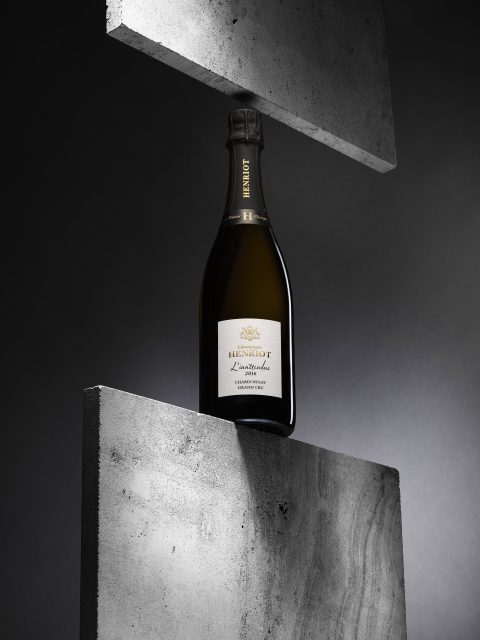
In October, the family of French billionaire luxury goods magnate Francois Pinault announced a merger with Maisons & Domaines Henriot in a move that will unite brands such as Château Latour and Champagne Henriot under one group.
The Pinault and Henriot families said they were merging their wine estate businesses, a deal that will see luxury brands such as Château Latour and Champagne Henriot come together under the newly-named Artémis Domaines group.
Francois Pinault will own three-quarters of the group, it is reported, while the remaining portion will be owned by the Henriot families.
Additional brands that will now become part of Artémis Domaines include Clos de Tart and Domaine d’Eugenie from the Pinault family and Bouchard Pere & Fils and William Fevre from Henriot.
“The merger of Maisons & Domaines Henriot and Artémis Domaines is a wonderful opportunity to bring together the treasures of our wine heritage under the same banner,” said Francois Pinault in a statement.
Moët Hennessy ‘running out of Champagne’ in lead up to Christmas

Surging demand for Champagne among wealthy consumers amid the relaxation of Covid rules led to Moët Hennessy “running out of stock” in the lead-up to Christmas, according to its CEO.
In an interview with Bloomberg Television, Moët Hennessy CEO Philippe Schaus said the group, which owns big name Champagne brands including Moët & Chandon, Krug, Dom Pérignon and Veuve Clicquot, was “running out of stock” of some of its Champagnes, amid what the business is referring to internally as “the roaring 20s”.
“As people are coming out of Covid there’s been pent up demand for luxury, enjoyment and travelling,” Schaus said.
It was not immediately clear which Champagnes were running short, or just how low the stocks were.
Maison Perrier-Jouët releases last vintage 2007 Jeroboam as NFT

In October, Maison Perrier-Jouët released its last limited-edition Belle Epoque Jeroboam vintage 2007 as an NFT in partnership With BlockBar and Hong Kong Digital Art Fair, priced at US$10,000.
With only 10 available in the world, BlockBar.com is exclusively releasing the last of the three-litre Belle Epoque 2007 engraved with the message ‘1st Perrier-Jouët NFT’. The Belle Epoque 2007 of the Perrier-Jouët exclusive Anemone Collection is composed of six Belle Epoque vintage cuvées embellished with floral lacework, fashioned in 24-carat yellow gold by master goldsmiths of Orfèverie Felix.
Dov Falic, BlockBar Co-Founder & CEO, said: “We’re delighted Perrier-Jouët has chosen to drop its first ever NFT on BlockBar.com as we continue our mission to bridge the digital and physical worlds of luxury.”
The Perrier-Jouët vintage 2007 NFT release also coincides with an “important milestone” for BlockBar, as the NFT marketplace celebrates its first birthday by “releasing our first of many champagnes”, Falic said.
A one-night stay at UNESCO World Heritage Site Maison Belle Epoque is also included in the release. Located in the centre of Epernay in Northern France, Maison Belle Epoque contains the largest private collection of French Art Nouveau in Europe. The experience also includes food offerings by executive chef Sebastien Morellon paired with Belle Epoque cuvées, vineyard and cellar tours, and tastings of the non-vintage range.
New Champagne Deutz and Delas Frères CEO appointed

After 49 years at the Roederer Collection group and 26 years as CEO of Champagne Deutz and Delas Frères, Fabrice Rosset has stood down and handed the reins over to former Moët & Chandon CCO Marc Hoellinger.
Frédéric Rouzaud, Roederer Collection group CEO, said: “As the head of Champagne Deutz, Fabrice Rosset has skilfully perpetuated the spirit of the founders while transforming this historic Champagne House, on which he will leave his mark. Delas Frères also owes a great deal to Fabrice, who is an influential figure in the wine world. With his deep commitment, his consummate professionalism, and his irrefutable talent, Fabrice was able to turn these two wine companies, which he headed for a quarter of a century, into undisputed references around the world.”
“We are very pleased to welcome Marc Hoellinger as the new CEO of these two jewels in the Roederer Collection group crown. His long and varied experience working for well-known wine and spirit companies and his dedication to this industry, in which he has become something of an expert, make him the ideal person to take Champagne Deutz and Delas Frères to new heights, continuing along the path of ambitious yet sustainable development,” continued Rouzaud.
Hoellinger previously worked as CEO of The Glenmorangie Company from 2013, before joining Moët & Chandon in 2018. While he joined the Deutz and Delas Frères management team earlier this week, Hoellinger will officially assume the role at the beginning of next year.
Before this, Deutz also announced that Caroline Latrive would become the house’s next cellar master, replacing Michel Davesne.
Maison Mumm launches first Champagne designed for space travel

In September, Champagne house Maison Mumm revealed the design of Mumm Cordon Rouge Stellar, the first Champagne bottle designed for space travel.
The bottle itself has been designed to cope with space’s zero-gravity environment. The wine is secured within a half glass bottle by a stainless steel opening device, ensuring the liquid only comes into contact with inert materials.
An aluminium shell protects the glass bottle, and the upper part of the bottle is composed of a long neck topped by a cork and a ring, which allows the cork to be retained and locks the bottle’s stainless steel mechanism.
Despite its futuristic appearance, the design has a shape similar to that of a traditional champagne bottle.
The Champagne has also been designed with the conditions of space travel in mind. In zero-gravity conditions bubbles no longer rise to the top of the glass, limiting the aromas released by the wine. Mumm Rouge takes the form of foam, to be inhaled through the mouth.
Taking into account these specific parameters, cellar master Laurent Fresnet has selected a blend of Mumm Cordon Rouge made with grapes from the 2016 harvest, which includes a majority of Pinot Noir — the House’s signature grape variety – and is supplemented with reserve wines from the past five years (up to 36%).
“My goal was to retain the freshness and power of Mumm Cordon Rouge, and to enhance the intensity of its aromas with more ageing and a dosage liqueur made with wines aged in oak barrels,” said Fresnet.
Fresnet also participated in a simulated flight to understand the impact of zero-gravity conditions on the wine and guarantee its integrity in finalising the specific blend of the Mumm Cordon Rouge Stellar cuvée.
Mumm Cordon Rouge Stellar was designed in collaboration with Axiom Space, a company focused on the development of commercial human spaceflight, and will join Axiom’s human spaceflight programme with plans to fly on future space missions.
Maison Mumm has been pursuing the project since 2017, and revealed the new bottle at the International Astronautics Congress hosted in the Paris Observatory on 21 September 2022.
The bottle was also created in collaboration with Octave de Gaulle, founder of SPADE, an agency specialising in the design of objects for space application, and the Centre National d’Etudes Spatiales (CNES), the national French space agency.
Champagne’s first B Corp certification granted

In August, Piper-Heidsieck, Charles Heidsieck and Rare Champagne, all part of EPI Group, became the first houses in Champagne to achieve B Corp certification, receiving a score of 91.9 points.
B Corp certification, granted by the non-profit B Lab, is granted after a through assessment of a brand’s social and environmental impact. In total, more than 200 questions are asked of each brand, covering everything from the office to the vineyard.
The houses have made several commitments in order to meet the standards of the qualification, including a drastic energy saving programme (which aims for a 40% reduction in usage by 2025), no use of herbicides, pesticides or chemicals to treat rot, and a culture of inclusive employment.
Damien Lafaurie, CEO and president of Piper-Heidsieck, Charles Heidsieck and Rare Champagne, said: “We are very proud to join this community of pioneers who are driving a global movement of people using business as a force for good and transforming the global economy for the benefit of all individuals, communities as well as the planet. We are honoured to be the first producers in Champagne to achieve Certified B Corporation status and are fully committed to B Lab’s vision of working towards an inclusive, equitable and regenerative economic system.”
Lafaurie also explained the rationale behind pursuing the qualification: “…we share B Corp’s premise that the company must create value for all stakeholders and not just for shareholders. While most certifications or standards focus on the operational impacts of a CSR approach, B Corp questions the place of the company in society and challenges its business model. This is what interests us in the approach, and it has led us to question our ‘raison d’être’ and to adopt a mission that guides our actions in both the short and medium term.”
“I don’t have any particular expectations in terms of business, but I hope that our approach will be understood by our consumers. But above all, I hope that it will inspire other major wine producers and Champagne houses to join the movement.” he added.
LVMH sees Champagne and wine sales soar amid overall sales growth
The wine and spirits division of luxury goods firm LVMH saw revenue growth in the double figures during the third quarter of 2022, with Champagne and wines the standout performers.
Sales of LVMH’s wine and spirits arm jumped 14% to €5.22 billion (US$5.07bn) over a nine-month period, while total organic revenue for LVMH in its entirety rose 20% to reach €56.5bn (US$54.9bn) for the first nine months of 2022.
The luxury goods firm said that sales in Europe, the United States, and Japan had risen “sharply” since the start of this year, thanks to a return to international travel and “solid demand” from consumers. Asia has experienced a “lower level of growth” during the first nine months of 2022, though growth in the last quarter has quickened in China due to the partial easing of health restrictions.
LVMH’s Cognac and spirits division experienced growth of 16% over the nine-month period, though it was wine and spirits that enjoyed a real surge with the division jumping 32% over the same period.
It is thought that the dollar’s current strength has lead to American shoppers in Europe making the most of the chance to splash out on luxury goods purchases, while demand for high value items has until now appeared relatively impervious to the cost-of-living crisis currently burgeoning in Europe.
LVMH said it would now focus on “strengthening the desirability of its brands, by relying on the authenticity and quality of its products, the excellence of their distribution and the reactivity of its organisation”.
World’s ‘most expensive’ Champagne sells for record US$2.5 million

In July, a magnum of Champagne Avenue Foch 2017 became the world’s most expensive Champagne after selling for an eye-watering US$2.5 million at auction – but there’s an additional aspect to the sale that its buyers see as an even greater investment.
Introduced to auction by British entrepreneur Shammi Shinh, the newest claimant to the title of world’s most expensive Champagne is enticing for more than just the fizz in the bottle. The magnum of Champagne Avenue Foch 2017 was offered with an NFT that gives the holder the digital art and intellectual property rights to an image of a now-famous Bored Ape Mutant, alongside the other collectible cartoon figures featured on the bottle.
Shammi Shinh hopes the sale will raise awareness of NFTs and help people to understand them. The Champagne bottle was designed in collaboration with the artist Mig.
Its buyers are Italian brothers Giovanni and Piero Buono. The duo are investors involved in the crypto market, as well as the fashion and technology industries.
The sale was reportedly made in dollars, rather than using cryptocurrency. It was first reported by The Wall Street Journal.
Champagne Avenue Foch is a newly-established brand made from Premier Cru grapes in Champagne grown at the family-owned estate of Allouchery in Chamery.
The sale may well make the Champagne Avenue Foch 2017 the most expensive bottle of wine ever sold, though it comes with the slight caveat of the additional perceived value accrued by the inclusion of the NFT.
Louis Roederer launches late release vintage Champagne series back to 1990
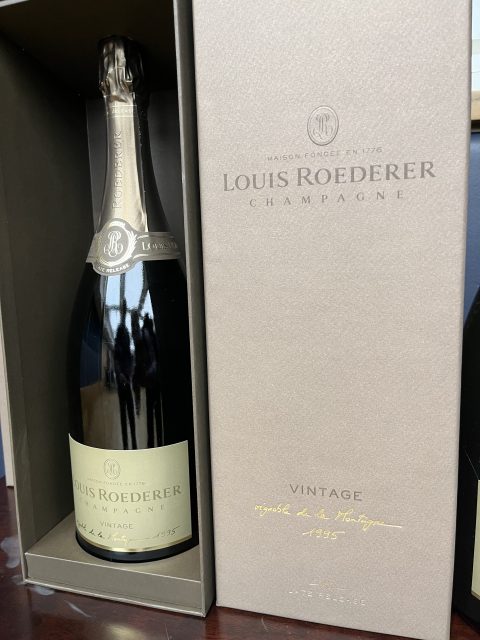
In November, Louis Roederer cellar master Jean-Baptiste Lécaillon launched “the most important” set of Champagnes in the producer’s modern history, as he unveiled a late-release vintage series going back to 1990.
Lécaillon said that the launch represented “a very important event for Louis Roederer and maybe the most important event for me,” even though, he added, “it’s nothing exciting on paper – “there’s not much new in fact”.
The reason for his excitement stems from the fact that these vintage Champagnes from as long as 30 years ago represent something “deep”, and “the DNA” of Louis Roederer, he said.
Explaining further, he said these bottles are being unveiled to demonstrated the age-worthiness of the “wine behind the bubbles”, and in particular, the long-life of certain single-harvest cuvées based on Pinot Noir from the village of Verzy in the Montage de Reims area of Champagne – where Roederer own vineyards.
Furthermore, with the oldest vintage in the late-release series hailing from the 1990 harvest, these are wines that Lécaillon, who joined Louis Roederer in 1989, “grew up with”.
And it was from this point in Louis Roederer’s history that the house began putting aside bottles of its vintage cuvée for extended ageing.
“It was not in the family’s mind to keep old vintages… I was frustrated talking about the ageing potential but not being able to demonstrate it, so I started putting aside a few bottles from the 90s to be able to showcase the ageability behind the bubbles,” he said.
Importantly, the late release vintage series – which comprises five Champagnes from the ‘90, ‘95, ‘96, ‘97 and 99 harvests – are not recently-disgorged. They have been aged in Louis Roederer’s cellars for extended ageing after disgorgement having been disgorged at the same time as the standard releases.
However, unlike the original release of the Louis Roederer vintage expression, these late-release bottles were given a slightly lower dosage of around 8g/l, because Lécaillon – knowing he would release them at a later date – decided they would not need the same level, which was around 11g/l in the 90s.
In total, around 1,000 bottles and fewer than 500 magnums will be released of the five vintages, priced at around £550 and £270 for a single one of these respective formats.
Lécaillon said that he had chosen to launch the vintages at the same time, rather than sequentially, because “we want to focus on our estate in La Montagne [de Reims].”
He also commented that the Champagnes were at an ideal stage in their development. “The wines really show their full potential between 20-30 years: it’s what I call ‘the window of beauty’,” he said.
Vintage review
A decade of Champagne, by Gabriel Stone

2011: “The only positive thing I can say about 2011 is that it is between two fantastic years,” is the wry summary from Michel Drappier of Champagne Drappier. The cool conditions that characterised 2011 were interspersed with unhelpful heat spikes, rain at just the wrong moments and localised hail storms. This in turn led to uneven ripening, difficult picking decisions and very mixed results across the region. Few Champagnes from this year were built to last, but don’t overlook individual pockets of high quality. Charles Philipponnat, head of Champagne Philipponnat notes: “We managed to achieve better-than-average cuvées through heavy sorting of the bunches at harvest time, and selective blending.”
2012: Champagne’s producers must have been bracing themselves as the growing season got off to a turbulent start. Frost, hail and disease slashed yields, but those grapes that made it through to August could bask in near-perfect conditions that lasted until harvest. The end result is summed up by The Wine Society’s Champagne buyer Sarah Knowles MW as “a great year with immediate charm, but also the structure to age well”. Spare a thought, however, for Michel Drappier down in the Aube, where “the worst hailstorm since 1722” wiped out almost his entire crop. Enough grapes were salvaged to produce single-vineyard prestige cuvée La Grande Sendrée, which Drappier notes was “so fresh” after eight years on its lees that a decision was made to hold it back for an extra two years. A bittersweet success.
2013: A spirited backlash against climate change, this cool year culminated in sunny, settled weather that led many growers to compensate for the slow start by pushing their harvest dates right into October. Generally regarded as a better year for Chardonnay – although several top Côte des Blancs crus suffered bad hail damage – 2013 is nevertheless picked out by Pinot Noir-dominant house Pol Roger as something of an unsung hero. “It was lovely on release, and is getting more spectacular by the year,” remarks James Simpson MW, managing director of Pol Roger Portfolio, who praises its “welcoming acidity and excellent structure”. Philipponnat is similarly convinced of this vintage’s quality. Drawing parallels with 1971, a year shaped by similar conditions, he predicts 2013 “will end up being a classic”.
2014: Some delightful results from an inauspicious year. Champagne producers didn’t rush to praise their 2014s, perhaps rattled by the cold, wet August in a year that saw the Marne Valley experience double its usual rainfall. “It did not seem a promising vintage,” admits Caroline Latrive, chef de cave at Champagne Ayala, but she has since wholeheartedly revised her opinion. She says: “Now it is showing beautifully.” Her view is shared by Dennis Bunner, deputy chef de cave at sister house Champagne Bollinger. “The 2014 vintage was considered by many an average year; however, it has really outperformed,” he observes, suggesting: “It is even a potential candidate to later become an R.D.” While not everyone succeeded in overcoming the challenges of the 2014 growing season, there remain plenty of pleasant surprises. Knowles agrees, noting: “From the best producers, I have been enjoying the 2014s more than the vintage reviews might have warranted.”
2015: The hottest vintage on record. Drought towards the end of the growing season affected yield more than quality; indeed, it helped keep grapes disease- free, a gift for Champagne’s organic growers. The result was a healthy crop of ripe, well- balanced grapes that have created richly styled wines, hailed by Simpson as “immediately appealing”. That’s not to suggest the vintage was straightforward. Uneven ripening led to extensive must analysis, followed by regular tasting, for Carine Bailleul, chef de cave of Champagne Castelnau. “Today, our concerns have vanished, and we know that the potential for ageing is very much there,” she reports. Philipponnat also recalls an uneasy wait for phenolic ripeness, balanced by a need to avoid over-ripeness, in Pinot Noir particularly, with further diligence required in the cellar. Today, he looks back on 2015 as a challenge “championed successfully to a more than satisfying result”.
2016: Opinions about this year will vary enormously depending on which producers you ask. At the time, Régis Camus, then chef de cave of Piper-Heidsieck, described as “a nightmare” a growing season that featured April snow, severe frost in the Côte des Bar, then a wet early summer that sparked mildew outbreaks, which were only halted by the welcome August sunshine. Even then, rain just before harvest caused particular problems in the Côte des Blancs. The ability to react fast was key, favouring smaller growers and houses with a nimble workforce. Philipponnat is eagerly anticipating the release of his 2016 Blanc de Noirs this summer, praising its “well- built structure and classical citrus flavours”. At Castelnau, low yields led to the decision not to produce a vintage expression this year, although Bailleul points to some “wonderful” 2016 reserve wines to draw on for the co-operative group’s non-vintage styles.
2017: After a warm, promising start, August brought rain. The resulting outbreak of rot forced producers to act fast, with several houses, including Moët & Chandon, reporting their shortest harvest on record. However, many struggled to pick enough clean fruit in time, with Castelnau just one of numerous producers who decided not to make a vintage expression this year. At Ayala, Latrive picks out 2017 as “the most challenging” vintage of the decade, with ACF (arômes de champignon frais) a major concern. Nevertheless, she describes the final result as “very positive”, noting: “It is in such difficult years that the winemakers show their blending skills.” In a similar vein, Philipponnat warns against writing off this vintage entirely, highlighting it as a year when “critics may have underrated some individual wines”.
2018: After 2017’s struggles, the friendly 2018 vintage shines particularly bright. After an uncertain start, a warm, long summer emerged, its sunshine punctuated by only a few welcome showers. Unlike other August harvests, such as 2003, yields and acid levels remained reassuringly high. “2018 was a huge vintage,” remarks Simpson, noting that Pol Roger had to deploy its reserve tank for the first time. Although Champagne Drappier suffered some raisined berries, Michel Drappier remained unflustered. “We had plenty of grapes so that we could be very selective,” he recalls, promising “a beautiful Grande Sendrée” in the pipeline. Indeed, many of the best 2018s are yet to be released, but Knowles reports that the vins clairs she tasted “looked very impressive”. One word of caution comes from Latrive, who warns that 2018 is in danger of proving “overhyped” against the far less favourable backdrop of 2017. Noting the high yields, she remarks that the “wines probably lack a little bit of concentration”.
2019: The second, and potentially finest, in a trio of notably warm vintages that sparks obvious comparison with Champagne’s run of success stories in 1988, 1989 and 1990. That’s not to say that 2019 was an easy year. A warm spring brought widespread mildew issues, before an unseasonably cold April meant damaging frost – ahead of a wet May with yet more disease. When sunshine did finally arrive, it soon turned to fierce July heat spikes, followed by August hailstorms that ravaged yields on the Côte des Blancs in particular. The end result was unsurprisingly reduced in volume, but those grapes that did survive were both beautifully ripe and with good acidity. Bailleul is convinced of the “magnificent ageing potential” of 2019, highlighting its “nice freshness on the palate”. While still waiting to see how the texture develops across this entire trio of dry summer vintages, Philipponnat suggests: “All three will be better than average, with 2019 being the best, in my view.”
2020: This was a growing season conducted in fast-forward mode. A mild spring led into a hot, dry summer with record- breaking July temperatures. This heat and drought naturally reduced the crop, and led to rapid but uneven ripening, with another August harvest kick-off. “Acidity was quite low, tannins rather strong,” recalls Drappier of 2020. “It will be interesting to taste these cuvées in the coming years. It could be underrated, and it might be a good surprise like 2010.” However, Bailleul points to “fruity aromas, and a palate that is beginning to evolve”, suggesting “the ageing potential is less apparent than the 2019”.
2021: As the new decade hit its stride, Champagne producers waved goodbye to a relatively straightforward run of warm summers. Severe April frosts meant a small harvest was guaranteed from the start, especially in the southerly and therefore more advanced Côte des Bar. Then came a cold, wet May, causing further damage from mildew. When the warm weather did finally arrive in June, it brought fierce thunderstorms and hail, this time hitting the Marne Valley most ferociously. Heavy rain fell again in mid- July, but somehow, by the time the harvest finally arrived, several houses were still managing to remain cautiously optimistic, especially those in the Côte des Blancs, which escaped the worst of the weather hurled at the region by 2021. This was not a year for organic producers, but others have offered surprisingly positive early assessments of their wines. Among these is Latrive, who believes that “2021 will outperform early reviews, as the still wines are already showing great – much more than what was expected during harvest”. Champagne is a region well used to pulling victory out of climatic adversity, and 2021 looks set to be a prime example.
Expectations for 2022
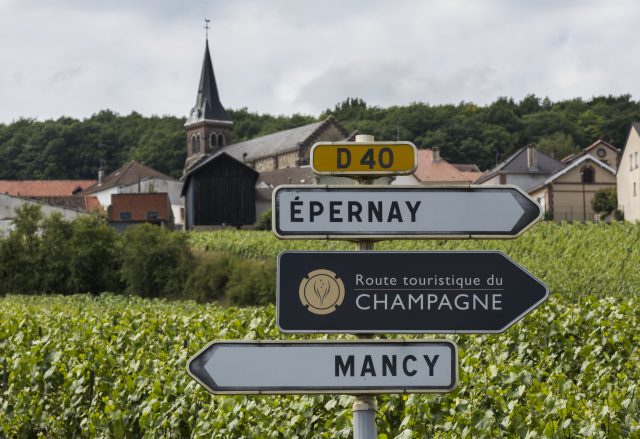
Expectations for the 2022 Champagne harvest, which concluded on 20 August, are high, with producers hailing a “solar vintage”. 2022 yields were around 96% higher than those of the 2021 harvest, and a third above the five-year average, according to Agreste predictions.
“Thanks to hot and dry weather in August, with well-timed rain, Champagne had the best conditions for ripening the grapes.
“They were in a perfect sanitary state at harvest time and, as expected, abundant, even if the quantity is variable from sector to sector,” says Victoria Henson, director of the Bureau du Champagne UK.
In 2022, losses due to spring frosts and hailstorms are estimated at less than 9% of the harvest potential, and thanks to the sunny and warm climate, there were no vine diseases.
The harvest started in the last 10 days of August, earlier than usual. Champagne growers and houses decided together to set an available yield of 12,000 kg/ha for the 2022 harvest. This is the highest level since 2007.
However, Champagne Deutz CEO Fabrice Rosset warned of counting one’s chickens before they roost: “We must remain humble and prudent as it is only when we taste the still wines in a few months that will we be able to confirm with certainty that the 2022 vintage is of high quality and true to the Deutz hallmark style.”
Investment
- The average price for a bottle of Champagne sold by iDealwine at auction is the second-highest of all French wine regions (after Burgundy, but ahead of Bordeaux and Rhône).
- Liv-ex’s Champagne 50 rose by 9.4% in the year to May 2022, and is up by 50.6% on last year, making it one of the best-performing sub-indices of the Liv-ex 1000.
- As connoisseurs are increasingly attracted to Champagne, they are broadening their interests, discovering less famous names alongside blue-chip prestige cuvées such as Salon and Dom Pérignon.
- Justerini & Brooks buyer Julian Campbell says there’s a clamour for top releases – not only prestige cuvées from grandes marques, but also interesting grower releases.
- Liv-ex’s Rupert Millar says the rise of the US market has been the real change for Champagne, very likely driven by the US tariffs that were in place from 2020-21 – from which Champagne was excluded.
- Campbell feels that what has been a loyal, if niche, following for grower Champagnes is about to bubble over into the mainstream.
iDealwine’s top 20 best-selling Champagne estates, 2021
Source: iDealwine Auction Barometer 2022
| Position 2021 | (2020) | Property | Total sales (€) | Bottles (@75cl) |
| 1 | (1) | Jacques Selosse | 197,394 | 447 |
| 2 | (2) | Dom Pérignon | 138,620 | 461 |
| 3 | (5) | Krug | 88,153 | 201 |
| 4 | (4) | Bollinger | 65,655 | 327 |
| 5 | (3) | Louis Roederer | 61,889 | 269 |
| 6 | (7) | Salon | 40,684 | 43 |
| 7 | (10) | Billecart-Salmon | 30,723 | 189 |
| 8 | (6) | Taittinger | 27,091 | 121 |
| 9 | (9) | Ruinart | 26,472 | 193 |
| 10 | (14) | Egly-Ouriet | 17,258 | 93 |
| 11 | (18) | Cédric Bouchard | 16,880 | 110 |
| 12 | (8) | Perrier-Jouët | 14,907 | 75 |
| 13 | (12) | Deutz | 14,186 | 126 |
| 14 | (-) | Aurélien Lurquin | 13,240 | 51 |
| 15 | (15) | Laurent-Perrier | 12,791 | 154 |
| 16 | (-) | Ulysse Collin | 12,573 | 61 |
| 17 | (13) | Jacquesson | 12,214 | 94 |
| 18 | (16) | Veuve Clicquot | <10,000 | 74 |
| 19 | (-) | Pommery | <10,000 | 78 |
| 20 | (20) | Moët & Chandon | <10,000 | 70 |
Sotheby’s top 10 Champagnes by share of sales (auction and retail), 2020-21
| 2020 | 2021 | ||
| 1) | Dom Pérignon | 22% | 26% |
| 2) | Krug | 17% | 23% |
| 3) | Louis Roederer | 12% | 20% |
| 4) | Salon | 20% | 8% |
| 5) | Sotheby’s (own label) | 4% | 7% |
| 6) | Bollinger | 4% | 4% |
| 7) | Taittinger | 4% | 2% |
| 8) | Veuve Clicquot | 1% | 1% |
| 9) | Pol Roger | – | 1% |
| 10) | Billecart-Salmon | – | 1% |
Note: Jacques Selosse and Philipponnat have dropped out of the Sotheby’s top 10 since 2021
Source: Sotheby’s Annual Reports, 2020-21
10 best Champagnes to buy
The Champagne Masters is a competition created and run by the drinks business, and is an extension of its successful Masters series for grape varieties, such as Chardonnay and Pinot Noir, as well as regions like Rioja and Tuscany. The competition is exclusively for Champagne, and the entries were judged using Schott Zwiesel Cru Classic glasses supplied by Sensible Wine Services. The top wines were awarded Gold, Silver or Bronze medals according to their result, and those expressions that stood out as being outstanding received the ultimate accolade – the title of Champagne Master.
The Champagnes were judged on 10 March at London’s Coravin Wine & Bubbles Bar by Patrick Schmitt MW, Patricia Stefanowicz MW, Jonathan Pedley MW, David Round MW, Susan Hulme MW, and Siobhan Turner MW.
Vintage
CHAMPAGNE PIPER-HEIDSIECK, VINTAGE 2014
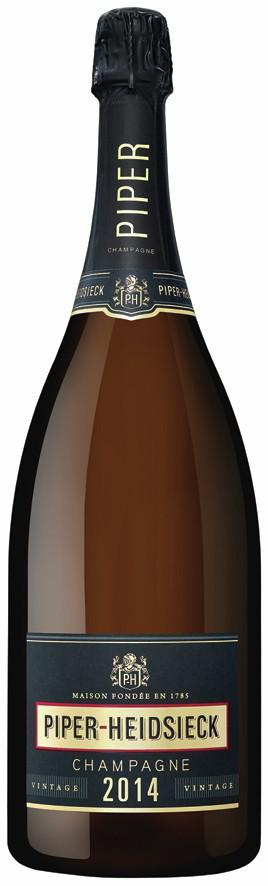
- Producer: Champagne Piper-Heidsieck
- Grape varieties: 55% Pinot Noir, 45% Chardonnay
- Abv: 12%
- Vintage: 2014
- Dosage: Brut
- Approx. retail price: £60
- Medal: Master
Like the other Heidsiecks, Heidsieck & Co. Monopole and this firm’s ‘sister’ Charles Heidsieck, this Champagne House traces its roots back to Florens-Ludwig Heidsieck in 1785, but its origins as a separate House date from 1834 when Christian Heidsieck formed his own company. From that point, this House is the only one allowed to use the brand ‘Heidsieck’, pure and simple, although most (if not all!) the sales are under the well-recognised Piper-Heidsieck brand. Long a reliable favourite, this bottle is a ‘star among stars.’ This wine, from the 2014 vintage, a possible rival to 2012, gives new meaning to the term, ‘bubbleometry’, with minuscule bubbles and persistent mousse shimmering through its mid-gold colour. A maturing and intense nose of orchard fruits, honey and buttery croissant leads onto an integrated, velvet-textured palate braced by brisk acidity, hints of lime and lemon zest and then to a long plush finish. A sensational wine that delivers for all five senses from the ‘pop’ of the cork to the last lingering sip. (Patricia Stefanowicz MW)
CHAMPAGNE JOSEPH PERRIER, CUVÉE ROYALE BRUT MILLÉSIMÉ, 2012
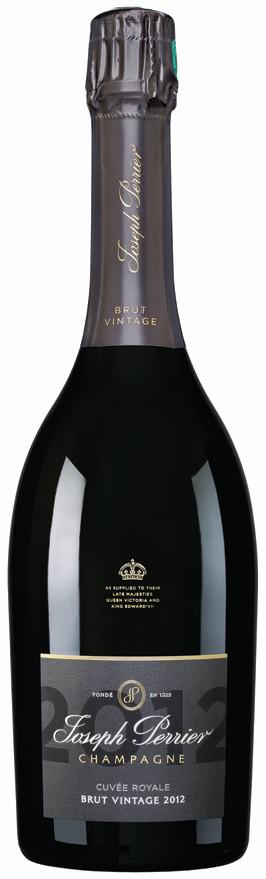
- Producer: Champagne Joseph Perrier
- Grape varieties: 46% Chardonnay, 54% Pinot Noir
- Abv: 12%
- Vintage: 2012
- Dosage: Brut
- Approx. retail price: £60
- Medal: Master
A stunning example of 2012 vintage Champagne, the wine is mid-straw in hue with tiny persistent bubbles, plenty of griotte and apple flavours and fresh yeast autolysis leading to a concentrated and integrated palate with racy acidity and brittle mousse texture. A long, savoury, bready and complex wine that is an excellent match for rich, intricate dishes, even game birds with exotic sauces. (Patricia Stefanowicz MW)
CHAMPAGNE HENRIOT MILLÉSIME 2012
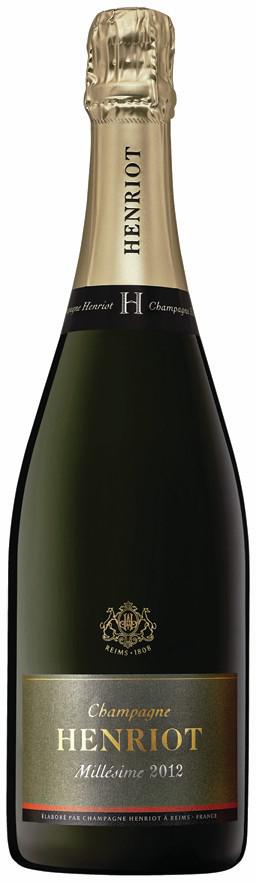
- Producer: Champagne Henriot
- Blend: Chardonnay: 54, Pinot Noir: 46
- Vintage: 2012
- Dosage: Brut
- Price Category: £50+
- Approx UK Retail Price: £85
- Medal: Master
Hailing from the great 2012 vintage, this marvellous Champagne from the house of Henriot is complete, featuring a hedonistic mix of creamy coffee, toast, gun smoke and tangy lemon and lime characters on the lingering, refreshing finish. (Patrick Schmitt MW)
To read the full 2022 list of the 10 best vintage Champagnes, click here.
Non-vintage
CHAMPAGNE LANSON LE BLACK LABEL BRUT
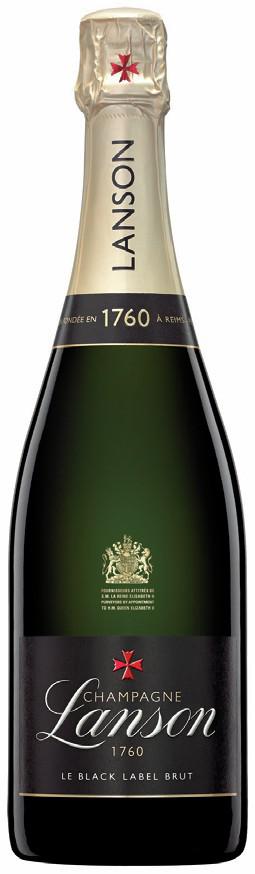
- Producer: Champagne Lanson
- Grape varieties: 50% Pinot Noir, 35% Chardonnay, 15% Meunier
- Abv: 12%
- Dosage: Brut
- Approx. retail price: £37
- Medal: Master
A famous ‘Grande Marque’ Champagne dating from 1760, Lanson Black Label seems to get better year-on-year. Based on the Crus of Dizy, Verzenay and Trépail with around 30% reserve wines and a low dosage of 6g/l, this is a shining star of Champagne. A mid-straw colour, showing persistent mousse, the wine has red and yellow fruits accented by buttered toast autolytic character, brisk acidity and velvet texture. A mid-weight wine designed for gastronomy and perfect with Thai or subtle Chinese dishes. (Patricia Stefanowicz MW)
To read the full 2022 list of the 10 best non-vintage Champagnes, click here.
Prestige cuvée
CUVÉE WILLIAM DEUTZ 2013
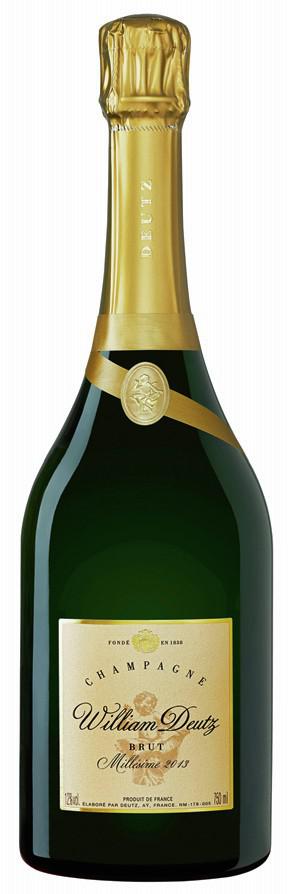
- Producer: Champagne Deutz
- Grape varieties: 77% Pinot Noir, 20% Chardonnay, 3% Meunier
- Abv: 12%
- Vintage: 2013
- Approx. retail price: £140
- Medal: Master
Owned by the Roederer group, Champagne Deutz is itself a House with distinctive style: firm, flavour-packed with finesse. This wine shows a pale lemon hue with tiny persistent bubbles and a tight cordon. Mid-weight, displaying ripe apricots, yellow plums with buttered toast and honey nuances, the palate is braced with lively acidity and creamy mousse texture. An elegant style suited to delicate canapés or pristine Asian cuisines. (Patricia Stefanowicz MW)
GRAND SIÈCLE, ITERATION NO.25
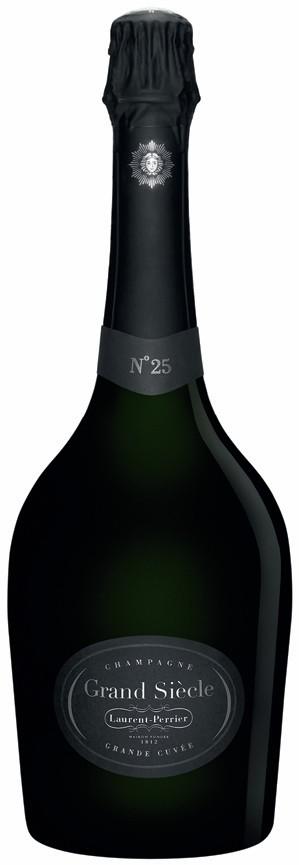
- Producer: Champagne Laurent-Perrier
- Blend: Chardonnay: 60, Pinot Noir: 40
- Vintage: NV
- Dosage: Brut
- Price Category: £50+
- Approx UK Retail Price: £175
- Medal: Master
Relatively under the radar for a house so famous for its rosé, this prestige cuvée is a stunner. Blending the best wines from a mix of fine vintages (2008, 2007 and 2006), Laurent-Perrier eschew the usual single harvest approach for their top expression, and craft this layered, thrilling Champagne for immediate consumption, or, should you like a more evolved fizz, further ageing. The style is a delicious mix of semimature and fresh fruit flavours, with some tinned pineapple and dried citrus, creamy coffee and roasted nuts, then baked bread, crisp apple and Comice pear, complemented by a long, dry, chalky-tasting finish. (Patrick Schmitt MW)
RARE MILLÉSIME 2006, IN MAGNUM
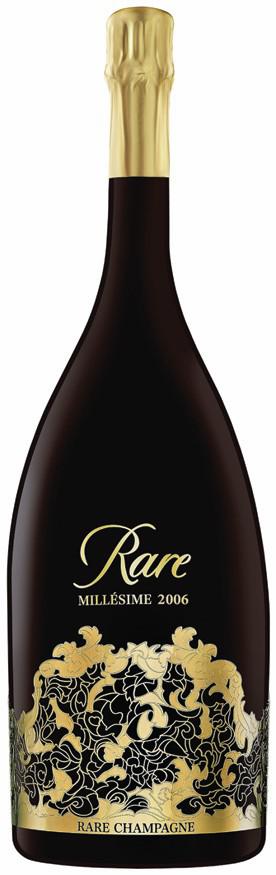
- Producer: Rare Champagne
- Blend: tbc
- Vintage: 2006
- Dosage: Brut Price Category: £100+
- Approx UK Retail Price: £tbc
- Medal: Master
My top-scoring wine of the tasting, this magnum of Rare 2006 – the single harvest prestige cuvée brand, and formerly the flagship expression of Piper-Heidsieck – is a magnificent Champagne. Yet to hit the market – this was a special pre-release tasting – this 2006 is a fizz that combines maturity and richness with freshness and energy in a wonderful way that so few manage to master in Champagne. It could partly be due to the ‘magnum effect’, which slows down the evolution of fruit flavours in fizz, but I believe it’s primarily due to the strict wine selection and skilled handling in the cellar. After all, Rare cuvées in standard formats have consistently been top-performers in the Champagne Masters. So what is it like to drink? A light pale gold appearance draws you in to its cappuccino and vanilla pod aromatics, with notes of stone fruit. On the palate, there’s charred bread and grilled nuts, pear and peach fruit, with a touch of bitter orange on the finish, which is long, dry, and chalky – the wine’s flavours gradually taper to a mouth-watering finish. Rare 2006 in magnum will be available from September 2022. (Patrick Schmitt MW)
To read the full 2022 list of the 10 best prestige cuvée Champagnes, click here.
Blanc de blancs
HENRIOT BLANC DE BLANCS
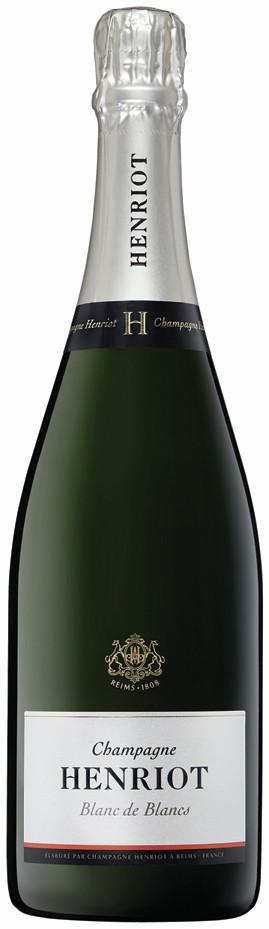
- Producer: Champagne Henriot
- Blend: Chardonnay: 100
- Vintage: NV
- Dosage: Brut
- Price Category: £50+
- Approx UK Retail Price: £50
- Medal: Champagne Master
If you like your Chardonnay smoky, then this Blanc de Blancs from Henriot will appeal greatly, with its flavours of toast, struck match and grilled lemons, complemented by hazelnuts and pear, along with orange and grapefruit zest on its persistent dry, fresh finish. (Patrick Schmitt MW)
PERRIER-JOUËT BELLE EPOQUE BLANC DE BLANCS 2012
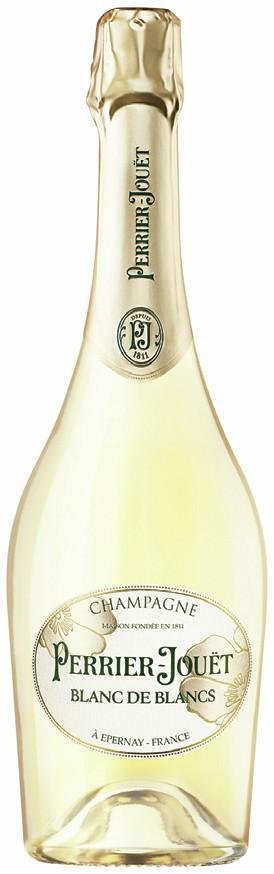
- Producer: Perrier-Jouët
- Blend: Chardonnay 100%
- Vintage: 2012
- Dosage: Brut
- Price Category: £50+
- Approx UK Retail Price: £340
- Medal: Champagne Master
Reaching the high point among the Blanc de Blancs in 2022 was this rare prestige cuvée expression from Perrier-Jouët, with its complex, mature aromatics of dried apple, burnt orange, honey and roasted coffee, and then flavours of hazelnut and grapefruit, lemon zest and chalk, with a texture that’s mouth-filling, but fresh and moreish too. (Patrick Schmitt MW)
To read the full 2022 list of the 10 best prestige blanc de blancs Champagnes, click here.
Pink
Comtes de Dampierre, Cuvée des Ambassadeurs Rosé, Premier Cru

- Producer: Comtes de Dampierre
- Blend: Chardonnay: 85%, Pinot Noir: 15%
- Vintage: NV
- Dosage: Brut
- Approx UK Retail Price: £55
- Medal: Master – Global Rosé Masters 2022
A Master winner in this year’s Global Rosé Masters, this pink fizz from Comtes de Dampierre garnered top scores for its Chardonnay-dominant zesty, fresh character and delicate red berry notes, along with subtle hazelnut and chalk characters.
To read the full 2022 list of the 10 best prestige cuvée Champagnes, click here.
Related news
Tasting Pol Roger Champagne from ‘truly remarkable vintage’
New leader for Champagne Pol Roger as Laurent d’Harcourt retires


