



‘Definitely not doom and gloom’ for Champagne sales in UK
Despite ongoing challenges in the drinks sector, Champagne sales in the UK are showing resilience, with several producers reporting growth in 2025.
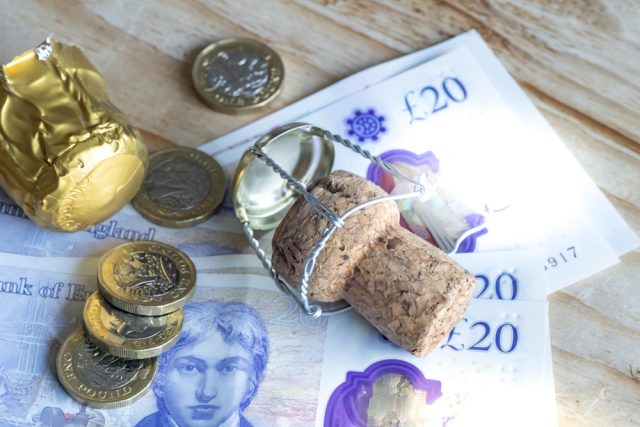
While demand for high-end expressions – such as prestige cuvées and vintage Champagnes – has softened, the category’s backbone, Brut non-vintage (NV), has remained strong.
Richard Billett, managing director of Maisons Marques et Domaines (the UK distributor for Champagne Louis Roederer), struck a cautiously optimistic tone. Speaking exclusively to the drinks business, he said, “It’s definitely not doom and gloom” when asked about the UK market.
“We are down from a peak in ‘22 and ’23, but we are up on ’24,” he added.
Billett reported a 9% increase in UK volume sales for 2025. This follows a 6% decline in 2024, placing current performance “between ’23 and ‘24” levels.
Shifting from value to volume
Reflecting on broader trends, he noted a shift in market dynamics: “The trend of the last 12 months is one of the volume; 24 months ago, it was about value.”
A key factor supporting demand has been what Billett described as “pricing stability,” even as producers absorb rising costs. These pressures include higher duty rates and the introduction of the Extended Producer Responsibility (EPR) packaging scheme in the UK, alongside increased costs for labour, energy, and, most significantly, grapes from the 2021 and 2022 harvests – which are the basis for Champagne on sale now.
Despite these challenges, Billett pointed to “reasons to be cheerful,” citing “growth throughout the range,” including both Roederer’s Collection multi-vintage blend and its prestige cuvée Cristal.
Adaptability is key
However, he cautioned that trading conditions remain demanding: “But it’s not a walk in the park.” He added, “You’ve got to be a lot more adaptable,” highlighting “a bit of ebb and flow between sectors,” particularly between retail and hospitality. Retail has driven much of the past year’s growth, in contrast to 2024, when the on-trade led performance.
Discussing the restaurant sector, Billett said, “The fact that the on-trade is only running at partial capacity doesn’t help, with some operators only open for 3-4 days a week, and some no longer offering lunch.”
As a result, “opportunities for engagement in hospitality are more irregular than they used to be,” compared to pre-pandemic norms. “In 2019 you wouldn’t have to worry about trying to find a restaurant that was open on a Monday,” he noted.
Cautious optimism for 2026
Looking ahead, Billett expects modest growth: “We are forecasting some modest growth in the UK.” He added, “Certainly, talking to others [who selling Champagne in the UK], there is an expectation of some forward movement, although it’s not going to be a major step forward.”
This cautious optimism is partly due to “the low level of stock in the market,” with many operators having reduced surplus inventory. For Louis Roederer, upcoming milestones also offer momentum.
“This year we are celebrating 250th years [since the foundation] of Maison Louis Roederer, and 150 years of Cristal,” he said, noting that the anniversaries will be marked separately – mid-summer and September, respectively.
In addition, 2026 will see the release of Cristal from the highly regarded 2018 vintage, which he hopes will bring “some energy and dynamism” to the UK prestige cuvée segment.
Nonetheless, Billett stressed the uncertainty created by global events, including conflicts in the Middle East and Ukraine, making forecasting “incredibly difficult,” with “unpredictability” as “the watchword of the market.”
Partner Content


Market-beating Laurent-Perrier
A similar tone was echoed by Adam Guy, managing director of Champagne Laurent-Perrier UK. He said that “Laurent-Perrier has done very well,” in 2025, adding that the brand has “beaten the market.”
This performance comes against a backdrop of modest overall growth, with Champagne shipments to the UK rising by 1.9% to 22.7 million bottles. In retail, the category grew by 5% according to Nielsen, a benchmark Laurent-Perrier also outperformed.
In hospitality, Guy noted continued success: there is “good momentum behind Laurent-Perrier’s more premium products and we’ve had some good wins in the on-trade.”
More broadly, he observed that “Champagne is doing well relative to other categories,” though he echoed concerns about cost pressures and market uncertainty.
Losing non-doms damaging demand
“This year is difficult to predict: there are so many ups and downs with sentiment and economic performance,” he said. Factors influencing demand include “VAT on schools fees and non-doms leaving,” as well as potential increases in mortgage rates linked to geopolitical tensions.
Like Billett, Guy highlighted cost challenges: “Most premium houses like ourselves are now selling Champagne made with grapes bought at a time when grape prices were very high, so we have a much higher cost of sale, which is awkward, because we can’t pass on the full effect [of those production cost increases] with the way of the world as it is now.” As a result, “Everyone’s margins are squeezed.”
Looking forward, he forecasts steady but limited growth: “We are expecting the Champagne for this year to be flat or low growth, and for Laurent-Perrier to beat the market with momentum carrying on from 2025.”
He concluded with a note on the category’s resilience: “We are lucky to be working with Champagne – thankfully it is quite ingrained in behaviours: sales tend to fluctuate between plus or minus 5%, but it never falls off a cliff.”
James Bond boosts Bollinger
At Champagne Bollinger, managing director Charles-Armand de Belenet also reported a strong year. He described 2025 as “positive in value and volume” for the maison, “mainly driven by the James Bond limited edition, which was a great success all over the world.”
He attributed this success partly to strategic pricing: the limited edition was released “for the first time at the same price as Bollinger Special Cuvée,” an approach designed to reward loyal customers with “an exciting gift pack.”
However, he acknowledged broader pressures: the “premium category in suffering,” in line with trends in the wider fine wine market. By contrast, the Brut NV segment continues to perform well, supported by “promotion activity in a few markets such as the UK.”
Summing up, he said that due to “the desirability of Champagne, if you have the right promotional strategy, it works.”
A new record for Pol Roger
Meanwhile, Champagne Pol Roger has achieved record sales for its Brut NV in the UK. According to UK managing director James Simpson MW, performance exceeded previous highs “and by quite a long way.”
Reflecting on the category’s enduring appeal, he concluded: “We seem to have trained the [UK] consumer to continue to drink Champagne.”
Finally, he reminded db that London was soon to see the return of a trade event for the French fizz called The Definitive Champagne Tasting, which will feature as many as 71 producers on Wednesday 22 April at The View within the Royal College of Surgeons.
Related news
New leader for Champagne Pol Roger as Laurent d’Harcourt retires
Laurent-Perrier returns to growth despite Champagne headwinds


