



Vin de France gains ground in Bordeaux
An increasing number of Bordeaux producers are stepping outside appellation rules in favour of Vin de France, seeking greater freedom over grape varieties, winemaking techniques and branding. While still a small part of regional production, the category is becoming a vehicle for innovation, climate adaptation and commercial flexibility.
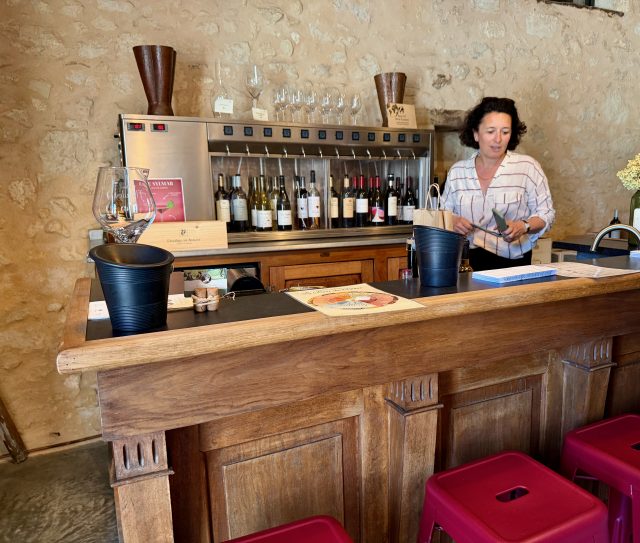
Adventurous, experimental (or frustrated) winemakers finding appellation rules too restrictive are making a break for it and offering Vin de France cuvées. Still a tiny part of the region’s production, these fun and creative wines are springing up across Bordeaux.
AOP or VdF?
For their wines to qualify for one of the 67 Bordeaux appellation wines, winemakers must adhere to strict rules. These govern what (varieties), where (geographical location) and how (yields, cultivation and winemaking methods). There is also a taste test to confirm quality, but also that the style conforms to the name. Understandably, from a consumer point of view, if you buy a Margaux, you want it to taste like Margaux, but it doesn’t leave much room for experimentation or offer the flexibility to correspond to changing market demand.
There’s a perception of older, more rigid rules (and sometimes members of tasting panels) controlling the wines. Experimental winemakers are unlikely to get their natural, orange or Pet Nat wines approved by the appellation. Even more conventional wines might fall foul of the rules, and if a grape variety is not officially sanctioned, growers cannot add it to their blend.
Anecdotal
Although Vin de France still only represents about 2% of regional production (about 132,000 hl), you’ll now find examples across the region, with varieties such as Chardonnay, Syrah and, increasingly, Chenin.
Still Blanc de Noirs, ‘non-traditional’ effervescent techniques, multi-vintage blends, low alcohol and more.
This is not unique to Bordeaux, nor to France; there’s more Vino d’Italia and Vino de España about, too. In Bordeaux, with its traditional image and despite the diversity of styles it already offers, it somehow feels more rebellious.
Creative freedom
Vin de France” (VDF) seems to be the nomenclature of choice for rebellious winemakers. A national category, it can be produced throughout all the wine regions of France with no geographical limits. It gives winemakers the freedom to choose grape varieties and mention them on the label, they can blend from different regions and vintages, and create taste profiles that don’t fit the received wisdom of the region. There’s also no tasting test.
In 2009, Vin de France officially replaced Vin de Table; this rebrand allowed producers to mention grape varieties and vintages on the label, formerly prohibited. The objective was to create a higher quality image, removing stigma around the label. Although this may be more in an older French generation, and these wines are targeting a younger market, who are rejecting a stuffy, traditional image and looking for something more fun.
Financial Freedom
In the current challenging market, no yield and no density constraints can reduce per-litre production costs, and interprofessional levies are also lower. I first heard this from a wine maker in the Médoc producing canned rosé. I asked why he was not using the Bordeaux Rosé AOP. His immediate response was lower levies, and secondly, that consumers of tinned rosé probably aren’t looking for Bordeaux on a can! CIVB and ODG (appellation organisation) levies were mentioned by several producers.
The price of innovation
For an AOP, the obligatory levy (Cotisation Volontaire Obligatoire) is paid to the CIVB Conseil Interprofessionnel du Vin de Bordeaux (Bordeaux Wine Council). This is an interprofessional tax, not a state duty, about 80% of which goes towards financing the CIVB promotional and communication campaigns. The amount varies by vintage and by appellation. Currently (2024-2026), it is €4,72 per hectolitre for AOP Bordeaux and over €10 for the communal (village) Médoc appellations, Pessac-Léognan and Saint-Emilion Grand Cru.
For Vin de France (VdF) in 2024 and 2025, rates were €0,50/hectolitre and up to €1,10 /hectolitre with an indication of variety or vintage. For IGP, it is €0.60/hectolitre – all amounts pre VAT. It’s a considerable difference, especially now, when buyers are increasingly price sensitive.
What about PGI?
With a VdF, producers can’t mention Bordeaux or Gironde or any geographical identity on their Vin de France, but it isn’t the only option for innovation. IGP, or Indication Géographique Protégée (PGI in English), has looser controls than AOP but a regional identity. Bordeaux comes within IGP Atlantique (Vin de Pays de l’ Atlantique), which includes the neighbouring Dordogne, Charente, Charente-Maritime and Lot et Garonne. Although with a focus on regional identity, the rules allow more flexibility, including freedom to choose from over 300 grape varieties, different blending techniques and higher yields. There are currently around 150 producers of IGP in Gironde. Although I’m not sure consumers equate Vin de Pays de l’Atlantique with Bordeaux, it doesn’t have quite the same ring about it.
French resistance
The creative freedom of Vin de France is clear from label design; most look nothing like a classic Bordeaux, including the bottle shape that tends toward a Rhone style. This seems to be a huge advantage in France right now. Several Bordeaux producers report a resistance from professionals (wine shops, sommeliers) to buying more Bordeaux. Bordeaux bashing is not uniquely an Anglo-Saxon sport. There’s an ‘anything but Bordeaux’ attitude in many traditional French outlets.
It shows that Jean Baptiste Duquesne, creator of Bordeaux Pirates and owner of Château Cazebonne in Graves, points out that as Bordeaux is the largest AOP region in France, it is clearly underrepresented on wine shelves across France. If wine professionals turn their backs on Bordeaux, consumers can’t buy what they don’t see. As the demand for lighter, brighter wines that don’t need ageing increases, could the innovative Vin de France cuvées from Bordeaux be a way of re-seducing these gatekeepers? Estelle Roumage from Château Lestrille in the Entre-deux-Mers sees this. When she cold-calls French retailers, saying she’s from Bordeaux, she’s unlikely to even get an appointment. If she says she has a range of innovative organic wines (which she does) without mentioning the origin, they are willing to meet her.
Grape varieties, location and climate change
According to the Vin de France organisation, the most cited reason for choosing Vin de France is grape variety, with growers looking for more heat, drought and disease-resistant varieties. Second is location, wanting to plant outside the delimited geographical area of an AOP.
Sometimes it just happens, Château Biac in Cadillac-Côtes-de-Bordeaux started making Felicie de Biac in 2010, picked from a plot of Sauvignon Blanc originally planted to complement the old Semillon for their liquoreux Cadillac. As the limestone gave enough elegance to the Sémillon, it wasn’t needed, so they sell the small production as VdF, avoiding extra admin. Owner Youmna Asseilly says, ‘Nobody seems to mind a bit about Vin de France or questions it, I guess the wine speaks for itself’
Climate change
The newsworthy defection of Château La Fleur from AOP Pomerol to Vin de France was in response to climate challenges. They quoted the impossibility of adapting cultivation techniques within the appellation rules, including irrigation, canopy management and planting density.
This links with grape variety choice, with winemakers looking at heat and drought-resistant grape varieties. Although there have been changes in Bordeaux, with the experimental introduction of six new grape varieties back in 2019 to address exactly this.
An impetus for AOP change?
Is the defection of such a prestigious name an instigator for change within the appellations? Things that would previously have seemed controversial, such as the new White appellation in the Médoc and the new grape varieties, show a response to the market and producer demand. A new INAO derogation in the winemaking charter for AOP Graves now allows irrigation ‘only in the case of prolonged drought that is impacting the physiological development of the vine’ with similar mentions in the charters of Entre-deux-Mers, Margaux, Moulis, Fronsac, Pessac-Léognan and Pomerol.
How to sell?
But, without this regional identity, VdF wines have to be hand-sold by sommeliers, retailers, or at the property. Despite these wines usually having a great story, they will struggle to defend themselves on a supermarket shelf or a wine list without a sommelier to hand. Bottle by bottle selling is hard work.
VdF wine makers have their own Trade organisation, Annivin, which actively promotes the wines under the strapline Liberty, Quality, Creativity – see what I mean about the fun? This year, they launched a collaboration with Michelin Maps to create a ‘Sur la Route de Vin de France’ map. It highlights 250 Vin de France producers across France, including 40 in Aquitaine, focusing on wine tourism.
Partner Content



Bordeaux Pirates
Under the impetus of Jean Baptiste Duquesne, a group of Bordeaux wine makers has created the Bordeaux Pirates Association to showcase this innovation, diversity and energy, targeting a clientele no longer seduced by the traditional Bordeaux image. It’s inclusive, open to AOP, Vin de Pays and Vin de France, even spirits, no and low and fruit juice! It includes cooperatives, negociants, and large and small producers. They are all welcome if they are innovative and different. They include wine shops and restaurants that support and encourage the movement in their promotion, organising events in Bordeaux and Paris. It does have rules, though; members must be organic and can’t sell in supermarkets.
Not always cheap but very cheerful
If Vin de France no longer means lower quality, it doesn’t necessarily mean lower price either. You’ll find them across all price points in Bordeaux, from the most prestigious to the more entry-level regions. Crus Classés, négociants, coopératives and independent wine makers are all trying their hand.
Some Vin de France from Bordeaux to try
Claire Lurton produces biodynamic wines from both her classified growths, Château Ferriere in Margaux and Château Haut Bages Liberale in Pauillac. Her Cuvée ‘Inspiration‘ is 50% Chenin Blanc, 40% Sauvigné Gris and 10% Muscaris, produced by maceration in a wine globe. Being sensitive to sulphur, she wanted to make a white wine she could drink. She counts on the extra antioxidants from the skin maceration to protect the wine. Since the 2024 vintage, her CERES is a vin d’IGP d’Atlantique – she finds the Haut-Médoc AOP too restrictive, and clients are dubious about a ‘natural’ wine in Haut-Médoc. Both these wines are ‘vins pirates‘. She says this initiative pushes her out of her comfort zone, something she is used to in biodynamics and something she thinks is essential to be successful right now.
Jean Baptiste Duquesne of Bordeaux Pirates fame bought Château Cazebonne in the Graves in 2016 and farms in organic and Biodynamic viticulture. With the enthusiasm of an evangelical newcomer, he is planting old grape varieties across his different terroirs, hoping to reach 60 different cépages in the next few years. He is hoping to find solutions to climate change in old varieties that were ignored or forbidden, as they were rarely ripe enough to make the grade. Today, that is an advantage. As many are not allowed in AOP, that led to Vin de France.
Despite the new White Médoc appellation, there’s experimentation with non-traditional Bordeaux varieties for whites in the Médoc, chosen with rising temperatures in mind. 2025 is the first Chardonnay, Sémillon and Viognier blend from Château Larose Trintaudon, and Mélanie Barton Château Mauvesin Barton, in Moulis, produced her first tiny 2025 vintage of a Chenin-Chardonnay blend. In Margaux, Château Marquis d’Alesme produces Saam Long, or ‘three dragons’, referring to the blend of Albariña, Chardonnay and Petit Manseng. Château du Tertre recently launched its new white, Alba by Tertre, a Chardonnay, Sauvignon Blanc and Viognier blend, and Château Palmer produces a small amount of a dry white blend of 50% Muscadelle, Loset and Sauvignon Gris.
Black and white
Vignobles André Lurton produces several Vin de France, Jacques Lurton’s Blouge, and a single variety Cabernet Sauvignon and Merlot, as well as the white Diane semi-sweet 100% Muscadelle and a sparkling 100% Cabernet Sauvignon Blanc de Noirs. Their ‘Petit’ Bonnet bottled in 25cl crown cap bottles is also in VdF. Blanc de Noir is allowed in Crémant de Bordeaux but not in the still AOPs, even from approved varieties. Château Paloumey in Haut Médoc produces a Cabernet Sauvignon Merlot version, and Château de La Dauphine in Fronsac 100% Merlot. Dufort Vivens produces a 50% Cabernet Franc and 50% Muscadelle blend, both approved varieties, but not together – you get the picture
The Entre-de-Mers rightly has a reputation for innovation. Estelle Roumage has created a multi-vintage cuvée at Château Lestrille in Entre-deux-Mers. ‘Dimanche en famille’ is a blend of five vintages, creating a blend of the 2014, 2016, 2018, 2019 and 2020, all excellent Bordeaux vintages. It’s a choice, Marie Laure Lurton at Château Villegeorge also produces a multi-vintage blend, but has kept it in AOP Haut Médoc, it’s allowed as long as there’s no vintage on the label. However, for her rosé, she prefers the freedom of VdF for the yields, no tasting obligation and lower fees. For a rosé, the Bordeaux signature seems less important.
Marie and Sylvie Courselle at Château Thieuley in Entre-deux-Mers embraced Vin de France in 2011, for the freedom it gave them to experiment with grape varieties; they planted Chardonnay and Syrah for their Les Truffières Cuvées on land that wasn’t then in the AOP zone.
Although their core range remains Château Thieuley in Bordeaux red, white, rosé and clairet, today they produce 20 different cuvées (although they are streamlining!) from 13 varieties with five hectares dedicated to Vin de France.
In 2015, they introduced their VdF Les Copains (red), a blend of Cabernet Franc, Merlot and Syrah and Les Copines (blanc), a blend of Sauvignon, Semillon and Chardonnay. Fun and easy to drink, these wines are not made to taste like Bordeaux, so VdF was the obvious choice.
They have also planted hybrid grapes, resistant to Mildew and Oidium, reducing the need for vine treatments and their carbon footprint. Their Sauvage dry white is 100% Sauvignac and the Sauvage Red is 100% Cabernet Cortis. Even more adventurous is Tendre Sauvage, 100% Sauvignac. Marie was inspired by the Kabinett wines from the Moselle that she loves, and it responds to a demand for lower-alcohol wines. It is slightly sweet, fruity and fun (that word again). In 2024, it was picked at a potential of 10-10.5°, fermentation stopped with cold, to produce a wine at just 8.5% alcohol with the high acidity balancing the 45 g/l residual sugar. However, as it’s below 9.5° alcohol, they can’t call it wine, not even VdF, so it’s known as half wine, half juice.
Another VdF pioneer is Jean-Yves Milaire in Fronsac and Canon-Fronsac. The domaine produces 18 cuvées in total, of which only four are in AOP Bordeaux, Fronsac and Canon-Fronsac. The other 14 are Vin de France. He took over the family vineyard in 1998, has farmed organically since 2006 and biodynamically since 2009 and started VdF in 2006, for the freedom to use different grape varieties. He wants varieties that offer protection against climate change, heat-resistant, giving higher acidity and lower alcohol in warmer conditions.
You’ll find Marselan, Riesling, Chenin, Petit Manseng, Cinsault, Fié Gris, Pinot d’Aunis (a Loire variety), alongside the more classic Merlot, Cabernet Franc and Petit Verdot, Sauvignon gris and Colombard in single varietals and in blends.
It’s not without challenges; this diversity doesn’t all ripen together, harvest can last well over a month. His wines are delicious, and the passion of the wine maker shines through them all.
Inspired by colleagues in the Loire, he’s a big fan of Chenin in Bordeaux, finding that here it finds a perfect balance between the cooler Loire and riper south. His Chenin is sourced from Monlouis-sur-Loire, grafted onto 30-year-old Merlot rootstock and planted on the slopes of Canon Fronsac. He uses a diversity of containers too, bringing in Foudres from La Loire (there’s a Loire theme here), and he introduced the first amphora in Fronsac. He affectionately calls his small cellar full of concrete eggs his ‘poulailler’ or chicken coop.
Light, bright and approachable is a signature of these VdF wines. Many of his reds are run off after just 48 hours of maceration, like the Lopiot Cabernet Franc, darker than a Clairet, and absolutely delicious served chilled – again very Loire in style. Etincelles is a blend of 2 vintages. Petit Manseng has some residual sugar, but so fresh you hardly feel it. and at just 10.5° alcohol
Their most fascinating and historic wine is Souviens-toi from ‘forgotten’ vines of Bordeaux, a 105-year-old ‘Franc de Pied‘ ungrafted, pre-phylloxera plot near the Dordogne. So close to the river that they were flooded to protect them from the dreaded louse. There are 8 ‘forgotten‘ varieties, including Castets (now allowed since 2019), mérille, bouchalès and Alicante. History in a glass.
Why now?
Producers are always experimenting, looking in the corners of cellars, and you’ll spot small vats or barrels where winemakers are trying something new. As both market demand and the climate are changing, they are ready to share the results of these experiments, and it often goes outside the rules.
Vin de France allows a diversity of varieties, areas, viticultural and winemaking techniques and styles that adapt to climate and financial constraints. They allow wine makers to respond to market demand while appealing to a broader audience. They are also having fun, expressing their creativity through wine making and label design.
Bordeaux, lovely but unloved?
Bordeaux has a long and rich history, a brand awareness, traditional skills, excellent terroir and well-known grape varieties. There will always be a market for the great classics, but this rather serious reputation doesn’t always do it any favours.
Whereas Vin de France is clear, it’s Wine from France. The perfect audience is too often intimidated by Bordeaux. Fun, often funky (in a good way) and accessible, it could be the gateway to the Bordeaux universe?
Related news
All the medallists from the Bordeaux Masters 2026


