



Chef Q&A: Pichaya ‘Pam’ Soontornyanakij
Pichaya ‘Pam’ Soontornyanakij, the chef-owner of Potong in Bangkok, discusses global acclaim, culinary progression and the prospects for Thai wine. In conversation with Amelie Maurice-Jones.
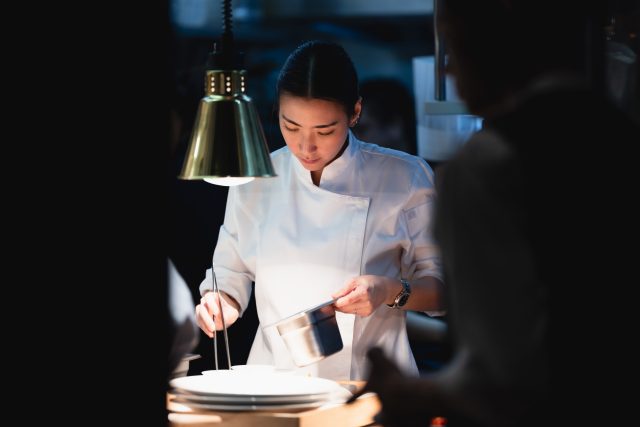
How did it feel to win The World’s Best Female Chef Award in 2025?
I felt very honoured, but what mattered most was what the recognition represents beyond myself. Being the first Thai and the first Asian chef to receive the award felt like a moment that reflects the growing presence of Asian cuisine on the global stage. I also hope the award can inspire other Thai and female chefs to believe it is possible to build something meaningful from our own culture and perspective. Recognition like this gives encouragement, but also reminds me to continue working with the same discipline and humility that brought me here.
Talk us through your cooking philosophy.
My cooking framework is built around five elements: salt, acid, spice, Maillard reaction and texture. Thai cuisine naturally contains these elements; thinking about them deliberately allowed me to refine dishes with more precision. Salt builds depth, acid gives brightness and balance, spice adds character, Maillard reaction creates aroma and complexity, and texture brings contrast and structure to the experience. When these five elements work together in harmony, the dish becomes complete.
You’ve described your cuisine as a ‘progression, not fusion’. What do you mean by this?
Thai-Chinese cuisine is not something that needs to be fused, because the cultures have already lived together for generations in Thailand. When I say progression, I mean respecting those roots while allowing the cuisine to move forward through new ideas, techniques and perspectives. It is not about combining cuisines artificially – it is about continuing a story that has already existed for a long time.
What’s been the biggest challenge of your career?
Opening Potong. The restaurant is located in my family’s ancestral building in Chinatown, which had more than a century of history behind it. Transforming that space into a modern restaurant while respecting its heritage required patience, resilience and a lot of careful decision-making. The process taught me that challenges are part of growth. I approach them the same way I approached sports when I was younger – with discipline, teamwork and the willingness to keep improving. Over time, those challenges become the foundation that strengthens the team and vision.
Partner Content


What’s the aim of your women-for-women scholarship and internship programme?
The goal is to create real opportunities for women who want to build a career in the culinary industry. Professional kitchens can be demanding environments, and sometimes access to training and mentorship is not always equal. We hope to give talented women, who do not have financial support, the chance to gain experience, develop technical skills and grow their confidence in a professional kitchen.
Pick a wine from your wine list and the dish you’d pair it with.
One wine I enjoy featuring is the Issara Winery Chenin Blanc 2023 from Khao Yai, a collaboration
with a local artist from Song Wat. The label and concept celebrate the philosophy of Potong, while the grapes come from Issara vineyards, produced using sustainable practices. I would pair this with our scallop course, served with curry and milk bread. The wine has a bright acidity and a clean, expressive profile that balances the richness of the scallop and the warmth of the curry flavours.
Where do you see Thai wine in 10 years?
Thai wine has made significant progress over the last decade in quality and experimentation. Winemakers are learning how to work with Thailand’s unique climate and terroir, which is very different from traditional wine regions. In the next 10 to 20 years, Thai wine will continue to develop its own identity, rather than trying to imitate other countries. That uniqueness could become its greatest strength.
What do you still hope to achieve?
To continue developing Thai cuisine in a way that is respectful to its roots while also moving it forward. I hope to keep building restaurants and projects that allow our culture, ingredients and techniques to be seen and understood internationally. If our work can contribute to strengthening Thailand’s culinary presence on the world stage and inspire the next generation of chefs, that would be something I would feel very proud of.
Related news
Why 'latitude' has exited the conversation
Vinexpo Hong Kong holds steady as appetite for Asian markets grows


